The Architecture of the Uncanny: How SoHo’s Puppet Makers are Resurrecting Surrealism
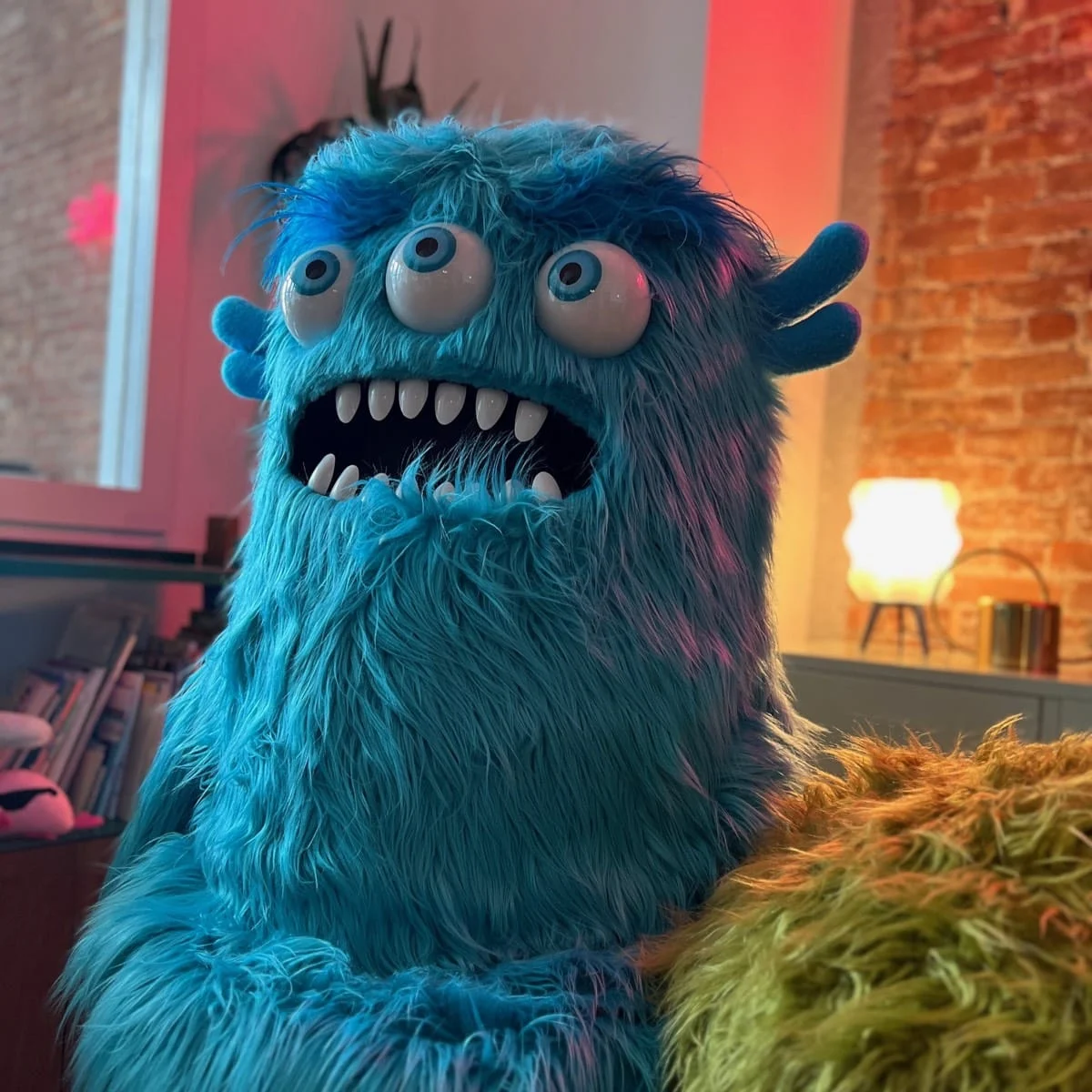
In a nondescript studio in SoHo, Manhattan, the boundary between the inanimate and the sentient is blurred daily through foam, latex, and a proprietary fabric known as "dream fleece." While the neighborhood is synonymous with high fashion and contemporary galleries, Furry Puppet Studio operates in a different echelon of the avant-garde. They do not merely create playthings; they manufacture the "uncanny"—that psychological space where an object is familiar enough to be recognized but strange enough to be unsettling.
This intersection of puppetry and surrealism is not accidental. As digital effects increasingly dominate the visual landscape, a growing movement of "physical surrealists" is reclaiming the power of the tangible. From the experimental films of Jim Henson to the public "ambushes" of Providence’s Big Nazo, the lineage of modern puppetry reveals a sophisticated artistic project: the attempt to place an impossible being in front of a viewer and convince them, if only for a fleeting second, that it is alive.
Main Facts: The Fabrication of the Impossible
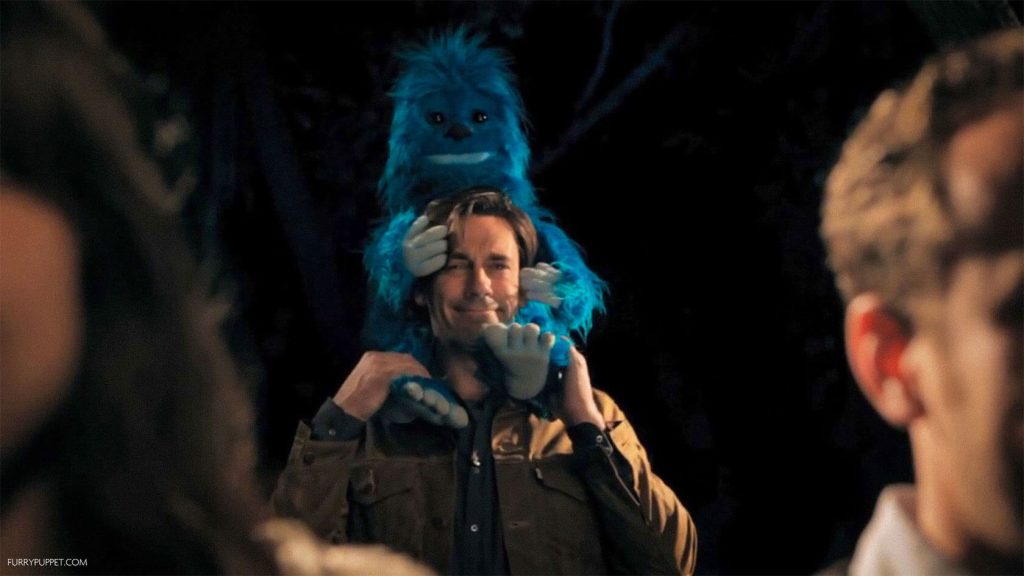
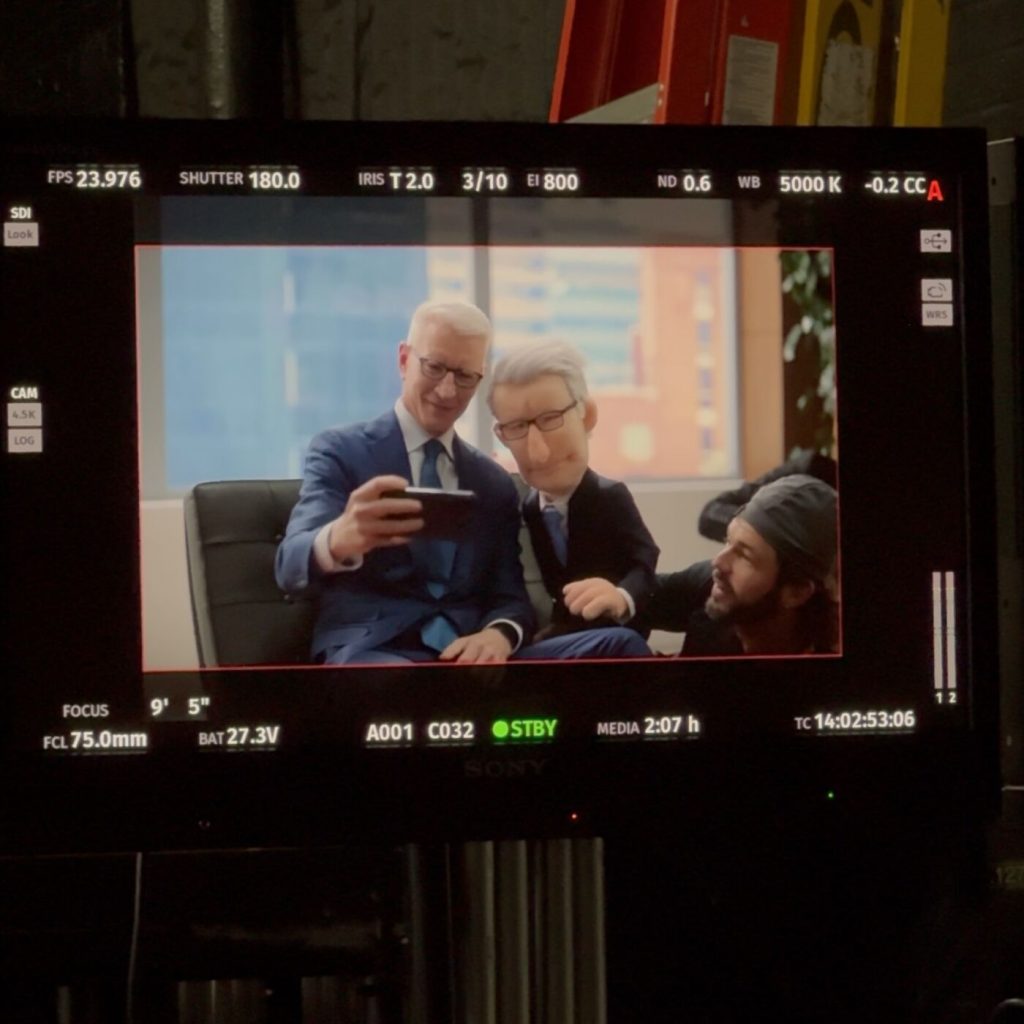
Furry Puppet Studio, founded by Zack Buchman, has become the go-to design house for what they describe as "pretty unusual work." Their portfolio reads like a fever dream of modern pop culture: a lovelorn blue yeti hitchhiking with Jon Hamm, hyper-realistic puppet doubles of Anderson Cooper and Andy Cohen for CNN, and complex marionettes of Missy Elliott and Pharrell Williams designed to be operated by street dancers.

The SoHo Methodology
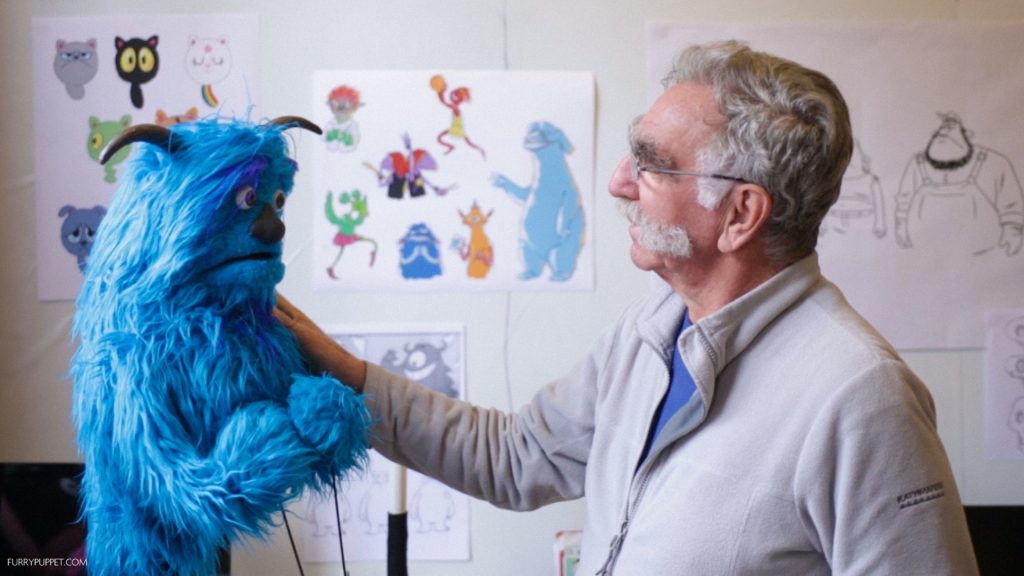
The studio’s process is a masterclass in analog precision. Every creature begins as a solid block of industrial foam. Unlike digital modeling, there is no "undo" command; a carver must possess the confidence of a surgeon, making permanent strikes into the material to reveal a character’s skeleton. Once carved, the foam is wrapped in "dream fleece," a custom fabric manufactured in-house to ensure a texture that looks organic under studio lighting.
The team composition reflects this multidisciplinary approach:
- Zack Buchman: The founder, who credits his outsider status (having never attended college) for his unconventional approach to character design.
- Polly Smith: A legendary costume designer and the co-inventor of the sports bra, bringing a deep understanding of structural textiles.
- Mechanical Engineers: Responsible for the internal armatures that allow puppets to mimic human micro-expressions.
- Specialized Foam Carvers: Described by Buchman as "real-life Edward Scissorhands," these artisans handle the primary sculpting.
The "Eye Hinge" Theory
According to Buchman, the most critical moment in the fabrication process is the placement of the eyes. This is the "hinge" of the work. A fractional shift in the pupil’s position or the brow’s weight can transform a creature from approachable to menacing. This is where fabrication ends and the "surrealist spark" begins—the moment the object appears to look back at its creator.
Chronology: From the Avant-Garde to the Street
To understand why a SoHo puppet studio belongs in the conversation of fine art, one must trace the lineage of the medium back to its most experimental roots.
1965: Henson’s Experimental Origins
While the public remembers Jim Henson for the Muppets, his early career was defined by surrealist filmmaking. His 1965 short film, Time Piece, is a dialogue-free exploration of time and mortality. Nominated for an Academy Award and screened at the Museum of Modern Art, the film utilizes associative logic—a man in a hospital bed, a heartbeat becoming percussion, and a cowboy shooting the Mona Lisa. This established the puppet as an avant-garde instrument, a tool for exploring the subconscious long before it was a tool for teaching the alphabet.
1982: The Dark Crystal and the Rejection of the "Cute"
Henson’s career culminated in The Dark Crystal, a film he reportedly had to buy back from the studio to prevent them from "sanding the weirdness off." It was a high-stakes bet on the idea that audiences craved the dark, the textured, and the otherworldly. It proved that physical puppets could carry the weight of a high-fantasy epic without the need for human actors.
1986: Big Nazo and the Public Ambush
In 1986, Erminio Pinque, a RISD-trained illustrator, founded Big Nazo in Providence, Rhode Island. If Furry Puppet Studio represents the controlled, high-fashion version of puppetry, Big Nazo is its punk-rock cousin. Pinque’s goal was a "puppet show without a stage." By creating nine-foot-tall foam aliens and monsters that roam street festivals and "creature dance parties," Big Nazo practiced what André Breton, the father of Surrealism, called the "marvelous eruption" into ordinary life.
2010s–Present: The Digital Backlash
As CGI reached a saturation point, directors and artists began returning to physical builds. Furry Puppet Studio rose to prominence in this era, providing the "weight" and "physical presence" that pixels often lack. Their work for Apple Japan, where puppet doppelgängers sat on public benches next to their human counterparts, marked a new peak in the "uncanny" aesthetic.
Supporting Data: The Science of the Uncanny Valley
The success of these studios is grounded in the "Uncanny Valley" theory, first proposed by roboticist Masahiro Mori in 1970. Mori observed that as an object becomes more human-like, our emotional response becomes increasingly positive—until it reaches a point where the slight "off-ness" triggers a feeling of revulsion or unease.
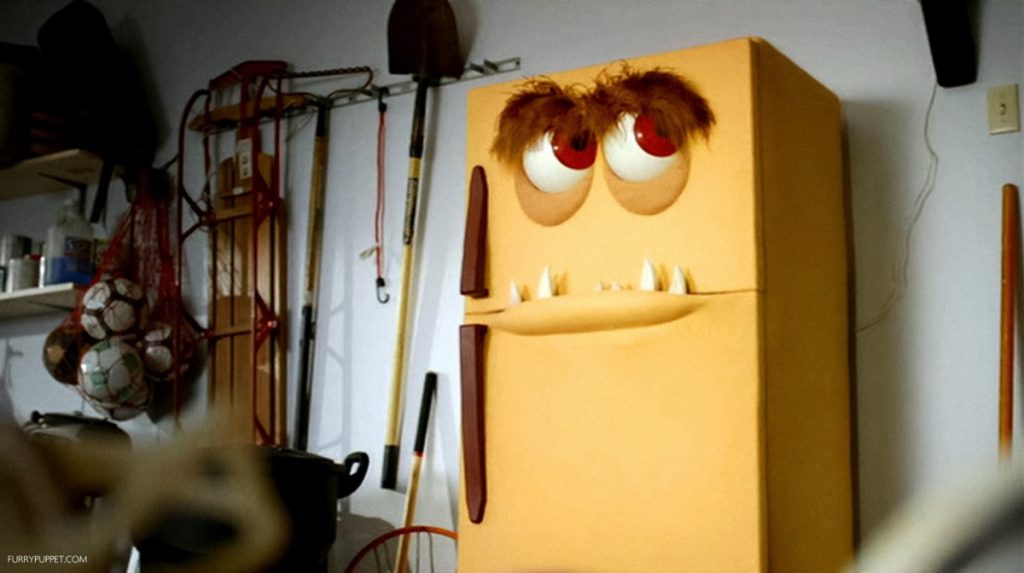
Puppet makers like those at Furry Puppet and Big Nazo operate exactly on the ridge of this valley. They use specific data points to navigate this psychological terrain:
- Tactile Resonance: The use of "dream fleece" and hand-carved foam provides a sub-surface scattering of light similar to human skin or animal fur, which the human brain perceives as "real."
- Micro-Expressions: By employing mechanical engineers to build internal rigs, puppets can achieve the subtle "glitches" in movement that signify life.
- The Doppelgänger Effect: Psychologists have long noted the "uncanny" nature of the double. When Furry Puppet created doubles for Anderson Cooper, they tapped into a primal human fear and fascination with the "other self," a motif Freud identified as central to the uncanny.
Official Responses: The Philosophy of the Creators
The creators themselves view their work not as entertainment, but as a form of psychological exploration.
Zack Buchman (Furry Puppet Studio):
"We do pretty unusual work. The goal is the instant disbelief clicks off, when your brain stops hunting for the rods and simply accepts that what it is seeing is alive. That isn’t a puppeteering note; it’s the entire project of surrealism." Buchman emphasizes that the "outsider" nature of his studio allows them to ignore the traditional "rules" of puppet making in favor of artistic impact.
Erminio Pinque (Big Nazo):
Pinque has often spoken about the "freedom to fail wonderfully." He views the accidents that happen during a street performance—a puppet tripping, a child’s unexpected reaction—as "automatism," the surrealist faith that the accident knows more than the plan. "The things that go wrong," Pinque notes, "are where the truly great juxtapositions come from."
Implications: The Future of the Tangible in a Virtual World
The continued relevance of studios like Furry Puppet suggests a significant shift in the visual arts. As we move deeper into the era of Generative AI and flawlessly rendered digital environments, the "surrealism you can hold" takes on a new political and aesthetic importance.
The Return to Mass and Weight
The primary implication of this work is the validation of "physical presence." A puppet like the blue yeti in the Herman Düne music video carries a gravity—both literal and metaphorical—that a digital character cannot. It occupies space, it displaces air, and it interacts with light in real-time. For artists, this means that the most "high-tech" tool in their arsenal might actually be a carving knife and a block of foam.

The Democratization of the Marvelous
By moving surrealism out of the gallery and onto the television screen (via CNN or Jimmy Kimmel) or the street (via Big Nazo), these creators are democratizing the avant-garde. They are proving that the "marvelous" does not require a museum membership; it only requires a viewer to look at a refrigerator with eyelids and, for a split second, believe it is breathing.
Lessons for the Digital Age
For creators working in digital mediums, the puppet makers of SoHo offer a vital lesson: belief is not a product of visual perfection, but of intentional imperfection. The "dream fleece," the hand-carved foam, and the fractional shift of a 3D-printed eyeball all serve to bridge the gap between the object and the soul. Anyone conjuring creatures today, whether through code or clay, must look to the puppet studio to understand the precise moment a "made thing" starts to breathe.
In the end, the work of Furry Puppet Studio and its peers is a reminder that surrealism was never about the paint or the film—it was about the trick of the mind. By keeping that trick alive in the physical world, they ensure that the marvelous remains within our reach, literally and figuratively.