
Reclaiming Our Core: Why Embodied Healing is the Foundation of Well-being

The profound wisdom held within our physical form, long overshadowed by a culture obsessed with external solutions, is re-emerging as the cornerstone of true healing and personal transformation. As Hermann Hesse eloquently stated, "I have been and still am a seeker, but I have ceased to question stars and books; I have begun to listen to the teaching my blood whispers to me." This sentiment resonates deeply with the growing understanding that our bodies are not merely vessels, but intricate landscapes holding the keys to our mental, emotional, and spiritual health.
Across society, countless individuals grapple daily with an array of debilitating symptoms: chronic stress, hypervigilance, pervasive aches and pains, disturbed sleep, episodes of depression, persistent brain fog, and an unsettling sense of numbness or meaninglessness. These experiences often culminate in a profound lack of joy and a palpable disconnection from oneself, others, and the fabric of life itself. While the pursuit of healing, meaning, clarity, and wholeness is universal, a critical oversight persists: the systematic neglect of the body as the primary site of these struggles and their resolution.
The Modern Disconnect: Seeking Answers "Out There"
In a world increasingly characterized by a collective state of dissociation, humanity has largely lost its intrinsic connection to its deeper self, often referred to as the Soul. This disembodiment leads to a pervasive belief that answers to our deepest woes lie externally. We are conditioned to seek solace in the next self-improvement book, the latest therapeutic tool, or an inspiring workshop, hoping these external interventions will finally unlock lasting change. While such resources may offer temporary relief or valuable insights, they frequently prove insufficient for sustained transformation.
The pattern is tragically familiar: individuals experience a brief respite, only to find themselves circling back to the same chronic symptoms, unresolved issues, and persistent blockages. This cyclical struggle often stems from a fundamental detachment from our physical selves. The notion of "listening to the body" might appear simplistic or even mundane when juxtaposed with more esoteric pursuits like astral travel or rapid abundance manifestation. Yet, this seemingly basic practice is, in fact, the bedrock upon which all genuine healing must be built.
Just as a stable foundation is paramount before constructing or renovating a house, a solid physiological basis is indispensable for our inner work and spiritual growth journeys. Without addressing the chronic states of fight, flight, freeze, or fawn that ensnare many, and without cultivating the capacity to regulate our nervous systems, no long-lasting change is truly possible. Deep inner work, authentic self-exploration, and profound spiritual development cannot occur from a place of chronic dysregulation. Physical grounding, embodiment, and a fundamental sense of safety are not optional but essential prerequisites.
This guide delves into the foundational principles of nervous system regulation, presenting it as the physiological bedrock for "Soul recovery"—the profound practice of reclaiming one’s wise, wild, warm, welcoming, and whole Self.
What "Regulating Your Nervous System" Actually Means: A Deeper Dive
The human nervous system is an extraordinarily complex and vital network, designed primarily to ensure our survival. As Jennifer Mann and Karden Rabin articulate in "The Secret Language of the Body," "Your nervous system exists to help your body produce physiological adaptations to ensure your survival. In other words, you have a nervous system so you can have your best chance at staying alive." It acts as an innate "guard dog," constantly scanning our environment for cues of safety or threat. Beyond this protective role, it orchestrates myriad essential involuntary functions, from controlling heart rate and digestion to regulating sleep patterns and facilitating social interaction.
Understanding the basic architecture of this system is empowering, offering individuals a greater sense of agency in their healing journey. While the topic can initially feel overwhelming, consistent engagement with the practices will deepen comprehension over time.
Nervous System 101: The Core Components
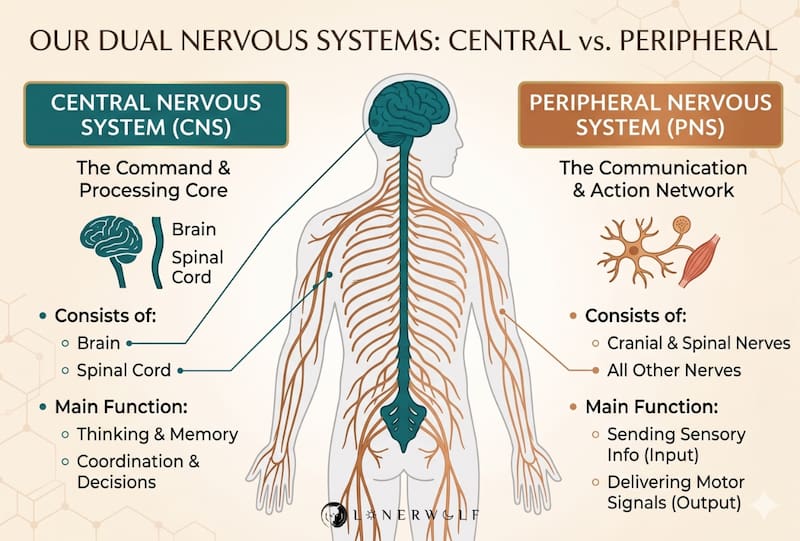
The nervous system is broadly divided into two main parts:

- The Central Nervous System (CNS): Comprising the brain and spinal cord, this is the command center that processes information and sends signals throughout the body.
- The Peripheral Nervous System (PNS): This vast network of nerves extends from the CNS to the rest of the body, including organs, muscles, and glands, facilitating communication between the CNS and the extremities.
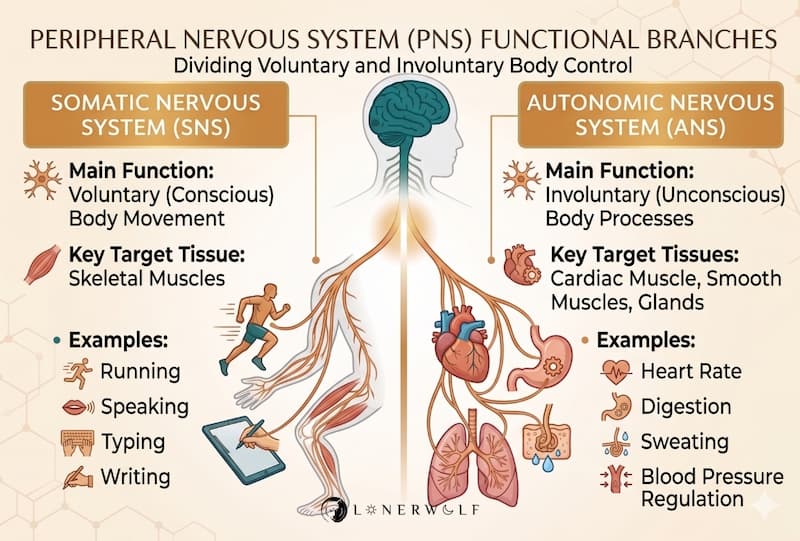
Within the Peripheral Nervous System, there are two crucial branches:
- The Somatic Nervous System: This system governs voluntary movements, allowing us to consciously control actions such as typing, speaking, or running.
- The Autonomic Nervous System (ANS): Operating largely unconsciously, the ANS regulates involuntary bodily processes critical for survival, including sweating, digestion, heart rate, and respiration.
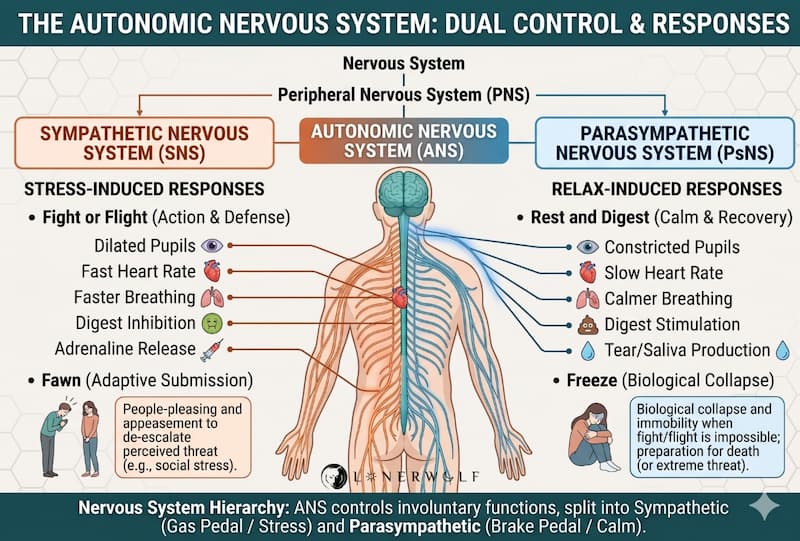
When discussions turn to "nervous system regulation," they primarily refer to working with the Autonomic Nervous System. The ANS itself is further subdivided into two antagonistic, yet complementary, branches:
- The Sympathetic Nervous System (SNS): Often termed the "fight-or-flight" system, the SNS prepares the body for action in response to perceived threats. It increases heart rate, dilates pupils, inhibits digestion, and mobilizes energy, readying the individual to confront or escape danger.
- The Parasympathetic Nervous System (PNS): Known as the "rest-and-digest" or "feed-and-breed" system, the PNS promotes relaxation, recovery, and energy conservation. It slows heart rate, constricts pupils, stimulates digestion, and fosters a sense of calm and safety.
The Autonomic Ladder: Navigating States of Safety and Threat
One of the most impactful frameworks for comprehending nervous system responses comes from neuroscientist and psychologist Dr. Stephen Porges’s Polyvagal Theory. Developed in the early 1990s, Porges’s research, particularly on the vagus nerve, revealed multiple levels to how our nervous systems respond to the world. This theory was further popularized by therapists like Deb Dana, who coined the concept of the "autonomic ladder," illustrating the hierarchical nature of these states:
- Ventral Vagal (Social Engagement System): This is the highest rung of the ladder, associated with feelings of safety, connection, calmness, and social engagement. In this state, individuals can think clearly, empathize, and interact effectively with others. It is characterized by optimal physiological regulation.
- Sympathetic (Mobilization/Fight-or-Flight): When a threat is perceived, the nervous system shifts to this state. Energy is mobilized for action, leading to increased heart rate, rapid breathing, heightened vigilance, and a readiness to fight or flee. This state is essential for acute survival but becomes detrimental when chronic.
- Dorsal Vagal (Immobilization/Freeze): If fight or flight is not an option, or if the threat is overwhelming, the nervous system may descend to this primitive state of collapse or "freeze." Characterized by numbness, dissociation, low energy, and a sense of helplessness, this is a profound shutdown response designed to conserve resources and minimize pain in extreme danger.
- Fawn (Appeasement/People-Pleasing): While not explicitly part of Porges’s original three states, the "fawn" response is widely recognized in trauma-informed care. It involves attempting to appease a perceived threat or aggressor, often through people-pleasing, compliance, or self-sacrificing behaviors, in an effort to avoid further harm.
Nervous system regulation is not about eliminating stress entirely, but about cultivating the flexibility to move fluidly between these states without getting "stuck" in dysregulated patterns, ultimately returning to a baseline of calm and safety (the Ventral Vagal state). It is a multi-layered process, demanding both physiological awareness and intentional practice.
The Nervous System and Inner Work: An Inseparable Link
The old adage, "the issue is in the tissue," holds profound truth when considering the intricate relationship between our physical bodies and our psychological landscape. Our unresolved traumas, unconscious shadows, deep-seated wounds, and experiences of "soul loss" are not merely abstract psychological constructs; they are embodied experiences etched into our physiological being. They reside not only in our minds but also in the very cells and tissues of our bodies.
Therefore, nervous system healing, or embodiment work, is not merely an adjunct to inner work; it is its foundational cornerstone. Without establishing a grounded presence in the body and cultivating a sense of internal safety, any endeavor to develop self-love, heal the inner child, or integrate the shadow will be fundamentally undermined and ultimately sabotaged. The journey of psychospiritual healing must begin with the body.
The Body IS the Unconscious
The profound connection between the body and the unconscious mind has been explored by pioneering thinkers throughout history. Psychoanalyst Wilhelm Reich, in the 1930s, first popularized the notion that our muscles, gestures, and postures serve as a direct reflection of unconsciously stored material, which he termed "body armor." This concept was further developed by physician and psychotherapist Alexander Lowen in the 1970s, who asserted that the body makes the unconscious visible. As Marilyn Ferguson concisely put it, "The unconscious is the body."
This perspective highlights the body as a vast reservoir of unexpressed emotions, forgotten memories, and unprocessed experiences. It is a living archive of our life’s journey, silently holding the narratives that shape our present reality.
The Inner Child and Shadow Speak Through the Body
Given that the body reflects our unconscious minds, it naturally follows that the inner child and shadow aspects of our psyche communicate through physical sensations and patterns. Jennifer Mann and Karden Rabin observe, "Oftentimes, nervous system dysregulation is the manifestation of wounds to our developmental self or inner child." Early relational traumas or unmet needs can imprint patterns of activation or shutdown in the nervous system, which persist into adulthood.
Therapists Connie Zweig and Steve Wolf, in "Romancing the Shadow," further elaborate on the body’s role in revealing the shadow: "The shadow wears the camouflage of physical symptoms. We may lie, but the body does not. We may forget an abuse, but the body does not… Inevitably, if we do not become conscious of the shadows lodged in our muscles and cells, they begin to tell their tales. What is your body trying to say? If your cells could speak, what secrets would they reveal? What betrayals?"
Our emotional triggers, chronic aches and pains, and habitual stress responses are not merely annoyances; they are vital doorways into deeper embodied healing. They are the body’s language, offering clues to what needs attention, release, and integration. This reinforces the unbreakable link: inner work and nervous system healing are two sides of the same coin, mutually dependent and equally essential.
Foundational Practices for Nervous System Regulation: A Chronology of Engagement
The journey towards nervous system regulation and embodiment is incremental, built upon a series of interconnected practices. Here, we outline the foundational skills that serve as the initial steps on this transformative path.
Grounding: Anchoring in the Present
"The body is anchored in the here and now while the mind travels into the past and future," observed Buddha. Learning to ground oneself is the initial, indispensable tool for nervous system regulation. Embodiment—the state of being deeply connected to oneself and to the earth—is a prerequisite for any meaningful healing work and for recovering access to our inherent wisdom. Its antithesis, dissociation, is a hallmark symptom of trauma, a protective mechanism that, when chronic, severely hinders our capacity for presence and healing.
As psychiatrist Bessel Van Der Kolk highlights in "The Body Keeps the Score," trauma often leaves individuals feeling "either some body else, or like no body. In order to overcome trauma, you need help to get back in touch with your body, with your Self."
Initiating the work of grounding involves engaging the senses and bringing conscious awareness to the physical present. Practical techniques include:
- Mindful Walking: Feeling the contact of feet on the ground, noticing the rhythm of steps, and observing the surroundings.
- Deep Breathing: Focusing on the breath entering and leaving the body, particularly the sensation in the abdomen.
- Sensory Awareness: Noticing five things you can see, four things you can touch, three things you can hear, two things you can smell, and one thing you can taste.
- Physical Contact: Hugging a tree, sitting on the earth, or feeling the texture of clothing against the skin.
- Temperature Stimulation: Holding ice cubes, taking a cold shower, or splashing cold water on the face to activate the vagus nerve.
- Progressive Muscle Relaxation: Tensing and then releasing different muscle groups throughout the body.
- Mindful Eating/Drinking: Savoring the taste, texture, and temperature of food or beverages.
These practices, though seemingly simple, re-establish a vital connection to the present moment, pulling the mind out of ruminative loops or anxious projections and anchoring it in the safety of the physical body.
Breath as a Regulator and Anchor
Following basic grounding skills, conscious breathwork emerges as the next most potent method for nervous system regulation. Breath is intrinsically linked to life, spirit, and movement; it serves as a constant anchor, centering and regulating us in the present.
Shallow, chest-level breathing, often a consequence of chronic stress, signals danger to the nervous system, perpetuating a tense, rushed, and hypervigilant state, keeping the sympathetic fight-or-flight system on high alert. Conversely, deep, diaphragmatic (belly) breathing sends calming signals to the brain, activating the parasympathetic "rest-and-digest" system. As Alexander Lowen noted in "Bioenergetics," "…only through breathing deeply and fully can one summon the energy for a more spirited and spiritual life."
While numerous breathwork techniques exist for expelling tension and inducing relaxation, one of the most effective and accessible is lengthening the exhale. This directly slows the heart rate, facilitating entry into a parasympathetic resting state. Approaches include:
- Equal Breathing (Sama Vritti): Inhaling for a count of four, holding for four, exhaling for four, and holding for four.
- 4-7-8 Breathing: Inhaling through the nose for four counts, holding the breath for seven counts, and exhaling completely through the mouth for eight counts.
- Box Breathing: Inhaling for four counts, holding for four, exhaling for four, and holding empty for four.
- Conscious Exhale Lengthening: Simply exhaling for a longer duration than the inhale, without specific counts.
The Vagus Nerve: Your Body’s Reset Button
The vagus nerve, the longest cranial nerve in the human body, is a crucial component of the parasympathetic nervous system, extending from the brainstem to the abdomen. It plays a pivotal role in relaxation, slowing down bodily functions, facilitating digestion, and fostering social connection. Learning to "stimulate" or enhance vagal tone is an incredibly powerful strategy for calming, restoring, and "resetting" the body from the cumulative effects of stress.
Activating the vagus nerve can profoundly shift the body’s physiological state towards rest and recovery. Simple and effective methods include:
- Deep and Slow Breathing: As discussed, diaphragmatic breathing with lengthened exhales directly stimulates the vagus nerve.
- Gargling: The muscles in the back of the throat activate the vagus nerve during gargling.
- Humming or Chanting: Vibrations created in the throat stimulate the vagus nerve.
- Cold Exposure: Splashing cold water on the face, taking a cold shower, or brief immersion in cold water can activate the vagus nerve and promote resilience.
- Singing: Similar to humming, singing causes vibrations in the vocal cords and stimulates the nerve.
- Laughter: Hearty laughter can engage the diaphragm and stimulate vagal activity.
- Massage: Gentle massage, particularly around the neck and feet, can indirectly stimulate the vagus nerve.
- Mindful Movement: Practices like yoga, tai chi, and qigong combine movement with breath and awareness, enhancing vagal tone.
Releasing What the Body Holds: Somatic and Physical Approaches
"The body remembers, the bones remember, the joints remember, even the little finger remembers. Memory is lodged in pictures and feelings in the cells themselves," writes Clarissa Pinkola Estes in "Women Who Run With the Wolves." Sometimes, simple grounding, breathwork, or vagus nerve activation are insufficient to dislodge years of deeply ingrained, "metastasized stress" stored within our physical being. In such instances, more direct, hands-on modalities are required.
Specialized somatic bodywork therapies, such as Somatic Experiencing, Hakomi, and Myofascial Release, are designed to help individuals process and release stored trauma and tension by focusing on bodily sensations. These approaches facilitate a gentle, guided awareness of physical responses, allowing the body to complete incomplete protective responses (like fight or flight) that were thwarted during a traumatic event.
Furthermore, paying close attention to specific areas of chronic muscle tension can offer profound insights into underlying emotional patterns. For example:
- Neck and Shoulder Pain: Often indicates carrying heavy burdens, stress from responsibilities, or an inability to "stomach" certain situations or people (leading to a metaphoric "pain in the neck"). Releasing this might involve therapeutic massage, specific yoga poses, or even primal vocal release like screaming.
- Stomach and Digestive Issues: Can be linked to anxiety, unprocessed fear, or situations that one "couldn’t stomach" or digest emotionally. Dietary changes, acupuncture, or gut-brain axis therapies might be beneficial.
- Lower Back Pain: Frequently associated with feeling unsupported, financial stress, or a lack of grounding and stability. Strengthening core muscles and engaging in practices that foster security can help.
Understanding that these physical manifestations are not merely random but often represent the body’s attempt to communicate unaddressed emotional or psychological material transforms them into powerful allies in the healing process.
Creative and Expressive Regulation
"My belief is in the blood and flesh as being wiser than the intellect. The body-unconscious is where life bubbles up in us. It is how we know that we are alive, alive to the depths of our souls and in touch somewhere with the vivid reaches of the cosmos," proclaimed D. H. Lawrence. For sensitive and artistically inclined individuals, creative expression offers a potent pathway for self-expression, processing old traumas, and regulating the nervous system.
Engaging in activities like drawing, sculpting, scrapbooking, painting, or any form of crafting bypasses the analytical mind, allowing access to deeper emotional and somatic states. This process is not merely a cathartic release of emotions and unconscious material, but a dynamic forging of the mind-body connection. The tactile experience of putting pen to paper, manipulating clay, or working with textiles brings a heightened sense of aliveness and provides a voice for the soul’s unspoken narratives. Art therapy techniques, in particular, offer structured ways to explore and integrate these experiences, transforming inner turmoil into tangible forms.
Nervous System Regulation as a Spiritual Path: Beyond Mere Practice
It is crucial to recognize that nervous system regulation transcends the realm of a mere therapeutic technique or a supplementary practice. It is, in its essence, the foundational premise of all inner work and, indeed, a profound spiritual path in its own right. As Zen master Thich Nhat Hanh illuminated in "Awakening of the Heart," "You may think somehow that being aware of your body is not an important spiritual practice, but that is not correct. Any physiological, psychological, or physical phenomenon can be a door to full realization."
Embodied spirituality represents the most authentic form of spiritual engagement, rooting us firmly in the "here-and-now" of our daily existence. Unlike disembodied or conceptual spirituality that floats in abstract realms, embodied spirituality is felt in and expressed through the body. It bridges the perceived gap between the sacred and the mundane, recognizing the divine immanence within our physical form.
The concept of "integration"—a vital component of all healing and inner work—is fundamentally about embodying the message. "Em-bodiment" literally means "in the body." It is the process by which intellectual understanding transforms into lived experience, knowledge into wisdom, and fragmented parts of the self coalesce into wholeness. Without this physical integration, insights remain ephemeral, and change remains superficial.
The emphasis on nervous system regulation is not an academic exercise but a deeply practical and indispensable first step in the journey of healing and soul recovery. For those navigating the complexities of modern life, especially sensitive individuals, cultivating this foundational skill is paramount for resilience and well-being.
Conclusion: Your Body Is Wise Beyond Measure
In the words of somatic educator Ann Weiser Cornell, "The truth is that our bodies are wise in many ways hardly ever acknowledged by our culture. Our bodies carry knowledge about how we are living our lives, about what we need to be more fully ourselves, about what we value and believe, about what has hurt us emotionally and how to heal it. Our bodies know which people around us are the ones who bring out the best in us, and which people deplete and diminish us. Our bodies know what is the right next step to bring us to more fulfilling and rewarding lives."
Learning how to regulate your nervous system is far more than a mere therapeutic approach; it is a gateway to profound wisdom. By befriending your body, you initiate a homecoming—a return to the present moment, a deepening of your presence, and a revitalization of your very essence. You become more embodied, more ensouled, and ultimately, more vibrantly alive. This journey invites us to listen to the whispers of our blood, to trust the intelligence of our flesh, and to rediscover the intrinsic wisdom that has always resided within.



Leave a Comment