The Digital Brushstroke: Jacob Holster and the Evolution of Painterly AI Aesthetics
In an era where the digital landscape is increasingly saturated with hyper-realistic renders, clinical perfections, and the often-unsettling gloss of generative artificial intelligence, a new movement is emerging—one that prioritizes the "tactile" over the "technical." At the forefront of this shift is Jacob Holster, an artist and academic whose work, under the digital moniker @bandyquantguy, is redefining the relationship between the machine and the masterpiece.
Holster’s work does not seek to mimic reality with the cold precision of a camera lens; instead, it seeks to evoke the warmth of a canvas. By bridging the gap between his role as a researcher at Penn State University and his creative output as an AI filmmaker, Holster is crafting a humanistic blueprint for the future of generative media.
Main Facts: The Intersection of Pedagogy and Pixels
Jacob Holster is not your typical "prompt engineer." While many AI creators focus on the speed and volume of output, Holster’s portfolio is a curated study in texture, sound, and narrative depth. As an Assistant Teaching Professor of Music Education at Penn State University, his primary professional focus is the convergence of artificial intelligence, pedagogy, and creative practice. This academic grounding provides a rigorous framework for his artistic endeavors, ensuring that his films and images are not merely aesthetic exercises but are rooted in a deep understanding of how humans learn, create, and perceive art.
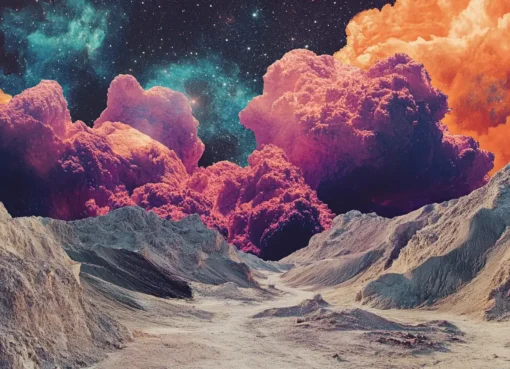
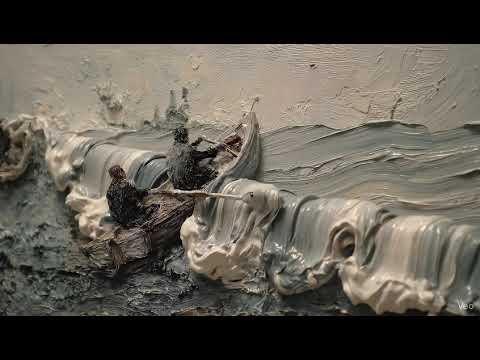
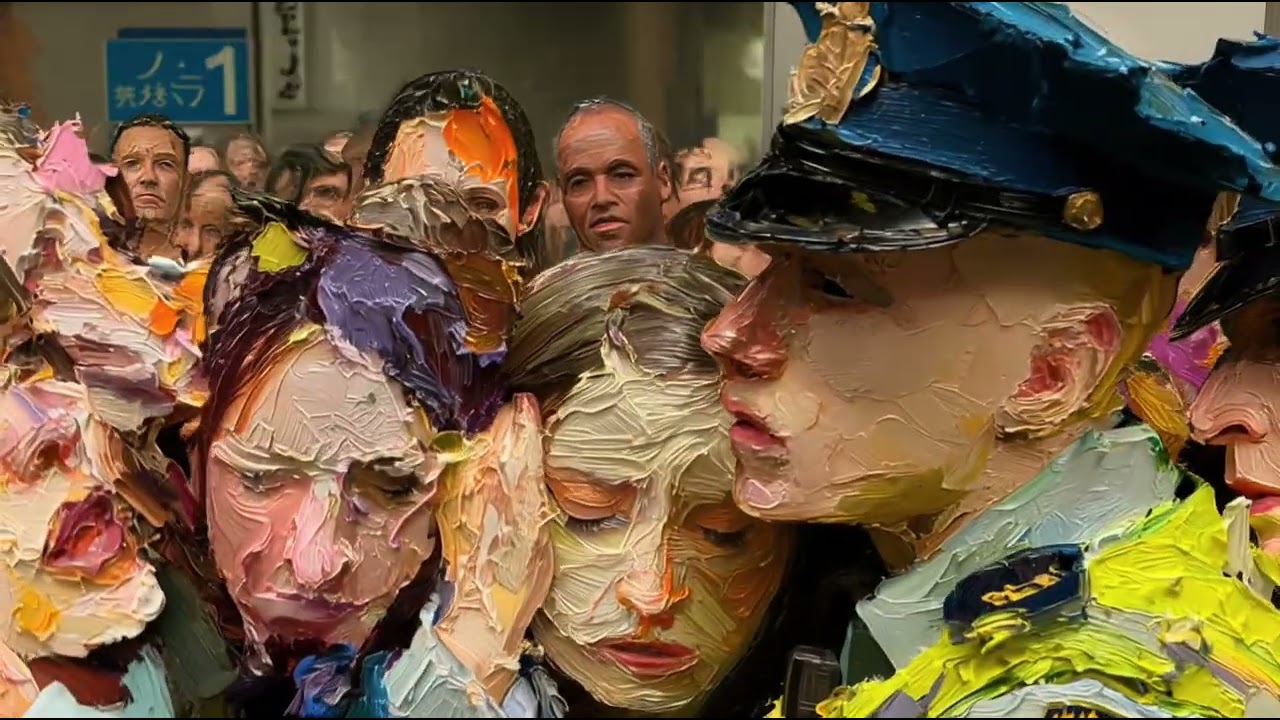
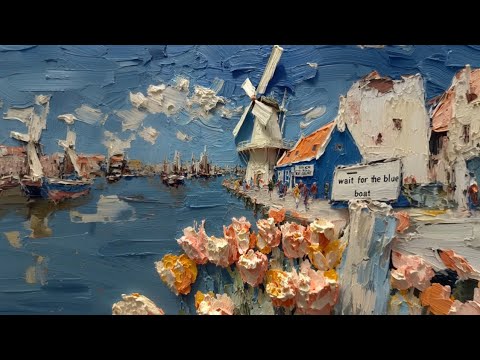
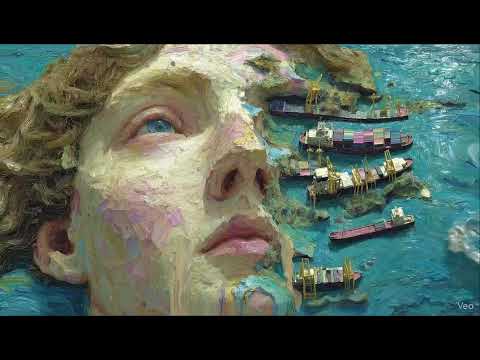
His signature series, "Paint World," which includes notable works such as Le Voyage [Paint World 28] and Recipe for Consciousness [Paint World 38], has garnered significant attention within the surrealist and digital art communities. These works are characterized by what critics call a "painterly" aesthetic—a style that favors the visible "brushstroke," the blending of colors reminiscent of traditional oils, and a soft, atmospheric lighting that defies the sharp edges of standard digital imagery.

Holster’s work is primarily distributed through his Instagram handle, @bandyquantguy, and his YouTube channel, where he experiments with the temporal nature of AI. His recent short film, Art Is Human Terrain, serves as a manifesto for his approach, arguing that technology is not a replacement for the human spirit but a new landscape upon which the human experience can be mapped.
Chronology: From Music Education to Generative Surrealism
The evolution of Holster’s work reflects the broader timeline of the AI revolution, yet it follows a uniquely academic trajectory.
The Academic Foundation (Pre-2022)
Before the public explosion of tools like Midjourney and Stable Diffusion, Holster’s work was centered on music education. His research into pedagogy explored how students interact with technology to produce sound. This period was crucial in developing his philosophy that tools—whether a violin or a neural network—are extensions of the human desire to communicate.
The "Paint World" Inception (2022–2023)
As generative AI tools became more sophisticated, Holster began experimenting with visual media. Unlike many early adopters who chased photorealism, Holster leaned into the "hallucinatory" nature of AI. He recognized that the "errors" and "glitches" in early diffusion models resembled the impressionistic techniques of the 19th century. This led to the birth of the "Paint World" series, a collection of vignettes that feel like living paintings.
The Narrative Shift (2024–Present)
In the last eighteen months, Holster’s work has moved from static or looped imagery toward more complex narrative structures. The release of Art Is Human Terrain marked a turning point. Here, Holster integrated his musical background with visual AI, creating a multi-sensory experience that questions the nature of consciousness. This period also saw his appointment at Penn State, where he began formalizing the study of these tools within a university setting.
Supporting Data: The Rise of "Tactile" Digital Media
The success of Holster’s aesthetic is backed by a growing trend in the digital art market. According to a 2023 report on digital consumption patterns, there has been a 35% increase in engagement with "lo-fi" and "textured" digital content compared to high-fidelity, polished renders. This "aesthetic fatigue" suggests that audiences are seeking a sense of the human hand in the digital void.
Holster’s work addresses this need by utilizing specific technical parameters that emphasize texture. While typical AI outputs might have a "smooth" or "plastic" finish, Holster’s films often feature:
- High Grain Density: Emulating the physical grain of film or the texture of canvas.
- Impressionistic Color Grading: Moving away from the high-contrast HDR look toward a muted, earth-toned palette.
- Acoustic Integration: Utilizing his background in music education to score his films with sounds that feel organic and "unplugged," providing a sensory counterweight to the synthetic origins of the visuals.
At Penn State, Holster’s research explores how these aesthetic choices affect the learner’s retention and emotional connection to the material. His preliminary findings suggest that "humanistic" AI visuals reduce the cognitive dissonance often associated with the "uncanny valley," making the technology more approachable for educational purposes.
Official Responses and Philosophical Stance: "Art is Human Terrain"
Holster’s work has prompted a broader conversation about the role of AI in academia and the arts. Within the halls of Penn State’s School of Music, his presence signals a shift in how traditional institutions view generative tools.
"Art is not just the final product; it is the terrain of human inquiry," Holster has suggested through his work. This stance positions him as a moderate in the often-polarized debate over AI. He does not view AI as an "automated artist" but as a "pedagogical partner."
Critics from the Surrealism Today collective have noted that Holster’s work "bridges scholarly inquiry with visual experimentation." They argue that his academic foundation lends his projects a conceptual depth that distinguishes them from the "meaningless spectacle" of much generative art. By treating AI as a medium rather than a shortcut, Holster is effectively creating a new category of digital impressionism.
Furthermore, Holster’s dual role allows him to address the ethical concerns of AI from the inside. He advocates for a "literacy-based" approach to AI in education, where students are taught not just how to use the tools, but how to maintain their own artistic voice while doing so.
Implications: The Future of Creative Pedagogy
The work of Jacob Holster has profound implications for both the future of art and the future of education.
1. The Redefinition of "Skill"
Holster’s success suggests that the "skill" of the future artist may not lie in manual dexterity alone, but in "curatorial sensibility." As AI lowers the barrier to technical execution, the artist’s value shifts toward their ability to infuse a work with conceptual meaning and a unique aesthetic "fingerprint"—such as Holster’s painterly texture.
2. AI as a Standard Tool in Music and Arts Education
Through his role at Penn State, Holster is paving the way for AI to be integrated into music education curricula. This could lead to a generation of musicians who use AI to visualize the "shape" of sound or to create immersive, painterly environments for their performances.
3. The Counter-Revolution Against Hyper-Realism
As AI video generators (like Sora and Runway) move closer to perfect photorealism, there will likely be a "flight to the organic." Holster’s work provides a roadmap for this counter-movement. By deliberately choosing to make digital art look like oil on canvas, artists can reclaim a sense of history and "soul" that is often lost in the digital transition.
4. Human-Centric AI Development
Holster’s philosophy of "Art Is Human Terrain" encourages developers to build AI tools that prioritize artistic nuance over clinical accuracy. This could lead to the development of "Style-Specific" neural networks that are trained to understand the physics of a brushstroke or the resonance of a cello, rather than just the pixels of a photograph.
Conclusion: The New Renaissance
Jacob Holster stands at a unique crossroads. He is a scientist of the classroom and a poet of the prompt. Through his work as @bandyquantguy, he reminds us that the "ghost in the machine" can be taught to paint with warmth.
As we move deeper into the 21st century, the clinical precision of technology will continue to advance. However, the work of Jacob Holster suggests that we will always crave the imperfect, the textured, and the human. By turning the digital brush toward the "human terrain," Holster is ensuring that even in an age of algorithms, the heart of the artist remains visible on the canvas.
For those looking to explore this new frontier, Holster’s "Paint World" is more than just a series of videos—it is an invitation to see the machine not as a replacement for the human hand, but as the most complex brush we have ever held.

Where to Explore His Work:
- Instagram: @bandyquantguy
- YouTube: Jacob Holster
- Academic Profile: Penn State University, School of Music.