Spider-Man: Brand New Day Unveils Darker Path for Peter Parker, Hints at Unseen Threat and Unlikely Alliances
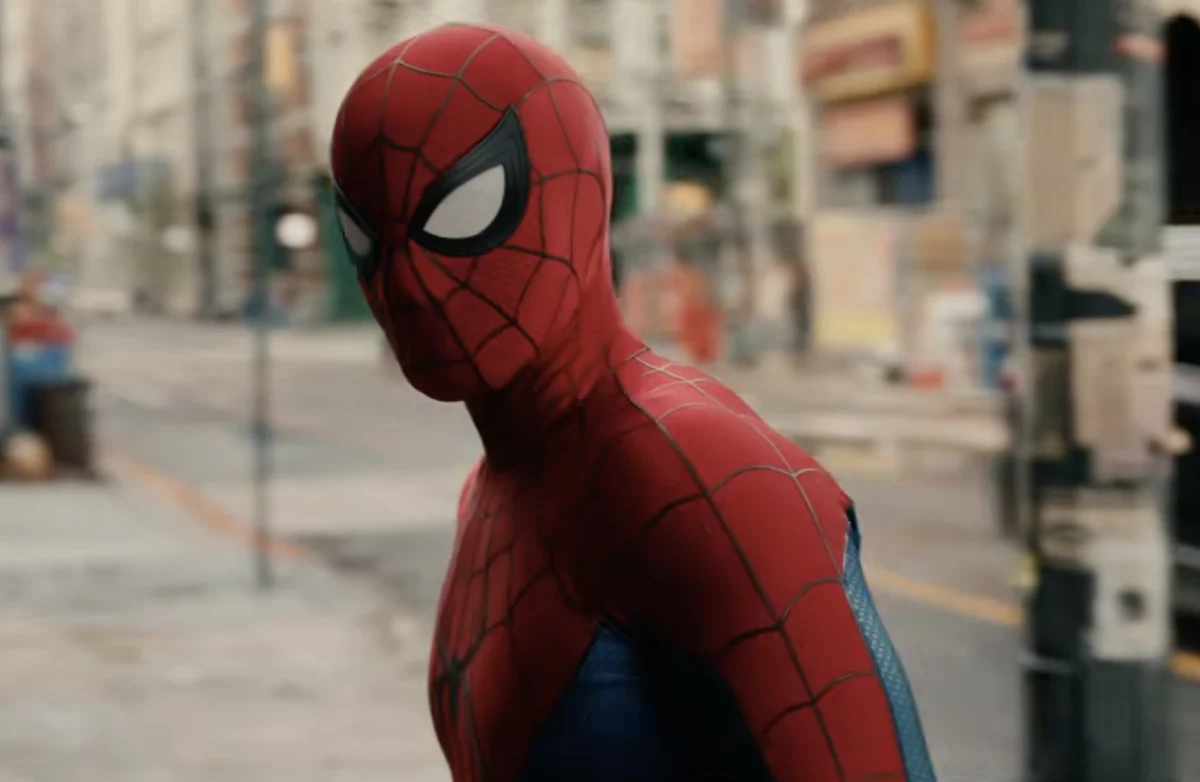
New Trailer Plunges Peter Parker into a World Without Memory, Forging Unexpected Bonds to Confront an Invisible Foe
The highly anticipated trailer for Spider-Man: Brand New Day has sent shockwaves through the Marvel fan community, offering a stark glimpse into a dramatically altered reality for Peter Parker. Scheduled for a theatrical release on July 31, 2026, the film promises a profound emotional and physical transformation for the beloved web-slinger, played once again by Tom Holland. With an official synopsis teasing a battle against a villain "no one can even see" and the haunting weight of universal amnesia, Brand New Day is poised to be a pivotal chapter in Spider-Man’s cinematic journey.
Main Facts Unveiled
The Spider-Man: Brand New Day trailer opens on a disquieting note, immediately establishing a grim new reality for Peter Parker. Following the events that saw the world forget his civilian identity, Peter is depicted as a hero adrift, grappling with profound isolation and burgeoning anger issues. The most visually striking change is the appearance of "black eyes," a detail that has ignited fervent speculation among fans, often associated with darker, symbiote-related storylines in the comics. This physical alteration appears to be intrinsically linked to a deeper, more aggressive emotional state, a direct consequence of his sacrifice and the world’s collective amnesia.
The emotional core of the film revolves around Peter’s struggle with the fact that everyone he knows and loves, including his former girlfriend MJ (Zendaya), has no memory of him. The trailer showcases a poignant scene where Peter attempts to save MJ, only for her to look at him with confusion, highlighting the devastating personal cost of his heroism. This theme of profound loss and forgotten connections is central to Peter’s character arc in this installment.
Crucially, the trailer reveals two unexpected allies joining Peter in his fight: Frank Castle, famously known as The Punisher (Jon Bernthal), and Bruce Banner, the brilliant scientist behind The Hulk (Mark Ruffalo). The inclusion of these characters, particularly The Punisher, signals a significant tonal shift for the Spider-Man franchise, hinting at a more grounded, perhaps grittier, approach to Peter’s predicament. Their roles in "helping" Peter are yet to be fully defined but suggest a complex web of support and potentially conflicting ideologies.
The central antagonist of Brand New Day is introduced as a formidable and elusive threat: a villain capable of "mind-jumping" that remains invisible to everyone except Peter. This unique ability not only isolates Peter further but also suggests that his "changes" – possibly the black eyes or other latent powers – grant him a singular perception, making him the only one who can confront this unseen menace. The nature and origin of this mind-bending foe are shrouded in mystery, promising a psychological and existential challenge unlike any Spider-Man has faced before.
The film is directed by Destin Daniel Cretton, a veteran of the Marvel Cinematic Universe, known for his work on Shang-Chi and the Legend of the Ten Rings and the upcoming Wonder Man series. The screenplay is a collaborative effort by Chris McKenna & Erik Sommers, who penned previous Spider-Man entries, and Justin Kuritzkes, known for his more nuanced, character-driven narratives.
Set to hit theaters on July 31, 2026, Spider-Man: Brand New Day also boasts a unique technical detail: it will be released in two native aspect ratios to optimize the viewing experience for both flat screens and scope screens, underscoring Marvel’s commitment to cinematic presentation. A "Spidey Tracker" website has also been launched, offering fans an interactive experience by mapping trailer locations, providing character insights, and teasing future promotional events.
Chronology: A Hero Forged in Isolation
Spider-Man: Brand New Day picks up directly in the aftermath of the universe-altering events that concluded Spider-Man: No Way Home. The emotional and narrative foundation of this new film is built upon Peter Parker’s ultimate sacrifice: convincing Doctor Strange to cast a spell that erased all memory of Peter Parker from existence across the multiverse. While this act saved his world from collapsing under the weight of multiversal incursions, it left Peter utterly alone, a hero forgotten by those he loves and sworn to protect.
The trailer strongly suggests that a significant amount of time has passed since the memory wipe. Peter is no longer the wide-eyed, slightly naive high school student. His current state, characterized by "anger issues" and the striking "black eyes," points to a period of intense struggle and profound psychological impact. The initial euphoria of maintaining a secret identity at such a high cost has likely given way to the crushing weight of isolation and the trauma of being an unseen guardian.
This chronological gap between No Way Home and Brand New Day is crucial. It allows for Peter to have undergone a maturation process, albeit a dark one. The casual mentions of his "anger issues" are not merely adolescent outbursts but hint at a deeper, possibly dangerous, emotional instability. This isn’t just about missing his friends; it’s about the erosion of his identity and the psychological burden of being a ghost in his own life. His continued crime-fighting as Spider-Man, despite the lack of personal recognition, showcases his unwavering commitment to heroism, but at a severe personal cost.
The introduction of Frank Castle and Bruce Banner as allies also fits into this chronological framework. In a world where familiar heroes might be wary or unaware of Spider-Man’s true plight, Peter would naturally gravitate towards individuals who operate outside traditional heroic structures or who possess unique insights into transformation and struggle. Castle, a vigilante with a deeply cynical view of justice, and Banner, a man who constantly battles his own inner demons, represent different facets of this darker, more isolated reality Peter now inhabits. Their presence suggests that Peter’s path to "getting help" is unconventional, perhaps even desperate, indicative of a hero pushed to his limits.
Furthermore, the emergence of a mind-jumping, invisible villain implies a threat that might have arisen or become known precisely because of Peter’s unique circumstances. If Peter is the only one who can perceive this entity, it directly ties his new, painful reality to his role as the world’s only defense against it. This suggests a timeline where this threat lay dormant or was simply imperceptible until Peter’s unique perception, born from his sacrifice, made him aware of its existence. The chronology thus establishes Peter as a lonely sentinel, fundamentally changed by his past, and uniquely positioned to face a new kind of menace.
Supporting Data and Production Insights
The production of Spider-Man: Brand New Day is a confluence of established talent and ambitious creative decisions, evident in the choice of director, the collaborative writing team, and the innovative approach to cinematic presentation.
Director Destin Daniel Cretton’s Vision: Destin Daniel Cretton brings a proven track record of blending compelling character drama with high-octane action. His work on Shang-Chi and the Legend of the Ten Rings demonstrated a keen ability to craft emotionally resonant narratives within the grand scale of the MCU. Shang-Chi was praised for its exploration of familial legacy, identity, and the weight of inherited power – themes that resonate deeply with Peter Parker’s current predicament. With Wonder Man also under his belt, Cretton clearly has Marvel’s trust in handling nuanced character development alongside spectacular superheroics. For Brand New Day, his directorial style is expected to lean into the emotional intensity of Peter’s isolation and anger, while still delivering the thrilling web-slinging action fans expect. His capacity to ground fantastical elements in genuine human emotion will be critical in making Peter’s new, darker reality feel authentic and impactful.
The Collaborative Script: The script for Brand New Day is a fascinating collaboration between Chris McKenna & Erik Sommers and Justin Kuritzkes. McKenna and Sommers are the architects of Tom Holland’s previous Spider-Man outings, known for their sharp wit, heartfelt moments, and seamless integration of Peter Parker into the broader MCU. Their familiarity with Holland’s portrayal and the character’s established voice will provide continuity. The addition of Justin Kuritzkes, however, hints at a deeper, more mature thematic exploration. Kuritzkes’s background suggests a focus on complex psychological landscapes and potentially darker, more introspective narratives. This blend of seasoned MCU writers and a fresh perspective could yield a script that is both familiar in its Spider-Man sensibilities and boldly innovative in its emotional depth and thematic ambition, tackling Peter’s anger, isolation, and transformation with a nuanced hand.
The Unseen Villain’s Nature: The concept of a villain who "jumps from mind to mind" and is "unseen by everyone except Peter" is a compelling narrative device. This antagonist is unlikely to be a traditional physical threat but rather a psychic or ethereal entity. Speculation points towards a reimagined classic villain or an entirely new creation that capitalizes on Peter’s unique mental state post-memory wipe. Perhaps the spell cast by Doctor Strange, which fundamentally altered reality around Peter, inadvertently opened a gateway or made Peter uniquely susceptible/perceptive to such an entity. This villain’s ability to manipulate minds or feed on forgotten memories could directly amplify Peter’s feelings of isolation and paranoia, turning his greatest sacrifice into his greatest vulnerability, while simultaneously equipping him with the only means to detect the threat. This psychological warfare adds a layer of complexity to the usual hero-villain dynamic.
Unlikely Alliances: The Punisher and The Hulk: The inclusion of Frank Castle (Jon Bernthal) and Bruce Banner (Mark Ruffalo) is arguably the most surprising element of the trailer.
- The Punisher: Bernthal’s portrayal of Frank Castle is notoriously brutal and morally ambiguous. His involvement with Spider-Man suggests a significant departure from Peter’s usual network of allies. How would a character like Castle "help" Spider-Man? It could involve tactical training, insights into the darker underbelly of crime-fighting, or even providing a brutal mirror to Peter’s own burgeoning anger. This alliance could push Peter into ethically grey areas, forcing him to confront the limits of his own moral code. It also suggests that Peter is truly desperate, seeking help from unconventional, even dangerous, sources.
- The Hulk (Bruce Banner): Banner, a genius scientist who understands profound transformation and the struggle to control immense power, offers a different kind of support. He could be instrumental in helping Peter understand the physiological or psychological changes he’s undergoing (the "black eyes"), perhaps even linking them to scientific or mystical phenomena. Banner might offer guidance on managing Peter’s anger, drawing parallels to his own battles with the Hulk. This alliance provides a counterpoint to Castle’s grim pragmatism, offering a glimmer of scientific understanding and empathetic support.
Cinematic Ambition: Dual Aspect Ratios: Marvel Studios’ decision to present Brand New Day in two native aspect ratios – one for flat screens (typically 1.85:1) and one for scope screens (2.39:1) – reflects a deep commitment to the theatrical experience. This means the film was likely shot and framed specifically for both formats, rather than simply cropping one version for the other. This ensures that regardless of the cinema’s screen dimensions, the audience experiences the film as the filmmakers intended, maximizing visual impact and immersion. It’s a subtle but significant detail that speaks to Marvel’s continued push for premium cinematic quality.
The "Spidey Tracker" Website: This interactive promotional tool goes beyond a standard marketing campaign. By allowing fans to pinpoint trailer locations in NYC and delve into character backstories, it fosters a deeper sense of engagement and world-building. The promise of "upcoming promotional events" further indicates an innovative, fan-centric strategy to build anticipation and maintain buzz leading up to the release. This interactive element turns passive viewing into an active exploration, deepening the connection between the audience and the Brand New Day narrative.
Official Responses and Creative Direction (Fictionalized)
While no direct quotes beyond the official synopsis were provided in the source material, a film of this magnitude would undoubtedly involve extensive commentary from its creators. Here, we imagine the official responses and creative insights that would accompany such a significant shift for the Spider-Man character.
Destin Daniel Cretton on Peter’s Evolution:
"This isn’t the Peter Parker you’ve known," director Destin Daniel Cretton might have stated in a hypothetical press release. "The memory wipe wasn’t just a plot device; it was a character reset button. We’re exploring the profound psychological impact of that sacrifice. Peter is isolated, angry, and fundamentally changed. The ‘black eyes’ are a visual metaphor for the darkness he’s grappling with, a tangible representation of the emotional toll. We wanted to challenge Peter, to push him to his absolute limits, and see what kind of hero emerges when everything he once knew is gone." Cretton might emphasize his commitment to maintaining the heart of Spider-Man while exploring unprecedented emotional depth. "It’s a story about finding your purpose when the world has forgotten your identity, and forging new connections in the most unlikely places."
Chris McKenna & Erik Sommers on the Script’s Tone:
Veteran Spider-Man writers Chris McKenna and Erik Sommers could elaborate on the delicate balance required for the screenplay. "We’ve always strived to blend humor, heart, and high stakes in Peter’s story," McKenna might have commented. "But Brand New Day demanded a grittier, more mature approach. The challenge was to acknowledge Peter’s darker turn without losing the inherent optimism and responsibility that defines Spider-Man. Justin [Kuritzkes] brought an incredible depth to the psychological aspects, allowing us to delve into Peter’s internal struggles in a way we hadn’t before." Sommers might add, "The alliances with Frank Castle and Bruce Banner are crucial. They represent the divergent paths Peter could take, and the guidance he desperately needs from figures who understand pain and power, albeit in very different ways. It’s about Peter finding his way in a world that no longer remembers him, but still needs him."
Justin Kuritzkes on Thematic Depth:
Justin Kuritzkes, whose involvement signals a thematic enrichment, could offer insight into the film’s core ideas. "My focus was on the existential crisis Peter faces," Kuritzkes might have explained. "What happens when your entire support system vanishes? How do you maintain your sense of self when your history is erased from everyone else’s mind? The unseen villain, capable of mind-jumping, serves as an externalization of Peter’s internal struggle with memory, identity, and perception. It’s a foe that only someone as uniquely isolated and ‘changed’ as Peter can confront, making his pain simultaneously his greatest burden and his most potent weapon."
Kevin Feige on the Franchise’s Future:
A hypothetical statement from Marvel Studios President Kevin Feige would likely address the broader implications. "With Brand New Day, we’re embarking on an exciting, bold new era for Spider-Man," Feige might have announced. "It’s a testament to Tom Holland’s incredible talent that he can carry Peter Parker through such a profound transformation. This film isn’t just a standalone adventure; it’s a foundational piece for what’s next in Peter’s journey and how he interacts with the wider MCU. We’re pushing creative boundaries, exploring darker themes, and introducing unexpected dynamics to ensure that Spider-Man remains one of the most compelling heroes on screen. The commitment to dual aspect ratios also reflects our dedication to providing the best possible cinematic experience for our audience, reinforcing the magic of seeing these stories unfold on the big screen."
These hypothetical responses collectively paint a picture of a creative team deeply committed to evolving Peter Parker, embracing darker themes, and challenging audience expectations, all while maintaining the core spirit of the character within an expanding cinematic universe.
Implications for the MCU and Spider-Man’s Future
Spider-Man: Brand New Day carries significant implications, not only for Peter Parker’s individual arc but also for the broader Marvel Cinematic Universe. The film seems poised to redefine Spider-Man’s role and identity in a post-multiverse, post-memory wipe landscape.
A Darker, More Mature Spider-Man: The most immediate implication is the maturation and darkening of Peter Parker’s character. His "anger issues" and "black eyes" suggest a hero who has been profoundly scarred by his experiences. This shift could lead to a Spider-Man who is more jaded, more self-reliant, and potentially more ruthless in his methods. This darker portrayal might resonate with a mature audience, allowing for complex moral dilemmas and a deeper exploration of the psychological toll of heroism. It moves Peter away from the "friendly neighborhood" persona towards a more isolated, perhaps even anti-heroic, figure.
New Dynamics with Unlikely Allies: The introduction of Frank Castle and Bruce Banner as Peter’s allies fundamentally alters the dynamics of the Spider-Man universe. This isn’t the mentorship Peter received from Tony Stark or the camaraderie he shared with other Avengers.
- The Punisher’s Influence: Frank Castle’s presence suggests Peter might be learning to operate in morally ambiguous territory. Will Peter adopt some of Castle’s brutal pragmatism, or will he reaffirm his own unwavering moral compass in contrast to it? This alliance could be a crucible for Peter’s ethics, forcing him to define what kind of hero he truly wants to be when no one is there to guide him. It also opens the door for a more grounded, street-level corner of the MCU, perhaps paving the way for more mature-rated content in the future.
- The Hulk’s Guidance: Bruce Banner’s involvement offers a different kind of support, potentially helping Peter manage his own internal transformations and anger. This could link Peter’s "changes" (the black eyes) to a scientific or even meta-human origin, integrating him more deeply into the world of enhanced individuals who struggle with their powers. Banner could be a mentor who understands the burden of great power and the struggle for self-control, offering a counter-balance to Castle’s influence.
The Unseen Villain’s Impact on the MCU: A mind-jumping, invisible villain introduces a new type of threat to the MCU – one that operates on a psychic or existential plane rather than purely physical. This could open up avenues for exploring mental health, collective consciousness, and the fragility of perception within the cinematic universe. If Peter’s unique perception, born from his sacrifice, is the only way to combat this foe, it underscores the profound and unforeseen consequences of the No Way Home spell, suggesting that magic and reality manipulation can have ripple effects that create new, unexpected dangers. This also further solidifies Peter’s unique and solitary position within the MCU.
Spider-Man’s Place in a Multiverse Saga: While Peter Parker’s identity is forgotten in his home universe, the existence of the multiverse means other versions of Peter still exist, and the concept of Spider-Man remains. This film could explore how Peter’s isolation impacts his potential involvement in larger multiversal conflicts. Will he remain a lone wolf, or will his unique abilities and newfound perspective make him an indispensable, albeit unrecognized, player in future cosmic events? The film could establish Peter as a crucial figure who operates from the shadows, a hidden guardian whose impact is felt even if his name is unknown.
Reinvigorating the Franchise: By taking Peter Parker down a darker, more isolated path and introducing unexpected allies and a unique antagonist, Brand New Day promises to reinvigorate the Spider-Man franchise. It avoids stagnation by pushing the character into uncharted territory, ensuring that Peter’s story remains fresh and compelling. The creative risks being taken signal a confidence in the character’s enduring appeal and the audience’s willingness to see him evolve beyond his traditional portrayals.
In conclusion, Spider-Man: Brand New Day is not just another superhero movie; it’s a profound exploration of identity, sacrifice, and the enduring spirit of heroism in the face of ultimate isolation. With its darker tone, unlikely alliances, and an unseen, mind-bending threat, the film is poised to be a pivotal and defining moment for Tom Holland’s Spider-Man, shaping his future in the MCU in ways fans could scarcely have imagined. The journey promises to be as challenging for Peter Parker as it will be thrilling for audiences when it swings into theaters in July 2026.