Héloïse: The Medieval Mind That Transcended Tragedy
OpenCulture.com | June 18, 2026
The enduring narrative of Peter Abelard and Héloïse, a love affair that defied medieval societal norms and culminated in profound personal tragedy, has long captivated the popular imagination. Yet, beneath the layers of romantic legend and dramatic downfall lies a figure of extraordinary intellectual depth and philosophical acuity: Héloïse d’Argenteuil. Often relegated to the footnote of her tumultuous relationship, Héloïse was, in her own right, a remarkable scholar, a formidable thinker, and a woman whose insights into love, ethics, and faith continue to resonate centuries later. This article seeks to delve beyond the well-trodden path of their tragic romance, illuminating Héloïse’s intellectual legacy and her significant, though often overlooked, contributions to medieval thought.
The Scholar and the Student: A Meeting of Minds
Before their paths irrevocably intertwined, Peter Abelard (1079-1142) was already a towering figure in 12th-century French intellectual life. Renowned across Europe for his sharp dialectical skills and passionate teaching, Abelard’s lectures drew throngs of eager students. His philosophical debates, particularly the enduring clash between realism and conceptualism, were the intellectual "spectator sports" of their era, drawing comparisons to a modern-day blend of academic superstar and public intellectual. His charisma and intellectual prowess were undeniable, attracting devoted admirers. However, none possessed the magnetic pull of Héloïse d’Argenteuil.
Héloïse was no ordinary young woman of the Middle Ages. Born around 1100, she was a prodigy from her earliest years, demonstrating an exceptional aptitude for learning. Her guardian, her uncle Fulbert, a canon of Notre Dame, recognized her extraordinary potential and ensured she received an education far beyond what was typically afforded to women of her time. This education was not confined to domestic arts; Héloïse became fluent in several languages, a rarity for anyone, let alone a woman. Her talents extended to poetry, music, and a sharp, incisive wit that foreshadowed her later philosophical acumen.
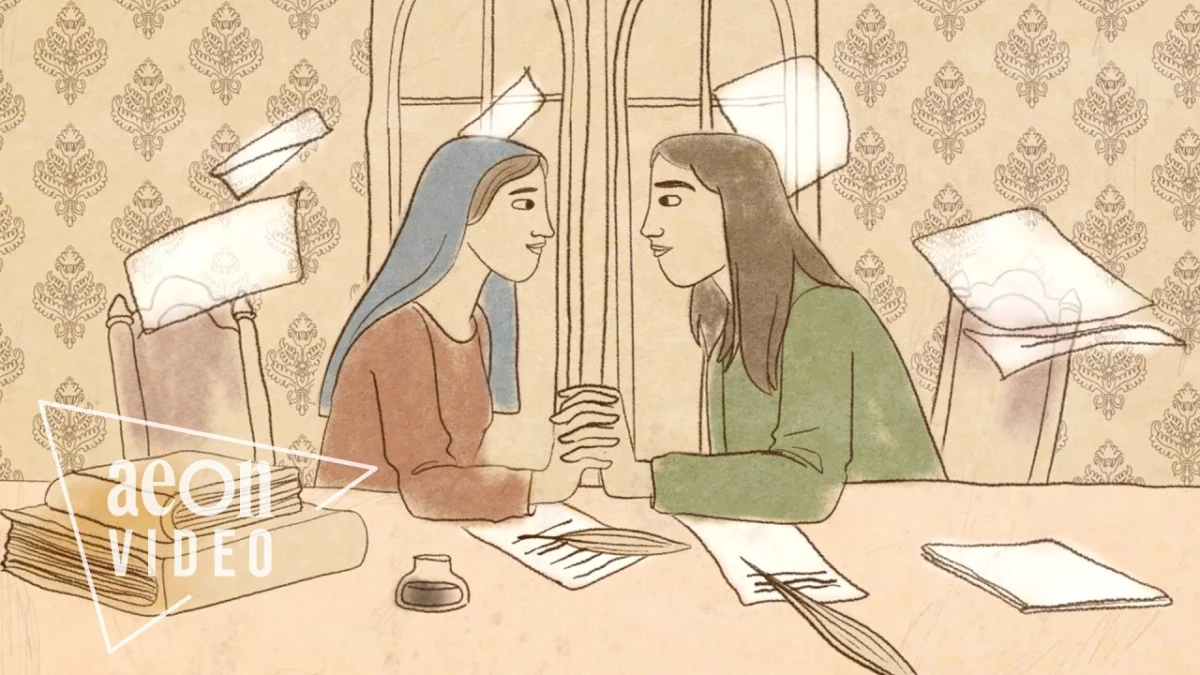
It was within this context of intellectual hunger and exceptional promise that Fulbert arranged for Héloïse to be tutored by the most celebrated scholar of the day: Peter Abelard. Abelard, already in his forties and known for his austere lifestyle and unwavering dedication to scholarship, found himself captivated not only by Héloïse’s beauty but, more importantly, by the brilliance of her mind. He recognized in her a peer, an intellectual equal capable of grasping the most complex philosophical arguments. This mutual intellectual fascination quickly blossomed into a passionate, clandestine love affair, a stark departure from Abelard’s carefully cultivated image of detachment.
The Tragic Turn: From Love to Loss
The affair between Abelard and Héloïse, born from a shared intellectual fire, was doomed from its inception by the rigid social and religious structures of the 12th century. Their secret was eventually discovered, leading to a brutal and life-altering consequence for Abelard: castration. This act of vengeance, orchestrated by Fulbert and his associates, was a devastating blow that irrevocably altered both their lives.
Following this catastrophe, the lovers were compelled to separate and seek solace in religious life. Abelard entered a monastery, and Héloïse, at her own request and despite her deep love for him, took vows as a nun at the Paraclete. This enforced separation, however, did not signify an end to their connection. Instead, it marked the beginning of a remarkable intellectual correspondence that would survive the trials of their lives and offer profound insights into their inner worlds and the philosophical landscape of their time.
The Letters of Héloïse: A Philosophical Dialogue
It was during their respective religious vocations that the most significant intellectual exchange between Abelard and Héloïse took place. Héloïse came into possession of a letter Abelard had intended to send to a friend, a eulogy of their time together. In response, she initiated a years-long correspondence that transcended mere personal sentiment. These letters, preserved for posterity, offer a unique window into the medieval mind, blending deeply felt personal emotion with rigorous philosophical inquiry.
The correspondence is steeped in longing and the poignant remembrance of their shared past. Yet, it transcends the typical laments of star-crossed lovers. Héloïse, in particular, uses the platform to explore groundbreaking philosophical territory. Her letters are a testament to her enduring intellectual curiosity and her ability to apply abstract reasoning to the most personal of circumstances.
A striking example of Héloïse’s philosophical prowess is her nuanced approach to the concept of sin and intention. Reflecting on their relationship, she grapples with the nature of their transgression, arriving at a profound conclusion that foreshadows modern ethical debates. She argues that "it is not the deed, but the intention of the doer, which makes the crime." This statement is a powerful articulation of an "intentionalist" ethical framework, a stark contrast to consequentialist ethics that focus solely on the outcome of an action.
Héloïse’s reasoning, further elaborated, suggests that "there can be no sin in an action done out of love." While the degree of comfort this argument provided Abelard remains a matter of historical speculation, its intellectual merit is undeniable. It demonstrates Héloïse’s sophisticated understanding of moral philosophy, her ability to dissect complex ethical dilemmas, and her courageous defense of love as a potentially redemptive force, even in the face of societal condemnation. Her mind, at least, remained intact and brilliantly engaged, even as Abelard’s physical suffering and the constraints of their religious lives imposed their own limitations.
Héloïse as a Medieval Philosopher
The significance of Héloïse’s contributions lies not only in her intellectual prowess but also in her position as a woman in a predominantly male intellectual sphere. In an era where formal university education was inaccessible to women, Héloïse carved out a space for herself through sheer intellect and an unwavering pursuit of knowledge. Her fluency in languages allowed her access to a wider range of texts, and her keen analytical skills enabled her to engage with philosophical concepts at the highest level.
Her engagement with Abelard’s work, and her subsequent independent philosophical explorations, place her among the significant thinkers of the High Middle Ages. Her letters reveal a sophisticated understanding of logic, ethics, and theology. She wasn’t merely a passive recipient of Abelard’s teachings; she was an active participant, a critical interlocutor who challenged, questioned, and ultimately expanded upon the philosophical discourse of her time.
The fact that her writings and correspondence have survived is a testament to their enduring value. They offer a rare glimpse into the intellectual life of a medieval woman who dared to think deeply, to question established norms, and to articulate her thoughts with clarity and conviction. Her work serves as a crucial piece in the ongoing project of recovering and recognizing the contributions of women to intellectual history, a field that has historically been dominated by male voices.
Broader Implications and Legacy
The story of Abelard and Héloïse, when viewed through the lens of Héloïse’s philosophical contributions, takes on a richer and more complex dimension. It moves beyond a simple tale of forbidden love and tragic consequences to highlight the enduring power of the human intellect and the capacity for profound thought, even amidst immense personal suffering.
Héloïse’s articulation of intentionalist ethics, her exploration of love as a moral force, and her ability to engage in sophisticated philosophical debate within the confines of medieval society offer valuable insights for contemporary ethical and philosophical discussions. Her work challenges us to reconsider the role of intention in our moral judgments and to acknowledge the complex interplay between personal experience and abstract philosophical reasoning.
Furthermore, Héloïse’s story serves as a powerful reminder of the historical marginalization of women’s intellectual contributions. The rediscovery and appreciation of her writings are part of a broader effort to rectify this historical imbalance and to ensure that the intellectual heritage of humanity includes the voices and ideas of all its members.
As we continue to engage with the rich tapestry of medieval thought, it is imperative that we recognize Héloïse d’Argenteuil not merely as the tragic lover of Abelard, but as a formidable philosopher in her own right, a woman whose intellect shone brightly in a challenging era, and whose ideas continue to offer profound inspiration and intellectual stimulation centuries later. Her legacy is a testament to the enduring power of the mind and the indelible mark that a keen intellect can leave on the world, regardless of the circumstances.
Related Content:
- The Encyclopedia of Women Philosophers: A New Web Site Presents the Contributions of Women Philosophers, from Ancient to Modern
- The Contributions of Women Philosophers Recovered by the New Project Vox Website
- A Short Animated Introduction to Hypatia, Ancient Alexandria’s Great Female Philosopher
- An Animated Introduction to the Feminist Philosophy of Simone de Beauvoir
- Kierkegaard on Why We All Misunderstand the True Meaning of Love: An Animated Explanation
Based in Seoul, Colin Marshall writes and broadcasts on cities, language, and culture. He’s the author of the newsletter Books on Cities as well as the books Igeu-ui Seolmong (No Summarizing Korea) and Korean Newtro. Follow him on the social network formerly known as Twitter at @colinmarshall.