Hellish Incursion Rocks Victorian London Amidst Grand Exhibition Preparations; Diplomat Faces Unholy Alliance
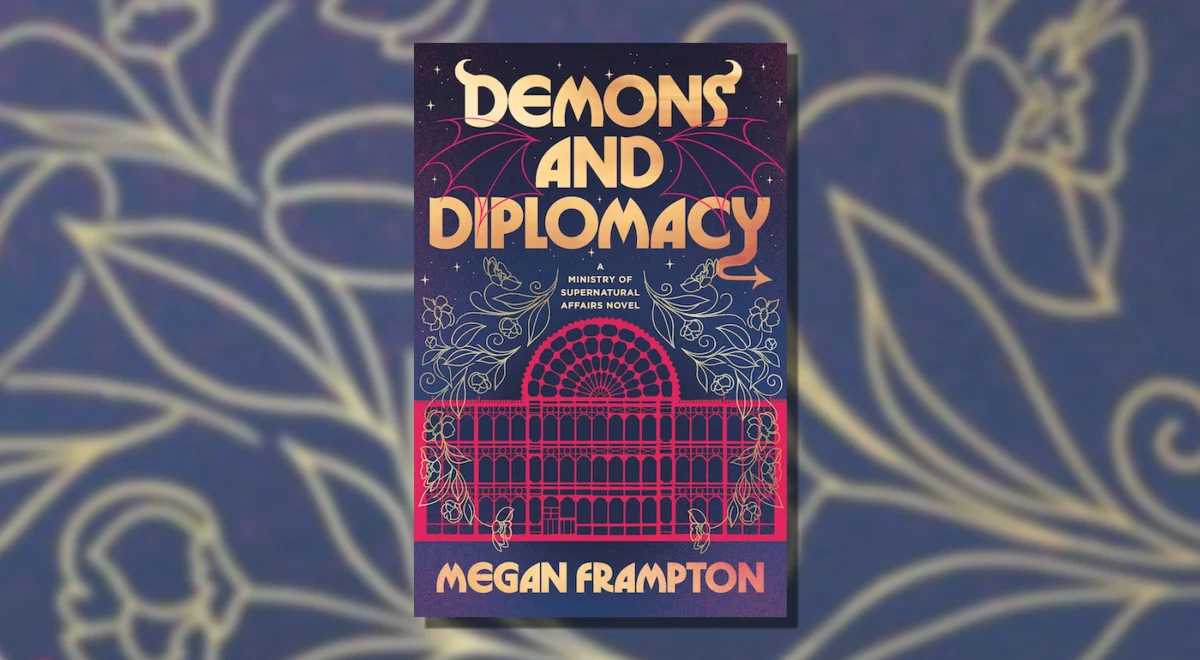
London, 1851 – A cataclysmic breach of unknown origin has plunged parts of London into chaos, as infernal creatures streamed from a newly opened portal, threatening the fragile peace established since the Great Revelation. The incident, which unfolded with alarming speed, saw British government official Cora Hastings, the human Species Ombudsman, thrust into a desperate struggle alongside the enigmatic Marquis of Hell, son of Lucifer himself, who has controversially arrived in the city for the highly anticipated Great Exhibition.
The sudden demonic incursion raises profound questions about the stability of the inter-species accord and the true intentions of the infernal visitors. Miss Hastings, tasked with navigating the intricate web of supernatural diplomacy, now faces an impossible choice: forge an unholy alliance with the Devil’s seductive heir or witness her world succumb to an insidious conspiracy, all set against the backdrop of humanity’s grandest display of innovation.
Main Facts: A World Transformed, A Peace Threatened
The year 1851 marks a pivotal era for Great Britain, not merely for its industrial prowess and global influence, but for a profound societal transformation known as The Great Revelation. This epochal event saw all manner of supernatural species – from vampires and werewolves to fae and other mythical beings – emerge from the shadows, integrating into human society. This new world order is presided over by none other than Her Majesty, Queen Victoria, herself a powerful vampiric sovereign, alongside her dhamphir consort, Prince Albert. Their leadership has been instrumental in forging an uneasy, yet functional, peace between disparate species.
At the heart of this complex diplomatic landscape is Cora Hastings, the British government’s dedicated Species Ombudsman. A human of remarkable intellect and tenacity, Miss Hastings’s mandate is to uphold the tenets of the Great Revelation, enforcing newly established shifting parameters, mediating intricate inter-species contracts, and ensuring equitable treatment for all Londoners, regardless of their origin. Her work, typically characterized by bureaucratic challenges and delicate negotiations, took an unprecedented turn with the arrival of the Devil himself, accompanied by his son, the Marquis of Hell.
The infernal dignitaries’ visit, ostensibly to witness Prince Albert’s crowning achievement, the Great Exhibition, has been a source of considerable apprehension. Their presence, viewed by many as a dangerous destabilizing factor, has already introduced significant diplomatic tensions. However, mere days before the grand opening of the Exhibition, the city was rocked by a far more direct and terrifying threat: an unheralded breach, believed to be a portal to Hell, disgorging a torrent of malevolent creatures into a London locale. This abrupt eruption of infernal chaos immediately cast suspicion upon the Devil and his son, even as they appeared to react with surprise to the unfolding events. Compounding the crisis, intelligence gathered by Miss Hastings suggests a secret conspiracy is poised to culminate at the Exhibition, forcing her into a perilous diplomatic tightrope walk.
Chronology of Events: From Revelation to Rupture
The Great Revelation and the New Order
The Great Revelation, occurring several decades prior to 1851, marked a seismic shift in global society. It was a period of unprecedented disclosure, orchestrated by Queen Victoria, where the hidden world of supernatural entities was unveiled to humanity. This event necessitated a complete overhaul of societal structures, legal frameworks, and diplomatic protocols. Queen Victoria, a powerful vampire, ascended to her supernatural role with Prince Albert, a dhamphir (half-vampire), by her side, establishing a unique monarchy that bridged the human and supernatural realms. The British government, under their guidance, created new institutions, among them the Species Ombudsman office, designed to manage the complexities of inter-species cohabitation. Cora Hastings, a human, was appointed to this critical role, embodying the ideal of human-supernatural cooperation. Her duties ranged from mediating territorial disputes between fae factions to regulating the shifting patterns of lycanthropes, all while striving to maintain an egalitarian society.
The Devil’s Arrival and Diplomatic Tensions
The announcement of Lucifer’s intention to visit London, accompanied by his son, the Marquis of Hell, sent ripples of unease through the diplomatic community. Their stated purpose – to observe the marvels of the Great Exhibition, a symbol of human ingenuity and inter-species collaboration – was met with widespread skepticism. Many viewed it as a calculated move to assert infernal influence or, worse, to sow discord. Miss Hastings was assigned the unenviable task of overseeing their diplomatic engagement, a role fraught with peril given the Marquis’s "diabolically good-looking" and "unnaturally perceptive" nature, as noted in her preliminary assessments. Her initial interactions with the infernal duo were characterized by a delicate balance of professional decorum and deep-seated suspicion, knowing that any misstep could ignite widespread unrest. The mere presence of such powerful, inherently chaotic entities cast a shadow over the otherwise celebratory atmosphere surrounding the Exhibition.
The Cataclysmic Breach
The fragile peace shattered dramatically when a portal, widely believed to be a direct conduit to Hell, inexplicably ripped open within a London church or bazaar. Eyewitness accounts describe a sudden rush of wind, followed by the emergence of grotesque, beetle-like creatures and other demonic entities, causing immediate panic and disruption. The Devil, his entourage, and the Marquis were present at the scene, along with a number of frightened citizens and a seemingly inebriated vicar.
In the ensuing chaos, the Marquis of Hell swiftly took action, forcibly removing Miss Hastings from immediate danger. "Miss Hastings," the marquis reportedly stated, "come with me. It is not safe." Her initial resistance, questioning his trustworthiness, was overcome by his decisive action, hoisting her over his shoulder and carrying her to a safer position. Once she was secured, he joined the fray, demonstrating a surprising commitment to defending the mortals present.
Hastings and the Marquis: An Unlikely Alliance
The excerpt reveals a harrowing scene of combat and collaboration. While the Devil thundered, "How did it get opened?" – a query that suggested his non-involvement, or a masterful deception – the Marquis grimly declared, "We’ll have to find out. In the meantime, you stay here. Stay safe." He then plunged back into the thick of the battle, confronting the streaming creatures.
Defying his command, Miss Hastings, armed with her cane (which doubled as a bladed weapon) and an improvised shield of two ornamental parasols, followed him into the danger. She observed the Marquis ruthlessly dispatching the creatures with a "lethal-looking sword," noting his efficiency. Her assistance, initially scoffed at by the Marquis ("I can handle this myself."), proved crucial when a beetle-like creature latched onto his leg. Miss Hastings skillfully dislodged it with a closed parasol and then stomped on it, showcasing her practical resourcefulness despite the extreme circumstances.
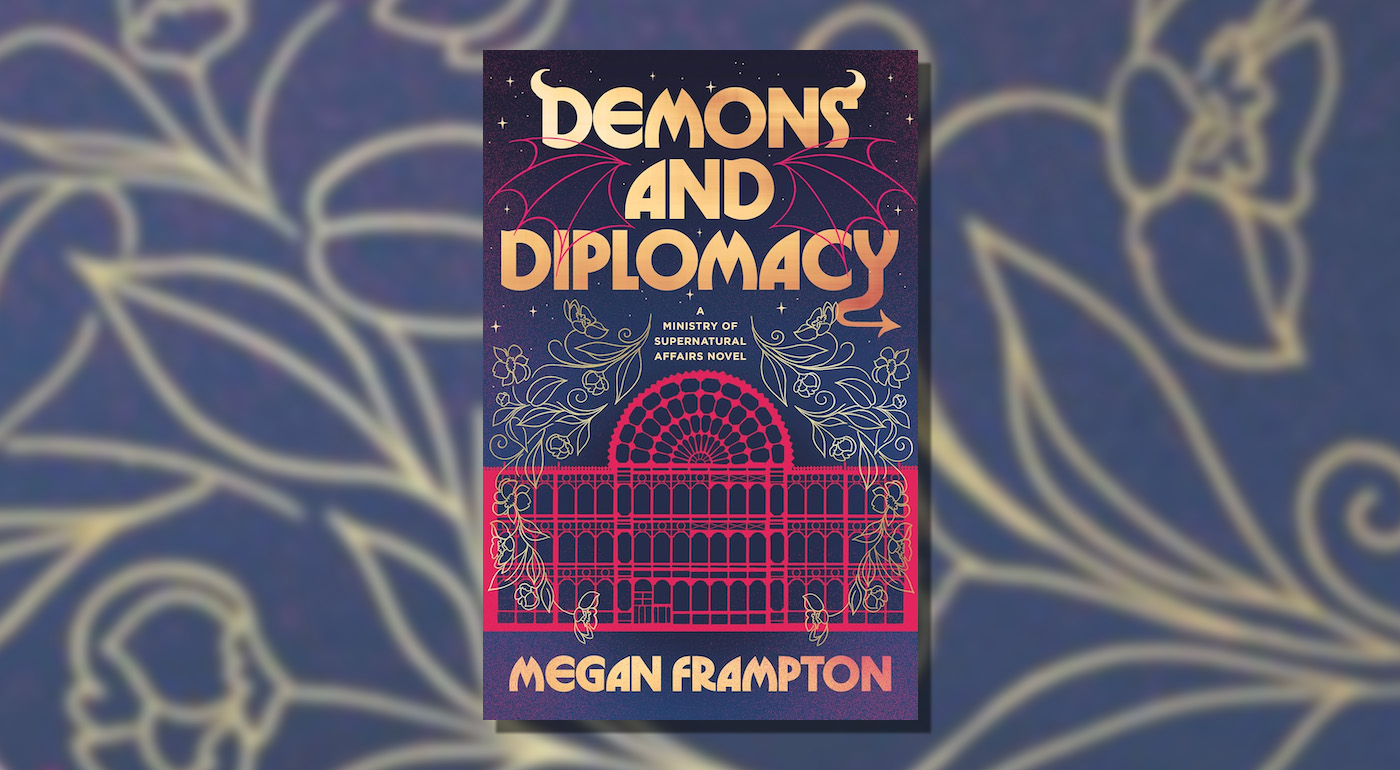
The two eventually converged at the portal’s mouth, located at the head of the church near the altar. The Marquis, amidst the "hellish wind," instructed Hastings to "hold that edge closed so I can push the door shut." The simple, almost anticlimactic act of pushing a plank through a metal chamber sealed the portal, temporarily stemming the tide of infernal invaders. Miss Hastings’s surprise at the simplicity of the closure – "That was it? That is all that is needed to close the portal from Hell?" – underscored the mystery surrounding the breach. The Marquis’s subsequent affirmation, "It was Hell, yes. And it was not our doing," leaves a critical question hanging: if not the Devil, then who?
Supporting Data: Anatomy of a Crisis
The Role of the Species Ombudsman: Navigating the New Normal
Cora Hastings’s office is central to the stability of post-Revelation Britain. Her daily work involves mediating disputes between ancient fae courts over territorial rights in Hyde Park, ensuring equitable housing for newly arrived gargoyles, and adjudicating complaints from human businesses about vampiric nocturnal habits. The newly created "shifting parameters" – regulations governing when and where shapeshifters can assume their alternate forms – are a constant source of legislative challenge and enforcement. This incident, however, represents a fundamental failure of these protocols, as creatures of Hell are explicitly outside the agreed-upon species integration. Her swift, albeit unorthodox, response on the front lines highlights the evolving and often perilous nature of her duties, far beyond the confines of bureaucratic paperwork. Her reliance on an amulet, a gift from Mr. Connors (presumably a higher-ranking government official or mentor), underscores the latent dangers of her profession and the potential for "diplomatic incidents" even in dire situations.
Anatomy of the Threat: Infernal Infiltration
The creatures described by Miss Hastings – "beetle-like things" that "oozed a yellowish goo" and "demonish creatures" – represent a new class of threat to London’s integrated society. Their sudden appearance suggests a weakness in the dimensional barriers or magical wards previously believed to protect the human realm from more malevolent extra-dimensional entities. The fact that the Devil and his son appeared genuinely surprised and actively engaged in repelling the invasion is a critical piece of information. If the rulers of Hell are not in full control of such breaches, or are themselves targeted by a rogue faction, the implications for universal security are profound. The vulnerability of the portal to a relatively simple physical closure, a "plank" and "metal chamber," further deepens the mystery: was this a crude, hastily opened gateway, or part of a more elaborate scheme designed to appear as such?
The Great Exhibition: A Symbol Under Siege
The Great Exhibition of 1851, housed within the magnificent Crystal Palace, stands as a beacon of human innovation, imperial power, and, significantly, inter-species collaboration. Prince Albert’s vision for this grand spectacle was to showcase not only technological advancements but also the potential for a unified world, embracing both human and supernatural contributions. The timing of the infernal breach, on the cusp of its opening, is no mere coincidence. It transforms the Exhibition from a symbol of hope into a potential flashpoint for a larger conflict. The conspiracy Miss Hastings has uncovered, set to come to fruition at this very event, suggests a deliberate attempt to undermine the Exhibition’s message and perhaps dismantle the fragile peace of the Great Revelation itself. The disruption caused by the portal incident serves as a stark warning of the vulnerabilities that lie beneath the veneer of progress and unity.
Official Responses: Navigating Suspicion and Crisis
Royal Decree and Diplomatic Scramble
While official statements from Buckingham Palace are yet to be fully disseminated, it is understood that Queen Victoria, with her unparalleled supernatural insight, and Prince Albert are gravely concerned. Emergency councils are likely being convened, drawing upon the combined expertise of human ministers and supernatural advisors. The unprecedented nature of the breach – an unprovoked attack from a realm supposedly overseen by Lucifer himself – necessitates a rapid and robust response. Questions will undoubtedly be raised regarding the efficacy of existing magical defenses and the intelligence failures that allowed such a significant breach. Diplomatic channels with other supernatural powers, particularly those with knowledge of infernal realms, would likely be activated, seeking both information and potential assistance. The incident demands an immediate strengthening of security around the Great Exhibition, transforming the celebratory venue into a potential fortress.
The Devil’s Denials and Human Skepticism
The Devil’s purported outrage and the Marquis’s active participation in repelling the creatures present a complex narrative. Their claim of non-involvement – "it was not our doing" – will be met with profound skepticism across all species. Historically, the infernal realms have been synonymous with deception and manipulation. Is this a clever ploy to deflect blame, a sophisticated smokescreen for a deeper, more insidious agenda? Or is it possible that even the rulers of Hell are not monolithic, and factions within their own domain are capable of independent, destabilizing actions? Miss Hastings’s internal monologue ("Unless he was pretending to be outraged. That seemed above my pay grade, to be honest.") perfectly captures the dilemma faced by human intelligence. Her weekly report to Mr. Connors, a critical document, will undoubtedly detail these observations, prompting further investigation into the veracity of the infernal claims. The very notion that the Devil might be a victim, rather than a perpetrator, challenges fundamental assumptions about the nature of evil in this transformed world.
Public Anxiety and Calls for Security
The incident has undoubtedly ignited widespread fear and anxiety among London’s diverse populace. While the Great Revelation brought many marvels, it also introduced new fears. News of hellish creatures pouring into a public space will spark outrage and demands for immediate, tangible security measures. Human citizens, already grappling with the complexities of coexisting with vampires, werewolves, and other beings, will question the safety of their city. Calls for increased government oversight, stronger magical wards, and perhaps even limitations on the presence of certain powerful supernatural entities are likely to emerge. The incident threatens to erode public trust in the established peace, fueling anti-supernatural sentiments that could destabilize the entire framework of the Great Revelation. The government faces the immense challenge of reassuring a frightened populace while simultaneously confronting an unseen enemy whose origins and motives remain shrouded in infernal mystery.
Implications: A World on the Brink
The Fragility of the Great Revelation
The infernal incursion represents the most severe test yet of the Great Revelation’s stability. The core premise of the new world order rests on the belief that a balance can be maintained between all species, with established rules and diplomatic channels. This event, however, demonstrates that unseen forces and external threats can easily shatter this carefully constructed peace. It forces a re-evaluation of the true extent of Queen Victoria’s power and the limitations of her government’s control over extra-dimensional threats. The incident underscores that while the supernatural may have emerged, the universe still holds untold dangers, and London, despite its imperial might, is not immune. The very foundation of inter-species trust has been shaken, raising the specter of a return to the chaotic, hidden conflicts that preceded the Revelation.
Unholy Alliances and Unanswered Questions
Cora Hastings’s "impossible choice" – an "unholy alliance with the Devil’s son" – highlights the extreme moral and political compromises required to navigate this new world. Her collaboration with the Marquis to close the portal, born of necessity, complicates her diplomatic mission immeasurably. How can she trust someone whose very nature is deceitful, even if he appears to be an ally in this specific crisis? The lingering question of "who had weakened it?" and "were they even telling the truth?" regarding the Devil’s non-involvement forms the core of the overarching conspiracy. If a faction within Hell itself, or an entirely different malevolent entity, possesses the power to breach dimensional barriers, then the threat is far more pervasive and insidious than previously imagined. This alliance, however temporary, may be the only path to uncovering the truth behind the conspiracy threatening the Great Exhibition and, by extension, the entire world.
A World on the Brink
The events unfolding in London paint a grim picture of a world teetering on the edge. The Great Exhibition, intended as a celebration of unity and progress, now stands as a potential stage for catastrophe. Miss Hastings, a human diplomat, finds herself at the nexus of infernal politics, royal decree, and a desperate struggle for survival. The outcome of the conspiracy, and her decisions in the coming days, will undoubtedly determine the fate of London and the continued existence of the Great Revelation. The fragile peace, carefully constructed by Queen Victoria, now hangs by a thread, threatened by forces both known and unknown, infernal and perhaps, surprisingly, internal. The world watches, holding its breath, as London grapples with its demons, both literal and metaphorical.