Global Horizons: A Week in Science, Culture, and Community
Dublin, Ireland – July 16, 2026 – From the dark corners of historical censorship to the furthest reaches of interstellar space, and from the hallowed halls of film academies to the auction block of prehistoric giants, this past week has delivered a diverse array of headlines. Cultural discussions, scientific breakthroughs, and community milestones paint a vivid picture of human endeavor and discovery. This report delves into the most compelling narratives, offering deeper context and exploring their broader implications.
Main Facts at a Glance
- Comics Censorship in Ireland: A pivotal talk by James Bacon at the National Library of Ireland on August 6th will explore the unique history of comic book censorship in the nation, reflecting on the 1950s "moral panic" and its lasting impact.
- Record-Breaking T. Rex Auction: The fossilized Tyrannosaurus rex nicknamed "Gus" fetched an astonishing $50.1 million at a Sotheby’s auction in New York, setting a new global record for a dinosaur fossil sold publicly.
- Voyager 1’s Enduring Journey: After nearly five decades, NASA’s Voyager 1 probe continues to transmit data from interstellar space, with a daring "Big Bang" plan underway to extend its operational life well into the 2030s.
- Unveiling the "Great Dying" Mystery: Scientists have finally pinpointed the primary kill mechanism behind the Permian-Triassic mass extinction 252 million years ago: rising ocean temperatures leading to severe oxygen depletion, a finding that carries sobering implications for Earth’s future climate.
- Interstellar Sugar Discovery: Researchers have reported the first detection of a four-carbon sugar, erythrulose, in interstellar space, offering crucial insights into the exogenous origins of life’s essential biomolecules.
- StokerCon 2027 Logo Revealed: Artist Dan Sauer unveiled the logo for StokerCon 2027, celebrating the 40th anniversary of the Horror Writers Association (HWA) and underscoring the vital role of community in the horror genre.
- Student Academy Awards Finalists: European film schools, particularly France’s Gobelins and Germany’s Filmakademie Baden-Württemberg, dominated the animation category finalists for the prestigious 2026 Student Academy Awards.
Cultural and Community Chronicles
This week saw significant developments across various cultural landscapes, highlighting both historical reflection and contemporary artistic achievement.
Comics Under Scrutiny: Ireland’s Censorship Legacy
On Thursday, August 6th, the National Library of Ireland in Dublin will host "Banned Comics at the NLI: A history of censorship of comics in Ireland." Esteemed comic fan and scholar James Bacon will lead this illuminating talk, drawing from the National Library’s extensive collections to unveil the often-overlooked history of comic book suppression.
The mid-20th century witnessed a global "Moral Panic" surrounding comic books, with figures like psychiatrist Fredric Wertham’s controversial book Seduction of the Innocent (1954) fueling widespread fears about the alleged link between comics and juvenile delinquency. This led to the creation of the Comics Code Authority in the United States, imposing stringent self-censorship on publishers. However, as Bacon will explain, the situation in Ireland was uniquely intensified. A traditionally conservative society, Ireland harbored a profound distrust of "foreign publications," leading to an even more active and vigorous censorship regime. This talk, recommended for ages 16+, promises to be a vital exploration of cultural control, media influence, and the enduring power of sequential art. Understanding this history offers crucial insights into Ireland’s social fabric and its relationship with external cultural forces during a formative period.

Celebrating Finnish Fantasy: The Tähtifantasia Award
The Helsinki Science Fiction Society has proudly announced the recipient of the 2026 Tähtifantasia Award. This esteemed accolade celebrates the finest fantasy book published in Finnish during the preceding year, underscoring the vibrancy and growing recognition of fantasy literature within Finland’s literary landscape. While the specific winner’s name was not immediately available, the award’s announcement serves as a beacon for genre enthusiasts and a testament to the thriving creative talent within the Finnish speculative fiction community. Such awards play a critical role in promoting national literature, encouraging authors, and bringing quality works to a broader readership.
The Art of Comparison: Russell Samora’s Visual Exploration
Russell Samora’s latest work for Pudding, titled "Comparisons as Predictable as the Sunrise," offers a fascinating dive into the mechanics of language and human perception. Pudding is renowned for its innovative data journalism, often presenting complex analyses through compelling and interactive visual storytelling rather than traditional text. Samora’s article, heavily reliant on graphics, explores the commonality and predictability of similes and metaphors in everyday language. This study promises to reveal underlying patterns in how we describe the world, offering insights into linguistic cognition and the shared cultural frameworks that shape our expressions. The visual nature of Pudding‘s articles transforms data into accessible art, making intricate linguistic patterns enjoyable and understandable for a wide audience.
Honoring Horror: The StokerCon 2027 Logo
The literary horror community buzzed with the unveiling of the StokerCon 2027 logo, masterfully designed by artist Dan Sauer. This particular logo holds special significance, marking the 40th anniversary of the Horror Writers Association (HWA). In an interview, Sauer articulated his profound connection to the genre and the community it fosters. "I’ve loved horror (and more broadly, the Weird) ever since I can remember," Sauer shared, reflecting on his early exposure to classics like Vincent Price’s The Pit and the Pendulum.
Sauer’s personal journey resonates with many within the genre: "I’ve also felt like an outsider for most of my life… I never felt completely at home until I got involved with the horror/weird fiction community." This sentiment underscores the HWA’s crucial role not just as a professional organization, but as a sanctuary for "creative, horror-loving misfits and weirdos of all kinds." The 40th anniversary is more than just a chronological milestone; it celebrates four decades of fostering talent, providing networking opportunities, and giving a collective voice to a genre often misunderstood. Sauer’s recurring involvement in designing StokerCon logos, including this special anniversary edition, highlights his deep appreciation for an association that has helped validate and elevate horror literature.

Muppets from Space: A Post-Henson Legacy Revisited
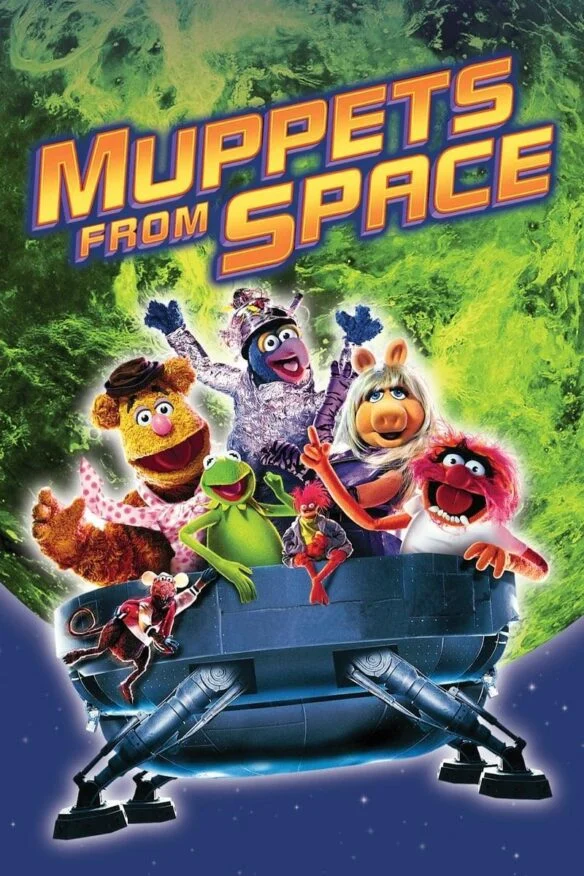
Twenty-seven years ago, on July 14, 1999, Muppets from Space premiered, carrying the immense weight of being the first Muppets film released after the passing of their visionary creator, Jim Henson. The film arrived with both high hopes and considerable apprehension, as many questioned whether the "magic" could endure without Henson’s direct involvement.
Penned by seasoned Muppets writer Jerry Juhl, Sesame Street Head Writer and Director Joseph Mazzarino, and Ken Kaufman (who lacked prior Muppets writing credits), the screenplay ventured into science fiction territory. The plot follows Gonzo’s discovery that he is, in fact, an alien from outer space, leading to an encounter with an entire ship full of his eccentric brethren. Mazzarino later revealed his departure from the project before filming, citing significant studio-imposed changes to his draft, which originally featured parodies of iconic sci-fi films like Alien, Contact, and Men in Black.
Critical reception was sharply divided. Roger Ebert of the Chicago Sun-Tribune famously declared, "Muppets from Space is just not very good," while Robin Rauzi of the Los Angeles Times heralded, "The magic is back." Even Frank Oz, a long-time Muppets performer whose absence from the filming remains a point of contention, publicly stated it was "not the movie that we wanted it to be." Ultimately, the film struggled at the box office, grossing approximately $2 million less than its $24 million production cost. Muppets from Space stands as a poignant reminder of the challenges inherent in continuing a beloved franchise after the loss of its foundational creative force, illustrating the delicate balance between honoring a legacy and forging new paths.
Nurturing Future Talent: The 2026 Student Academy Awards Finalists
The Academy of Motion Picture Arts and Sciences has unveiled the finalists for the 2026 Student Academy Awards, recognizing exceptional emerging talent across Animation, Documentary, Live Action Narrative, and Alternative/Experimental categories. Notably, the animation category is predominantly represented by European film schools, a trend highlighted by Animation Magazine. France’s Gobelins secured three coveted spots, while Germany’s Filmakademie Baden-Württemberg earned two, with additional finalists from ESMA and Rubika (both from France).

This strong showing by European institutions underscores their global leadership in animation education and innovation. The Student Academy Awards serve as a crucial launching pad for aspiring filmmakers, with a distinguished history of alumni who have gone on to achieve significant success in Hollywood. Past winners like Pete Docter (Pixar) and Robert Zemeckis (director of Forrest Gump, Back to the Future) collectively boast 70 Oscar nominations and 15 wins, demonstrating the profound impact these awards have on shaping future cinematic landscapes. The recognition not only validates the rigorous training offered by these schools but also celebrates the diverse storytelling and artistic prowess of the next generation of animators.
Scientific and Exploratory Frontiers
Innovation, discovery, and a deeper understanding of our universe continue to push the boundaries of knowledge.
T. Rex Gus Sells for Record-Breaking $50.1 Million
In a stunning turn of events at Sotheby’s in New York, a colossal fossilized Tyrannosaurus rex skeleton, affectionately dubbed "Gus," was sold for an astounding $50.1 million, including fees. This record-breaking sum makes Gus the most valuable dinosaur fossil ever sold at auction, significantly surpassing its pre-sale estimate of $20 million to $30 million. The buyer, a phone bidder whose identity remains undisclosed, has acquired one of the largest and most complete T. rex specimens ever unearthed.
Gus was meticulously excavated from a ranch in Harding County, South Dakota, by Theropoda Expeditions, a commercial fossil outfit. While such private sales generate immense public interest and highlight the extraordinary value of paleontological finds, they also spark ongoing debate within the scientific community. Many paleontologists express concern that valuable specimens entering private collections may become inaccessible for research and public display, potentially hindering scientific progress and educational outreach. The sale of Gus, while a testament to the awe-inspiring nature of these ancient predators, reignites discussions about the ethics and implications of commercializing irreplaceable scientific heritage.

Voyager 1: Humanity’s Enduring Whisper in the Void
After an astonishing journey spanning nearly five decades, NASA’s Voyager 1 probe continues its solitary mission, sending messages that traverse the vast cosmic ocean, taking 23 hours to reach Earth. Launched in 1977 alongside its twin, Voyager 2, it holds the distinction of being the oldest operational spacecraft and the farthest human-made object from our planet. Its initial mission, a straightforward flyby of Jupiter (1979) and Saturn (1980), yielded groundbreaking discoveries, including new rings and moons around both gas giants.
However, Voyager 1’s true legacy has been forged in its extended mission, venturing into interstellar space far beyond its initial design parameters. The probe, a testament to human ingenuity and perseverance, faces immense challenges. Its three radioisotope thermoelectric generators (RTGs), powered by decaying plutonium pellets, have seen their output diminish from an initial 470 watts to a mere 230 watts today. This power drain has necessitated the sequential shutdown of precious scientific instruments, leaving only the magnetometer and plasma wave subsystem currently operational.
Adding to the urgency, Voyager 1’s thruster lines are both clogged and at risk of freezing. Without functional thrusters, the probe would lose its ability to orient its antenna towards Earth, severing contact forever. To prevent this, certain systems are kept powered specifically to heat these lines, further straining the dwindling RTGs. In a bold maneuver dubbed the "Big Bang," NASA’s Jet Propulsion Laboratory (JPL) is planning to switch off these dedicated heating devices and simultaneously activate several others. If successful, this audacious plan could save 10 watts of power, potentially extending the operational life of both Voyager 1 and Voyager 2 into the 2030s – an unimaginable feat back in 1977. Voyager 1 remains a poignant symbol of humanity’s insatiable curiosity and our enduring quest to understand our cosmic home, even as it fades into the long dark.
The Great Dying’s Revelation: A Warning from the Past
Scientists have finally unraveled the long-standing mystery behind Earth’s most catastrophic mass extinction event, the Permian-Triassic extinction, also known as "The Great Dying." Approximately 252 million years ago, a staggering 96% of marine species and 70% of terrestrial species vanished in a geological blink. While the trigger—massive volcanic activity from the Siberian Traps releasing immense greenhouse gases and ushering in extreme global warming—was known, the precise "kill mechanisms" remained elusive.

In a groundbreaking study published on July 6th in the Proceedings of the National Academy of Sciences, a team of scientists, led by Jose Andres Marquez as a PhD student in Sperling’s lab, presented compelling evidence. Building on previous modeling, the research definitively attributes the widespread marine die-off to rising ocean temperatures and a consequent drastic decline in dissolved oxygen levels. The rationale is elegantly simple: warmer water holds significantly less oxygen than cold water.
To test their hypothesis, researchers compared the metabolic tolerances of modern representatives of species groups that thrived before the extinction with those that dominate today. The findings were stark: species groups that succumbed to the Great Dying possessed metabolisms far less tolerant of warm, oxygen-poor waters. Conversely, the handful of survivors exhibited remarkable resilience to these harsh conditions. As Marquez stated, "Our findings show that, across different organism groups, extinctions happened at much higher rates for those more vulnerable to increases in water temperature and decreases in oxygen availability." This discovery not only solves a critical paleontological puzzle but also serves as a stark warning for Earth’s future, highlighting the severe consequences of rapid global warming and ocean deoxygenation, phenomena increasingly observed in our contemporary climate crisis.
Sweet Discovery: Sugar in Interstellar Space
In a discovery that could profoundly impact our understanding of the origins of life, researchers have reported the first-ever detection of a four-carbon sugar, erythrulose, in interstellar space. This groundbreaking finding, detailed in a pre-print paper by Jiménez-Serra, I. et al (2026) in Nature Astronomy, adds a crucial piece to the puzzle of how life’s fundamental building blocks might have formed and arrived on early Earth.
Sugars are indispensable biomolecules, serving as metabolic fuels, structural components of nucleic acids (like DNA and RNA), and energy-storage polymers. A central challenge in origin-of-life research has been explaining how monosaccharides could have formed in sufficient concentrations on primitive Earth. The prior detection of ribose, glucose, and other monosaccharides in asteroids and meteorites suggested an "exogenous origin"—meaning they might have formed in the interstellar medium (ISM) before being delivered to Earth via celestial impacts. However, until now, no direct observation of sugars in the ISM had been made.

The discovery of erythrulose, a chiral four-carbon ketose, provides direct evidence supporting this hypothesis. Chirality, the property of a molecule being non-superimposable on its mirror image, is particularly significant as life on Earth overwhelmingly utilizes only one form of chiral molecules. This finding suggests that the chemical complexity required for life may begin forming in the cold, vast expanse between stars, predating planetary formation. As SF Concatenation’s Jonathan Cowie light-heartedly noted, connecting it to the "sweet tooth" of fans at the 1993 Eastercon/Eurocon in Jersey, the universe itself seems to have a taste for the complex and essential, setting the stage for life’s incredible journey.
In Memoriam: Andrew Nisbet III (1949-2026)
The science fiction and gaming communities mourn the passing of Andrew Nisbet III, an esteemed Oregon fan who died on July 4th at the age of 77. Andrew’s life was a testament to dedication, community spirit, and intellectual curiosity.
A 1973 graduate of Reed College, Andrew was one of a limited number of Vietnam veterans in the student body, known for his extraordinary storytelling abilities and his passion for board games. He famously led the Empire (game) Association for over 50 years and remained an active, valued game master for a core group of role-playing game friends for decades, right up until his passing. His commitment to these communities fostered lasting friendships and provided countless hours of shared enjoyment and intellectual engagement.
Beyond gaming, Andrew was a tireless volunteer for local and regional science fiction conventions, including Con, OryCon, and Westercon, and served on the board of Oregon Science Fiction Conventions, Inc. (OSFCI). Alongside his wife, Cecilia Anne Eng, whom he married in 1977 after being together since December 1973, he was an inseparable force. Andrew wholeheartedly supported Cecilia’s music and her non-profit association, Friends of Filk, dedicated to bringing filk musicians—a genre of folk music focused on science fiction, fantasy, and fandom—to conventions across the Pacific Northwest and occasionally to Worldcons. His contributions, often behind the scenes, were instrumental in enriching the cultural tapestry of these events. Andrew Nisbet III is survived by his wife, a sister, a brother, and numerous nephews, nieces, grandnieces, and grandnephews, leaving behind a legacy of camaraderie, service, and a deep love for speculative fiction and gaming.