Unearthing Ancient Guardians: The Enduring Mystery and Significance of the Nimrud Dogs
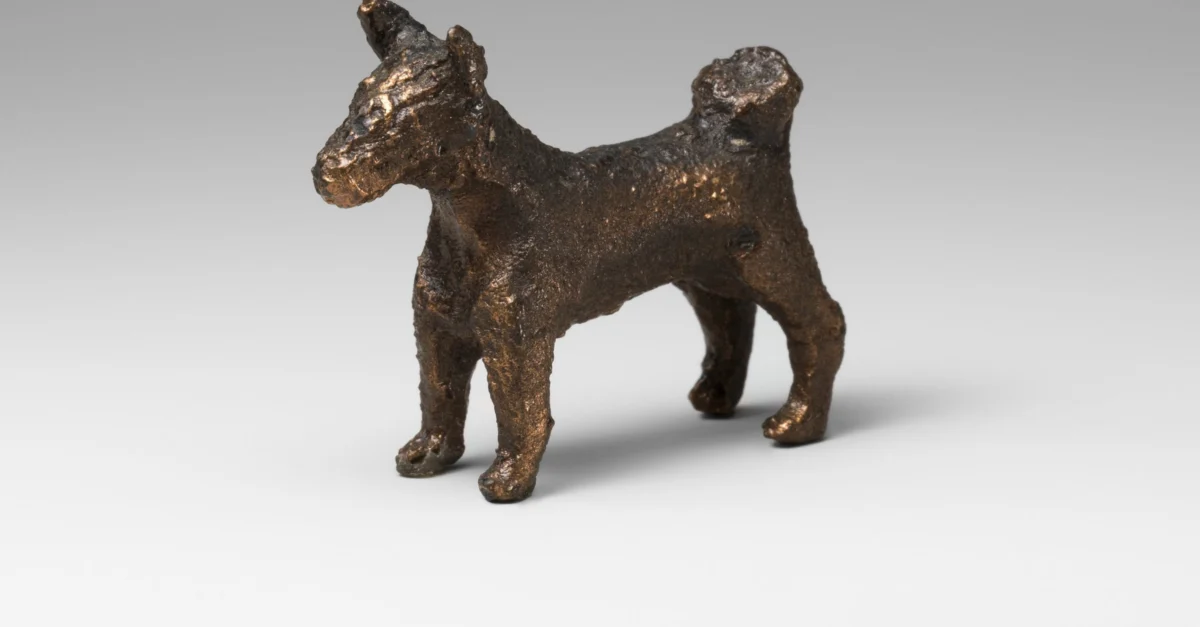
Nimrud, Iraq – In the annals of archaeological discovery, some finds captivate the public imagination with their grandeur and beauty, while others, seemingly modest, unlock profound insights into ancient civilizations. Among the latter are the Nimrud Dogs, a collection of five clay canine figurines unearthed from the ancient Mesopotamian city of Nimrud. Dating back to the 8th-7th century BCE, these unassuming artifacts offer a rare glimpse into the spiritual beliefs and daily anxieties of the powerful Neo-Assyrian Empire, whose vast dominion once stretched across the Near East. Though often overshadowed by more spectacular treasures like the Nimrud Ivories, these clay canines served a vital, mystical purpose: to guard homes against malevolent spirits and unseen dangers.
Discovered by the renowned archaeologist Max Mallowan during his 1951-1952 excavation season, the Nimrud Dogs represent more than just ancient pottery. They are tangible embodiments of a complex apotropaic (evil-averting) ritual, meticulously crafted and strategically placed to invoke divine protection. Their story is intertwined with the dramatic rise and fall of one of history’s most formidable empires, the evolving methods of archaeology, and the enduring human quest for security in a world perceived to be teeming with both benevolent and malevolent forces.
A Legacy Forged in Empire and Ruin: Chronology of Discovery and Collapse
The journey of the Nimrud Dogs from their ancient resting places to modern museum pedestals is a chronological tapestry woven with threads of imperial ambition, scholarly curiosity, and the relentless march of time.
The Grandeur and Fall of Assyria (c. 912-612 BCE)
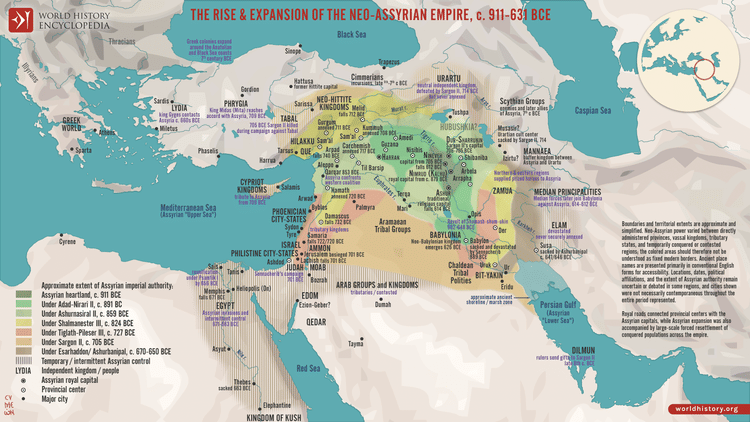
The Neo-Assyrian Empire, a colossal power of the ancient world, experienced its zenith between the 9th and 7th centuries BCE. Its expansion began in earnest under kings like Adad Nirari II (c. 912-891 BCE) and reached unprecedented heights through a succession of formidable rulers including Tiglath Pileser III (745-727 BCE), Sargon II (722-705 BCE), Sennacherib (705-681 BCE), and Esarhaddon (681-669 BCE). These monarchs forged a highly efficient, albeit brutal, military machine and administrative system, extending Assyrian influence from Egypt to the Persian Gulf. Cities like Nineveh, Ashur, and Kalhu (modern Nimrud), one of its several magnificent capitals, flourished as centers of imperial power, art, and learning.
However, by the reign of Ashurbanipal (668-627 BCE), the empire had grown too vast to manage effectively. Its immense size, coupled with the constant need to suppress revolts from subjugated peoples and defend its sprawling borders, placed an unsustainable strain on its resources. Following Ashurbanipal’s death, a power vacuum and internal strife weakened the empire significantly. The myriad vassal states, long chafing under Assyrian hegemony, seized their opportunity. In a coordinated campaign of vengeance, a coalition of Babylonians, Persians, Medes, and Scythians descended upon the heartland of Assyria.
In 612 BCE, the great Assyrian cities, symbols of millennia of enduring power, were utterly sacked and razed. Nineveh, in particular, was so thoroughly destroyed that its precise location became lost to history for centuries. Kalhu, though perhaps not erased as completely as Nineveh, suffered a similar fate. Treasures were plundered, destroyed, or discarded in the chaos. Paradoxically, this brutal destruction became a form of preservation; many artifacts, including the Nimrud Dogs and the famous Ivories, were cast into wells or buried under debris, shielding them from the elements and preserving them for future discovery. The resentment felt by the Assyrians’ former subjects ensured that the cities were not merely conquered but obliterated, their ruins left to be swallowed by the Mesopotamian sands.
From Biblical Quest to Archaeological Revolution (19th – Mid-20th Century)
The forgotten cities of Mesopotamia remained buried for over two millennia until the 19th century, when European explorers, driven by a desire to corroborate biblical narratives through physical evidence, turned their attention to the Near East. It was a period of intense intellectual curiosity, where the Bible was widely regarded as the oldest and most historically accurate text.
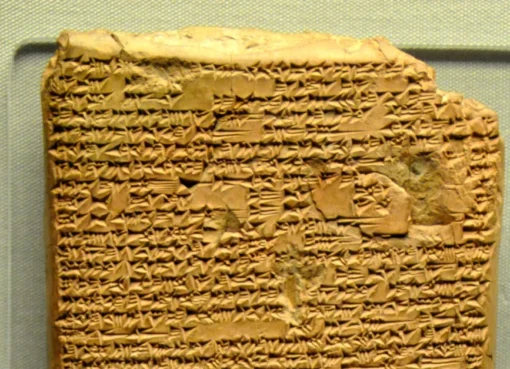
Austen Henry Layard (1817-1894) was one of the pioneering figures. Beginning his systematic excavations in the 1840s, Layard believed he had discovered the biblical city of Nineveh. His bestselling book, Nineveh and its Remains (1849), captivated the public and spurred further expeditions. However, subsequent archaeological work soon revealed that Layard’s initial discovery was not Nineveh, but Kalhu, which scholars of the time linked to the biblical figure Nimrud, thus giving the site its modern name.
Crucially, these expeditions, while initially aimed at validating biblical accounts, often yielded precisely the opposite. Archaeologists uncovered ancient Mesopotamian texts detailing narratives of the Great Flood and the Fall of Man that predated the biblical versions by centuries. This paradigm shift fundamentally altered understanding of world history and the origins of these foundational stories.
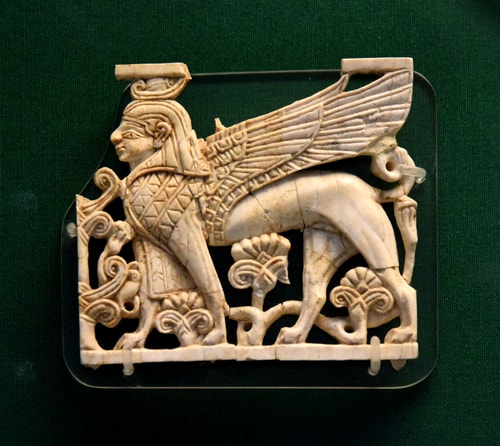
Layard’s work was continued by William K. Loftus (1820-1858), who made the spectacular discovery of the Nimrud Ivories (also known as the Loftus Ivories). These exquisite carvings, many of which had been thrown into a well during the sack of the city, were perfectly preserved by the mud and earth. Joan Lines, a historian and curator, described them as "exquisitely carved heads that once must have ornamented furniture…boxes inlaid with gold…decorative plaques; delicately carved small animals." The ivories’ exceptional preservation and artistic quality underscored the potential for even greater finds, fueling further archaeological endeavors into the 20th century.
It was against this backdrop that Max Mallowan (1904-1978), husband of mystery writer Agatha Christie, arrived at Nimrud in 1951. His expedition proved exceptionally fruitful, unearthing even more ivories, many of which are now iconic museum pieces. Yet, it was in the corner of Room NN in the Northwest Palace that Mallowan’s team made a less publicized but equally significant discovery: a cluster of clay dog figurines, the Nimrud Dogs. The conditions were arduous; as described by scholar Ruth A. Horry, the team contended with a deep well "filled with sludge that Mallowan described as being ‘the consistency of plaster of Paris’." Without electric pumps, workmen painstakingly scooped out the water and sludge by hand, revealing not only the ivories but also these unique canine guardians, all preserved by the anaerobic environment of the well. Mallowan inferred that these objects, along with other foreign artifacts like horse harnesses, had been purposefully discarded during the brutal sack of Nimrud.
Supporting Data: Canines, Cosmos, and Clay – The Deeper Meaning
The Nimrud Dogs, far from being mere decorative items, were deeply embedded in the religious and magical worldview of ancient Mesopotamia. Understanding their purpose requires delving into the daily life, spiritual beliefs, and protective rituals of the Neo-Assyrians.
Dogs in Mesopotamian Daily Life and Divinity
Dogs played a prominent and multifaceted role in Mesopotamian society. As Wolfram Von Soden noted, they were among the earliest domesticated animals, serving primarily as protectors of herds and dwellings. While some roamed freely, others were clearly bonded to individual masters. Beyond their practical utility, dogs held significant spiritual meaning. They were often depicted in the company of deities, signifying loyalty, guardianship, and sometimes even healing.
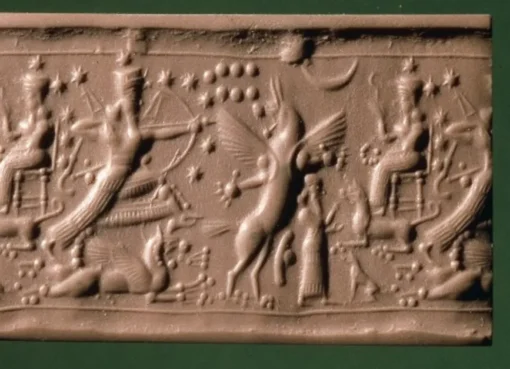
The goddess Inanna (later known as Ishtar), one of Mesopotamia’s most revered deities associated with love, war, and fertility, was frequently accompanied by dogs. Even more profoundly, Gula, the goddess of healing, became closely associated with dogs from the Old Babylonian period (c. 1894-1595 BCE) onward, with the canine becoming her enduring symbol. This connection stemmed from the keen observation that injured dogs would lick their wounds to heal. Mesopotamians interpreted dog saliva as a potent medicinal substance, viewing the animals as a divine gift endowed with curative powers. Thus, dogs embodied a dual role: robust protectors in the physical world and potent symbols of healing and guardianship in the spiritual realm.
Apotropaic Magic and the Human-Divine Partnership
The Mesopotamian worldview was one where humanity existed in a delicate partnership with the gods, tasked with maintaining order against the ever-present forces of chaos. The vast Mesopotamian pantheon included a multitude of deities, but also ghosts, evil spirits, and demons that could afflict individuals and households. To navigate this complex spiritual landscape and ensure well-being, Mesopotamians developed an elaborate system of charms, amulets, spells, and rituals for protection.
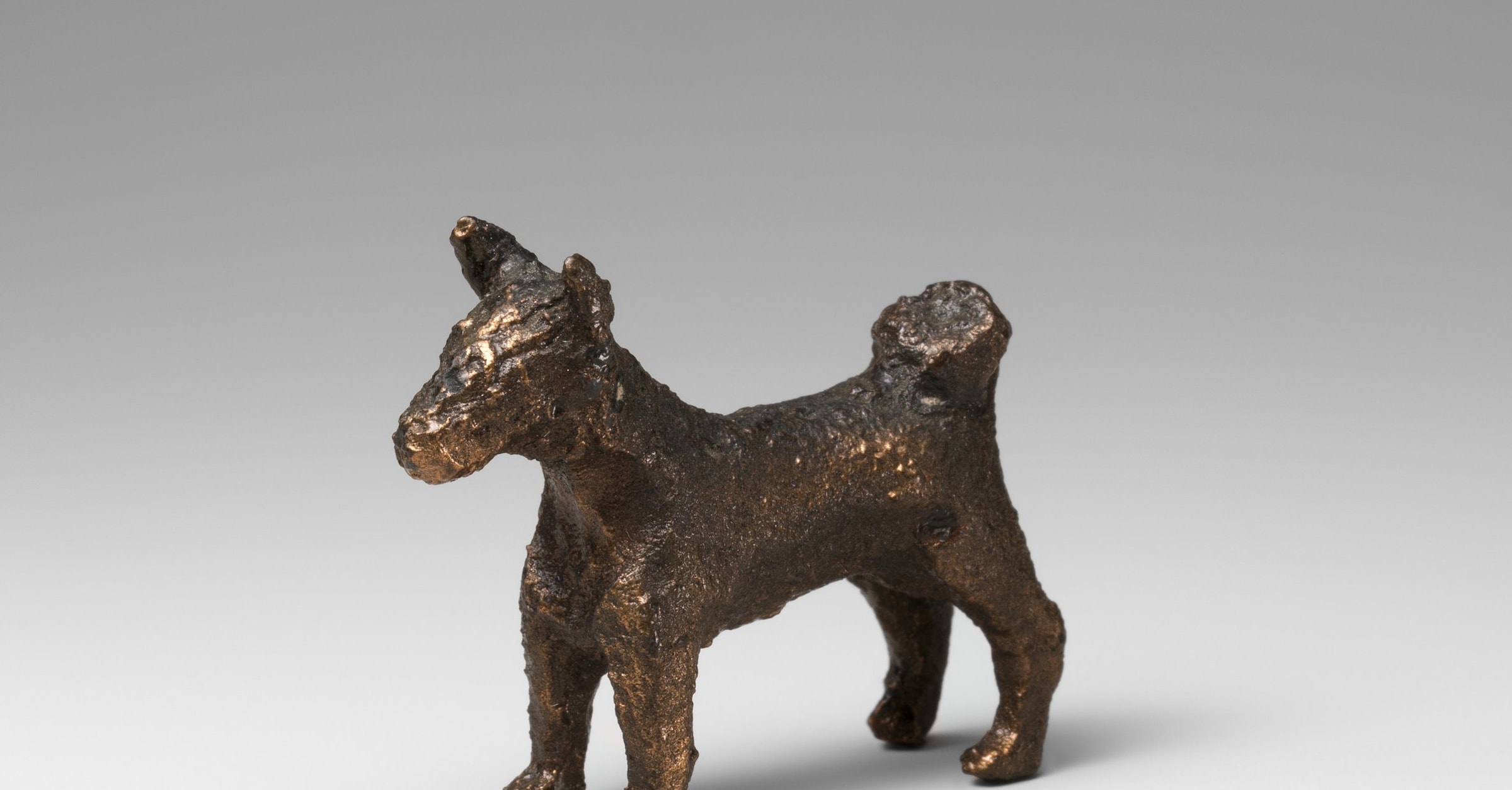
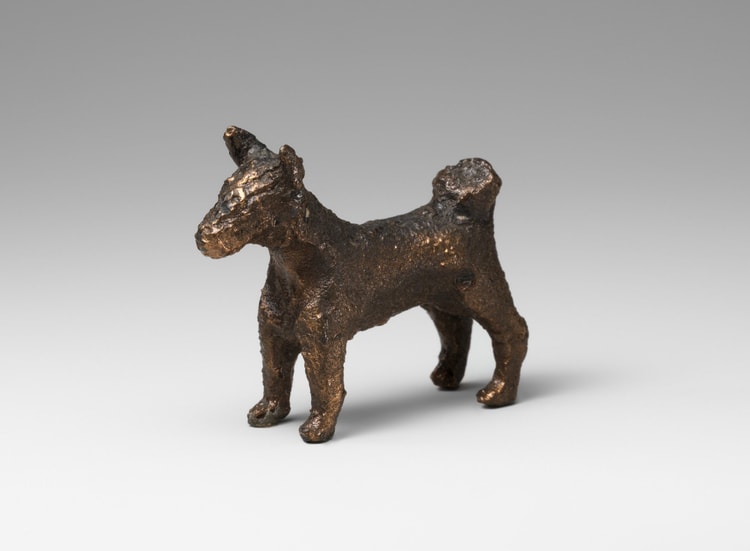
Among these protective measures were the dog statuettes. Crafted from clay or bronze, these figurines were not merely symbolic representations but were believed to be imbued with actual protective power through ritual. As scholar E. A. Wallis Budge noted from discoveries at Kish, some figurines even had names inscribed on them, such as "Biter of his enemy" and "Consumer of his life," clearly indicating their aggressive, protective function.
The ritual for "awakening" these figures was crucial. Joan Lines explained that these figurines, symbols of Gula-Ninkarrak, goddess of healing and defender of homes, "were buried beneath the floor, usually under the doorstep, to scare away evil spirits and demons and an incantation called ‘Fierce Dogs’ was recited during the ceremony." This practice highlights the apotropaic nature of the figurines, designed to actively avert evil.
Scholar Carolyn Nakamura further elaborates on the profound significance of these rituals: "Through this production of figurines, Neo-Assyrian apotropaic rituals trace out complex, and even disorienting, relations between humans, deities, and various supernatural beings in space and time…the creation of powerful supernatural beings in diminutive clay form mimes the divine creation of being from primordial clay." This suggests that by crafting these figures, humans were, in a sense, mimicking divine creation, bringing forth their own protectors to aid in the cosmic struggle against chaos. Once animated, these dog figures served as the first line of defense, often complemented by other magical artifacts like the "magical boxes" Mallowan also found at Nimrud, placed in the corners of rooms or beds to offer additional layers of security.
The Curious Case of the "Feline" Figurine
Among the five clearly identifiable canine figures Mallowan discovered, there was a sixth that presented an archaeological puzzle. This particular figurine lacked an inscription and, to Mallowan’s initial assessment, appeared distinctly "feline in character." This posed a significant interpretive challenge, as cats were not traditionally considered protective entities in Mesopotamia. As Ruth A. Horry explains, omens portrayed cats as "wild animals, at best untameable ones, that wandered in and out of houses at will. Humans and cats lived around each other but did not engage directly…the inhabitants of Kalhu, even the king in his palace, could not rely on cats to guard a building."
Given the complete absence of precedent for cat figures or amuletic imagery in Mesopotamian protective magic, Mallowan found himself in a quandary. In his initial reports, he cautiously described it as "feline in character." However, the overwhelming contextual evidence pointed towards its protective function, aligning it with the other dogs. Mallowan later revised his interpretation, suggesting it was likely a dog with a "feline appearance," acknowledging stylistic variations within the canine depictions.
The "cat" figure’s true identity remained debated for decades. It was reinterpreted as a cat by British scholars at Cambridge, where it was initially housed. It wasn’t until a comprehensive study of the figurines as a group in 2013 that the consensus shifted definitively. The "cat" was, in fact, another dog, demonstrating the ongoing nature of archaeological interpretation and the importance of re-examining artifacts with new knowledge and methodologies. This small controversy underscores the meticulous work required in archaeology, where even seemingly minor details can hold significant interpretive weight.
Official Responses and Modern Custodianship
Today, the Nimrud Dogs and their counterparts from Nineveh are dispersed across the globe, serving as silent ambassadors of a lost civilization. Their custodianship highlights both the global interest in Mesopotamian heritage and the challenges of preserving it.
Global Guardianship of Ancient History
The dog figures found by Layard at Nineveh are prominently displayed in the British Museum, a testament to early British archaeological efforts in the region. The Nimrud Dogs, discovered by Mallowan, are housed in various institutions around the world: some remain in the Iraq Museum in Baghdad, while others are found in museums in Cambridge, England; New York, America; and Melbourne, Australia.
The fate of the collections at the Iraq Museum in Baghdad, particularly during the tumultuous period of the 2003 Iraq War, provides a poignant chapter in their modern history. While much of the museum’s collection suffered devastating looting and destruction, it is a testament to their understated nature and perhaps their less immediate monetary value that the Nimrud Dogs were reportedly left untouched. They remain a part of the permanent collection, surviving conflict and serving as a symbol of the enduring heritage of Iraq.
Bridging the Interpretive Gap
For many museum visitors, these small clay dogs are often overlooked, or, if noticed, are interpreted simply as representations of ancient pets. Their humble appearance belies their profound cultural and religious significance. The challenge for museums and scholars today is to bridge this interpretive gap, moving beyond mere descriptive labels to convey the deep meaning these figures held for the people who created them.
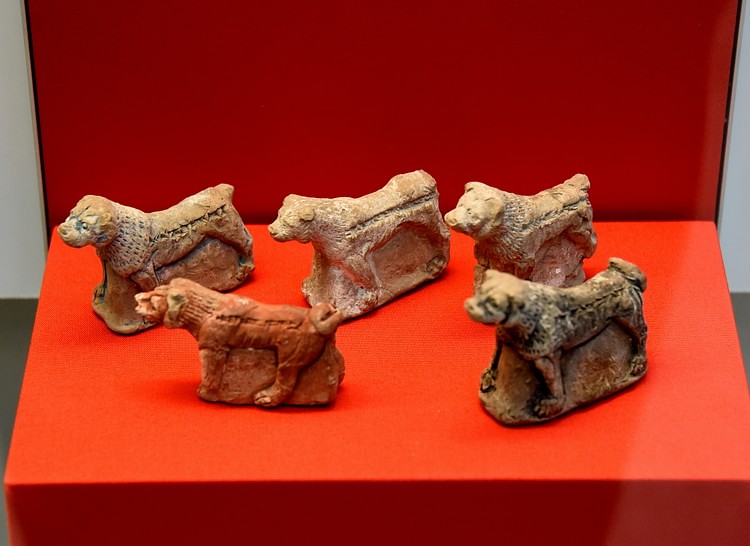
The dog statuettes were not just beloved companions, but active participants in the ancient Mesopotamian’s spiritual defense system. They represented divine protection, crafted through ritual to safeguard homes and families from the myriad unseen threats believed to permeate their world. This distinction is crucial for appreciating their true value as historical artifacts.
Implications: Echoes of Ancient Fears and Enduring Human Needs
The Nimrud Dogs, though small in stature, carry immense implications for our understanding of human history, belief systems, and the universal quest for security.
A Window into the Ancient Mind
These clay guardians serve as tangible links to the anxieties, hopes, and beliefs of people living thousands of years ago. They offer a unique window into the daily psychological landscape of ancient Mesopotamians, revealing their efforts to exert control over a world they perceived as governed by powerful, often capricious, divine and demonic forces. The meticulous creation and ritualistic placement of these figures speak volumes about the importance of home, family, and personal safety in an era vastly different from our own, yet driven by fundamentally similar human needs. They demonstrate that magic and religion were not abstract concepts but practical tools for navigating life’s uncertainties.
The Timeless Quest for Protection
Perhaps the most compelling implication of the Nimrud Dogs is their resonance with contemporary human experiences. As scholar Carolyn Nakamura notes, "an idiom of protection arises in material enactment of memory." In ancient Mesopotamia, this "enactment of memory" involved awakening the spirit of the dog within the figurine. Today, while we may no longer bury clay dogs under our thresholds, the underlying impulse remains unchanged. An individual installing a home security system, double-checking locks, or hanging a religious symbol or talisman near a door is engaging in a similar, timeless act of seeking peace of mind and safeguarding loved ones. The Nimrud Dogs are significant precisely because they are so personal, connecting us directly to the hopes and fears of ancient individuals who sought to protect what they cherished most.
The Imperative of Preservation
Finally, the story of the Nimrud Dogs underscores the enduring importance of archaeological sites and the critical need for their preservation. Nimrud, like many other sites in conflict-ridden regions, faces continuous threats from looting, neglect, and deliberate destruction. Artifacts like the Nimrud Dogs, which survived the destruction of an empire and later modern conflict, are irreplaceable keys to understanding our shared human past. Their continued study and careful curation in museums worldwide ensure that the voices and beliefs of ancient civilizations can continue to inform and inspire future generations, reminding us of the profound connections that bind humanity across millennia. These small, silent guardians of clay continue to evoke the spirit of the past, offering a powerful reminder of the enduring human need for safety, comfort, and the profound belief in forces beyond our immediate comprehension.