The Setting Sun: Analyzing the Quiet Discontinuation of the Tesla Solar Roof
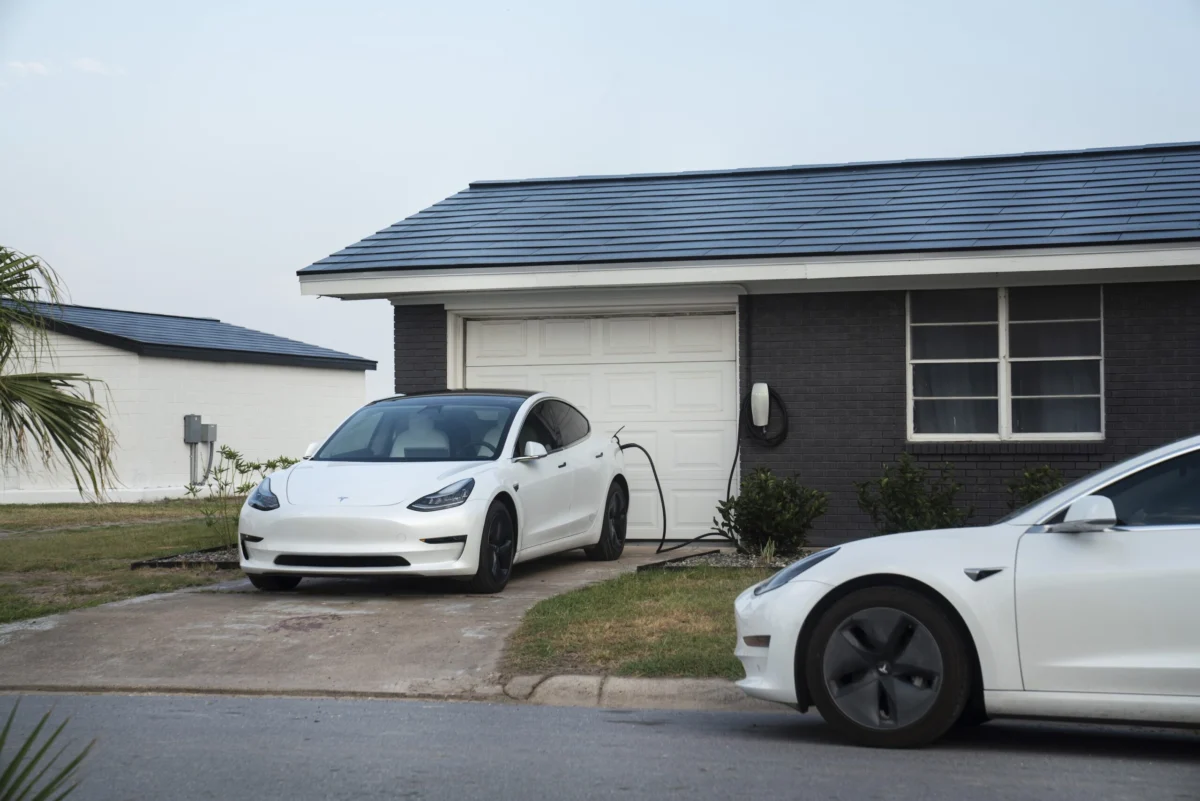
Nearly a decade after its theatrical debut on a Hollywood backlot, the Tesla Solar Roof—once hailed as the future of sustainable architecture—has quietly reached the end of its production life. In a move characteristic of Tesla’s strategic pivots, the company has scrubbed nearly all public-facing mentions of the product from its official website. What was once envisioned as a "mini-power plant" disguised as high-end shingles has been replaced by a redirect to Tesla’s traditional, bolt-on solar panel offerings.
The disappearance of the Solar Roof marks the conclusion of one of Elon Musk’s most ambitious, yet operationally fraught, experiments in "Building-Integrated Photovoltaics" (BIPV). While the product promised to revolutionize how we think about energy generation and home aesthetics, it ultimately succumbed to the harsh realities of physics, specialized manufacturing costs, and the grueling complexity of the construction industry.
Main Facts: The Erasure of a Flagship Product
The discontinuation of the Solar Roof was not announced via a formal press release or a keynote presentation. Instead, it was discovered by industry observers who noticed that the dedicated Solar Roof URL now redirects to a generic solar landing page. Support pages, installation guides, and design tools for the tiles have similarly vanished or been redirected to traditional solar panel resources.
Key takeaways from the current situation include:
- Website Scrubbing: Tesla has removed the Solar Roof as a primary product category.
- Inventory Offloading: While Tesla is no longer actively marketing the product, third-party installers report they are still finishing existing projects and offloading remaining inventory.
- Strategic Pivot: Tesla appears to be doubling down on its "standard" solar panels—traditional silicon modules that are mounted on top of existing roofs—which offer higher margins and simpler installation processes.
- Operational Failure: The product never came close to its stated goal of 1,000 installations per week, peaking at a small fraction of that number.
Chronology: From Hollywood Hype to Digital Redirection
To understand the fall of the Solar Roof, one must look at the timeline of its development, which was inextricably linked to Tesla’s controversial acquisition of SolarCity.
2016: The Grand Unveiling
In October 2016, Elon Musk stood on the set of Desperate Housewives at Universal Studios, showcasing a series of houses equipped with what appeared to be normal roofing tiles. He revealed that these were actually solar-active glass tiles. The launch was timed just weeks before Tesla shareholders voted on the $2.6 billion acquisition of SolarCity, a company founded by Musk’s cousins. Critics later argued the Solar Roof was a "prop" used to justify the merger, though Tesla maintained it was a legitimate R&D priority.
2017–2019: The Iteration Phase
Tesla struggled to move from prototype to mass production. The company went through several versions of the tile (V1 and V2), facing challenges with the durability of the tempered glass and the complexity of the electrical connectors. In late 2019, Musk introduced "Version 3" (Solar Glass Roof), which utilized larger tiles and fewer parts to speed up installation.
2020–2022: Scaling Hurdles and Price Hikes
Despite the technical refinements of V3, the Solar Roof remained a "luxury" item. In 2021, Tesla faced a wave of consumer backlash and lawsuits after retroactively increasing prices on signed contracts, in some cases by more than $50,000. By 2022, reports surfaced that Tesla was installing only 20 to 40 roofs per week—nowhere near the 1,000-per-week target Musk had set years earlier.
2024–2025: The Quiet Exit
Following a period of relative silence regarding the product during earnings calls, Tesla began removing the product from its digital storefront. The transition to a "panels-only" strategy signifies the end of Tesla’s attempt to disrupt the roofing industry directly.
Supporting Data: Why the Economics and Physics Failed
The failure of the Solar Roof was not due to a lack of consumer interest, but rather a fundamental disconnect between the product’s design and the realities of the market.
The Problem of Standardization
The global solar industry relies on the extreme standardization of silicon panels. Billions of identical cells are assembled into rectangular modules that fit on standard racking systems. The Tesla Solar Roof defied this logic. Because every roof has a unique geometry—valleys, ridges, dormers, and chimneys—Tesla had to manufacture not only the active solar tiles but also a vast array of "dummy" tiles (non-active glass) to fill in the edges. This bespoke nature prevented the company from achieving the economies of scale necessary to compete with traditional roofing and solar combinations.
The "Green Premium" and Cost Prohibitions
Tesla marketed the Solar Roof as being "cheaper than a new roof plus solar panels." However, this comparison often relied on comparing the Solar Roof to high-end materials like slate or terra cotta. When compared to the standard asphalt shingle roof used on 80% of American homes, the Solar Roof was prohibitively expensive.
- Average Solar Panel Install: $15,000 – $25,000.
- Average Roof Replacement: $8,000 – $15,000.
- Tesla Solar Roof Quotes: Often ranged from $70,000 to over $200,000 for complex structures.
Thermodynamic Inefficiencies
Physics presented another formidable barrier. Solar cells lose efficiency as they get hotter; voltage typically drops by about 0.5% for every degree Celsius increase in temperature. Traditional solar panels are mounted on racks that allow air to circulate underneath, providing natural cooling. The Tesla Solar Roof tiles were mounted much closer to the roof deck. This lack of airflow led to higher operating temperatures, which caused the system to underperform compared to Tesla’s initial estimates. Furthermore, extreme heat led to reports of the roof’s underlayment warping or melting in high-temperature climates like Arizona and Florida.
Official Responses and Corporate Context
Tesla has not issued an official "obituary" for the Solar Roof. Historically, the company prefers to let underperforming products fade away while refocusing the narrative on its latest ventures—currently AI, the Optimus humanoid robot, and the "Robotaxi" initiative.
During previous shareholder meetings, Musk admitted that the company had made "significant mistakes" in the Solar Roof’s rollout, particularly regarding the difficulty of assessing the structural integrity of existing roofs before installation. "We found that we were essentially having to rebuild the house in some cases because the roof structure wasn’t strong enough for the glass tiles," Musk noted in 2021.
Industry analysts suggest that the dissolution of the Solar Roof team is part of a broader "belt-tightening" at Tesla. As the company faces increased competition in the EV space from Chinese manufacturers and legacy automakers, it is shedding capital-intensive projects that do not have a clear path to profitability. The energy division is now focusing almost exclusively on the Powerwall (battery storage) and Megapack (utility-scale storage), both of which have shown much stronger growth and healthier margins than the solar installation business.
Implications: The Future of Integrated Solar
Does the death of the Tesla Solar Roof mean that building-integrated photovoltaics (BIPV) is a dead-end concept? Not necessarily, but it does serve as a cautionary tale for the industry.
The Survival of Competitors
While Tesla is retreating, other companies are attempting to succeed where Musk failed by focusing on "installability" rather than "aesthetic perfection."
- GAF Energy: A subsidiary of the world’s largest roofing manufacturer, GAF Energy launched the Timberline Solar shingle. Unlike Tesla’s glass tiles, GAF’s product can be nailed directly to the roof by traditional roofing crews, drastically reducing labor costs and installation time.
- Merlin Solar: This company is focusing on flexible, "peel-and-stick" solar panels that can be applied to metal roofs or curved surfaces, targeting commercial and industrial applications where the "luxury" aesthetic is less important than utility.
The Challenge to Future Founders
Tesla’s exit leaves a void in the high-end residential market. There remains a segment of affluent homeowners who refuse to put "ugly" blue panels on their homes but want renewable energy. If a startup can solve the heat-dissipation and manufacturing-cost issues that plagued Tesla, a market still exists.
The Legacy of the Experiment
The Solar Roof’s greatest contribution may have been its role as a marketing tool. It brought the concept of solar energy into the mainstream conversation, moving it from a "nerdy" environmentalist hobby to a desirable luxury lifestyle product. Even if the product itself failed to scale, it forced the traditional roofing industry to take solar seriously.
In the final analysis, the Tesla Solar Roof was a victim of its own ambition. It attempted to disrupt two massive, slow-moving industries simultaneously—manufacturing and construction—while ignoring the fundamental advantages of standardization. As Tesla redirects its customers toward traditional panels, the dream of the "invisible solar house" remains just that: a beautiful vision that proved too expensive and too complex for the real world.