The Venice Declaration: George Clooney Challenges the Viability of the Paramount-Warner Bros. Mega-Merger
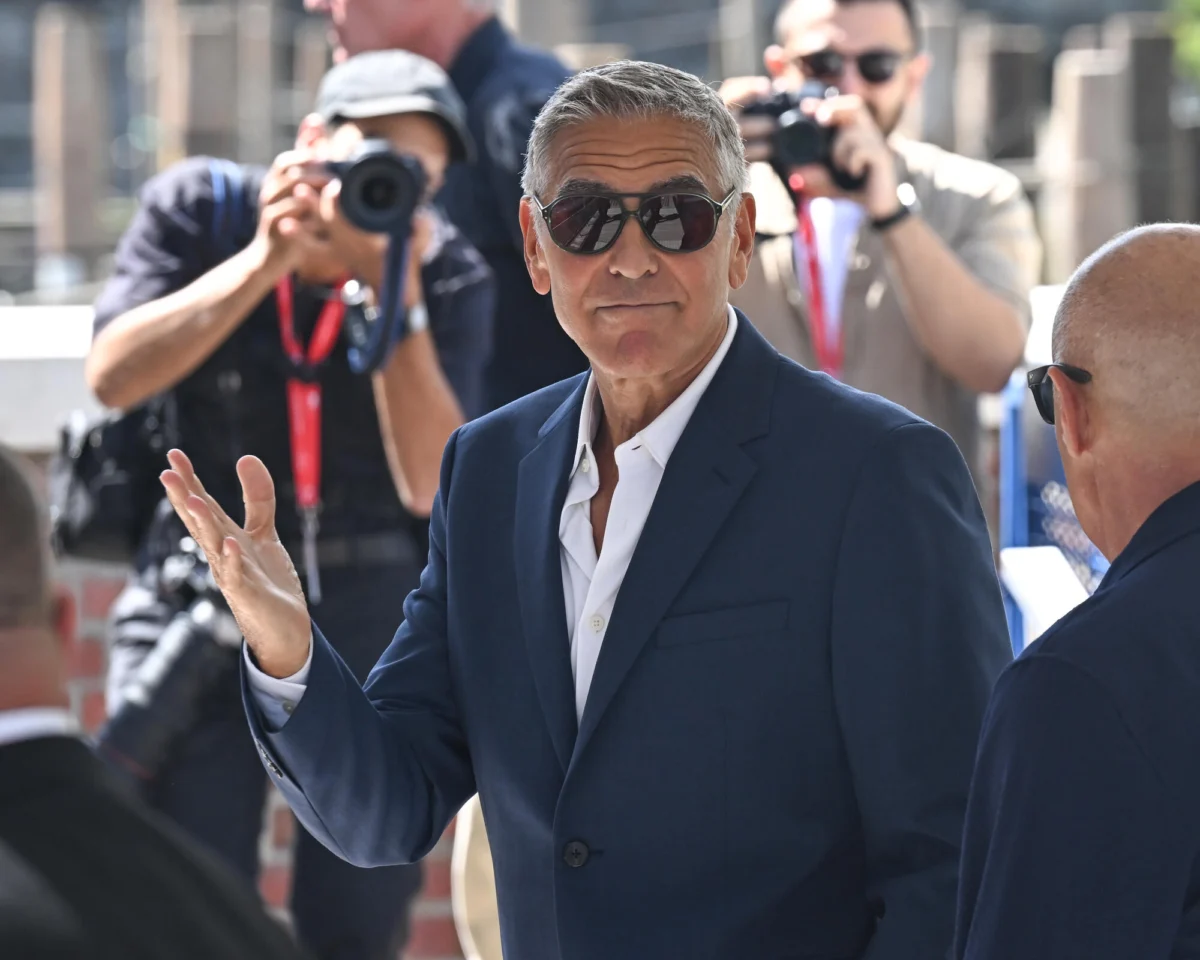
VENICE, ITALY — As the 2026 Venice Film Festival unfolds against the backdrop of the Adriatic, the focus has shifted from the silver screen to the high-stakes boardrooms of Los Angeles and New York. George Clooney, the two-time Academy Award winner and recipient of this year’s Golden Lion for Lifetime Achievement, has emerged as a prominent skeptic of the proposed consolidation of two of Hollywood’s most storied institutions: Paramount and Warner Bros.
In a wide-ranging press conference that touched upon the future of cinema, the ethics of artificial intelligence, and the preservation of free speech, Clooney offered a sobering critique of the "WarnerMount" era. His comments reflect a growing anxiety among the creative elite regarding the financial logic and human cost of an industry increasingly defined by "swallowing" its peers.
Main Facts: A "Complicated" Union
During his appearance in Venice, Clooney did not mince words when asked about the ongoing efforts led by David Ellison and Skydance to bridge the gap between Paramount Global and Warner Bros. Discovery. While he stopped short of an outright condemnation, his skepticism was rooted in what he described as a "complicated" and potentially unworkable financial landscape.
"I don’t know how it works out," Clooney admitted to a room of international journalists. "I don’t know how this goes through. There’s so many issues involved."
The crux of Clooney’s argument rests on the financial viability of the deal. Despite the immense capital involved—with the Ellison family’s deep pockets often cited as the deal’s primary engine—Clooney questioned whether the numbers would ever truly add up for the stakeholders. "It doesn’t matter how much money you have, it’s going to be very tricky to do," he noted. "I don’t see how it financially ends up making sense for the people who are trying to do it."
Clooney’s critique is particularly poignant given his dual role as a high-earning star and a seasoned producer. His perspective suggests that even with the infusion of "tech money" from the Ellison camp, the structural debt and operational redundancies of merging two legacy giants may outweigh the perceived benefits of scale.
Chronology: The Road to "WarnerMount"
The path to this potential merger has been fraught with regulatory hurdles, bidding wars, and shifting market conditions. To understand Clooney’s skepticism, one must look at the timeline of the industry’s consolidation:
- The Rise of the Conglomerates (2022–2024): Following the merger of WarnerMedia and Discovery, the industry began speculating on the "next shoe to drop." Paramount Global, burdened by debt and a fragmented streaming strategy, became the primary target for acquisition.
- The Skydance Entry (2024–2025): David Ellison’s Skydance Media emerged as the frontrunner for Paramount, backed by RedBird Capital and the Ellison family fortune. Initial talks focused on acquiring Shari Redstone’s National Amusements.
- The Warner Bros. Pivot (Late 2025): As the Skydance-Paramount deal matured, reports surfaced of a secondary "mega-merger" involving Warner Bros. Discovery. This proposed "WarnerMount" entity was envisioned as a way to compete with the sheer volume of Netflix and Disney.
- The 2026 Venice Film Festival: Clooney arrives in Venice not just as a lifetime achievement honoree, but as an Executive Producer for the Venice Spotlight selection Furies. Having starred in Jay Kelly at the festival the previous year, Clooney used his 2026 platform to voice the concerns of the labor force currently caught in the crosshairs of these corporate maneuvers.
Supporting Data: The Financial and Labor Toll
Clooney’s skepticism is backed by a growing body of industry data suggesting that "bigger" does not necessarily mean "more stable." Analysts have pointed to several key factors that complicate the Paramount-Warner Bros. union:

The Debt Burden
Both Paramount Global and Warner Bros. Discovery carry significant debt loads—remnants of previous acquisitions and the costly transition to streaming. A merger would create a combined entity with a balance sheet that many Wall Street analysts find precarious. Clooney’s assertion that it "doesn’t make sense" aligns with fears that the new company would be forced into a cycle of asset stripping and extreme cost-cutting to service its interest payments.
The Human Cost: Synergies and Layoffs
The word "synergy" has become a dreaded term in Hollywood, usually serving as a euphemism for mass layoffs. Clooney addressed this directly, noting that consolidation is almost always a precursor to job losses.
"I always worry whenever big companies are consolidating because it usually means a lot of people lose their jobs. That’s the truth," Clooney stated. This is not merely an abstract concern; the previous Warner-Discovery merger resulted in thousands of layoffs across the globe. A further merger with Paramount would likely lead to the elimination of redundant departments in marketing, distribution, and back-office operations, devastating the middle-class workforce of the industry.
The AI Revolution
Clooney linked the merger talk to a broader "revolution" in the industry, specifically the encroachment of Artificial Intelligence. He warned that AI, combined with corporate consolidation, creates a "back foot" position for human creators.
"AI is going to be a very big part of this industry. It’s going to hurt us in a lot of ways," he warned. He specifically highlighted visual effects supervisors—once the "safe" technical backbone of the industry—as being at high risk of displacement. Clooney’s research into the field led him to a humorous but dark realization: "I would like to avoid being in a tampon commercial 20 years after I’m dead."
Official Responses and the Defense of Free Speech
The studios involved have remained largely silent on Clooney’s specific criticisms, maintaining the standard "no comment" policy on pending regulatory matters. However, the industry at large has been buzzing with Clooney’s defense of his peer, Mark Ruffalo.
Ruffalo, an outspoken critic of corporate overreach and a frequent commentator on geopolitical issues, recently faced accusations that his criticisms of Paramount’s leadership had "antisemitic leanings." Clooney used his Venice platform to forcefully defend Ruffalo’s right to speak.
"That’s ridiculous," Clooney said of the accusations against Ruffalo. "We’re not going to ban speech, but I believe in free speech even when I completely disagree with it. That’s important. In fact, it’s part of how a democracy works."

Clooney’s defense of Ruffalo serves as a reminder of the internal cultural tensions within Hollywood. As studios become larger and more beholden to global investors and complex political landscapes, the "ability to speak freely" becomes a contested resource. Clooney’s insistence that "we’re supposed to argue these things out" suggests a fear that mega-mergers might lead to a more sanitized, corporate-controlled public discourse.
Implications: A "Complicated Time" for Survival
The implications of Clooney’s "Venice Declaration" are manifold, signaling a shift in how Hollywood’s A-list views the future of the business.
1. The Survival of the Independent Spirit
If Paramount and Warner Bros. merge, the "Big Five" studios effectively become the "Big Four" (or even Three, depending on the status of other smaller players). This concentration of power limits the avenues for independent producers to find homes for mid-budget films—the very type of cinema Clooney has championed throughout his career as a director and producer.
2. The Preparedness Gap
Clooney’s observation that Hollywood is on its "back foot" regarding AI suggests that the current focus on mergers might be a distraction from a more fundamental technological threat. If the industry spends the next two years navigating the legal and operational hurdles of a merger, it may fail to establish the necessary ethical and contractual guardrails for AI usage.
3. The Future of the "Golden Lion" Class
As Clooney accepted his Lifetime Achievement award, his speech felt less like a retirement and more like a call to arms. The implication is clear: the veterans of the industry—those who have seen the transition from film to digital and from cable to streaming—must take the lead in navigating this "revolution."
"It’s going to be a complicated time in our industry," Clooney concluded. "So we’re going to have to find ways to survive."
Conclusion
George Clooney’s skepticism in Venice serves as a reality check for an industry often blinded by the glitter of "mega-deals." By highlighting the financial instability, the threat to the labor force, and the ethical dilemmas of AI, Clooney has positioned himself as the conscience of a shifting Hollywood. Whether the "WarnerMount" merger proceeds or collapses under its own weight, the questions raised on the Lido will remain: At what point does a company become too big to create, and how many people will be left behind in the pursuit of "synergy"?
For now, Clooney remains a wary observer, supporting the right to speak, the right to work, and the right to not be resurrected by an algorithm for a commercial two decades after his passing.