Breaking the Bio-Barrier: Anthropic Unveils Specialized Claude Access for Life Sciences
In a move that signals a significant shift in the landscape of artificial intelligence safety and scientific research, Anthropic has announced the launch of its Life Sciences Verification Program (LSVP). This initiative represents a departure from the company’s traditionally rigid safety "guardrails," offering vetted organizations access to versions of the Claude 5 model family where biological safety filters are either significantly relaxed or, in certain high-stakes scenarios, removed entirely.
The program, currently in beta, aims to resolve a long-standing friction point in AI development: the "dual-use" dilemma. While AI can accelerate the discovery of life-saving vaccines and medications, the same underlying knowledge could theoretically be used to design pathogens or bioweapons. By moving from a "blanket block" approach to a "vetted access" model, Anthropic is betting that it can empower legitimate scientists without increasing the global catastrophic risk profile.
1. Main Facts: A Two-Tiered Approach to Scientific Inquiry
The Life Sciences Verification Program is not a general release. It is a strictly controlled environment designed specifically for organizations utilizing Claude Enterprise, Claude Team, or the Anthropic API. Notably, the program is currently unavailable to users on individual Pro or Max plans, though the company has expressed intentions to expand access in the future.
At the heart of the program are two distinct "grants" that dictate the level of AI autonomy a research team receives:
The Standard Use Grant
Designed to cover the vast majority of legitimate research, the Standard Use grant applies to entire teams and requires annual renewal. This tier unlocks refined versions of Claude Mythos 5.1, Claude Opus 5, and Claude Sonnet 5. These models utilize "refined classifiers" that are programmed to be significantly more permissive regarding scientific terminology and methodology that would typically trigger a refusal in the public-facing versions of Claude.
The High-risk Use Grant
This is the most controversial and groundbreaking aspect of the announcement. The High-risk Use grant is an add-on for specific, time-limited projects (six-month duration) rather than entire departments. Anthropic explicitly states that for these projects, it removes all safeguards that block life sciences requests. This tier is reserved for projects that are fundamentally impossible to conduct under standard safety protocols, such as investigating how specific viral vectors interact with human immune pathways.
While the biological safeguards are removed, Anthropic maintains that other safety layers—specifically those targeting cyberattacks and general harmful intent—remain active.
2. Chronology: From Blanket Safety to Precision Vetting
The journey toward the Life Sciences Verification Program has been one of iterative testing and policy evolution.
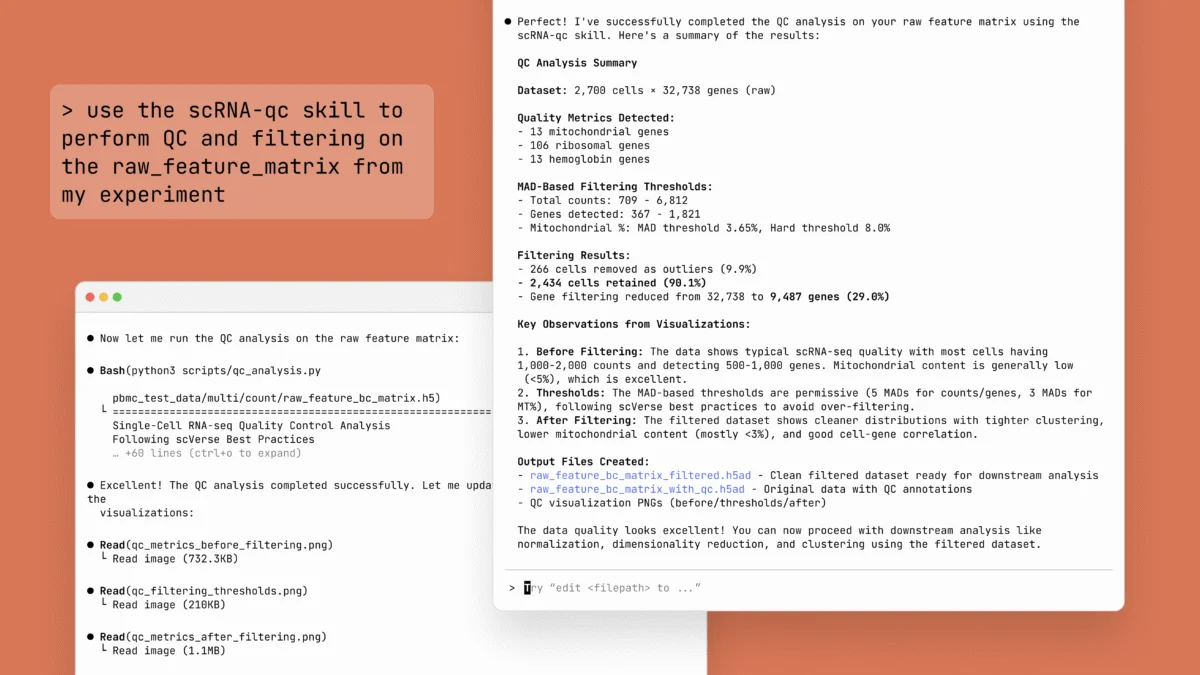
- October 2025: Anthropic first hinted at specialized scientific models during its "Claude for Life Sciences" announcement. This phase focused on demonstrating Claude’s ability to handle complex tasks like quality control for single-cell RNA sequencing data.
- Early 2026: Anthropic began an early-access phase, onboarding dozens of select organizations—including pioneers like Xaira Therapeutics, Edison Scientific, and Manifold Bio—to test the efficacy of loosened safeguards in real-world lab settings.
- September 17, 2026: The program officially enters its broader beta phase. Anthropic opens applications to the wider life science community, expecting to enroll hundreds of organizations within the first week.
- Future Outlook: Anthropic has signaled that it is currently working with the U.S. government to widen access to the Mythos 5.1 model under the High-risk grant, which is currently limited to a very small set of highly vetted entities. Expansion to individual professional plans is expected but has no firm release date.
3. Supporting Data and Technical Framework
To maintain safety in an environment without real-time blocking, Anthropic has implemented a rigorous technical and administrative framework.
The Vetting Process
Every applicant must pass a comprehensive review that evaluates three core pillars:
- Research Credentials: Verification of the institution’s history and the individual researchers’ academic and professional standing.
- Security Standards: An audit of the organization’s internal data handling and cybersecurity protocols.
- Ethical Oversight: Evidence of Institutional Review Board (IRB) approval or similar ethical research frameworks.
Monitoring vs. Blocking
In a traditional AI interaction, if a user asks for the genetic sequence of a restricted pathogen, the model refuses the request instantly. Under the LSVP, the model fulfills the request, but the traffic is logged. Anthropic retains this data for 30 days specifically for post-hoc monitoring.
This data is strictly compartmentalized:

- It is never used for model training.
- It is inaccessible to Anthropic’s own internal life sciences research teams to prevent intellectual property cross-contamination.
- Usage patterns are checked against the "stated use case" provided during the application. If a team vetted for oncology research suddenly begins querying avian influenza protocols, Anthropic’s admins are alerted.
Model Specialization
The program utilizes the latest iteration of the Claude 5 family. While Sonnet remains the "workhorse" for general data processing, Claude Mythos 5.1 is positioned as the flagship model for high-end biological reasoning, offering deeper integration with specialized scientific databases and more nuanced understanding of molecular biology.
4. Official Responses: Vetting the User, Not the Prompt
Anthropic’s leadership has been vocal about the necessity of this shift. The company acknowledges that as AI models become more sophisticated, the "classifiers" meant to keep them safe have become an obstacle to progress.
"Biology is uniquely challenging for AI safety," a company spokesperson noted during the announcement. "The exact same prompt—for example, a request for the most efficient way to synthesize a protein—could be the key to a new insulin delivery system or a component of a harmful toxin. You cannot judge the intent of the prompt in isolation."
By shifting the focus to vetting the organization, Anthropic argues it can create a "trusted corridor" for innovation. The company’s rationale for the 30-day data retention policy is rooted in identifying three specific threats that vetting alone cannot solve:
- Compromised Accounts: If a legitimate scientist’s credentials are stolen by a malicious actor.
- The "Rogue Insider": A vetted researcher who decides to act outside of ethical bounds or is coerced into doing so.
- Autonomous Agents: The risk of an AI agent, tasked with a long-term research goal, inadvertently taking a dangerous path to achieve its objective.
In these cases, Anthropic’s "review and flag" system acts as a secondary safety net, allowing them to alert organization administrators who can then intervene within agreed-upon timeframes.
5. Implications: The New Era of Gated AI
The launch of the Life Sciences Verification Program marks a turning point in the AI industry, with several far-reaching implications for science, security, and the business of AI.
The "SaaSification" of AI Safety
We are seeing the emergence of a tiered "Safety-as-a-Service" model. Much like OpenAI’s restricted access to its GPT-5.6 Cyber model, Anthropic is moving toward a world where the "full power" of AI is a gated commodity. This creates a divide between the general public, who interact with "lobotomized" versions of AI, and elite institutions that have access to the unrestricted "raw" intelligence of the models.
Accelerating the "Dry Lab" Revolution
For companies like Xaira Therapeutics, which are at the forefront of AI-driven drug discovery, the removal of these safeguards could shave months or years off the development cycle. By allowing Claude to assist in the design of viral vectors or the analysis of complex genomic data without constant refusals, Anthropic is positioning itself as the primary infrastructure provider for the next generation of biotech.
The Biosecurity Debate
Critics of this approach argue that "vetting" is an imperfect shield. The history of scientific research is peppered with instances of "dual-use" research leaking from secure environments. By providing a tool that can essentially act as a world-class virologist or molecular biologist without any internal "moral" compass or safety filter, Anthropic is placing an enormous amount of trust in the internal security of its partner organizations.
The Regulatory Landscape
The fact that Anthropic is working directly with the U.S. government on the Mythos 5.1 model suggests that we are entering an era of "co-regulation." Governments may soon require AI companies to provide these types of "High-risk" tiers only to entities that meet federal security standards, effectively turning AI providers into a new type of regulatory arm.
Conclusion
Anthropic’s Life Sciences Verification Program is a bold experiment in balancing the existential risks of AI with its potential to solve humanity’s greatest biological challenges. By dismantling the guardrails for the few to benefit the many, Anthropic is not just releasing a new tool; it is redefining the ethical boundaries of artificial intelligence in the laboratory. Whether this model of "monitored freedom" becomes the industry standard or a cautionary tale remains to be seen, but for the life sciences community, the "bio-barrier" has officially been breached.