Shadow of the State: Jafar Panahi Sentenced to Five Years as Tehran Intensifies Crackdown on Cinema
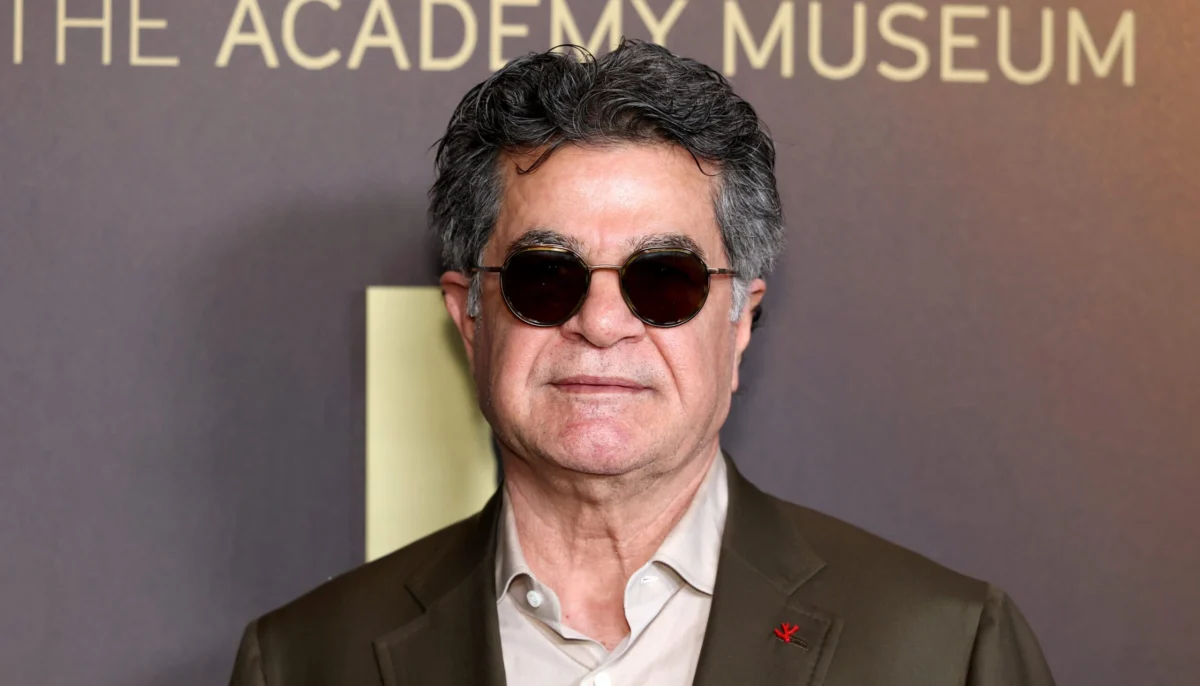
TEHRAN — In a move that has sent shockwaves through the international film community, Branch 26 of the Tehran Revolutionary Court has sentenced the world-renowned filmmaker Jafar Panahi to five years and one month in prison. The sentence, handed down in absentia, marks a significant escalation in the Iranian judiciary’s long-standing campaign against the director, whose work has come to symbolize both the artistic brilliance and the precarious political existence of the Iranian New Wave.
The ruling comes at a time of immense professional triumph for Panahi. Only months ago, the director was celebrated on the global stage for his latest thriller, It Was Just an Accident, which secured the prestigious Palme d’Or at the 2025 Cannes Film Festival. However, the contrast between international acclaim and domestic persecution has never been starker. Alongside the custodial sentence, the court has imposed a two-year travel ban and a two-year prohibition on social media activity, effectively attempting to sever the filmmaker’s connection to both his physical audience abroad and his digital community at home.
The Verdict: Legal Irregularities and Frozen Assets
The details of the sentencing emerged through Mansour Jahani, an independent film journalist based in Tehran who has spent years documenting the legal hurdles faced by the nation’s dissident artists. According to Jahani, Panahi’s legal counsel, Mostafa Nili, was informed of the verdict following a series of abrupt financial restrictions placed on the director.
Last week, Panahi discovered that his bank accounts had been frozen without prior notice. This financial strangulation prompted a meeting between Nili and the Enforcement of Judgments Unit at Iran’s Cultural and Media Prosecutor’s Office. It was during this inquiry that the existence of the new sentence was revealed. The court’s justification for issuing the verdict in absentia—a legal term meaning the defendant was not present—rests on the claim that authorities were unable to locate Panahi, alleging he was outside the country.
This claim has been vehemently contested by Nili. The lawyer pointed out that Panahi has been physically present in Iran since March 2026, following the conclusion of his international awards tour for It Was Just an Accident. Furthermore, Nili noted that Panahi had appeared before a different branch of the Prosecutor’s Office as recently as September 2026. The defense maintains that Panahi was never notified of a hearing date for the current case, suggesting a procedural bypass intended to secure a conviction without the opportunity for a formal defense.
A Chronology of Defiance: Panahi’s Decades of Conflict
To understand the weight of this new sentence, one must look at the timeline of Panahi’s career—a journey defined by a refusal to stop filming, regardless of the cost.
The Rise to Global Prominence (2000–2010)
Panahi first gained major international attention with The Circle (2000), which won the Golden Lion at the Venice Film Festival. The film offered a harrowing look at the systemic oppression of women in Iran. While the world cheered, the Iranian government grew increasingly wary. By 2010, amid the fallout of the Green Movement protests, Panahi was arrested and sentenced to six years in prison and a 20-year ban on filmmaking and travel.

Innovation Under Duress (2011–2024)
Rather than retreating, Panahi turned his restrictions into a new form of cinematic language. He famously smuggled the documentary This Is Not a Film out of Iran on a USB drive hidden inside a cake to reach Cannes in 2011. In 2015, he won the Golden Bear at the Berlinale for Taxi, a film shot entirely inside a yellow cab roaming the streets of Tehran, with Panahi himself acting as the driver. These works blurred the lines between fiction and reality, documenting his own legal limbo.
The "Accident" and the 2025 Campaign
The current legal crisis stems from the period surrounding his latest masterpiece, It Was Just an Accident. In May 2025, the film won the Palme d’Or, sparking a massive Academy Awards campaign. In December 2025, while Panahi was in the United States promoting the film—which eventually earned Oscar nominations for Best International Feature Film and Best Original Screenplay—the Iranian government sentenced him to one year in prison on charges of "propaganda activity against the system."
Panahi returned to Iran in March 2026, fully aware of the risks. His return was seen as an act of bravery, asserting his right to live and work in his homeland despite the looming shadow of the December sentence.
Supporting Data: The Systematic Squeezing of the Arts
The sentencing of Jafar Panahi is not an isolated event but part of a broader statistical trend of judicial pressure on the Iranian film industry. Human rights organizations have noted a 40% increase in summons and "preventative" detentions of filmmakers and actors since late 2022.
The use of "propaganda against the state" (Article 500 of the Islamic Penal Code) has become a catch-all charge for any artistic work that does not strictly adhere to the guidelines set by the Ministry of Culture and Islamic Guidance. Panahi’s specific sentence—five years and one month—is particularly harsh, even by the standards of the Revolutionary Court’s Branch 26, which is known for handling national security cases.
The freezing of bank accounts represents a shift toward "civil death" tactics. By cutting off a filmmaker’s ability to pay for legal fees, daily expenses, or production costs, the state aims to neutralize the artist without necessarily placing them behind bars immediately, though the prison sentence remains a permanent threat.
Official Responses and the Defense’s Stance
While the Iranian government has not issued a public press release regarding the specific nuances of Panahi’s case, the actions of the Cultural and Media Prosecutor’s Office speak to a policy of containment. The state’s narrative often frames directors like Panahi as "tools of Western soft war," alleging that their international accolades are politically motivated rewards for portraying Iran in a negative light.

Mostafa Nili, Panahi’s lawyer, has been vocal in his criticism of the judicial process. "My client has never gone into hiding," Nili stated during his communications with the Enforcement Unit. "He has been visible, he has been present at other court sessions, and he has been living at his known address. To claim he was ‘unreachable’ is a factual error that invalidates the grounds for an in absentia ruling."
The international community has begun to mobilize. Representatives from the Cannes Film Festival and several European film academies have issued preliminary statements calling for the "immediate and unconditional annulment" of the sentence. There are growing fears that this sentence is a precursor to a wider crackdown on the "It Was Just an Accident" production team.
Implications for the Future of Iranian Cinema
The sentencing of Jafar Panahi carries implications that extend far beyond his personal liberty. It signals a "zero tolerance" era for Iranian cinema that seeks international engagement outside of state-sanctioned channels.
1. The Chilling Effect on Co-productions
It Was Just an Accident was a triumph of international collaboration. By punishing Panahi so severely upon his return, the Iranian authorities are sending a message to foreign producers and distributors: working with dissident Iranian talent carries a high risk of "contaminating" those artists and making them targets for the state.
2. The Weaponization of Social Media Bans
The two-year social media ban is a modern addition to the state’s toolkit of censorship. In an era where filmmakers use Instagram and X (formerly Twitter) to bypass state media and speak directly to the public, this restriction is designed to silence Panahi’s voice during what will likely be a period of intense international advocacy for his case.
3. The Paradox of the "Global Director"
Panahi remains one of the most decorated directors in history, yet he is currently a man without the right to travel, the right to post online, or access to his own money. This paradox highlights the tension between the globalized nature of modern art and the localized power of authoritarian legal systems. As Panahi faces over five years in prison, the world of cinema must grapple with the reality that one of its greatest visionaries is being punished precisely because his vision was so clear.
As the legal battle continues, Panahi’s supporters remain hopeful that international pressure might lead to a suspension of the sentence, as has happened in the past. However, with his bank accounts frozen and a five-year term hanging over his head, the "accident" of Panahi’s freedom appears more fragile than ever. The director, who once said, "When a filmmaker is not making films, it is like he is in prison," now faces the literal reality of that metaphor once again.