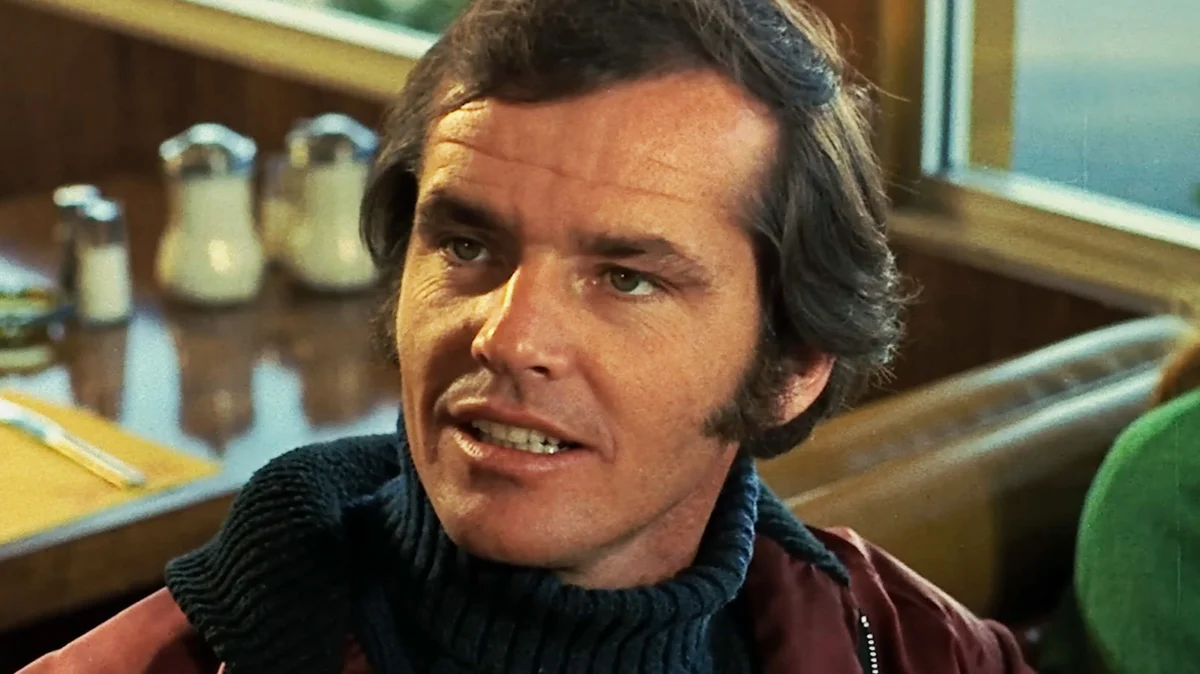
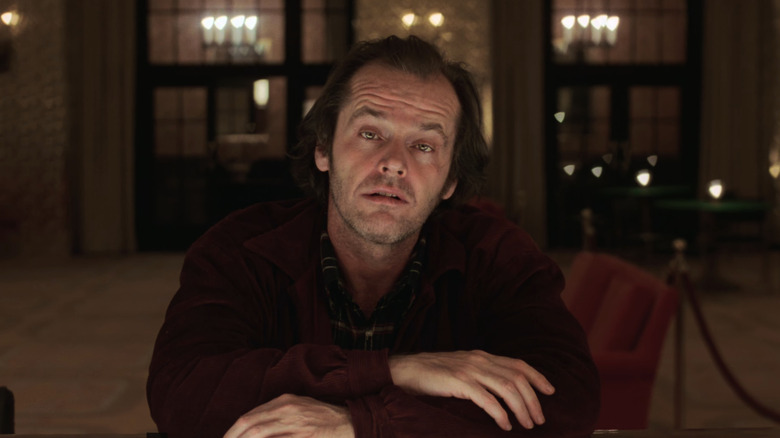
For more than half a century, Jack Nicholson was the atmospheric center of Hollywood—a grinning, sunglasses-wearing force of nature whose presence at the Oscars was as guaranteed as the red carpet itself. Then, around 2010, the screen went dark. Nicholson didn’t issue a grand press release or embark on a farewell tour; he simply stepped away. While rumors of health issues occasionally surfaced and were subsequently debunked by those close to him, the truth behind his retirement appears to be far more intellectual and, perhaps, more indicting of the modern film industry.
Jack Nicholson did not just leave Hollywood; he arguably outgrew a culture that he felt had lost its appetite for the "immediate facts of understanding." As a three-time Academy Award winner and the most nominated male actor in history, Nicholson’s withdrawal marks the end of an era defined by "pressing on the nerves"—a philosophy of acting and art that prioritized emotional subversion over safe, predigested entertainment.
A Chronology of Subversion: From B-Movies to Cinematic Iconography
To understand why Nicholson walked away, one must first understand the trajectory of his ascent. His career was not a product of the traditional studio system, but rather the rebellious "New Hollywood" movement of the late 1960s and 70s.
The Formative Years (1958–1968)
Nicholson began his journey in the trenches of Roger Corman’s B-movies. This period was essential in shaping his work ethic and his "cerebral" approach to what many viewed as disposable art. Working on titles like The Cry Baby Killer and The Terror, he learned the mechanics of filmmaking from the ground up. During this time, he wasn’t just an actor; he was a writer and a student of the craft, deeply embedded in the counterculture that would soon upend the industry.
The Breakthrough and the Golden Era (1969–1980)
The 1969 classic Easy Rider served as Nicholson’s lightning bolt. His portrayal of George Hanson—a drunken, ACLU-affiliated lawyer—encapsulated the friction between the establishment and the hippie movement. This role established the "Nicholson Persona": the roguish, hyper-intelligent outsider.
The 1970s saw him solidify this status through a string of masterpieces that defined "emotive" cinema. In Five Easy Pieces (1970), he explored the alienation of the American male; in Chinatown (1974), he reinvented the noir detective; and in One Flew Over the Cuckoo’s Nest (1975), he became the ultimate symbol of anti-authoritarianism. These were films that, in his own words, "moved people."
The Blockbuster Transition (1980–2010)
As the industry shifted toward the "High Concept" era of the 1980s, Nicholson managed a rare feat: he maintained his artistic integrity while becoming a massive commercial draw. From the psychological horror of The Shining (1980) to his transformative, Oscar-winning turn in Terms of Endearment (1983) and his iconic Joker in Batman (1989), Nicholson remained a "true movie star"—a title that implies both immense charisma and a deep, underlying intellectualism.
"Pressing on the Nerves": Decoding Nicholson’s Artistic Manifesto
The core of Nicholson’s brilliance was often obscured by his tabloid reputation as a high-living lothario—the man Kim Basinger famously called "the most highly sexed human being" she had ever met. However, beneath the "Jack" persona lay a rigorous, almost academic commitment to the craft of acting.
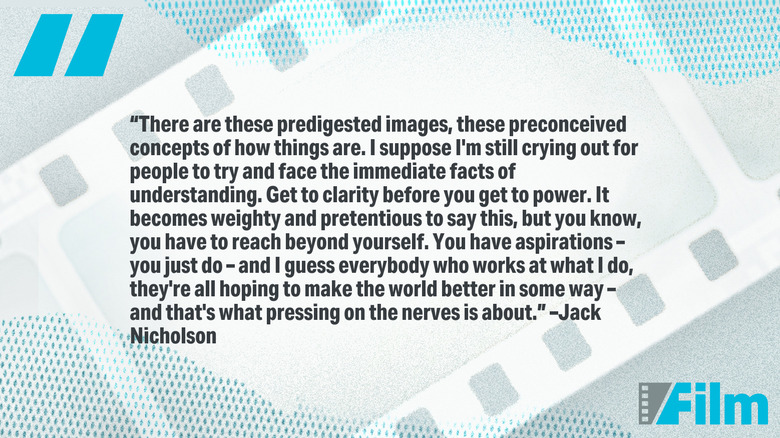
In a seminal 1986 profile for The New York Times, Nicholson sat down with Ron Rosenbaum to discuss the "Method" and the mystique of his performance style. It was here that he articulated his most famous mission statement:
"There are these predigested images, these preconceived concepts of how things are. I suppose I’m still crying out for people to try and face the immediate facts of understanding. Get to clarity before you get to power… you have to reach beyond yourself. You have aspirations—you just do—and I guess everybody who works at what I do, they’re all hoping to make the world better in some way—and that’s what pressing on the nerves is about."
The Theory of "Clarity Before Power"
Nicholson’s insistence on "clarity before power" is a direct critique of "lazy" acting. He argued that many actors reach for the "power" of a scene—the shouting, the tears, the dramatic gestures—without first achieving the "clarity" of the character’s internal truth. For Nicholson, "pressing on the nerves" meant finding the uncomfortable, unpolished reality of a human being and forcing the audience to look at it, even if it defied their expectations.
Subverting the Cliché: The Garrett Breedlove Example
Nicholson pointed to his role as the aging astronaut Garrett Breedlove in Terms of Endearment as a prime example of this philosophy. At the time, Hollywood was beginning to lean into the "midlife crisis" trope—a predigested image of the middle-aged man as a pathetic, regressive figure.
Nicholson consciously chose to play Breedlove against that grain. He didn’t want to portray a man in crisis; he wanted to portray a man who was comfortable in his skin, even if that skin was aging. By doing so, he subverted the "cliché of middle age" and won an Oscar in the process. He used his platform not just to entertain, but to challenge the "orthodoxy" of how society views different stages of life.
The Ferris Bueller Critique: Why Nicholson Feared the Death of Creativity
Nicholson’s eventual departure from Hollywood was foreshadowed as early as the mid-1980s. While the world fell in love with John Hughes’ Ferris Bueller’s Day Off, Nicholson viewed the film with a sense of dread. To him, the movie represented a shift toward a more sanitized, "predigested" form of entertainment—one that prioritized cleverness and style over the raw, messy "nerves" of real human experience.
His disdain for the 1986 classic wasn’t about the film’s quality per se, but what it signaled for the future of the industry. He saw a move toward "concept-driven" films where the characters were archetypes rather than people. This suspicion grew over the following decades as Hollywood became increasingly reliant on franchises, sequels, and intellectual property.
In a 2013 interview with the Sydney Morning Herald, Nicholson expressed a "chilling thought" that had been haunting him: "Maybe people in their twenties and thirties don’t actually want to be moved anymore." He noted that the modern audience seemed to prefer the comfort of the familiar—reboots, remakes, and superhero epics—over the challenge of films that "move people" through complex emotions.
Industry Context and the "Death of Emotive Cinema"
Nicholson’s observations align with a broader shift in the cinematic landscape. Film critics and historians have noted that the "mid-budget adult drama"—the very genre Nicholson excelled in—has largely vanished from theatrical release, migrating to streaming services or disappearing altogether.
The Rise of the "Safe" Narrative
In the current era of "algorithmic greenlighting," studios often prioritize films with built-in global recognition. The "predigested images" Nicholson railed against in 1986 have become the industry standard. Whether it is the live-action Disney remakes or the infinite expansion of the Marvel Cinematic Universe, the goal is often to minimize risk by providing the audience with exactly what they expect.
The Impact of AI and Digital Ownership
The modern landscape further complicates Nicholson’s vision of "pressing on the nerves." The rise of generative AI threatens to create a world of entertainment built entirely on "predigested" data points, devoid of the human aspiration to "reach beyond oneself." Furthermore, the shift toward streaming and the "death of ownership" has turned film into a disposable utility rather than a lasting cultural artifact. In this environment, the "immediate facts of understanding" that Nicholson sought are often buffed away in favor of "content" that can be consumed passively.
Implications: The Void Left by the Last Movie Star
Jack Nicholson’s quiet retirement is more than just a personal choice; it is a commentary on the state of the arts. By choosing to "disappear," he preserved his legacy from being diluted by the very trends he despised. He refused to be a "predigested image" of himself, appearing in late-career cameos or uninspired sequels just to maintain relevance.
The Legacy of the Rebel
Nicholson’s words serve as a rallying cry for a new generation of filmmakers and actors. His philosophy suggests that the only way to save cinema from stagnation is to return to the "nerves"—to find stories that are heretical, uncomfortable, and deeply human. As Susan Sontag once claimed, "the only interesting ideas are heresies," and Nicholson’s entire career was a testament to that belief.
The Enduring Need to be "Moved"
While Nicholson feared that younger audiences might not want to be "moved," the enduring popularity of his work suggests otherwise. New generations continue to discover The Shining, One Flew Over the Cuckoo’s Nest, and Chinatown, finding in them a level of emotional complexity that modern blockbusters often lack.
The implication of Nicholson’s career is that "clarity" is the ultimate form of power. In an age of digital noise and artificiality, the act of "pressing on the nerves"—of forcing an audience to confront the raw reality of the human condition—remains the most radical and necessary function of art. Jack Nicholson may have left the building, but his blueprint for "reaching beyond oneself" remains the gold standard for anyone who believes that movies should be more than just entertainment.
In the ever-shifting landscape of Hollywood, where the lines between social media stardom, television showrunning, and literary achievement frequently blur, few figures have navigated the transition a
In the pantheon of American cinema, few figures loom as large as Clint Eastwood. To the modern audience, he is the definitive silhouette of the Old West—a squinting, cigarillo-chewing arbiter of justi
VENICE — The 2026 Venice Film Festival has long been a harbor for the melancholic and the macabre, but few films this year have sparked as much divisive conversation as Martin McDonagh’s latest offeri