The Digital Grind: Unpacking the Mechanics and Allure of ‘Influencer Solitaire’
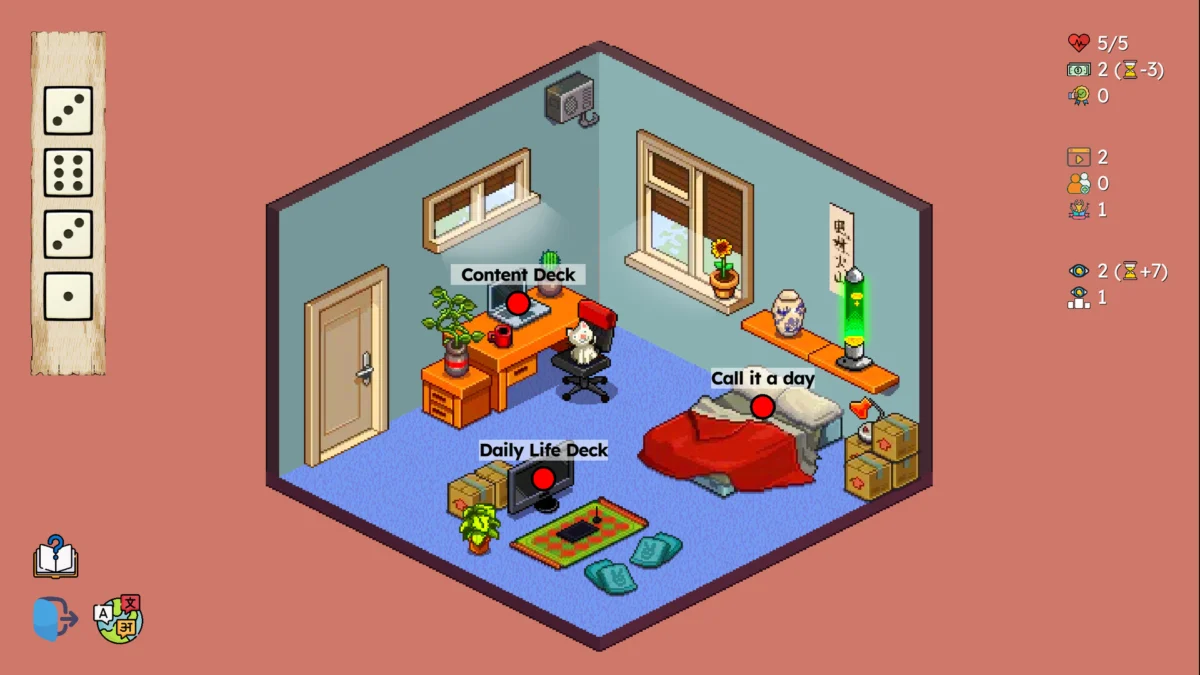
In the modern landscape of independent gaming, few themes are as ripe for exploration—and satire—as the meteoric rise of the social media influencer. At this year’s Gamescom, a new title emerged that seeks to distill the chaotic, high-stakes world of digital fame into a structured, dice-based strategy experience. Influencer Solitaire, a title that blends resource management with tactical deck-building, has officially transitioned from a buzzed-about demo to a free-to-play reality on Steam.
While the title suggests a traditional card game, Influencer Solitaire is a complex simulation of the modern "hustle culture," tasking players with balancing the mundane requirements of survival against the volatile pursuit of internet stardom.
Main Facts: A New Breed of Life Simulation
Influencer Solitaire is not, as the name might imply, a variation of Klondike or Spider Solitaire. Instead, it is a "solitaire" in the sense of being a solitary, contemplative puzzle of optimization. The core gameplay revolves around a daily cycle of dice rolling and placement. Players inhabit the role of an aspiring content creator who must manage three primary pillars of existence: financial stability, skill acquisition, and audience growth.
The game’s arrival on Steam as a free-to-play title marks a significant entry into the "work-sim" subgenre. Unlike high-budget titles like Youtubers Life, which focus on 3D lifestyle management, Influencer Solitaire leans into the abstraction of cards and dice. This mechanical focus forces players to confront the cold mathematics behind the "algorithm," turning the pursuit of followers into a series of calculated risks.
Core Gameplay Mechanics
- The Dice Pool: Each in-game day begins with a fresh set of dice. These are the player’s primary currency.
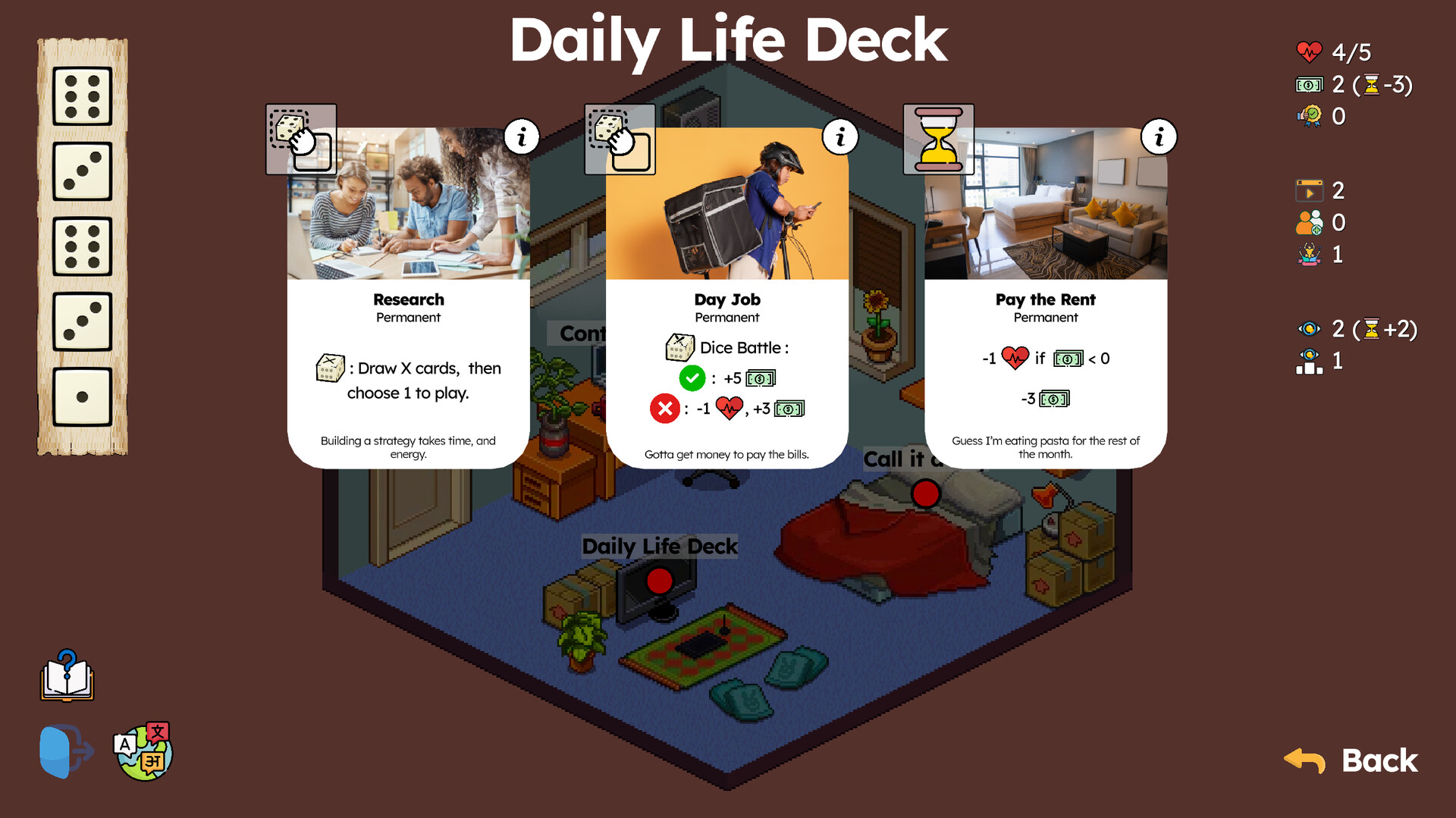
- Resource Allocation: Dice must be placed on cards representing different actions. High-value dice might be required to pay rent at a "day job," while specific numbers might be needed to trigger a "viral" video card.
- The Progression Loop: By spending dice on "research," players unlock new cards, expanding their deck and, by extension, their potential for content creation.
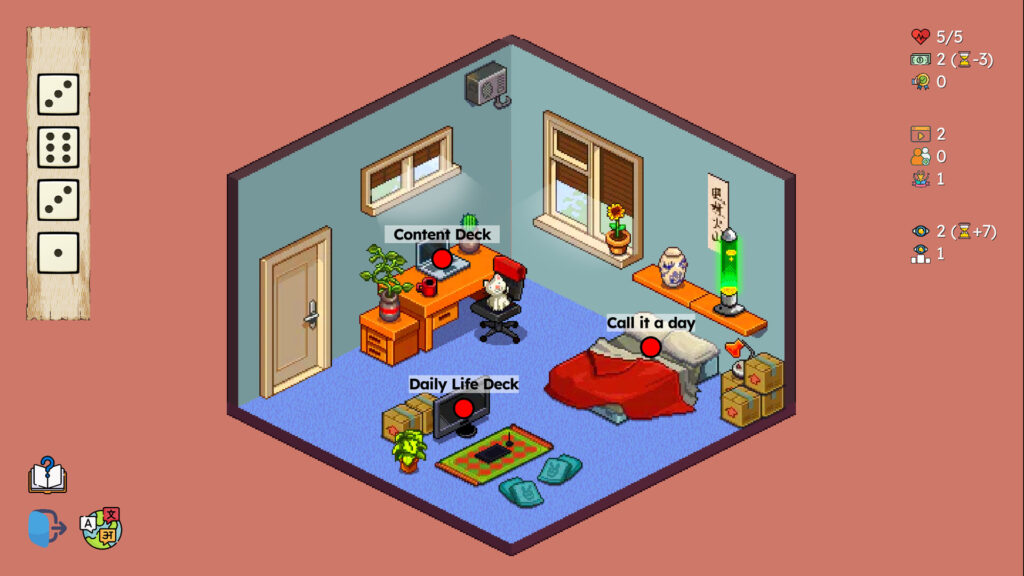
- Visual Evolution: As the player’s stats increase, their physical environment—a modest bedroom—undergoes visual upgrades, providing a tangible sense of progress amidst the abstract card-play.
Chronology: From the Morning Roll to the Midnight Upload
The "day-in-the-life" structure of Influencer Solitaire provides a rhythmic, almost hypnotic gameplay loop that mirrors the repetitive nature of content creation.
The Morning: The Weight of Reality
Every "turn" in the game represents a single day. The player wakes up and rolls their available dice. This initial roll determines the potential of the entire day. If the player rolls poorly, they are immediately faced with a dilemma: do they use their best dice to ensure their "Rent" card is satisfied, or do they gamble on a "Content" card in hopes of a massive follower payout? This tension between the "day job" and the "dream" is the emotional core of the game.
The Afternoon: Research and Development
Once the immediate needs of survival are met, the player must invest in their future. The "Research" mechanic allows players to spend dice to see more cards or unlock higher-tier abilities. This represents the time an influencer spends learning SEO, editing software, or studying current trends. It is a slow-burn progression system that ensures the player’s deck evolves from basic "vlogs" to sophisticated "multimedia campaigns."
The Evening: Engaging the Audience
The final phase of the daily loop involves the conversion of effort into numbers. In Influencer Solitaire, there is a clear distinction between "Followers" and "Super Fans." While followers are easy to gain through broad content, super fans require specific, often higher-value dice placements. Super fans act as a multiplier for future growth, simulating the importance of community building over mere view counts.
Supporting Data: The Mechanics of Chance and Choice
The efficacy of Influencer Solitaire lies in its mathematical balance. According to early player data and hands-on impressions from Gamescom, the game utilizes a "weighted luck" system. While the roll of the dice is random, the player’s ability to mitigate that randomness through card synergies is where the strategy resides.
The Resource Hierarchy
- Money: Essential for staying in the game. Failing to meet rent requirements often leads to a "Game Over" or significant penalties to the player’s dice pool.
- Followers: The primary metric of success. Certain cards require a minimum follower count to be activated, creating "gates" in the progression.
- Super Fans: A rare resource that provides passive bonuses, such as re-rolling a single die per day or adding +1 to a die’s value.
Visual Disparity as a Narrative Tool
One of the most discussed aspects of the game at Gamescom was the jarring transition between the 2D card interface and the 3D room graphics. While some critics found this "jarring," others have argued that it serves a thematic purpose. The 2D cards represent the sterile, digital interface of the internet—the "work"—while the 3D room represents the player’s actual, lived reality. As the player succeeds, the 3D room becomes more cluttered with high-end tech, creating a visual reward for the abstract labor performed on the cards.
Official Responses and Developer Philosophy
While the developers of Influencer Solitaire have remained relatively low-profile, their presence at Gamescom allowed for a glimpse into the project’s philosophy. During informal Q&A sessions at the booth, the team emphasized that the game is intended to be both an accessible "time-waster" and a subtle critique of the attention economy.
"We wanted to make a game where the player feels the pressure of the ‘daily upload,’" one developer noted. "In many sims, you have infinite time. In Influencer Solitaire, you have five or six dice. That’s it. If you spend three of them on a video that flops, you might not be able to afford lunch. That’s the reality for a lot of people trying to make it in this industry."
The decision to release the game for free on Steam was also a strategic choice. By removing the barrier to entry, the developers have allowed the game to act as a "viral" entity itself, mirroring the subject matter it portrays. The feedback from the Gamescom demo was reportedly instrumental in tuning the difficulty of the "Rent" cards, ensuring that the game remained challenging without becoming a "poverty simulator."
Implications: The Gamification of the Digital Career
The release and reception of Influencer Solitaire point to a broader trend in the gaming industry: the gamification of modern labor. We are seeing an influx of titles like Papers, Please, Not Tonight, and Voices of the Void, which take stressful or repetitive tasks and find the "fun" in the management of that stress.
The Rise of the "Dice-Builder"
The success of games like Dicey Dungeons and the recent phenomenon of Balatro has primed the audience for games that use traditional gambling tools (dice and cards) for non-gambling purposes. Influencer Solitaire fits perfectly into this niche. It satisfies the player’s desire for "number go up" satisfaction while providing enough tactical depth to keep the experience from feeling like a slot machine.
Social Commentary through Mechanics
By making "Risky Content" a card that can be played for high rewards but high potential backlash, the game teaches the player about the volatility of online reputation. It suggests that becoming an influencer is not just about talent, but about the calculated management of risk and the efficient use of limited time.
Accessibility and the Free-to-Play Model
As an indie title, Influencer Solitaire faces stiff competition for player attention. By opting for a free-to-play model without aggressive monetization (at least in its current Steam iteration), the game positions itself as a "pure" mechanical experience. It serves as a testament to the viability of small-scale, high-concept games that focus on a single, well-executed idea rather than sprawling, unfinished open worlds.
Conclusion
Influencer Solitaire is a surprising entry in the simulation genre. It manages to take a topic often dismissed as superficial and imbues it with the tension and strategy of a hardcore roguelike. While its visual style may be a point of contention for some, its core mechanics are robust, offering a compelling look at the trade-offs required to maintain a digital persona.
For players attending Gamescom or those browsing the Steam "New and Trending" section, the game offers a low-risk, high-reward dive into the mechanics of fame. It serves as a reminder that behind every viral video and polished Instagram feed, there is a "solitaire" player—someone alone in a room, rolling the dice and hoping that today is the day the algorithm finally pays out.
The game is currently available for download on Steam, inviting everyone to see if they have the discipline, the strategy, and the luck to survive the digital grind.