The New Titan of Non-Fiction: ‘You Can See Everything’ Rewrites the A24 Record Books
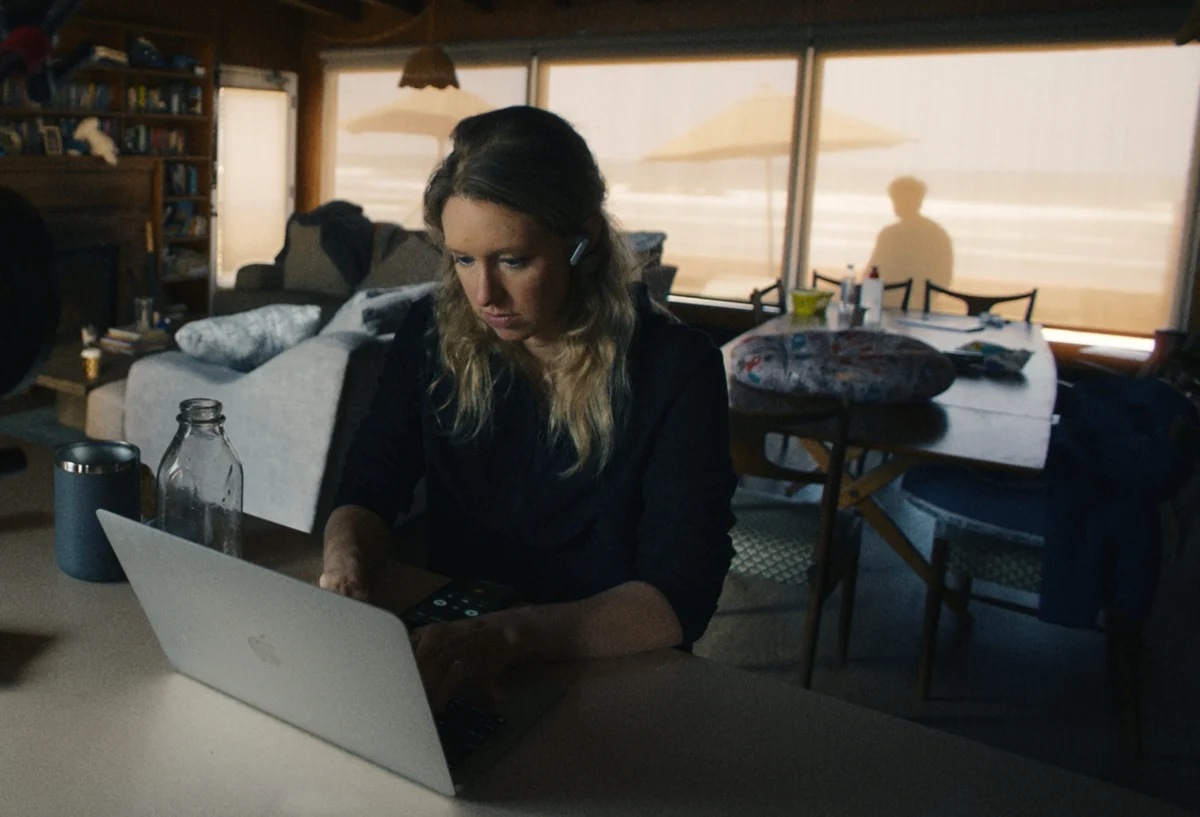
The landscape of independent cinema and non-fiction storytelling shifted significantly this week as A24’s intimate Elizabeth Holmes documentary, You Can See Everything, officially cemented its status as a box office phenomenon. Surpassing industry expectations and historical benchmarks alike, the film has climbed to the top of the domestic charts, signaling a new era for both the studio and the documentary genre.
In a feat that few industry analysts predicted, the film has now earned nearly $80 million at the domestic box office. In doing so, it has unseated the Academy Award-winning Everything Everywhere All at Once to become the third-highest-grossing North American release in A24’s history. The success of You Can See Everything is not merely a financial win; it is a cultural moment that validates the public’s enduring fascination with the rise and fall of Silicon Valley’s most controversial figures.
Main Facts: A Record-Breaking Ascent
The financial trajectory of You Can See Everything represents a masterclass in independent distribution and targeted marketing. As of the latest reporting period, the film has amassed $79.8 million stateside. By crossing the $77 million threshold, it effectively pushed Everything Everywhere All at Once—the film that swept the Oscars and redefined the "multiverse" genre—down to the fourth spot on A24’s all-time domestic list.
Currently, the documentary sits behind only two other titles in the A24 pantheon: the summer horror sensation Backrooms, which dominates with a staggering $197 million domestic haul, and the 2025 sports-drama Marty Supreme, which holds the second spot at $96 million.
The film’s achievement is even more pronounced within the documentary category. It has officially overtaken the beloved 2005 nature documentary March of the Penguins ($77 million) to become the second-highest-grossing documentary in North American history. It now trails only Michael Moore’s political lightning rod Fahrenheit 9/11, which earned $119 million in 2004. While music-focused concert films like Taylor Swift: The Eras Tour and Michael Jackson’s This Is It have earned higher raw totals, industry standards typically categorize those as "event films" rather than traditional documentaries, leaving You Can See Everything as a dominant force in narrative non-fiction.
Chronology: From Silicon Valley Scandal to Silver Screen Success
The path to $80 million began with the unique creative partnership of Nathan Fielder and Lance Oppenheim. Fielder, known for his subversive, genre-blurring comedy in The Rehearsal and Nathan for You, joined forces with Oppenheim, a rising star in the documentary world known for his stylized, cinematic approach to real-world subjects.
Phase 1: The Vision
When the project was first announced, skeptics questioned if there was any room left for Elizabeth Holmes content. Following a high-profile trial, a bestselling book (Bad Blood), an HBO documentary, and a scripted Hulu miniseries (The Dropout), the "Theranos fatigue" was a real concern. However, A24 bet on the "intimate look" promised by Fielder and Oppenheim—a perspective that moved away from the courtroom and into the psychological and personal nuances of Holmes’ life.

Phase 2: The Strategic Release
A24 utilized a "slow-burn" release strategy, building word-of-mouth through limited engagements before expanding to wide release. The film’s $7 million budget allowed for a lean operation, meaning the studio was in the black almost immediately after its opening weekend. Unlike the sprawling blockbusters of the summer, You Can See Everything relied on critical acclaim and the "Fielder-esque" curiosity of its audience.
Phase 3: The Climb
Throughout the fall, the film maintained incredible "legs," a term used by exhibitors to describe movies that sustain small week-over-week drops in attendance. While larger films flickered out, the Holmes documentary became a staple of suburban multiplexes and urban arthouses alike. By the time it reached its third month in theaters, it was clear that it wasn’t just a documentary—it was a blockbuster.
Supporting Data: The Economics of an Indie Hit
To understand the magnitude of this success, one must look at the profitability margins. While Backrooms and Marty Supreme have higher raw totals, their production and marketing budgets were significantly larger than the $7 million spent on You Can See Everything.
A24 Domestic Leaderboard
- Backrooms: $197 Million
- Marty Supreme: $96 Million
- You Can See Everything: $79.8 Million
- Everything Everywhere All at Once: $77 Million
Global Context and Profitability
The global market presents a different story. While Backrooms has cleared over $400 million worldwide and Marty Supreme sits at $192.4 million, You Can See Everything has yet to be fully unleashed on international markets. History suggests that American white-collar crime stories can be a difficult sell in non-English speaking territories, but the film’s domestic profit margin is already so high that its international performance is essentially "gravy" for the studio.
The Documentary Elite (Domestic)
- Fahrenheit 9/11: $119M
- You Can See Everything: $79.8M
- March of the Penguins: $77M
- Justin Bieber: Never Say Never: $73M
Official Responses and Industry Impact
While A24 rarely issues traditional "victory" press releases, the industry’s response has been one of shock and awe. Cinema owners have praised the film for bringing an older, more affluent demographic back to theaters—a group that has been slower to return to cinemas post-pandemic compared to the younger audiences fueling horror and superhero films.
The creative impact is equally significant. Nathan Fielder and Lance Oppenheim are now reportedly the most sought-after duo in the industry. Fielder’s transition from cult comedy figure to a director capable of helming a top-tier box office hit has opened doors for more experimental non-fiction storytelling. Talent agencies in Hollywood are reportedly scouring for the "next Fielder," looking for creators who can blend irony, sincerity, and investigative rigor.
Furthermore, A24’s current "hot streak" is the talk of the industry. The studio’s ability to pivot from the high-concept horror of Backrooms to the prestige drama of Marty Supreme and then to a record-breaking documentary demonstrates a diversified portfolio that few independent distributors can match.

Implications: What This Means for the Future of Film
The success of You Can See Everything carries several long-term implications for the film industry:
1. The Rise of "Prestige Non-Fiction"
For years, documentaries were seen as the province of streaming services like Netflix or HBO. The theatrical success of this film proves that audiences are willing to pay for a documentary experience on the big screen, provided the filmmaking is cinematic and the subject is compelling. We can expect a surge in theatrical documentary acquisitions at festivals like Sundance and Cannes.
2. The "A24 Brand" as a Guarantee
The studio has reached a point where the "A24" logo acts as a seal of quality, much like Pixar did in the 2000s or Marvel in the 2010s. This brand loyalty allows them to take risks on films like Club Kid—a drama about a hard-living gay man and his son. Club Kid opened this past weekend with a massive per-screen average of $65,097 across six screens. This strategy of using blockbusters to fund and promote smaller, more daring art is the hallmark of a healthy studio.
3. The Oscar Race
With $80 million in the bank and critical acclaim to match, You Can See Everything is no longer just a box office hit; it is a frontrunner for the Best Documentary Feature Oscar. Historically, the Academy favors films that have made a significant cultural impact, and Fielder and Oppenheim’s work fits that description perfectly. Simultaneously, A24 is positioning Club Kid and its star Jordan Firstman for a major awards push, suggesting the studio could have a dominant presence at next year’s ceremonies.
4. The International Question
The looming question remains: will the Elizabeth Holmes story resonate in Europe and Asia? Silicon Valley is a uniquely American ecosystem, and while the fraud is universal, the specific cultural nuances of the "girlboss" era and the American healthcare system might not translate. However, given the film’s $7 million budget, it has already achieved a level of "wild profitability" that makes international performance secondary to its legacy.
Conclusion
You Can See Everything is a testament to the power of unique storytelling and the enduring appeal of the truth—no matter how strange it may be. By bypassing an Oscar-winning Best Picture and climbing to the top of the documentary charts, the film has proved that there is still plenty of room in the theater for stories that don’t involve capes or jump scares. As A24 continues its unprecedented run of success, the industry will be watching closely to see what this record-breaking documentary does next. For now, Elizabeth Holmes has once again captured the American imagination—this time, through the lens of two of the most innovative directors working today.