The Evolution of Miles Teller: From Maverick to Maturity in James Gray’s ‘Paper Tiger’
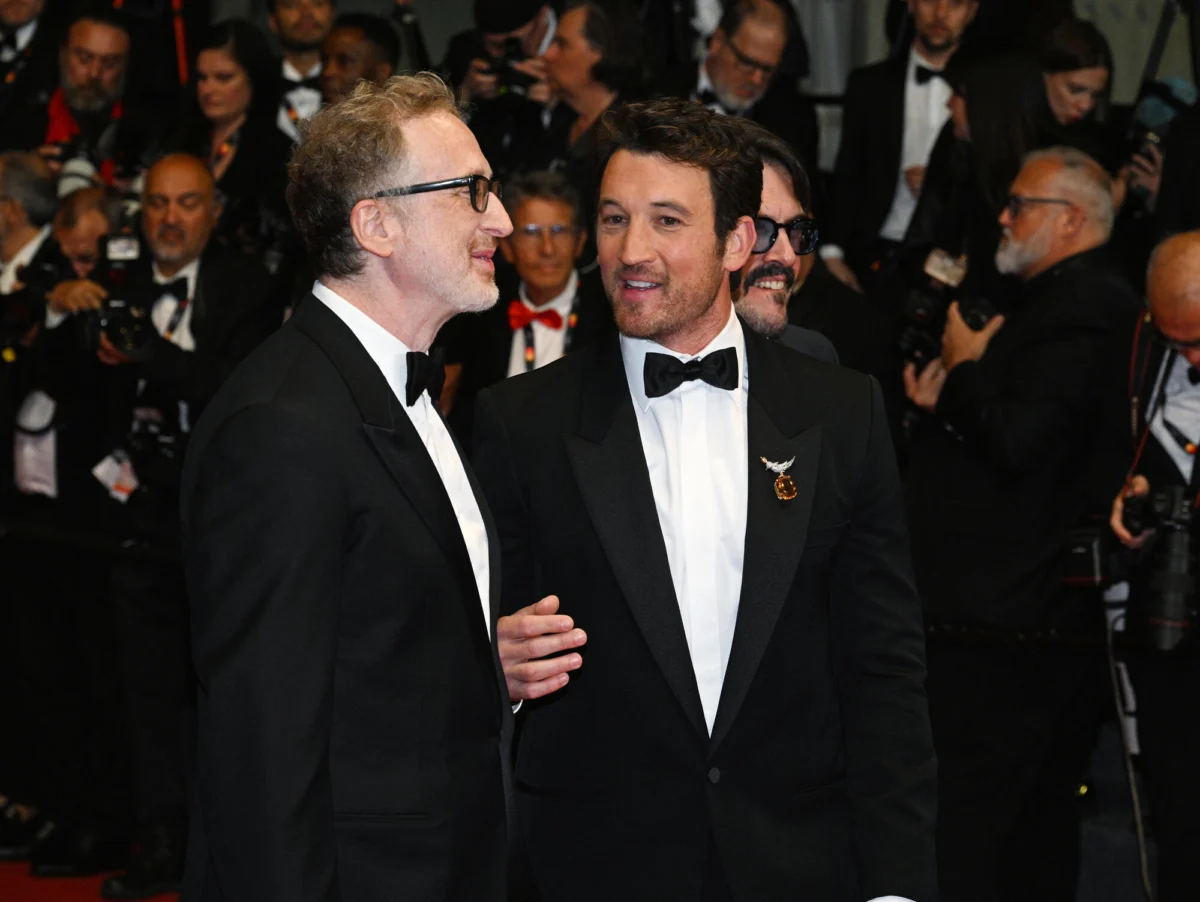
CANNES, FRANCE — The Carlton Hotel, with its storied history and Belle Époque grandeur, often serves as the backdrop for the reinvention of Hollywood’s elite. During the 2026 Cannes Film Festival, it served as the setting for a definitive shift in the career of Miles Teller. Once the "wide-eyed teenager" of independent cinema and later the high-flying "Rooster" of blockbuster fame, Teller has emerged in James Gray’s Paper Tiger as something he has rarely been allowed to be on screen: a grown man.
Directed by the auteur of American domestic tragedy, James Gray, Paper Tiger arrived on the Croisette to a reception that transcended the often-performative standing ovations of the Palais. Neon, having secured the rights, is set to release the film in theaters on Friday, November 6, positioning it as a cornerstone of the upcoming awards season. The film marks a transition for Teller, moving him away from the shadow of mentors and fathers and into the role of a patriarch navigating a world of moral ambiguity.
Main Facts: A New Chapter in Queens
In Paper Tiger, Teller portrays Irwin Pearl, a meticulous engineer living in Queens. Unlike his previous roles, which often leaned on youthful arrogance or physical prowess, Irwin is a "real grown-up"—a family man striving to build a legitimate business. He is flanked by a powerhouse ensemble: Scarlett Johansson plays his wife, Hester, and Adam Driver portrays his older brother, Gary, a former police officer whose shortcuts to success provide the film’s central conflict.

The narrative follows Irwin as he succumbs to a "quicker route" to prosperity offered by Gary. This choice leads to a disastrous night of reconnaissance where Irwin stumbles upon the inner workings of the Russian mafia, witnessing events that place his family in the crosshairs. The film is less a traditional thriller and more a searing exploration of how ambition can act as a corrosive agent on the domestic unit.
According to critics and festival attendees, the chemistry between Driver and Teller is the film’s engine, while Johansson provides the emotional anchor. Though the film did not take home the Palme d’Or, its trajectory toward the fall festival circuit suggests a robust presence in the Best Actor and Best Supporting Actor categories.
Chronology: The Decadelong Ascent of Miles Teller
Teller’s journey to the Carlton Hotel began in 2010, and his career has since been a study in the "ebb and flow" of Hollywood stardom.

2010–2014: The Breakout and the Auteur Phase
At age 22, Teller made a haunting debut in Rabbit Hole, playing a teenager involved in a tragic accident. His performance was so grounded that it led to an immediate signing with CAA. This was followed by a string of critically acclaimed turns in The Spectacular Now and, most notably, Damien Chazelle’s Whiplash. As Andrew Neiman, the obsessive jazz drummer, Teller cemented his reputation for high-intensity, physically demanding performances.
2015–2021: The Franchise Era and Personal Setbacks
Like many rising stars of his generation, Teller was swept into the studio machine. This period was marked by the Divergent series and the ill-fated Fantastic Four (2015). It was also during this time that Teller faced significant media scrutiny, specifically following a controversial Esquire profile in 2015 that painted him in an unflattering light. Simultaneously, Teller continued to seek out "man’s man" roles, such as his portrayal of boxer Vinny Pazienza in Bleed for This (2016) and his lead role in the limited series Too Old to Die Young.
2022–2026: Blockbuster Validation and Domestic Tragedy
The release of Top Gun: Maverick in 2022 changed the math for Teller. Playing Bradley "Rooster" Bradshaw, he held his own against Tom Cruise in a film that saved the theatrical box office. While Maverick made him a household name, he was still playing the "son" of a legacy character. It was not until the 2024–2026 period, with his role as producer Al Ruddy in The Offer and now Irwin Pearl in Paper Tiger, that Teller fully transitioned into "father roles."

Supporting Data: Commercial Success and Critical Standing
The data surrounding Teller’s recent output suggests an actor who has successfully bridged the gap between commercial viability and prestige cinema.
- Commercial Dominance: Teller’s role as John Branca in the Michael Jackson biopic Michael has seen the film gross over $707 million worldwide. This commercial leverage has allowed him to choose smaller, more personal projects like Paper Tiger.
- The "Class of 2010" Competition: Teller’s career is often measured against his peers. During his early years, he was frequently competing for roles against Michael B. Jordan, Robert Pattinson, Shia LaBeouf, and Zac Efron. While some of his contemporaries leaned into superhero franchises, Teller has increasingly focused on director-driven dramas.
- The James Gray Effect: James Gray is renowned for extracting career-best performances from actors (e.g., Joaquin Phoenix in The Yards and Two Lovers). Industry insiders suggest that Teller’s turn in Paper Tiger is his most nuanced work since Whiplash, specifically citing a pivotal confrontation scene with Adam Driver where Teller’s "face was shaking with anger."
Official Responses: On Media, Family, and Future Projects
In a candid sit-down in Cannes, Teller addressed the personal and professional forces that shaped his performance in Paper Tiger. He revealed that the film’s themes of home and loss were deeply resonant due to real-life tragedies.
On Personal Loss and Performance
"When I met James [Gray] for this movie, our house had just burned down in the Palisades Fire," Teller shared. "And I had just lost my grandfather. We were renting a place in Santa Barbara… that feeling of home that Keleigh [Sperry] and I had lost infused this story with a lot of love." Teller noted that his grandfather, a Marine who was "never afraid to show his sensitive side," served as a primary model for his character Irwin.

On the 2015 ‘Esquire’ Controversy
Addressing the "bad press" that has trailed him for over a decade, Teller was firm about his withdrawal from the traditional celebrity profile circuit. "That [interview] was so mishandled. I told my team, ‘Guys, I don’t think I’m doing this again.’ It felt like a violation of what actually transpired. Being a good person doesn’t sell; people want to click on negativity." He emphasized that his reputation on set—among cast and crew—is the only metric he now values.
On the ‘Michael’ Sequel
Regarding the legal and creative complexities surrounding the Michael Jackson estate and the massive success of Michael, Teller confirmed that a sequel is in development. "They had to rework the third act of the last movie. The team is excited to complete that story," he stated, though he noted that direct discussions regarding his return as John Branca are still in the early stages.
Implications: The Return of the Adult Drama
The success of Paper Tiger at Cannes and its upcoming release by Neon signal a potential resurgence for the mid-budget adult drama—a genre that has struggled in the age of streaming.

The Maturity of the Audience
Teller argues that his career shift reflects the aging of his original fan base. "The audience that you attract in your early 20s… as they get older and start having kids, you want to reflect that in your choices," he said. This strategy aligns with James Gray’s filmmaking philosophy, which eschews spectacle for "movies for adults" that deal with character and consequence.
Awards Season Trajectory
With Neon’s backing, Paper Tiger is expected to be a major player in the 2027 Oscars race. The film’s exploration of "business ambition" and "collateral damage" within a family mirrors Gray’s own father’s life experiences, adding a layer of authenticity that typically resonates with Academy voters.
The "Actor as Merchandiser"
Teller’s recent trajectory suggests a shift in how actors maintain longevity. By balancing massive IP projects like Michael with rigorous auteur fare like Paper Tiger, Teller is following the blueprint of 1970s leading men—actors who are "men of action" but are not afraid to expose the "twitches" of vulnerability.

As the industry moves toward the final quarter of 2026, the conversation surrounding Miles Teller has shifted. He is no longer the promising kid from Rabbit Hole or the arrogant drummer from Whiplash. He is an actor who has weathered personal fire and professional scrutiny to emerge as a pillar of contemporary American cinema. In the words of Teller himself, "You can’t hide who you are when you’re on set." In Paper Tiger, it appears there is nowhere left to hide, and for Teller, that may be his greatest strength.