
The Architecture of a Fractured Mind: Exploring the Surreal Depths of ‘Psychotic Bathtub’

The landscape of independent video games has long served as a sanctuary for stories too intimate, too strange, or too uncomfortable for the mainstream industry to touch. Among the most recent and striking examples of this trend is Psychotic Bathtub, an experimental narrative experience that challenges the player’s perception of reality, mental health, and the limits of the human psyche. Developed with a raw, "indie" sensibility, the game confines the player to a single, claustrophobic location—a bathtub—to tell a sprawling story of internal escalation and psychological unraveling.
Following its recent showcase at AdventureX, the premier narrative games convention, Psychotic Bathtub has emerged as a poignant meditation on what it means to be trapped within one’s own mind.
Main Facts: A Narrative Submerged in Crisis
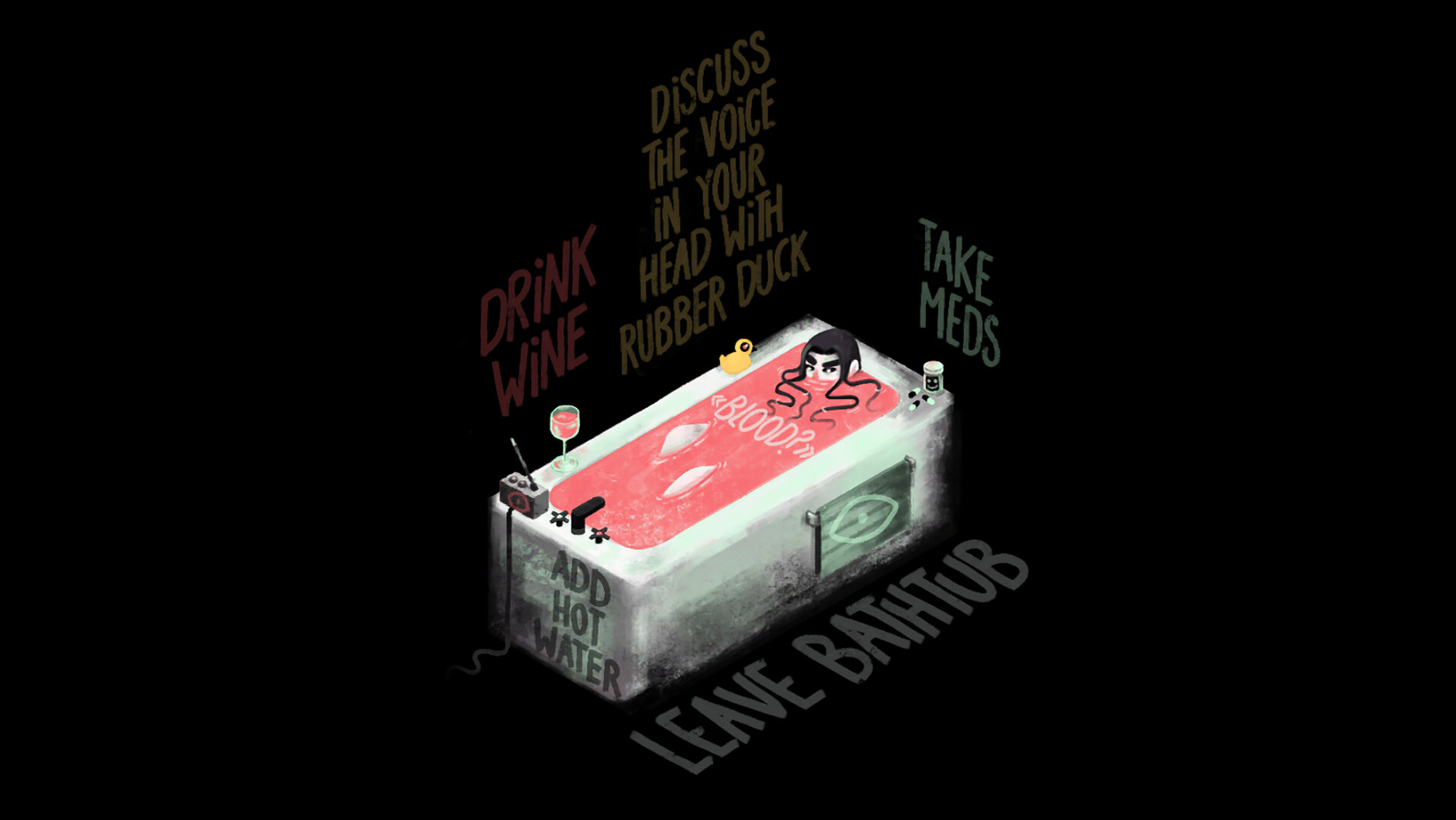
Psychotic Bathtub is a point-and-click narrative adventure that places players in the role of a young protagonist who has reached a breaking point. The premise is deceptively simple: you are in a bathtub, you have stopped taking your medication, and you cannot—or will not—get out. The water has turned cold, the soap bubbles have long since dissolved into a gray film, and your skin has begun to prune. Despite the physical discomfort, the protagonist remains anchored by a weight that is purely psychological.
The game is built upon a foundation of branching paths and "escalating" mental states. Every interaction, from staring at a bottle of wine to conversing with a rubber duck, serves as a catalyst for the protagonist’s deteriorating grip on reality. The developers describe it as a "story of an escalating mind," where the mundanity of a bathroom becomes the stage for a cosmic, surreal, and often disturbing exploration of self.
Key features of the title include:
- A Static Setting with Fluid Realities: While the character never leaves the tub, the environment shifts based on the player’s internal choices.
- Non-Linear Interaction: The order in which a player examines objects determines the narrative trajectory and the protagonist’s emotional stability.
- Surrealism as a Lens for Mental Health: The game utilizes "psychotic logic," where inanimate objects take on personas and religious or existential delusions become tangible.
- Multiple Endings: A vast array of outcomes ranging from the darkly comedic to the profoundly tragic, reflecting the unpredictability of a mental health crisis.
Chronology: From Concept to AdventureX
The development of Psychotic Bathtub follows a trajectory typical of high-concept indie titles, where personal expression takes precedence over commercial tropes. The game first began to garner attention in indie circles for its uncompromising visual style—often utilizing a stark, stylized palette that mirrors the protagonist’s isolation.
In late 2023 and throughout 2024, the game underwent significant refinement, focusing on the "logic of the irrational." The goal was to create a system where players felt the weight of their choices not through traditional RPG mechanics, but through the shifting tone of the protagonist’s internal monologue.
The most significant milestone in the game’s public life occurred at AdventureX, an annual London-based festival dedicated to narrative-driven gaming. The event, known for hosting titles that push the boundaries of interactive storytelling, provided the perfect platform for Psychotic Bathtub. Attendees who played the demo reported a sense of "profound unease," noting that the game manages to capture the specific lethargy and hyper-fixation associated with depressive and psychotic episodes.
Currently, the game exists as a playable demo on Steam, with a full release anticipated as the developers continue to map out the intricate web of narrative consequences that define the experience.
Supporting Data: The Mechanics of Introspection
To understand why Psychotic Bathtub resonates with its audience, one must look at the data of its design. Unlike traditional adventures that use puzzles to gate progress, Psychotic Bathtub uses "mental triggers."
The Order of Operations
The game tracks the sequence of player interactions. For instance, looking at a bottle of wine before interacting with a razor blade might lead to a different internal monologue than doing so in reverse. This "order of operations" mimics the way a spiraling mind fixates on certain stimuli, allowing one thought to poison the next.
Surreal Interactions and Symbolic Logic
The game features several recurring motifs that serve as pillars for its narrative:

- The Rubber Duck: In one of the game’s more jarring turns, the protagonist can engage in a heated argument with a rubber duck that they believe contains the soul of their deceased father. This interaction serves as a bridge between grief and psychosis.
- The Towel: The player can project feelings onto a nearby towel, eventually concluding that they are "abusing the towel’s friendship." This highlights the symptom of ideas of reference, where a person attributes profound meaning or intention to inanimate objects.
- The "Jesus" Path: The game allows for delusions of grandeur, where the protagonist can convince themselves of a divine nature. This path explores the intersection of spiritual ecstasy and mental breakdown.
Visual and Auditory Sensory Data
The demo utilizes a minimalist soundscape—the dripping of a faucet, the sloshing of cold water—to heighten the sense of sensory deprivation. This lack of external stimulation forces the player to focus entirely on the text and the increasingly distorted visuals, creating a feedback loop of intimacy and discomfort.
Official Responses: The "Indie" Philosophy
While the game has not yet been subject to wide-scale mainstream reviews, the response from the indie community and narrative designers has been overwhelmingly focused on its "bravery."
The developers have maintained that Psychotic Bathtub is intended to be a "deeply personal story." In interviews and developer logs, the team has emphasized that the game is not necessarily a clinical simulation of psychosis, but rather an artistic interpretation of the feeling of being unwell. This distinction is crucial; it allows the game to utilize humor—however dark—and surrealism to bridge the gap between the player and a protagonist whose actions might otherwise seem incomprehensible.
Critics at AdventureX noted that the game feels "unfiltered." Unlike larger studio projects that might sanitize mental health struggles to make them more "palatable" or "heroic," Psychotic Bathtub embraces the pathetic, the weird, and the illogical. One commentator noted, "It’s a game that isn’t afraid to let you be wrong, or let you be small. It’s the antithesis of the power fantasy."
Implications: Gaming as a Mirror for the Marginalized
The emergence of Psychotic Bathtub carries significant implications for the future of "empathy games" and the broader discourse on mental health in digital media.
1. The Bathtub as a Liminal Space
The choice of a bathtub as the sole setting is a masterstroke of narrative economy. The bathtub is a place of vulnerability (nakedness), ritual (cleansing), and stasis. By trapping the player there, the game forces a confrontation with the "self" that most games allow us to escape through movement and combat. The implication is clear: you cannot run from your own head.

2. De-stigmatization through Interaction
By allowing players to choose "uncomfortable" or "wrong" answers, the game provides a safe space to explore the logic of a breakdown. It fosters a unique kind of empathy—not the kind where you feel sorry for a character, but the kind where you begin to understand the internal "logic" that leads to self-destructive behavior.
3. The Trend of "Micro-Narratives"
Psychotic Bathtub signals a shift toward "micro-narratives"—games that focus on a single hour, a single room, or a single decision. In an era of 100-hour open-world epics, there is a growing demand for dense, short-form experiences that can be completed in a sitting but processed for weeks.
4. Ethical Considerations in Mental Health Representation
As games like this become more prevalent, they raise questions about the responsibility of developers. Psychotic Bathtub walks a fine line between artistic expression and the depiction of sensitive subjects like self-harm and medication non-compliance. The game’s "unsettling nature" is its greatest strength, but it also serves as a warning: this is an experience intended for those ready to look into the abyss.
Conclusion
Psychotic Bathtub is more than a quirky indie title about a rubber duck; it is a sophisticated, albeit harrowing, exploration of the human condition under pressure. By shrinking the world down to the four walls of a bathtub, it manages to expand the narrative horizon, proving that the most epic journeys are often the ones we take without moving a muscle. As the game moves toward its full release, it stands as a testament to the power of interactive storytelling to illuminate the darkest, dampest corners of the human mind.
For those brave enough to dip their toes in, the demo is currently available on Steam—just don’t expect the water to be warm.