Locus Magazine Unveils a Breathtaking Lineup of Speculative Fiction for Late 2026: A Deep Dive into Genre-Bending Narratives and Authorial Brilliance
San Francisco, CA – As the literary world turns its gaze towards the latter half of 2026, Locus Magazine, the authoritative voice in science fiction, fantasy, and horror, has spotlighted an extraordinary collection of upcoming releases. This curated selection promises a season rich with diverse voices, innovative concepts, and profound explorations of the human condition, challenging conventional genre boundaries and delivering narratives that resonate with contemporary anxieties and timeless wonders. From chilling psychological horror to intricate dystopian fantasies, and from groundbreaking science fiction to emotionally charged graphic novels, the slate of books reviewed by Locus underscores a vibrant and evolving speculative fiction landscape.
The magazine’s latest critical assessments reveal a publishing season marked by both established masters and captivating debut authors, all contributing to a tapestry of stories that are as intellectually stimulating as they are emotionally resonant. Locus‘s discerning eye has identified titles poised to become critical darlings and reader favorites alike, ensuring that the remainder of 2026 will be a fertile ground for imaginative discovery.
A Chronological Journey Through Anticipated Releases
The diversity of this season’s offerings is evident in the broad spectrum of genres and themes, strategically staggered across several months to maximize reader engagement and critical attention.

August 2026: Foundations of Destiny and Rebellion
Kicking off the late summer, Christelle Dabos’s We (Europa Editions, August 2026), translated by Hildegarde Serle, plunges readers into a compelling young-adult dystopian dark fantasy. Set in a world where individual roles are rigidly assigned by "Instinct," which brooks no questioning, Dabos crafts a narrative around the universal struggle between destiny and free will. Goliath, destined to be a life-saving Protector, harbors a secret dream of becoming a Saint, while the Confidant Claire conceals her own profound mystery. Their paths converge in a forbidden investigation when students inexplicably vanish, hinting at a larger conspiracy within their tightly controlled society. Dabos, known for her intricate world-building and character-driven narratives in series like "The Mirror Visitor," promises another engrossing tale of rebellion and self-discovery.
September 2026: A Flood of Fright, Philosophy, and Fantastic Art

September emerges as a particularly dense and exciting month for speculative fiction enthusiasts, presenting a veritable feast of horror, science fiction, and unique literary experiences.
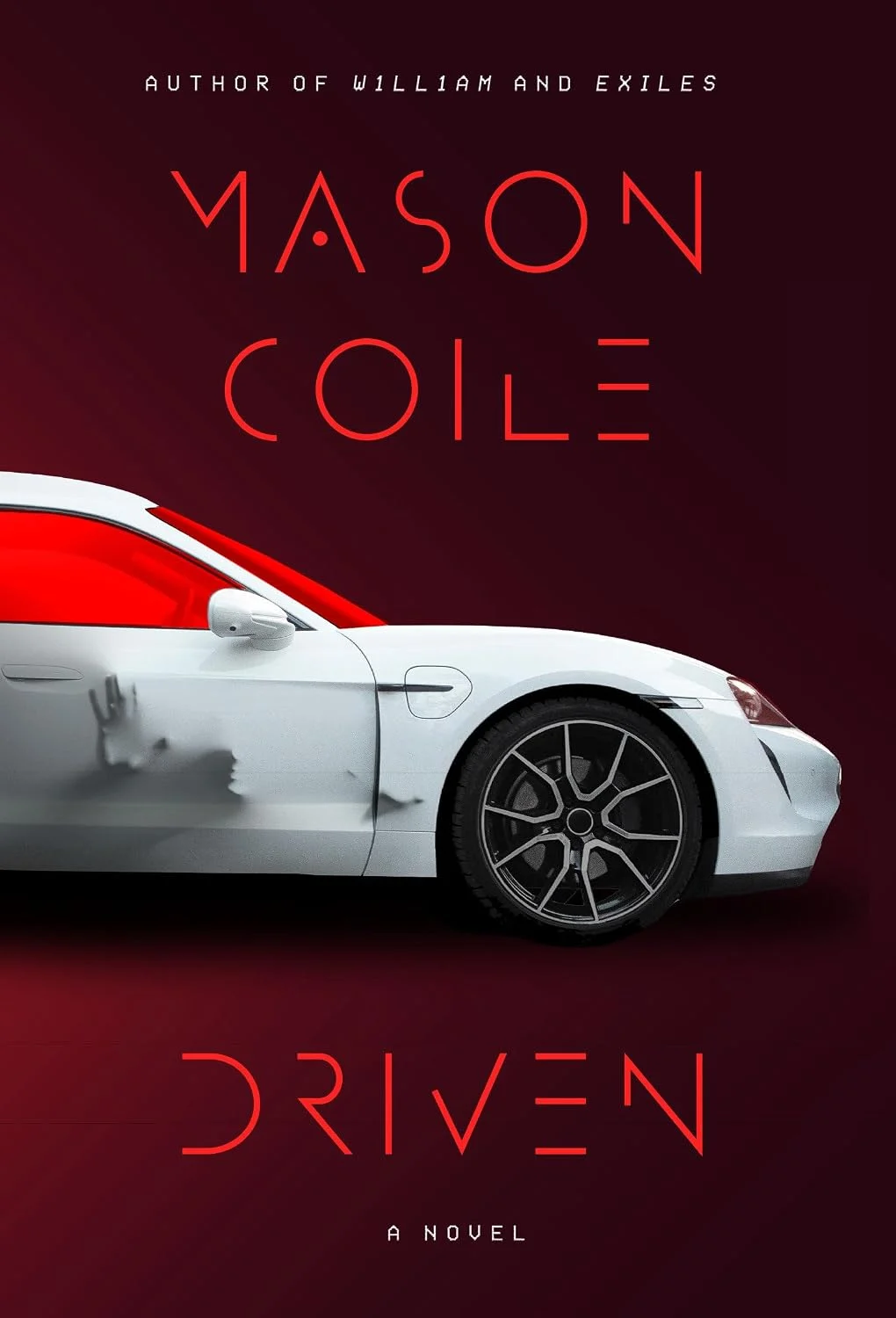
Leading the charge into the chilling depths is Mason Coile’s Driven (Putnam, September 2026). This intense short horror novel, penned under a pseudonym for the late Andrew Pyper, traps a grieving, haunted man in the inescapable confines of a self-driving car. Reviewer Gabino Iglesias lauds it as "strangely plausible, always moving forward, and wonderfully creepy," specifically highlighting "a scene with a ghost in a bathroom that is worth the price of entry." Driven masterfully weaves together elements of violence, spectral encounters, mystery, crime, science fiction, and top-notch psychological horror, creating a narrative that is both timely in its technological fears and timeless in its exploration of grief and the supernatural. The revelation of Pyper’s authorship adds a poignant layer, hinting at a final, masterful contribution from a celebrated author.
For aficionados of curated terror, Ellen Datlow, ed., All Hallows Eve (Titan Books, September 2026), is an essential acquisition. Datlow, an editor whose name is synonymous with excellence in horror anthologies, presents an original collection of 19 stories. These narratives offer fresh perspectives on Halloween, exploring its diverse celebrations and dark undercurrents across the globe. The roster of contributing authors is nothing short of impressive, featuring luminaries such as Linda D. Addison, Jeffrey Ford, Stephen Graham Jones, Alma Katsu, Josh Malerman, Lisa Morton, Lee Murray, Garth Nix, and Michael Marshall Smith, ensuring a high-caliber and varied reading experience that redefines the festive yet fearsome holiday.

Science fiction titan Ken Liu returns with The Passing of the Dragon and Other Stories (Saga, September 2026). This latest collection from one of SF’s most celebrated short fiction authors gathers 13 stories spanning the past 15 years. Liu, renowned for his "silkpunk" aesthetic and deeply philosophical narratives, delves into complex themes including communication, connection, creativity, artificial intelligence, and the very essence of humanity. His work consistently blends intricate scientific concepts with profound emotional depth, offering readers both intellectual challenge and narrative satisfaction. This collection serves as a powerful testament to Liu’s enduring impact on the genre and his ability to provoke thought while entertaining.
Emily St. John Mandel’s Exit Party (Knopf, September 2026) arrives with significant critical buzz from major media outlets, cementing her reputation for literary science fiction that resonates deeply. This novel ingeniously employs multiple realities and doppelgängers to dissect the insidious nature of the surveillance state and the often-unforeseen costs of perceived safety. Mandel constructs two contrasting timelines, both originating in a dystopian 2031 Los Angeles: one celebrates the formation of the new Republic of California post-US collapse, while the other depicts a US utterly consumed by surveillance. A physics experiment then leads to individuals swapping places across these divergent worlds, prompting a chilling exploration of identity, choice, and the fragile nature of reality.
In a unique blend of art and narrative, Shaun Tan’s Hometown (Levine Querido / Allen & Unwin Australia, September 2026) promises a visually stunning and emotionally rich experience. This upper-middle-grade picture book/graphic novel, a revised and expanded version of his 2018 Eisner-nominated story "Here I Am," features Tan’s distinctively strange and colorful art. It follows a human girl raised by a non-human adopted family within a beloved community. Her world is upended when a creature from space arrives, claiming a deeper kinship and inviting her to leave. Colleen Mondor hails it as "a breathtaking read; Hometown is a triumph and strikes at the heart of what it means to be human," underscoring Tan’s unparalleled ability to explore profound themes of identity and belonging through fantastical lenses.

Sheree Renée Thomas showcases her remarkable range in The Tongue I Dream In (PM Press, September 2026). Part of the publisher’s "Outspoken Authors" series, this collection is a treasure trove for both long-time fans and new readers. It comprises 19 pieces, including ten poems, a compelling speech, seven stories (three of which are new), and an insightful essay. Further enriching the experience is an interview with Thomas conducted by Nisi Shawl, offering deeper insights into her creative process and thematic preoccupations. Thomas’s work consistently challenges, inspires, and expands the boundaries of speculative fiction, making this collection a vital contribution.
Rounding out September’s heavy hitters is Peter Watts’s Fold Catastrophes (Tachyon, September 2026). Watts, celebrated for his hard science fiction and unflinching exploration of bleak futures, demonstrates his mastery of the short story form in this new collection. Featuring 11 stories from the past 13 years, including one new piece, the collection underscores his exceptional skill. Gary K. Wolfe notes, "For all his exceptional skill in creating alien points of view and bizarre transformations, it’s somehow reassuring that he can be just as insightful in dealing with the visceral anxieties and self-doubts that can plague us all," highlighting Watts’s unique ability to merge cosmic horror and scientific rigor with deeply human psychological landscapes.
Supporting Data: Critical Acclaim, Debut Brilliance, and Thematic Depth
Beyond the September surge, other months bring equally compelling narratives, demonstrating the breadth and depth of talent emerging and re-emerging in speculative fiction.

May 2026: Ripples Through Time
Portia Elan’s Homebound (Scribner, May 2026) stands out as a critically acclaimed debut LGBTQ+ SF novel. Its ingenious premise centers on a floppy disk game with the power to alter the future of the planet. In 1983, 19-year-old Becks, grieving the loss of her uncle to AIDS, inherits his half-finished text game. Her decision to complete it sends unforeseen ripples across centuries, intricately entangling five lives. Elan’s debut promises a narrative rich in emotional complexity, speculative ingenuity, and a powerful exploration of love, loss, and the butterfly effect of individual actions across time.
June 2026: Time Travel, Identity, and Societal Reflection

June offers two distinctive takes on speculative fiction, both earning early critical praise.
Jessica M. Goldstein’s Retro (Ballantine, June 2026) is a humorous SF time-travel novel marking a critically acclaimed debut. An unemployed actress lands an unexpected role as a tour guide for an ultra-luxury time-travel company. Her life transforms into an exciting, cinematic journey through history, with stops in the Old West and the Roaring ’20s. However, the glamour soon fades as strange phenomena begin to affect her memory and relationships, hinting at the profound and unsettling consequences of tampering with time. Goldstein’s novel offers a witty yet poignant commentary on identity and the desire to escape reality.
Meanwhile, Isabel J. Kim’s Sublimation (Tor, June 2026) is the highly anticipated first novel from a Nebula Award and Shirley Jackson Award-winning author. This thought-provoking work tackles the complex cultural issues faced by immigrants through a unique speculative lens: immigration literally splits people in two, leaving one half in the origin country and the other in the new. The narrative explores the strange and profound consequences when one such pair eventually meets, offering a powerful allegory for identity, displacement, and the yearning for wholeness in a fractured world. Kim’s established reputation for incisive, award-winning short fiction sets high expectations for this thematic and imaginative debut novel.

July 2026: Supernatural Journeys
Christopher Golden’s Carry Me to My Grave (St. Martin’s, July 2026) injects a dose of supernatural horror and unexpected romance into a compelling journey. Malcolm attempts to honor his mother’s dying wish to return her body to her birthplace. However, the long train ride quickly turns sinister as he uncovers her hidden past, revealing that strange forces and ancient beings are relentlessly pursuing her corpse. Gabino Iglesias praises it as "Golden at his best: gripping, dark, and full of both supernatural horror and heart," affirming Golden’s continued ability to craft terrifying yet emotionally resonant tales that combine visceral horror with poignant human drama.
Official Responses: The Chorus of Critical Acclaim
The consistent theme across these Locus reviews is one of enthusiastic endorsement. Reviewers like Gabino Iglesias, Colleen Mondor, and Gary K. Wolfe are not merely summarizing plots but actively championing these works as significant contributions to their respective genres. Iglesias’s pronouncements on Driven and Carry Me to My Grave highlight a preference for narratives that blend genre elements with psychological depth, delivering genuine thrills and emotional impact. Mondor’s assessment of Hometown emphasizes its capacity for profound emotional connection and its exploration of fundamental human questions through fantastical means. Wolfe’s praise for Watts’s ability to balance cosmic scale with intimate human anxieties underscores a desire for speculative fiction that is both grand in scope and deeply personal.

The repeated mention of "critical acclaim" for debut novels like Homebound and Retro, and for established authors like Emily St. John Mandel, signals a robust and healthy publishing environment. It suggests that both fresh voices and seasoned storytellers are finding fertile ground for narratives that challenge, entertain, and provoke thought, earning recognition not just within genre circles but across wider literary platforms.
Implications for the Speculative Fiction Landscape
The selections highlighted by Locus Magazine offer a compelling snapshot of the current and future trajectory of speculative fiction.
1. The Blurring of Genre Lines: Many of these titles defy easy categorization, blending horror with sci-fi (Driven), fantasy with dystopian elements (We), and literary fiction with speculative conceits (Exit Party). This trend indicates a growing sophistication in storytelling, where authors are less constrained by traditional genre boxes and more focused on crafting narratives that organically incorporate diverse elements.

2. Socially Conscious and Allegorical Narratives: Several books engage directly with pressing social and political issues. Sublimation offers a powerful allegory for the immigrant experience, Exit Party critiques the surveillance state, Homebound explores LGBTQ+ themes and historical trauma, and We delves into destiny and systemic control. This demonstrates speculative fiction’s enduring power as a tool for social commentary and critical reflection on contemporary society.
3. The Power of Psychological Depth and Human Connection: Whether it’s the grief-stricken protagonist in Driven, the quest for identity in Hometown, or the anxieties explored in Watts’s Fold Catastrophes, there’s a strong emphasis on internal struggles and emotional landscapes. Even when dealing with grand scientific or fantastical concepts, the human element remains central, grounding the narratives in relatable experiences.
4. Innovation in Form and Medium: Shaun Tan’s Hometown, presented as an upper-middle-grade picture book/graphic novel, exemplifies a willingness to experiment with different forms of storytelling. Similarly, Sheree Renée Thomas’s collection, incorporating poetry, essays, and interviews, showcases the versatility of literary expression within the speculative domain.

5. The Enduring Appeal of Short Fiction and Anthologies: The prominent inclusion of collections from Ken Liu, Sheree Renée Thomas, and Peter Watts, alongside Ellen Datlow’s anthology, reaffirms the vital role of short fiction in the genre. These formats allow for diverse explorations of themes and styles, providing a rich testing ground for ideas and a showcase for authorial range.
6. The Significance of Debut Voices: The critical acclaim for debut novels like Homebound and Retro signals a healthy infusion of new talent, promising a vibrant future for speculative fiction. These fresh perspectives ensure the genre continues to evolve and reflect contemporary sensibilities.
In conclusion, Locus Magazine‘s latest recommendations paint a vivid picture of a speculative fiction landscape that is diverse, daring, and deeply resonant. The upcoming releases for late 2026 are not merely escapist fantasies but powerful literary works that challenge readers to confront complex ideas, explore new worlds, and reflect on the very nature of humanity. As these titles make their way to bookshelves, they are poised to enrich discussions within the genre and beyond, solidifying speculative fiction’s place as a vital and dynamic force in contemporary literature.

While you’re here, please take a moment to support Locus with a one-time or recurring donation. We rely on reader donations to keep the magazine and site going. We publish hundreds of reviews and news stories each year, but we can’t do it without your help.