Crafting Longevity in the XR Abyss: How Dungeons of Eternity Redefined VR Co-op Success
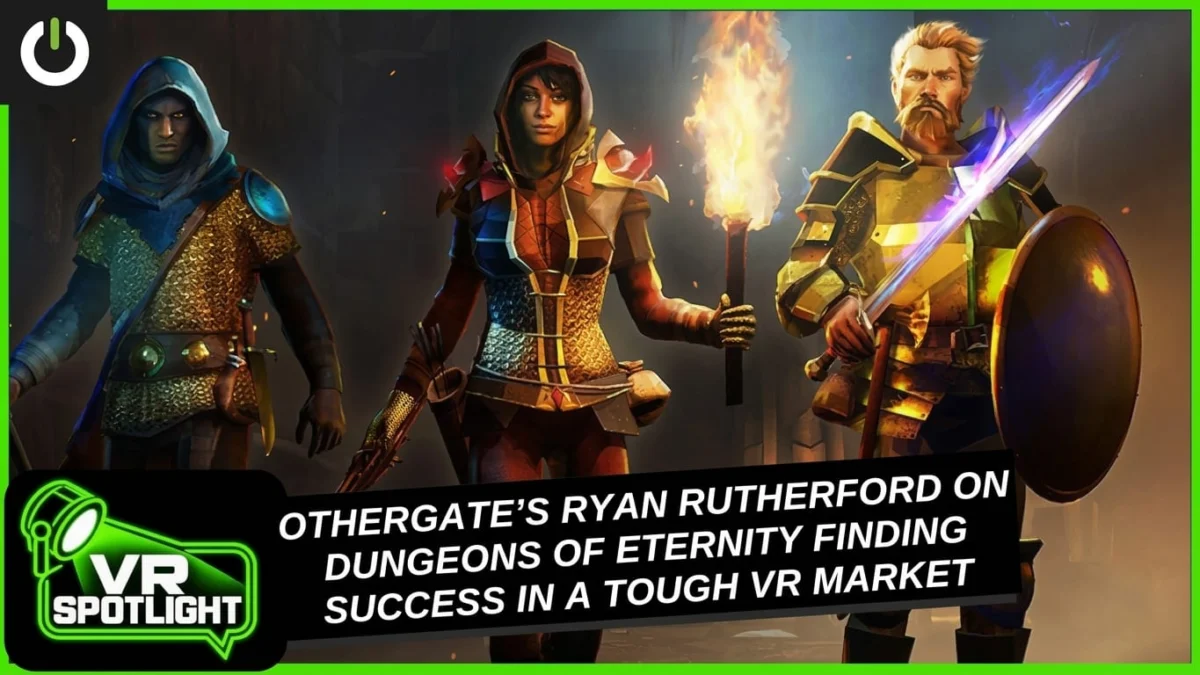
In the volatile landscape of virtual reality gaming—a market characterized by rapid hardware cycles, shifting consumer demographics, and the high-profile shuttering of established studios—Othergate’s Dungeons of Eternity stands as a rare beacon of sustained achievement. Celebrating its third anniversary this year, the cooperative dungeon crawler has transitioned from a promising indie project into a cornerstone of the Meta Quest and SteamVR libraries.
In a recent comprehensive interview with UploadVR’s Mike Johnson, Othergate co-founder and level designer Ryan Rutherford detailed the strategic decisions, technical hurdles, and community-driven philosophies that have allowed a six-person team to thrive where larger entities have faltered.
Main Facts: The Anatomy of a VR Mainstay
Dungeons of Eternity is a high-fantasy, four-player cooperative hack-and-slash adventure built from the ground up for spatial computing. At its core, the game utilizes procedural generation to ensure that no two "runs" through its subterranean labyrinths are identical. Players engage in physics-based combat using a variety of traditional and magical weaponry, ranging from swords and shields to staves and bows.
Key highlights of the game’s current state include:
- Multi-Platform Presence: Originally a Meta Quest exclusive, the title recently expanded to SteamVR, supporting full cross-play between standalone and PC-tethered headsets.
- Player Scaling: Initially launched as a three-player experience, the game successfully scaled to four-player co-op, a move driven by intense community demand.
- Diverse Game Modes: The experience is divided into several distinct modes, including the flagship "Dungeon Raid," the horde-style "Soul Harvest," and the objective-based "Crystal Hunt." Recent updates have introduced "Tomb Extraction," a mode that emphasizes atmospheric tension and limited resources.
- Technical Leadership: While supporting the aging Quest 2 hardware, Othergate has shifted its development focus to the Quest 3 as its baseline platform, leveraging the improved chipset for advanced lighting and weather effects.
Chronology: From Mobile VR Foundations to Quest 3 Dominance
The lineage of Dungeons of Eternity is rooted in the early days of mobile VR. The founding team at Othergate consists of veterans who previously worked at Meta (and Oculus) on foundational titles like Dead and Buried and Herobound for the Samsung Gear VR.
October 2021 – October 2023: The Foundation
The team spent two years in intensive development, focusing on a "Quest 2 first" philosophy. During this period, the team established the "three-player" limit, which was initially chosen for both performance stability on mobile chipsets and the practical logistics of a small development team testing their own builds.
October 2023: The Strategic Launch
The game officially launched just one week before the Meta Quest 3 hit shelves. This timing was intentional. By working closely with Meta, Othergate secured early access to Quest 3 hardware, ensuring that while the game was optimized for the massive Quest 2 install base, it was "Quest 3 ready" on day one. This alignment allowed the game to ride the wave of the 2023 holiday hardware rush.
2024: Expansion and Modernization
The current year has been defined by expansion. Othergate released a SteamVR version, introducing high-fidelity graphical settings, real-time lighting, and volumetrics. Simultaneously, the team overhauled the player limit, expanding to four-player co-op. The "Tomb Extraction" and "Stormgrave" updates further diversified the gameplay, introducing the first significant outdoor environments to the game’s procedural pool.
Supporting Data: Metrics of Engagement and Popularity
During the interview, Rutherford provided insights into how players actually interact with the game, revealing a clear hierarchy of interest that dictates the team’s development priorities.
The Popularity of "Dungeon Raid"
Internal metrics indicate that "Dungeon Raid" remains the most-played mode by a significant margin. Rutherford attributes this to the classic "loot-and-level" loop.
- Dungeon Raid: Provides the highest yield of gold and experience points. It concludes with high-stakes boss fights, which Rutherford notes are the primary draw for the veteran community.
- Resource Modes: "Crystal Hunt" and "Soul Harvest" serve as secondary activities, used primarily to gather specific resources for unlocking "Exo Perks" and potions. Once these upgrades are maximized, players almost invariably return to the core raiding experience.
The Hardware Shift
Despite the massive historical sales of the Quest 2, Othergate is observing a "sea change" in user behavior.
- Quest 3 Lead: The Quest 3 has become the primary platform for active users.
- PC VR Upswing: The launch of "Steam Link" and the "Steam Frame" (Valve’s ecosystem) has provided a surprising uptick in sales, proving that there is still a hungry market for high-end, tethered VR experiences if they offer cross-play with the larger standalone community.
Official Responses: Addressing the PlayStation VR2 and Modding
Two of the most frequent questions from the VR community involve a potential port to Sony’s PlayStation VR2 and the introduction of modding tools. Rutherford’s responses highlight the pragmatism required of a small studio.
The PSVR2 Dilemma
Rutherford confirmed that a PSVR2 version of Dungeons of Eternity is "running" internally, but its release remains uncertain.
"It’s a lot harder to release on PlayStation VR2," Rutherford explained. He cited Sony’s stringent certification process—comparable to a major console title launch—as a significant hurdle for a six-person team. Furthermore, recent reports of Sony pausing production on the headset have influenced Othergate’s risk assessment. The team fears a scenario where they commit resources to a port, only for the platform’s OS support to stagnate, making long-term updates impossible.
The Path to UGC (User-Generated Content)
On the topic of longevity, Rutherford was more bullish regarding mod support and custom dungeons.
"UGC is a big part of the plan for next year," he stated. While the game does not currently have an official SDK, the team is exploring ways to allow players to build their own dungeons, quest lines, and campaigns. This is viewed as the "Holy Grail" for sustainability, allowing the community to generate content during the lulls between official developer updates.
Implications: Sustainability in a "Free-to-Play" Culture
The interview touched on a sobering reality for VR developers: the "TikTok Effect." Rutherford noted that while promotional videos on social media often garner millions of views, they rarely convert to sales because the dominant question in the comments is always, "Is it free?"
The Small Team Advantage
Othergate’s success is partially due to its refusal to over-expand. By maintaining a core team of six, they have avoided the "burn rate" issues that have led to layoffs at other VR studios. "The install base is healthy enough to sustain a business, but it’s not large enough yet to support 20-man teams unless you’re in the top ten," Rutherford warned.
Financial Evolution: From Cosmetics to Premium DLC
To keep the lights on for another three years, Othergate is looking beyond initial game sales:
- In-App Purchases (IAP): While controversial in some gaming circles, Rutherford noted that the Dungeons of Eternity community has been vocal about wanting to spend money to support the devs.
- Cosmetic Bundles: These have performed better than expected, providing a steady revenue stream without splitting the player base.
- Premium Expansions: For 2025, the team is considering "Premium DLC" that offers more than just skins—potentially adding narrative-driven campaigns or entirely new realms.
The "Mini-MMO" Ambition
Looking toward the horizon, Rutherford expressed a desire to move the game toward a "mini-MMO" structure, similar to the social and world-building elements of Diablo 4 or Breath of the Wild. The goal is to create an "abandoned wasteland" or "open plains" that players can explore between dungeons, though he acknowledged that the technical expectations for VR MMOs are often impossibly high for small teams.
Conclusion: A Winter Update and Beyond
As 2024 draws to a close, Othergate is preparing for its final major milestone of the year: the Christmas update. Rutherford confirmed the return of the "Frostbound" realm, featuring slippery ice physics and snowball fights, alongside a potential new DLC drop.
The trajectory of Dungeons of Eternity suggests that the secret to VR success isn’t necessarily massive budgets or cutting-edge marketing, but rather a deep understanding of platform constraints and a symbiotic relationship with a loyal community. By focusing on Quest 3 as the new standard while refusing to abandon the players who built their success on Quest 2, Othergate has positioned itself as a survivor in the increasingly competitive XR landscape.