
"Orchid Rain on the Underground": Chris "Daze" Ellis Honors New York’s Enduring Creative Pulse at PPOW Gallery
New York, NY – PPOW Gallery is currently hosting "Orchid Rain on the Underground," the third solo exhibition by renowned artist Chris "Daze" Ellis. Running through April 25, 2026, the exhibition is a vibrant testament to Ellis’s lifelong artistic journey, meticulously weaving together the raw energy of 1970s and 80s graffiti culture with a sophisticated, decades-honed studio practice. Featuring a compelling new series of paintings, a thought-provoking multimedia installation, and a striking site-specific mural, "Orchid Rain on the Underground" serves as a powerful affirmation of the enduring legacy of New York City’s foundational creative spirit, demonstrating its continued relevance and profound influence on contemporary artistic expression.
A Legacy Forged in the Streets: The Genesis of Daze’s Artistic Vision
Born in Brooklyn in 1962, Chris "Daze" Ellis emerged from a New York City that was a fertile ground for artistic innovation, particularly within the burgeoning graffiti movement. His formative years, spent attending the High School of Art and Design in the mid-1970s, exposed him to the groundbreaking work of early graffiti pioneers like Blade, Lee Quiñones, and the visionary PHASE 2. These artists, who were transforming the city’s public spaces into dynamic canvases, ignited a passion within young Ellis that would shape his artistic trajectory.
As Daze began to carve out his own identity as an artist, he was also an integral part of the city’s vibrant nightlife scene. He was a regular at legendary establishments that have since become hallowed ground in the annals of New York’s cultural history. Spots like the Lit Lounge in the East Village, Danceteria on West 21st Street, and the iconic Mudd Club in Tribeca were more than just places to socialize; they were dynamic hubs of artistic and social experimentation. These nightclubs, often functioning as impromptu galleries and performance spaces, provided a crucial incubator for Daze’s early creative endeavors. It was within these electrifying environments that the ethos of the city, with its blend of grit, glamour, and unbridled creativity, began to permeate his artistic output. By the early 1980s, Daze was successfully transitioning from the ephemeral act of tagging subway cars to establishing a more permanent studio practice, one that sought to encapsulate the very essence of the urban experience.
Echoes of the Past, Visions of the Present: Artistic Influences and Evolution
Daze’s artistic evolution is deeply rooted in a rich tapestry of influences, drawing from both the raw dynamism of street art and the contemplative depth of established art historical movements. His work pays homage to the spirit of early 20th-century urban realist painters, such as John Sloan of the Ashcan School and Reginald Marsh, whose art vividly captured the everyday realities of New York City’s streets and its inhabitants. Like these predecessors, Daze elevates the city’s streets and subways to the status of significant sites of creative exploration, imbuing them with a profound sense of narrative and historical weight.
Simultaneously, Daze finds resonance in the expressive freedom of lyrical abstraction, citing the works of abstract expressionist titans like Joan Mitchell and Willem De Kooning. This influence is evident in his masterful juxtaposition of gestural, energetic swathes of acrylic and spray paint with meticulously rendered details of subway car interiors, the shadowy depths of tunnels, and the bustling energy of stations. This unique synthesis allows him to capture both the visceral energy of the urban environment and the nuanced emotional undercurrents that define it.
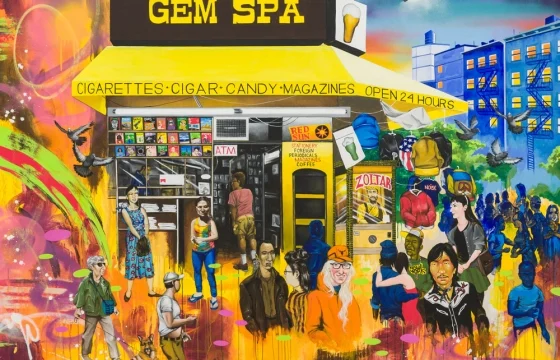
A prime example of this artistic dialogue is showcased in his 2025 painting, "Gem Spa In the 80s." This evocative work resurrects the iconic newspaper stand and candy store that once stood at the bustling intersection of St. Mark’s Place and Second Avenue. Gem Spa was far more than a simple retail establishment; it was a vital nexus for the city’s diverse subcultures and a celebrated haunt for literary luminaries. Figures like Jack Kerouac and Allen Ginsberg, who famously described it as a "nerve center" of the city, recognized its cultural significance. Daze’s painting not only captures the physical presence of this lost landmark but also populates it with significant figures from his own life and the broader cultural landscape. In the foreground, critic and curator Carlo McCormick and artist Martin Wong emerge from the vibrant throng, a poignant acknowledgment of the personal connections and influential personalities that shaped Daze’s artistic journey.
Beyond specific landmarks and portraits, "Orchid Rain on the Underground" consistently explores the theme of beauty emerging from adversity. Many of Daze’s canvases feature technicolor explosions of flowers ascending from seemingly desolate urban rubble. These striking compositions serve as powerful metaphors for optimism in the face of inequality and the inherent capacity for beauty to flourish even amidst destruction. The inclusion of both exotic tropical flora and familiar local flowers from the artist’s upstate New York home adds another layer of poignancy, functioning as both somber memorials to what has been lost and hopeful testaments to the enduring creativity and beauty that can be discovered in every corner of the city.
Immersive Environments: The Multimedia Installation and Site-Specific Mural
"Orchid Rain on the Underground" extends beyond the traditional canvas, offering viewers an immersive experience that fully encapsulates Daze’s artistic vision. A significant highlight of the exhibition is a captivating site-specific mural that transforms a gallery hallway into a dynamic extension of the artist’s urban explorations. This mural, often a practice reserved for outdoor spaces, seamlessly bridges the gap between street art and the gallery setting, drawing viewers deeper into the exhibition’s narrative.
The mural culminates in the exhibition’s final room, which houses a meticulously crafted multimedia installation. This installation is a deliberate attempt to transport visitors into a composite scene from Daze’s formative years, recreating the atmosphere of the spaces that fueled his early creativity. The experience is amplified by a pulsating light-up dance floor and a glittering disco ball, evoking the vibrant nightlife that was so integral to the artist’s development. Authentic subway car seats are incorporated into the space, grounding the installation in the urban reality that has always been central to Daze’s work.
To further enhance the immersive quality, a carefully curated soundtrack fuses the genres that defined the era – house, disco, and early hip-hop – creating an auditory landscape that complements the visual and spatial elements. This powerful combination of sensory experiences underscores the profound sense of freedom and creative inspiration that these urban environments fostered, highlighting their indispensable role in Daze’s personal and artistic trajectory.
By integrating elements that span his entire career, "Orchid Rain on the Underground" showcases Daze’s unwavering commitment to exploring the multifaceted nature of daily life in New York City. The exhibition is not merely a retrospective; it is a living testament to the city’s vibrant cultural heartbeat, an ongoing dialogue with its past, and a powerful affirmation of its enduring creative spirit.
Chronological Significance: Tracing Daze’s Artistic Trajectory
The exhibition "Orchid Rain on the Underground" can be understood as a rich chronological narrative, charting Chris "Daze" Ellis’s artistic evolution from his early days as a graffiti artist to his established position as a contemporary painter and multimedia artist.
- Mid-1970s: Daze’s artistic journey begins during his attendance at the High School of Art and Design. This period marks his introduction to and inspiration from the pioneering graffiti artists of the era, laying the groundwork for his future endeavors.
- Late 1970s – Early 1980s: Daze actively participates in the New York City nightlife scene, frequenting iconic clubs that served as vital hubs for artistic and social experimentation. This immersion deeply influences his early artistic style and thematic concerns. Concurrently, he begins to transition from subway car graffiti to developing a studio practice, reflecting a growing desire for a more enduring artistic output.
- 1980s and Beyond: Daze’s studio practice solidifies, incorporating influences from urban realism and abstract expressionism. His work begins to blend detailed urban depictions with energetic, gestural abstraction, creating a signature style that captures the complexity of New York City. His paintings from this era often reflect the specific cultural landmarks and social dynamics of the time.
- Contemporary Period (Exhibition Focus): "Orchid Rain on the Underground" showcases a new body of work, including paintings, a multimedia installation, and a site-specific mural. These recent pieces demonstrate a mature artistic voice that continues to engage with his foundational influences while pushing the boundaries of his practice, incorporating immersive experiences and a continued exploration of themes of urban beauty, resilience, and cultural memory. The exhibition itself, running through April 25, 2026, represents the culmination of decades of artistic development and a powerful statement about the enduring relevance of his vision.
Supporting Data: The Enduring Impact of New York’s Creative Crucible
The exhibition’s success and thematic resonance are underscored by several supporting elements:
- Artistic Influences: The explicit mention of influences like John Sloan, Reginald Marsh, Joan Mitchell, and Willem De Kooning places Daze within a significant lineage of American art, validating his sophisticated approach to urban subject matter and abstract expression.
- Cultural Landmarks: The inclusion of "Gem Spa In the 80s" as a featured artwork provides concrete evidence of Daze’s deep connection to specific, culturally significant locations in New York City. The reference to literary figures like Kerouac and Ginsberg further emphasizes the historical and cultural weight of these sites.
- Key Figures: The presence of recognizable figures such as Carlo McCormick and Martin Wong within the artwork highlights Daze’s engagement with and contribution to the intellectual and artistic communities that shaped his career. Their inclusion serves as a testament to the interconnectedness of the New York art world.
- Thematic Resonance: The recurring motif of flowers emerging from urban debris speaks to a broader societal narrative of resilience and beauty. This theme resonates with contemporary audiences grappling with issues of urban decay, social inequality, and the search for hope in challenging environments.
- Multimedia Engagement: The exhibition’s use of a site-specific mural and an immersive multimedia installation demonstrates a contemporary approach to art exhibition, aiming to engage viewers on multiple sensory levels. This reflects a growing trend in contemporary art to create more experiential and participatory encounters.
Official Responses and Critical Acclaim
While specific official responses and extensive critical reviews for "Orchid Rain on the Underground" are still developing given its ongoing exhibition period, the PPOW Gallery’s decision to present Daze’s third solo exhibition with them speaks volumes. Galleries like PPOW are highly selective, and a repeated invitation for a solo show indicates a strong belief in the artist’s consistent artistic merit and commercial viability. The gallery’s statement itself, emphasizing the exhibition’s "thoughtful and meticulous practice honed over the past five decades" and its demonstration of the "continued relevance" of Daze’s work, serves as an implicit endorsement and a preview of the critical reception.
Furthermore, Daze’s established career, marked by his early influence on graffiti art and his successful transition into the fine art world, has garnered significant attention over the years. His work has been exhibited internationally and is held in numerous private and public collections. This exhibition at PPOW, a gallery known for its commitment to showcasing innovative and historically significant contemporary artists, is poised to attract considerable attention from art critics, curators, and collectors alike. The exhibition’s comprehensive scope, encompassing new paintings, a mural, and an immersive installation, provides ample material for in-depth critical analysis of Daze’s artistic trajectory and his enduring contribution to the art world.
Implications: The Enduring Power of Urban Art and Cultural Memory
"Orchid Rain on the Underground" offers profound implications for understanding the evolution of urban art and the vital role of cultural memory in shaping contemporary creative expression.
- Legitimization of Urban Art: The exhibition solidifies the trajectory of artists like Daze, who have successfully bridged the gap between street art and the established fine art world. It demonstrates that the raw energy and authentic voice of graffiti culture can be translated into sophisticated, museum-quality works that engage with complex artistic and social dialogues. This contributes to the broader legitimization and appreciation of urban art as a significant artistic genre.
- Preservation of Cultural Heritage: By focusing on iconic New York City locations and figures, Daze’s work acts as a form of visual archiving, preserving aspects of the city’s cultural heritage that might otherwise fade from collective memory. The exhibition serves as a powerful reminder of the specific historical and social contexts that have nurtured artistic innovation.
- The Interconnectedness of Art and Life: Daze’s practice underscores the inseparable link between an artist’s lived experience and their creative output. The exhibition highlights how personal narratives, urban environments, and cultural movements converge to forge unique artistic visions. This serves as an inspiration for aspiring artists to draw deeply from their own surroundings and experiences.
- Relevance of Historical Movements: The exhibition powerfully argues for the continued relevance of the graffiti movement and the vibrant cultural scenes of the 1970s and 80s. It demonstrates that the foundational energies and aesthetics of these eras continue to inform and inspire contemporary art, proving that artistic legacies are not static but are continuously reinterpreted and revitalized.
- New York City as a Muse: Ultimately, "Orchid Rain on the Underground" is a love letter to New York City. It showcases the city not just as a backdrop, but as an active participant in the creative process, a source of endless inspiration, and a testament to the enduring spirit of its people. The exhibition implies that even as the city evolves, its core creative energy, born from its diverse communities and its dynamic urban landscape, will continue to thrive and find new artistic expressions.


Leave a Comment