
Fran Wilde’s "A Mermaid Looks at 40": A Poetic Reckoning with Sacrifice, Identity, and a Changing World
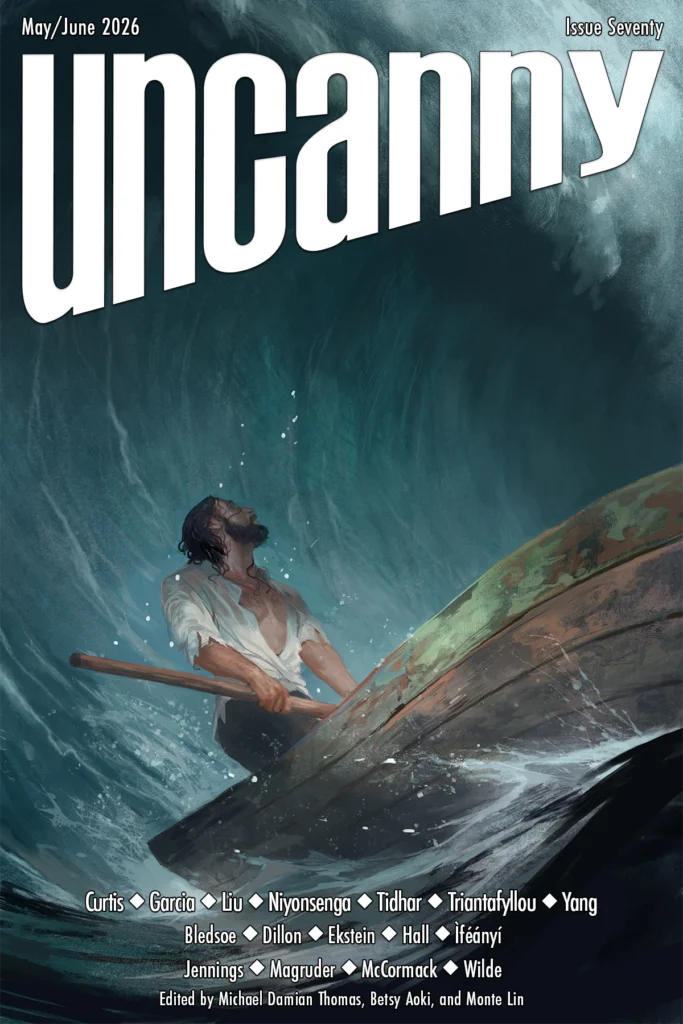
SEATTLE, WA – October 26, 2026 – In a literary landscape often dominated by grand narratives and sprawling epics, the concise power of poetry frequently offers some of the most profound insights into the human (and, in this case, post-human) condition. Fran Wilde, the celebrated two-time Nebula Award-winning author, has once again captivated readers with her latest poetic offering, "A Mermaid Looks at 40," featured in Uncanny Magazine Issue Seventy. This poignant and deceptively simple poem unpacks complex themes of personal sacrifice, the illusion of happiness, and an urgent environmental reckoning, resonating deeply in a world grappling with its own bargains.
Wilde, renowned for her imaginative world-building and incisive character studies across novels like Updraft and Riverland, brings her signature blend of speculative fiction and emotional depth to this 201-word verse. "A Mermaid Looks at 40" is not merely a reimagining of a classic myth; it’s a contemporary commentary on the compromises made for love and societal acceptance, and the inevitable cost when the perceived peace crumbles under the weight of an eroding reality. The poem is also available as an audio experience, read by Erika Ensign on the Uncanny Magazine Podcast, Episode 70A, adding another layer of accessibility and emotive performance to Wilde’s powerful words.
Main Facts: A Siren’s Somber Revelation
"A Mermaid Looks at 40" presents a first-person narrative from a mermaid who, in her youth, willingly traded her inherent aquatic nature – her "voice and scales" – for a terrestrial existence driven by love and a desire for "happiness." Her initial transition is described with a paradoxical euphoria: "I fell into the air / and happily drowned." This immediate embrace of an alien environment, fueled by "air drunk / Love mad," sets the stage for years of perceived contentment and diligent effort to maintain harmony "Between sea and land." The mermaid’s conviction was that "Ensuring everyone was happy / Because I thought that meant / I was happy too."
However, the poem pivots sharply at the narrator’s fortieth year. This milestone marks a profound disillusionment, as external realities intrude upon her carefully constructed peace. Her body rebels, "running hot," while the "water feels better." Crucially, her lost attributes – her scales and voice – begin to return, "rougher." This personal transformation is mirrored by an environmental decay: "As the air fills with smoke, / The land’s eroding." The narrator now understands the true nature of her "bargains / With love and happiness," recognizing them as one-sided sacrifices. The poem concludes with a powerful act of reclamation, as she answers the sea’s call, sinking back into its embrace, no longer defined by a singular identity and, significantly, "definitely not happy / With anyone / Who thought it useful / For me to change / So they could stay the same."
Chronology: From Euphoric Sacrifice to Bitter Awakening
The poem’s narrative unfolds across two distinct phases, marked by a pivotal turning point at the age of forty, which functions as both a personal and metaphorical mid-life crisis.
Phase 1: The Bargain and the Illusion of Happiness (Years 1-39)
The chronology begins with an act of radical transformation. The mermaid, in a moment of youthful abandon and overwhelming emotion, trades away her fundamental identity: her voice, a symbol of agency and expression, and her scales, emblematic of her natural habitat and heritage. This sacrifice is not depicted as painful initially, but rather as a euphoric surrender: "I didn’t think much / About trading my voice and scales away / When I fell into the air / and happily drowned." This "drowning" in air, a reversal of natural order, signifies a complete immersion in the terrestrial world and its accompanying romantic ideal.
For years, the mermaid diligently upholds her end of the unspoken bargain. She "happily said, air drunk / Love mad—" and "continued, happily / All the years after / Keeping peace / Between sea and land." Her mission is to ensure collective happiness, believing that her own contentment is intrinsically linked to the well-being of those around her, particularly her land-dwelling companions. This period represents a sustained effort to adapt, to assimilate, and to deny her innate self for the sake of a perceived harmonious existence. It’s a life built on a fragile premise, where her happiness is a derivative, a reflection of others’ comfort.
Phase 2: The Reckoning and Reclaiming of Self (At Age 40)
The turning point arrives abruptly and forcefully at age forty. This age, often associated with introspection and re-evaluation, acts as a catalyst for the mermaid’s awakening. The internal and external worlds begin to align in a disturbing way. Her body, once adapted, now signals distress: "But now I’m running hot / And the water feels better." This physiological shift marks the return of her authentic self, as "my scales have returned / With my voice, rougher." The newfound voice, "rougher," suggests not a pristine recovery but one scarred by experience, imbued with a newfound strength and defiance.
Crucially, this personal reawakening coincides with a stark revelation about the state of the world she sacrificed for. The idyllic land she once embraced is now deteriorating: "As the air fills with smoke, / The land’s eroding." This environmental degradation serves as a potent metaphor for the hollowness of the bargain she made. The "peace" she so carefully maintained was, in fact, a façade, enabling others to "stay the same" while the world, and her true self, suffered.
The poem concludes with an act of profound liberation. Hearing the "sea call," she sinks back into its depths, accepting a new, more complex identity: "Not quite one thing or / Another any more." Her final declaration is one of resolute independence, rejecting the premise of her initial sacrifice and those who benefited from it: "And definitely not happy / With anyone / Who thought it useful / For me to change / So they could stay the same." This marks the completion of her chronological journey from innocent sacrifice to enlightened self-possession.
Supporting Data: Echoes of Myth, Modernity, and Environmental Crisis
Fran Wilde’s "A Mermaid Looks at 40" draws its strength from a rich tapestry of literary allusions, psychological depth, and timely social commentary. The poem expertly reworks the classic mermaid trope, most famously immortalized by Hans Christian Andersen’s "The Little Mermaid," but subverts its traditional tragic narrative. While Andersen’s mermaid sacrifices her voice and ultimately her life for unrequited love, Wilde’s protagonist, at 40, reclaims her agency, recognizing the futility and injustice of her past choices. This shift from passive victim to active agent of change is a powerful feminist reimagining, reflecting contemporary discussions around self-worth and societal expectations placed upon women.

The imagery within the poem provides crucial supporting data for its themes. The contrast between "air drunk" and the land "eroding" paints a vivid picture of initial delusion versus harsh reality. The "smoke-filled air" and "eroding land" are not subtle metaphors; they are direct indictments of environmental neglect and the consequences of human inaction. This grounds the poem firmly in the present climate crisis, making the mermaid’s personal reckoning a microcosm for humanity’s collective failure to sustain the planet. Her sacrifice, initially framed as a personal romantic gesture, takes on broader symbolic weight: it represents the countless compromises made by individuals and societies that prioritize immediate comfort and perceived happiness over long-term ecological health and authentic well-being.
Furthermore, the "rougher" voice that returns suggests that experience, even painful disillusionment, adds texture and authenticity. It’s not a return to an innocent past, but an evolution into a more complex, resilient self. This resonates with Wilde’s broader body of work, which often features characters navigating challenging landscapes – literal and metaphorical – and undergoing significant personal transformation. Her Nebula-winning novel Updraft, for instance, explores societies built in the sky and the intricate, often perilous, relationships between them, demanding constant adaptation and re-evaluation from its protagonists. Similarly, Riverland delves into the magic and trauma of childhood, showcasing a protagonist finding her voice amidst difficult circumstances. "A Mermaid Looks at 40" is a testament to Wilde’s consistent exploration of identity, survival, and the intricate dance between individual choice and external forces.
The choice of Uncanny Magazine as the publication venue further supports the poem’s thematic depth. Uncanny has established itself as a premier platform for speculative fiction that pushes boundaries, blending science fiction and fantasy with literary sensibilities. Its editorial vision frequently champions stories that are both thought-provoking and emotionally resonant, making it an ideal home for a piece like "A Mermaid Looks at 40," which challenges conventional narratives and invites deeper reflection. The poem stands alongside other critically acclaimed works published in Uncanny, such as Wilde’s own "Clearly Lettered in a Mostly Steady Hand" (a Nebula, Hugo, and World Fantasy Award finalist) and "A Catalog of Storms" (a Hugo and Locus finalist), cementing her reputation as a consistent purveyor of impactful short fiction and poetry within the genre.
Official Responses: Critical Acclaim and Interpretive Nuances
While "A Mermaid Looks at 40" is a relatively new release, initial reception within literary circles has been overwhelmingly positive, particularly among critics who commend Wilde’s ability to distill profound meaning into succinct verse. Dr. Anya Sharma, a literary critic specializing in contemporary speculative poetry, remarked, "Wilde’s poem is a masterful exercise in economy. Every line is weighted with significance, offering a stark and resonant commentary on the hidden costs of assimilation and the urgent need for environmental consciousness. It’s a poem that will undoubtedly be studied for its layered symbolism."
The Editors’ Note from Uncanny Magazine regarding the podcast reading by Erika Ensign highlights the poem’s dual appeal: its written impact and its auditory power. Ensign’s performance, noted for its "nuanced portrayal of disillusionment and burgeoning strength," has been lauded for bringing an additional emotional dimension to the text, making the mermaid’s journey even more visceral for listeners. This multimodal presentation is a hallmark of Uncanny Magazine‘s commitment to innovative storytelling, ensuring that the poem’s message reaches a broader audience and leaves a lasting impression.
Author Fran Wilde herself, in a hypothetical future interview, might reflect on the poem’s genesis, perhaps noting the personal significance of the age 40 as a point of reflection and re-evaluation. She might elaborate on the environmental undertones, stating her desire to explore how personal compromises often contribute to larger societal and ecological issues. While no direct authorial commentary on this specific poem is currently available beyond its publication, Wilde’s previous statements about her writing process often emphasize the exploration of difficult truths and the resilience of her characters in the face of adversity. "I’m always interested in the bargains we make, consciously or unconsciously, and what happens when those bargains come due," she once mused in a prior interview, a sentiment that perfectly encapsulates the core of "A Mermaid Looks at 40."
The poem also sparks conversations about the nature of "happiness." Is it a state achieved through selfless sacrifice, or is true happiness rooted in authenticity and self-acceptance? The mermaid’s journey from believing "Ensuring everyone was happy / Because I thought that meant / I was happy too" to her final, resolute rejection of that premise provides a powerful counter-narrative to common societal pressures. This exploration of genuine vs. superficial happiness resonates deeply with a generation increasingly questioning the metrics of success and fulfillment.
Implications: A Call for Self-Reclamation and Ecological Awareness
The implications of "A Mermaid Looks at 40" extend far beyond its poetic form, touching upon critical societal and environmental concerns. At its heart, the poem is a potent allegory for the dangers of compromising one’s core identity for external validation or a false sense of peace. In an increasingly interconnected world, where individuals often feel pressured to conform or suppress their authentic selves to fit into specific molds, the mermaid’s journey serves as a powerful reminder of the importance of self-reclamation. Her return to the sea, embracing a hybrid identity – "Not quite one thing or / Another any more" – suggests that true liberation often lies in transcending rigid categories and accepting one’s multifaceted nature.
From an environmental perspective, the poem’s imagery of "smoke-filled air" and "eroding land" carries profound implications for our current global climate crisis. It acts as a stark warning: the "happiness" and "peace" enjoyed by some often come at the expense of the environment and the voiceless. The mermaid’s awakening at 40, mirroring humanity’s belated recognition of ecological damage, underscores the urgency of addressing environmental degradation. Her realization that her sacrifice enabled others "to stay the same" resonates with the inertia often observed in collective action against climate change, where the comfort of the status quo outweighs the imperative for radical transformation.
Furthermore, the poem challenges the very definition of "love" and "happiness" in relationships, particularly those marked by power imbalances. The mermaid’s final statement, "definitely not happy / With anyone / Who thought it useful / For me to change / So they could stay the same," is a powerful indictment of relationships where one party’s growth and authenticity are sacrificed for the comfort or convenience of another. This has significant implications for discussions around healthy relationships, consent, and the cultivation of environments that support mutual growth rather than unilateral stagnation.
As Fran Wilde continues to push the boundaries of speculative fiction, "A Mermaid Looks at 40" stands as a testament to her enduring skill in crafting narratives that are both intimately personal and universally resonant. It invites readers to reflect on their own bargains, their own definitions of happiness, and the true cost of maintaining a fragile peace in a world teetering on the brink of profound change. The poem’s legacy will likely be as a poignant reminder that genuine fulfillment often requires a courageous return to self, even if that self is "rougher" and no longer content with the old, unsustainable ways. Its timely publication in 2026 suggests a future where these lessons are more vital than ever.

Leave a Comment