
Intel’s Panther Lake Chips Reign Supreme in the Mobile Gaming Arena
[City, State] – [Date] – After a period marked by significant challenges and a recent leadership change, Intel appears to be regaining its footing, particularly in the fiercely competitive mobile processor market. The company’s latest generation of mobile chips, codenamed "Panther Lake" and officially branded as the Intel Core Ultra Series 3, are earning widespread acclaim, showcasing a remarkable leap in integrated graphics performance that rivals discrete GPUs and promises a brighter future for portable gaming.
This surge in performance comes at a crucial juncture for Intel. The past two years have been tumultuous, with a substantial financial downturn in 2024 leading to the departure of then-CEO Pat Gelsinger. Furthermore, Intel’s flagship desktop processors, the Core Ultra 200S series, have struggled to gain traction in the gaming segment, allowing rival AMD to further solidify its dominance. However, the positive reception to the Lunar Lake laptop processors in 2024 has seemingly paved the way for the success of their successors. The Panther Lake family, particularly its integrated Arc B390 GPU, is generating significant buzz, with claims of matching the gaming prowess of a discrete Nvidia RTX 4050. To assess these bold assertions, a comprehensive, week-long gaming intensive test was conducted on a variety of laptops equipped with these new chips.
A Stumble in the Desktop Arena, a Leap Forward in Laptops
Intel’s recent journey has been anything but smooth. The company faced a substantial financial setback in 2024, incurring a multi-billion dollar quarterly loss that ultimately led to a change in leadership. The introduction of their latest desktop processors, the Intel Core Ultra 200S series, also failed to impress in the gaming arena, further conceding market share to their long-standing rival, AMD. This period of adversity, however, has not extinguished Intel’s innovation, particularly in the mobile computing space.
Following the moderately successful launch of the Lunar Lake laptop processors in 2024, the subsequent generation, codenamed Panther Lake and officially designated as the Intel Core Ultra Series 3, has been met with overwhelmingly positive feedback from industry analysts and reviewers. A key highlight of this new architecture is the integrated Arc B390 GPU. On paper, this integrated graphics solution promises performance comparable to a discrete Nvidia RTX 4050, a claim that has ignited considerable interest within the gaming community. To put these claims to the test, an extended evaluation was undertaken, dedicating a full week to using laptops powered by Panther Lake as primary gaming machines.
Rigorous Testing: Configurations and Methodology
The evaluation involved a diverse range of laptops, carefully selected to represent both high-end and mid-range configurations of the Panther Lake platform.
High-End Configuration: Asus ZenBook Duo 2026
The primary testbed for this extensive review was an Asus ZenBook Duo 2026. This premium device is equipped with the Intel Core Ultra X9 388 processor, featuring the integrated Arc B390 iGPU. Complementing the powerful processor and graphics unit were 32GB of LPDDR5 system memory and a capacious 1TB PCIe SSD. This configuration represents the pinnacle of Panther Lake performance currently available in thin-and-light laptops, offering a clear insight into the capabilities of the most powerful systems on the market. During gaming sessions, the dual-screen functionality of the ZenBook Duo was deactivated, and the laptop was used in a traditional clamshell mode to ensure a consistent testing environment.
Mid-Range Configurations: MSI, Samsung, and Asus
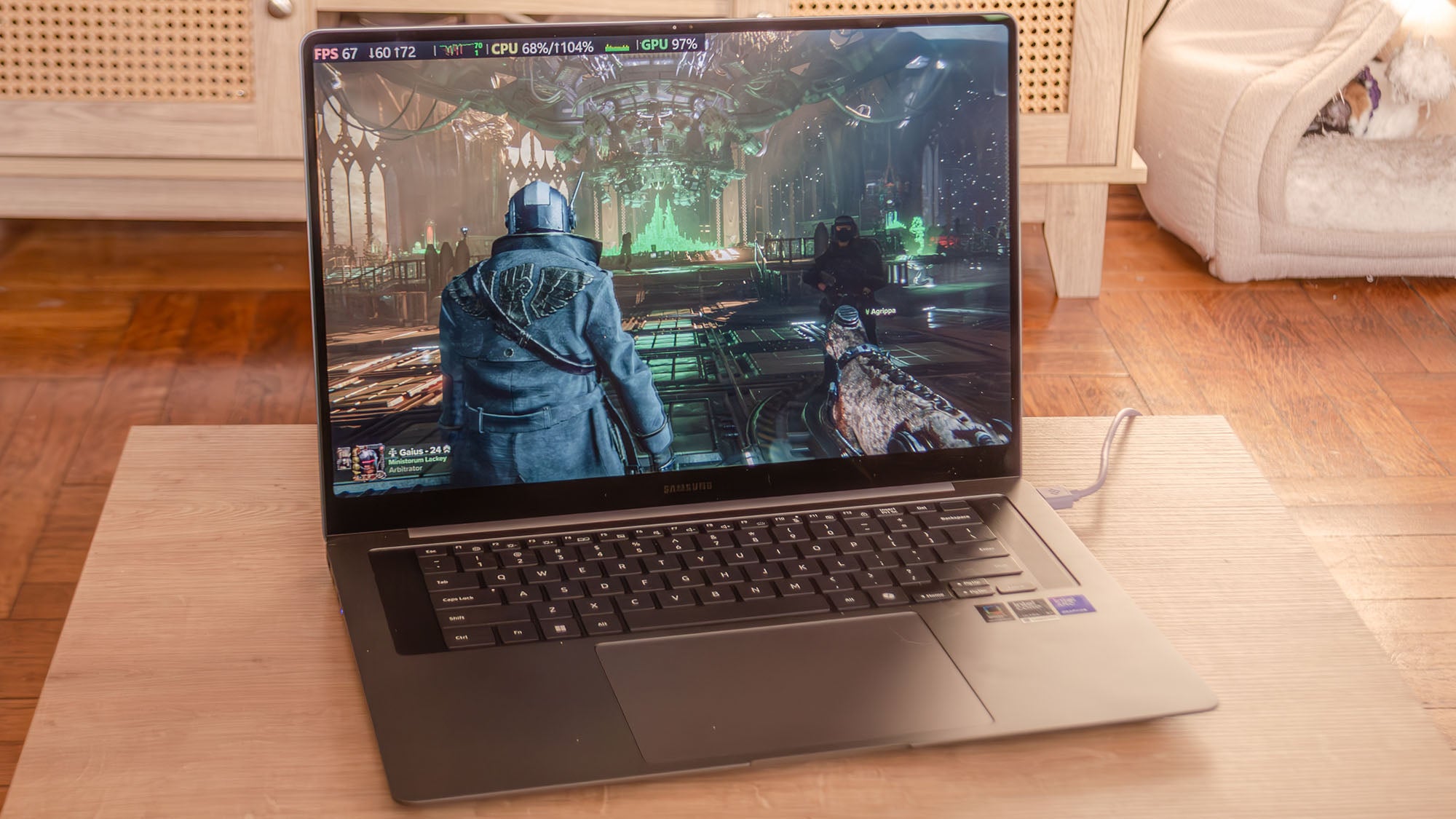
To gauge the broader appeal and value proposition of the Panther Lake architecture, several mid-range systems were also incorporated into the testing regimen. These included the MSI Prestige Flip 14 AI+, the Samsung Galaxy Book6 Pro, and an Asus ExpertBook. These laptops all featured the Intel Core Ultra X7 358H chip, also equipped with the Arc B390 iGPU. They were outfitted with 32GB of LPDDR5 system memory and boasted PCIe SSD storage ranging from 1TB to 2TB. Notably, these mid-range models are available at more accessible price points, with some models, such as the MSI Prestige 14 AI+, retailing for as low as $1,250. This selection allowed for an assessment of Panther Lake’s performance across a wider spectrum of consumer budgets.
Gaming Benchmarks and Performance Metrics
The testing methodology focused on demanding modern titles that have historically presented challenges for integrated graphics solutions. Games such as Cyberpunk 2077, Warhammer 40,000: Darktide, and Path of Exile 2 were chosen for their graphical fidelity and resource-intensive nature. The testing was conducted primarily at a resolution of 1080p (or 1200p, depending on the laptop’s native display). Graphics settings were adjusted to slightly below their maximum presets, with ray tracing features disabled. Intel’s XeSS upscaling technology was utilized in "balanced" mode, without employing frame generation, to provide a baseline of native performance. The goal was to achieve consistent frame rates of 45+ to 60 frames per second (fps) across a broad range of titles.
Unprecedented Performance: The Arc B390 Delivers
The results of the week-long gaming marathon were nothing short of remarkable, exceeding even the most optimistic expectations for integrated graphics. Across a diverse array of demanding titles, the Intel Core Ultra X7 and X9 processors, paired with the Arc B390 iGPU, consistently delivered playable frame rates, a feat previously unimaginable for thin-and-light mobile devices.
Consistent Frame Rates in Demanding Titles
Maintaining a resolution of 1080p/1200p, with graphics settings set to slightly below the highest presets, ray tracing disabled, and Intel XeSS set to balanced mode (without frame generation), the Panther Lake-equipped laptops consistently achieved average frame rates of 45+ to 60 fps in nearly every game tested. This level of performance represents a significant leap forward, blurring the lines between integrated and discrete graphics solutions for everyday gaming.
Warhammer 40,000: Darktide – A Stress Test Mastered
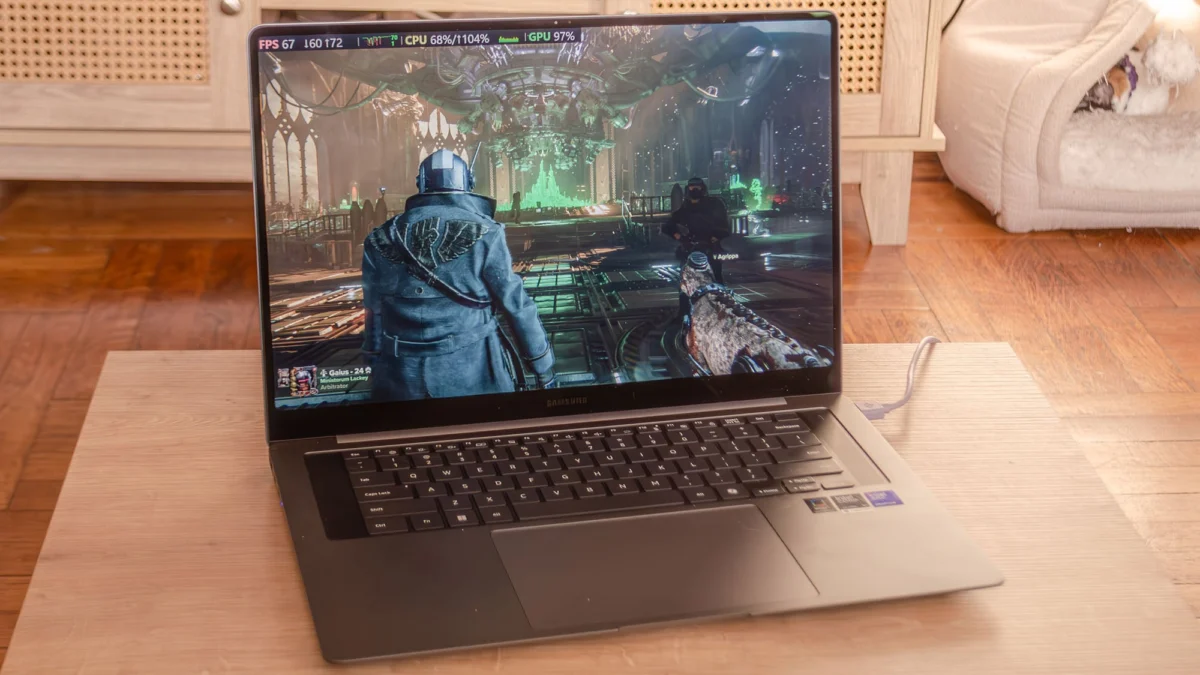
In Warhammer 40,000: Darktide, a notoriously demanding title, the Panther Lake chips performed admirably. While brief instances of stuttering were observed during intense encounters, such as large swarms of Poxwalkers, these dips were never severe enough to significantly detract from the gameplay experience. It’s worth noting that even on a high-end desktop PC equipped with an RTX 5080, a Ryzen 7 9800X3D, and 32GB of DDR5 memory, Darktide has exhibited similar performance anomalies. This suggests that the occasional frame drops are more indicative of the game’s inherent optimization challenges than a fundamental limitation of the Panther Lake hardware.
Doom: The Dark Ages – The Toughest Challenge
Doom: The Dark Ages emerged as the most challenging title for the Intel iGPU. To maintain frame rates above 45-50 fps at 1080p, more significant compromises in graphics settings were required. While these adjustments might be less perceptible on a smaller 14-inch display, they were noticeable on a 16-inch screen. Future driver updates may alleviate some of these performance limitations, but for now, this title highlights the upper bounds of the Arc B390’s capabilities.

Cyberpunk 2077 and Path of Exile 2 – Smooth Sailing
Cyberpunk 2077 proved to be a more accommodating experience, with average frame rates hovering between 50-60 fps. During intense firefights, such as the climactic assault on Arasaka Tower, frame rates would occasionally dip into the mid-40s. However, similar to Darktide, these slowdowns did not fundamentally impair the enjoyment of the game.
Path of Exile 2 offered the most fluid gameplay. The game consistently averaged around 70 fps, with only rare drops into the mid-50s. Given the limited time spent with this title, it’s possible that more demanding scenarios later in the game could present further challenges. Nevertheless, the visual fidelity at 1080p with High settings and Balanced XeSS was impressive. Should performance become an issue, users have the flexibility to switch XeSS to "Performance" mode or adjust graphical settings without a significant loss in visual quality.
Battery Life Performance: Uncompromised Gaming
A particularly noteworthy finding was the lack of performance degradation when gaming on battery power. Even the most potent gaming laptops typically experience a substantial drop in frame rates when unplugged. In stark contrast, Panther Lake-equipped systems maintained their plugged-in performance levels, ensuring an uninterrupted gaming experience regardless of power source. This consistency, however, is contingent on the user’s power profile settings, with identical profiles for both plugged-in and battery operation recommended for optimal results.
CPU Performance: Core Ultra X7 vs. X9
In terms of pure CPU performance in gaming scenarios, no significant discernible difference was observed between the Core Ultra X7 and the Core Ultra X9 processors. While synthetic benchmarks like Cinebench and 3DMark may show slight advantages for the X9, these translate into negligible gains in real-world gaming applications.
Bonus Features: XeSS and Ray Tracing Limitations
While the Arc B390 iGPU demonstrates impressive capabilities, it’s important to acknowledge its limitations. Ray tracing, a visually demanding feature, proved to be a bridge too far for the integrated graphics. Even with resolutions reduced below 1080p, achieving acceptable frame rates with ray tracing effects enabled was not feasible across the tested games.
Intel’s XeSS frame generation technology, however, performed commendably. When a game could maintain a baseline of 45-50 fps without it, enabling XeSS FG consistently resulted in a noticeable improvement in visual smoothness without introducing any perceptible latency. This feature serves as a valuable enhancement for users seeking an extra layer of fluidity, though the core performance of the Arc B390 is strong enough to stand on its own merits without relying on it.

Implications for Intel’s Market Position
Intel’s resurgence in the mobile processor market, spearheaded by Panther Lake, arrives at a critical juncture. While the company faces an uphill battle in the desktop CPU segment, where AMD’s Ryzen processors have established a formidable presence, their strength in the laptop arena is undeniable. The middling performance of the Intel Core Ultra 200S series in gaming has placed significant pressure on Intel to maintain its competitive edge in the mobile space.
The exceptional performance of Panther Lake chips, particularly the Arc B390 iGPU, positions Intel favorably against its rivals. For gaming-specific applications, no other integrated graphics solution currently offers comparable performance at an accessible price point. While Nvidia’s upcoming RTX Spark SoC has made ambitious performance claims, its projected premium pricing suggests a different market segment.
Furthermore, Panther Lake exhibits significant potential for the burgeoning market of Steam Deck-style handheld PCs. AMD currently dominates this segment with its Ryzen Z-series chips and custom APUs found in devices like the Steam Deck and Steam Deck OLED. However, the Intel Lunar Lake-powered MSI Claw 8 AI+ has already established itself as a top-tier performer in this category. The upcoming MSI Claw 8 EX AI+, powered by Panther Lake’s Arc G3 Extreme chip and the familiar Arc B390 GPU, is poised to further challenge AMD’s dominance.
A Glimmer of Optimism Amidst Desktop Challenges
While Panther Lake’s success in laptops may not entirely offset Intel’s recent disappointments in the desktop CPU market – a task that may fall to the upcoming Nova Lake flagship series – it undeniably provides a much-needed ray of optimism for Intel’s future in the gaming landscape. The company has demonstrated a remarkable capacity for innovation, and the Panther Lake generation stands as a testament to their ability to deliver compelling performance where it matters most for a significant segment of consumers. As the mobile computing and portable gaming markets continue to evolve, Intel’s renewed strength in these areas positions them as a formidable contender for years to come.



Leave a Comment