
Japanese Speculative Fiction Crowns Its Champions: 57th Seiun Awards Announce Stellar Lineup Ahead of HELLCON 2026
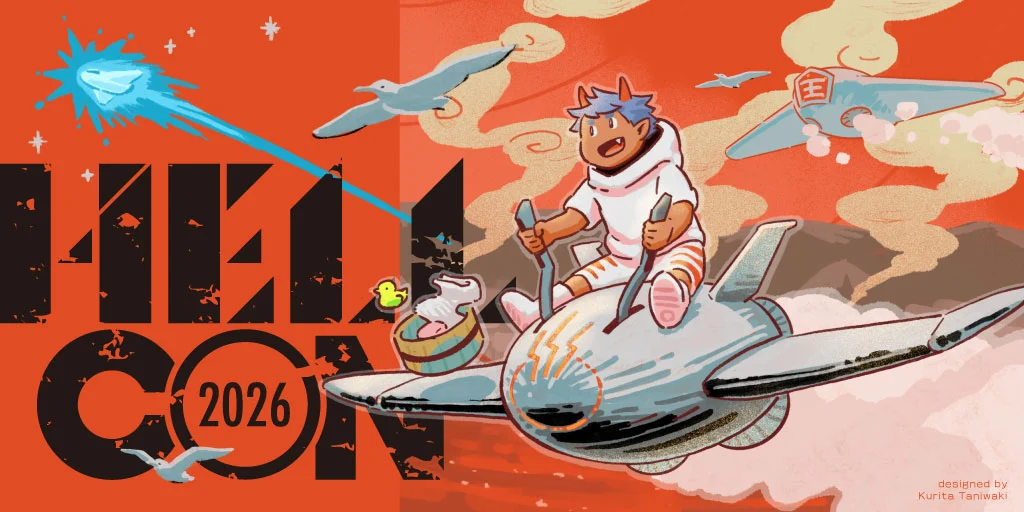
Oita Prefecture, Japan – The Japanese speculative fiction community is buzzing with anticipation as the winners of the prestigious 57th Seiun Awards, Japan’s equivalent of the Hugo Awards, have been officially unveiled. Celebrating the finest works of science fiction and fantasy from the previous calendar year, the announcement sets the stage for a vibrant awards ceremony scheduled to take place at the 64th Japan Science Fiction Convention, famously known as HELLCON, in Oita Prefecture from July 11-12, 2026. This year’s roster of laureates showcases a rich tapestry of talent, spanning original Japanese works, acclaimed international translations, and diverse media, underscoring the dynamic and ever-evolving landscape of speculative fiction.
The Seiun Awards, a cornerstone of Japanese science fiction since its inception, continue to be a vital platform for recognizing excellence and fostering innovation within the genre. For Anglophone readers, particular attention will be drawn to the fiercely competitive Best Translated Long Story category, which saw a joint victory for Alastair Reynolds’ cosmic epic Eversion and R. F. Kuang’s critically lauded dark academia fantasy Babel: Or the Necessity of Violence: an Arcane History of the Oxford Translators’ Revolution. In the Best Translated Short Story category, hard science fiction maestro Greg Egan clinched the award for his thought-provoking piece, "After Zero." These international triumphs highlight the global interconnectedness of speculative fiction and the dedicated work of translators who bridge cultural and linguistic divides.
The Significance of the Seiun Awards: A Historical Perspective
The Seiun Awards (星雲賞, Seiunshō), named after the Japanese word for "nebula," were established in 1970 by the Federation of Science Fiction Fan Groups of Japan. They are Japan’s oldest and most respected awards for speculative fiction, often likened to the American Hugo Awards for their fan-voted nature and broad categories. The awards aim to honor excellence across various facets of science fiction, fantasy, and related media, including novels, short stories, comics, films, television series, and even non-fiction works that contribute to the genre.
Over its 57-year history, the Seiun Awards have played a pivotal role in shaping the Japanese speculative fiction landscape. They have celebrated pioneering Japanese authors who pushed the boundaries of imagination, such as Sakyo Komatsu, Yasutaka Tsutsui, and Hideaki Sena, while also introducing Japanese audiences to global masterpieces from authors like Arthur C. Clarke, Isaac Asimov, Philip K. Dick, and Ursula K. Le Guin through their translated categories. This dual focus on nurturing domestic talent and appreciating international contributions has cemented the Seiun Awards’ reputation as a cornerstone of the genre, reflecting both Japan’s unique cultural contributions and its engagement with the global SF community.
The selection process typically involves a nomination phase open to members of the Japan Science Fiction Fan Group, followed by a voting period. This fan-centric approach ensures that the awards genuinely reflect the tastes and preferences of the dedicated speculative fiction readership, making a Seiun Award a deeply cherished recognition within the community. The awards are traditionally presented at the annual Japan Science Fiction Convention (Nihon SF Taikai), which serves as the largest gathering for SF fans, creators, and scholars in the country.
HELLCON 2026: A Gathering of Minds in Oita
The announcement of the 57th Seiun Awards winners serves as a powerful prelude to the upcoming 64th Japan Science Fiction Convention, affectionately known as HELLCON. Scheduled for July 11-12, 2026, in the scenic Oita Prefecture, HELLCON promises to be a vibrant hub for speculative fiction enthusiasts. These conventions, held annually in different cities across Japan, are more than just award ceremonies; they are comprehensive celebrations of the genre, featuring author panels, fan discussions, art shows, dealer rooms, and opportunities for networking among creators and readers.
HELLCON, like its predecessors, will provide a unique platform for attendees to delve into the rich world of Japanese and international science fiction. It’s a place where new ideas are forged, old favorites are revisited, and the communal spirit of speculative fiction fandom thrives. The choice of Oita Prefecture, known for its natural beauty and hot springs, offers a distinctive backdrop for this intellectual and imaginative gathering. The convention’s organizers, the Japan Science Fiction Fan Group, meticulously plan these events to ensure they cater to a wide array of interests, from hardcore literary critics to casual fans of manga, anime, and video games inspired by SF themes. The presentation of the Seiun Awards is undoubtedly the crowning jewel of the convention, drawing significant media attention and spotlighting the genre’s annual achievements.
Detailed Analysis of the 57th Seiun Awards Winners
The 57th Seiun Awards categories reflect the expansive nature of speculative fiction, recognizing achievements across various forms. Here’s a closer look at the distinguished winners:
Best Japanese Long Story
Labeled Human by Ningen Rokudo (Hayakawa Publishing Corporation)
Ningen Rokudo’s Labeled Human takes the top honor in the Best Japanese Long Story category, marking a significant achievement for the author and Hayakawa Publishing Corporation, a venerable name in Japanese speculative fiction publishing. While specific plot details might not be widely available outside Japan, the title itself suggests themes of identity, societal classification, or perhaps post-humanism—concepts frequently explored in deep and thought-provoking Japanese science fiction. This award affirms Rokudo’s growing prominence and points to a work that has resonated deeply with Japanese readers for its narrative strength and thematic relevance. Hayakawa Publishing has a long history of bringing both classic and cutting-edge SF to Japanese audiences, and this win further solidifies their commitment to original Japanese works.
Best Japanese Short Story
"Tokitoki Channel: How to Make Nonexistent Weather" by Iori Miyazawa (TOKYO SOGENSHA Co.,Ltd.)
Iori Miyazawa’s "Tokitoki Channel: How to Make Nonexistent Weather" captures the Best Japanese Short Story award, demonstrating the enduring power and innovation found in shorter forms of speculative fiction. The intriguing title hints at a story possibly blending elements of fantasy, scientific speculation, and perhaps a touch of whimsy or social commentary on media and reality. Miyazawa is known for crafting imaginative narratives, and this win highlights their ability to condense complex ideas into compelling short-form fiction. TOKYO SOGENSHA Co.,Ltd. also makes a strong showing this year, publishing not only this award-winning short story but also the two joint winners in the Best Translated Long Story category, showcasing their significant impact on the genre.
Best Translated Long Story (Joint Winners)
This year’s Best Translated Long Story category presents a fascinating joint victory, reflecting the diverse appeal of international speculative fiction in Japan.
Eversion by Alastair Reynolds, translated by Naoya Nakahara (TOKYO SOGENSHA Co.,Ltd.)
Alastair Reynolds, a titan of hard science fiction and space opera, receives a Seiun Award for Eversion. Reynolds is celebrated globally for his meticulously constructed universes, intricate plots, and scientific rigor, often exploring themes of post-humanism, ancient alien civilizations, and the vastness of space. Eversion notably departs from his usual epic scale, offering a more contained yet equally mind-bending narrative that plays with perception, memory, and reality, often described as a cosmic horror mystery. Its recognition by the Seiun Awards underscores the Japanese audience’s appreciation for sophisticated, intellectually challenging science fiction. The masterful translation by Naoya Nakahara was undoubtedly crucial in conveying Reynolds’ complex prose and intricate concepts to Japanese readers, making the work accessible and impactful.
Babel: Or the Necessity of Violence: an Arcane History of the Oxford Translators’ Revolution by R. F. Kuang, translated by Yoshimichi Furusawa (TOKYO SOGENSHA Co.,Ltd.)
R. F. Kuang’s Babel has been a global phenomenon, and its joint win at the Seiun Awards further solidifies its international acclaim. A brilliant blend of dark academia, historical fantasy, and incisive critique of colonialism and linguistic power, Babel resonated with readers worldwide for its compelling characters, intricate world-building, and powerful thematic explorations. Its win in Japan highlights the country’s openness to diverse voices and genres within speculative fiction, moving beyond traditional science fiction to embrace works that use fantastic elements to examine real-world historical and social issues. Kuang’s meteoric rise in the literary world, marked by numerous awards including the Nebula and Locus Awards, makes this Seiun win a fitting addition to her accolades. Yoshimichi Furusawa’s translation is commended for bringing the nuanced prose and dense historical context of Kuang’s work to life for Japanese audiences.
The joint victory in this category is particularly noteworthy. It suggests a breadth of taste among Japanese voters, who evidently appreciate both the grand, scientific narratives of authors like Reynolds and the socially conscious, historically rich fantasies of authors like Kuang. This reflects a healthy and inclusive speculative fiction community.
Best Translated Short Story
"After Zero" by Greg Egan, translated by Makoto Yamagishi (Hayakawa Publishing Corporation)

Greg Egan, another icon of hard science fiction, receives the Seiun Award for "After Zero." Egan is renowned for his intellectually rigorous and often challenging exploration of physics, mathematics, philosophy, and consciousness, frequently pushing the boundaries of what is conceivable. His short stories are celebrated for their dense ideas and uncompromising scientific accuracy. "After Zero" likely delves into concepts that demand careful thought, characteristic of Egan’s style. This win reinforces the Japanese audience’s strong affinity for hard SF that grapples with complex scientific and philosophical questions. Makoto Yamagishi’s translation is essential in rendering Egan’s precise and often technical language into Japanese while maintaining its intellectual integrity and impact.
Best Media (Theater, Cinema, TV, Video game, and whole Entertainment)
"Apocalypse Hotel", Director: Kana Shundo (©APOCALYPSEHOTEL Partners)
The Best Media award goes to "Apocalypse Hotel," directed by Kana Shundo. This category is a testament to the Seiun Awards’ commitment to recognizing speculative fiction across all forms of entertainment. The title immediately evokes post-apocalyptic themes, a popular subgenre globally. Given the breadth of the category (theater, cinema, TV, video game, and whole entertainment), "Apocalypse Hotel" could be a film, a television series, or even a stage production that skillfully blends speculative elements with engaging storytelling. Director Kana Shundo’s recognition here points to a compelling vision and execution that captured the imagination of the voting public, demonstrating the vibrant crossover appeal of speculative narratives into visual and interactive mediums.
Best Comic
"APOCALYPSE HOTEL PUSUPUSU" by IZUMI TAKEMOTO (TAKESHOBO Co.,ltd.)
Intriguingly, the Best Comic award goes to "APOCALYPSE HOTEL PUSUPUSU" by IZUMI TAKEMOTO. The shared "Apocalypse Hotel" in the title with the Best Media winner suggests a potential connection, perhaps a spin-off, adaptation, or a companion piece within the same universe. This phenomenon of transmedia storytelling is increasingly common in speculative fiction, especially in Japan where manga, anime, and games often exist in symbiotic relationships. IZUMI TAKEMOTO’s work is recognized for its excellence in visual storytelling and narrative construction within the comic medium, showcasing the powerful and often innovative ways that manga contributes to the broader speculative fiction genre in Japan. TAKESHOBO Co.,ltd. adds another prestigious award to its publishing portfolio.
Best Artist
Ikuto Yamashita
The Best Artist award is bestowed upon Ikuto Yamashita. Yamashita is a highly respected name in Japanese design and illustration, particularly known for his contributions to mecha design. His iconic work includes mechanical designs for groundbreaking anime series such as Neon Genesis Evangelion, Bubblegum Crisis, and RahXephon, which have left an indelible mark on the visual aesthetics of science fiction globally. This award acknowledges not just his artistic skill but his profound and lasting influence on the visual language of Japanese speculative fiction, shaping how audiences imagine future technologies, characters, and worlds. His contributions extend beyond mere illustration to visionary conceptualization.
Best Non-Fiction (Related Work)
"Norio Itoh’s Encyclopedia Fantastica" by Norio Itoh (KOKUSHOKANKOKAI INC.)
"Norio Itoh’s Encyclopedia Fantastica" by Norio Itoh wins the Best Non-Fiction (Related Work) category. This award highlights the critical and scholarly underpinnings of speculative fiction. Norio Itoh is a highly regarded figure in Japanese SF criticism and scholarship, known for his extensive knowledge and insightful analysis of the genre. An "Encyclopedia Fantastica" suggests a comprehensive and perhaps definitive work that explores the vast landscape of fantasy and science fiction, offering historical context, critical analysis, and deep dives into themes and authors. Such a work is invaluable for both seasoned fans and new readers seeking to understand the genre’s depth and evolution. KOKUSHOKANKOKAI INC. is recognized for publishing this significant contribution to SF scholarship.
Non Category (Everything that feels Sense of Wonder)
MYAKU-MYAKU (Design: mountain mountain, Japan Association for the 2025 World Exposition)
Perhaps the most unique and distinctly Japanese category, the "Non Category (Everything that feels Sense of Wonder)" award goes to MYAKU-MYAKU. This category is dedicated to anything—a concept, an event, a technological achievement, or a cultural phenomenon—that evokes the classic "sense of wonder" central to speculative fiction. MYAKU-MYAKU is the official mascot for the Japan Association for the 2025 World Exposition (Expo 2025 Osaka, Kansai, Japan). Designed by "mountain mountain," Myaku-Myaku’s unusual, somewhat abstract, and visually striking appearance—resembling a whimsical, amoeba-like creature with large eyes—has generated significant buzz and discussion. Its selection in this category signifies its success in capturing the public’s imagination and embodying a futuristic, perhaps even alien, aesthetic that aligns with the spirit of speculative fiction. This award underscores how deeply embedded the "sense of wonder" is within Japanese culture, extending beyond traditional literary or media forms to influence public design and national representation.
Official Responses and Community Outlook
While specific official statements from the Japan Science Fiction Fan Group or individual winners are typically reserved for the awards ceremony itself, the announcement has been met with widespread enthusiasm across the Japanese speculative fiction community. The diverse array of winners—from established masters like Alastair Reynolds and Greg Egan to rising stars like R. F. Kuang, and celebrated Japanese talents like Ningen Rokudo and Iori Miyazawa—reflects a healthy and vibrant genre.
The presence of strong translated works from international authors is particularly welcomed, reinforcing the Seiun Awards’ role in promoting cross-cultural literary exchange. Publishers like Hayakawa Publishing Corporation and TOKYO SOGENSHA Co.,Ltd., who have multiple award-winning titles this year, are commended for their dedication to bringing both original Japanese and translated speculative fiction to the forefront.
The anticipation for HELLCON 2026 is now at an all-time high. The convention not only serves as the platform for the official presentation of these prestigious awards but also as a vital gathering point for the entire Japanese speculative fiction ecosystem. It’s an opportunity for fans to celebrate with their favorite authors and artists, engage in lively discussions, and look forward to the future of the genre.
Implications for the Future of Speculative Fiction
The 57th Seiun Awards winners offer several key insights into the current state and future trajectory of speculative fiction, both in Japan and globally.
Firstly, the strong showing in the translated categories, particularly the joint win for Eversion and Babel, highlights a global convergence of literary tastes. Japanese readers are clearly seeking out and appreciating diverse forms of speculative fiction from around the world, from hard science fiction to socially conscious fantasy. This bodes well for continued international literary exchange and the breaking down of genre silos. For foreign authors, a Seiun Award can significantly boost their visibility and readership in the lucrative Japanese market.
Secondly, the awards underscore the multi-faceted nature of speculative fiction. The recognition of "Apocalypse Hotel" in media, "APOCALYPSE HOTEL PUSUPUSU" in comics, and Ikuto Yamashita in art demonstrates that the genre extends far beyond the written word. In Japan, where manga, anime, and video games are dominant cultural forces, this integrated approach to recognizing speculative storytelling across various platforms is crucial for its continued growth and cultural relevance. The potential connection between the "Apocalypse Hotel" media and comic wins also suggests a growing trend towards transmedia franchises that build expansive narrative universes.
Finally, the "Non Category (Sense of Wonder)" award for MYAKU-MYAKU is a profound statement about the broader cultural impact of speculative thought. By honoring something as ubiquitous as a World Expo mascot, the Seiun Awards committee acknowledges that the "sense of wonder" is not confined to fictional narratives but can permeate public imagination, design, and national identity. This unique category encourages a wider appreciation for how speculative elements influence and enrich daily life and cultural discourse.
As the speculative fiction world looks forward to HELLCON 2026, the 57th Seiun Awards winners stand as a testament to the genre’s enduring power, its capacity for innovation, and its vital role in exploring the possibilities of human experience and imagination across all mediums and cultures. The awards continue to shine a light on the exceptional talent that drives this vibrant and ever-expanding field.



Leave a Comment