Residency Scandals and Administrative Turmoil: The Convergence of Legal and Political Crises in 2026
Main Facts: A Convergence of Credibility Gaps
As the summer of 2026 unfolds, the American political landscape is grappling with a series of overlapping controversies that challenge the integrity of high-ranking officials and the efficacy of federal administration. At the center of this storm is Senator Tommy Tuberville (R-AL), whose aspirations for the Alabama governorship have been complicated by a dual-state residency scandal that raises questions about potential voter fraud—a poignant irony given his party’s long-standing emphasis on election integrity.
Simultaneously, the executive branch faces a deepening credibility crisis. This includes the controversial appointment of Bill Pulte as Acting Director of National Intelligence (DNI) despite a lack of statutory qualifications, and a series of high-profile disinformation campaigns regarding the social safety net, led by senior advisors. These domestic political tensions are further exacerbated by international logistical failures surrounding the 2026 World Cup, where aggressive immigration enforcement and organizational incompetence by FIFA have led to lackluster ticket sales and a fearful international fan base.
Chronology of the Tuberville Residency Dispute
The legal challenges facing Senator Tuberville are rooted in a timeline of conflicting residences spanning nearly a decade. To understand the current crisis, one must look back to the transition period between his career in Florida and his political ascent in Alabama.
- August 1, 2018: Tuberville officially changed his primary residency to Alabama. Shortly thereafter, he applied for and received a homestead exemption on his Alabama property taxes—a legal benefit reserved exclusively for a taxpayer’s primary residence.
- November 2018: Despite claiming Alabama as his primary residence for tax purposes three months prior, records indicate that both Tuberville and his wife cast ballots in the state of Florida during the midterm elections.
- 2019–2022: Tuberville continued to serve in the U.S. Senate, representing Alabama. While U.S. Senators have no specific state residency duration requirement beyond being an inhabitant of the state at the time of election, the seeds of his current gubernatorial hurdle were sown during this period.
- 2023: Records show that Tuberville maintained a Florida driver’s license until this year, a fact that critics argue contradicts his claims of being a dedicated Alabama resident during his Senate tenure.
- June 3, 2026: A formal residency challenge reached an Alabama GOP hearing. The challenge, spearheaded by his primary opponent, argues that Tuberville fails to meet the state’s constitutional requirement that a governor must reside in Alabama for at least seven years prior to taking office.
Supporting Data: The Legal and Bureaucratic Framework
The controversies surrounding Tuberville and other GOP figures are not merely political theater; they hinge on specific statutory requirements and administrative data.
Alabama’s Gubernatorial Residency Requirements
Under Alabama law, the eligibility for the office of Governor is far stricter than that of the U.S. Senate. The Alabama Constitution requires a candidate to have been a citizen of the United States for ten years and a resident of the state for seven years. If Tuberville’s residency is deemed to have officially begun only after he surrendered his Florida driver’s license or stopped voting in Florida, he would be several years short of the eligibility threshold for the 2026 election cycle.
The SNAP Disinformation Campaign
In a parallel development, the administration’s credibility was tested by claims made by senior advisor Stephen Miller regarding the Supplemental Nutrition Assistance Program (SNAP). Miller asserted that the program operates on an "honor system," claiming the government does not verify the existence of children or financial need before issuing checks.
However, Department of Agriculture (USDA) data and state-level administrative records tell a different story. SNAP eligibility requires rigorous documentation, including:
- Proof of Identity: Government-issued identification.
- Income Verification: Recent pay stubs or tax returns.
- Household Composition: Documentation of every individual living in the home, including Social Security numbers for children.
- Asset Limits: Verification of bank accounts and property.
The "Food Stamp" system Miller referenced was phased out nearly 20 years ago in favor of Electronic Benefit Transfer (EBT) cards, which allow for real-time tracking and auditing of expenditures.
World Cup Logistical Failures
The 2026 World Cup, intended to be a showcase of North American unity, is instead revealing deep-seated administrative flaws.
- Ticketing Errors: FIFA was forced to retract a significant number of tickets that were accidentally released for free due to a software glitch.
- Tourism Decline: Reports from the Committee to Protect Journalists (CPJ) and various travel watchdogs suggest that international fans are avoiding the U.S. legs of the tournament. This is attributed to widely publicized incidents of ICE and Customs officials detaining tourists under heightened security protocols, leading to a "chilling effect" on global sports tourism.
Official Responses and Political Friction
The fallout from these events has triggered a rare wave of bipartisan pushback, particularly regarding executive appointments and the rhetoric of election integrity.
The DNI Confirmation Battle
President Trump’s nomination of Bill Pulte, a prominent homebuilder and former head of the Federal Housing Finance Agency, to the role of Director of National Intelligence (DNI) met immediate resistance. Unlike most cabinet positions, the DNI role has a statutory requirement (under the Intelligence Reform and Terrorism Prevention Act of 2004) that the nominee must have "extensive national security expertise."
Senate Majority Leader Mitch McConnell (R-KY) issued a blistering critique of the nomination, stating, "Anyone performing this role of such immense public trust must have the extensive national security experience required by statute, and no nominee who falls short of this requirement will earn my vote."
In response to this rejection from his own party, the President circumvented the Senate by naming Pulte "Acting Director," a move critics argue is a temporary fix that undermines the stability of the intelligence community.
The Randy Fine "Xitter" Incident
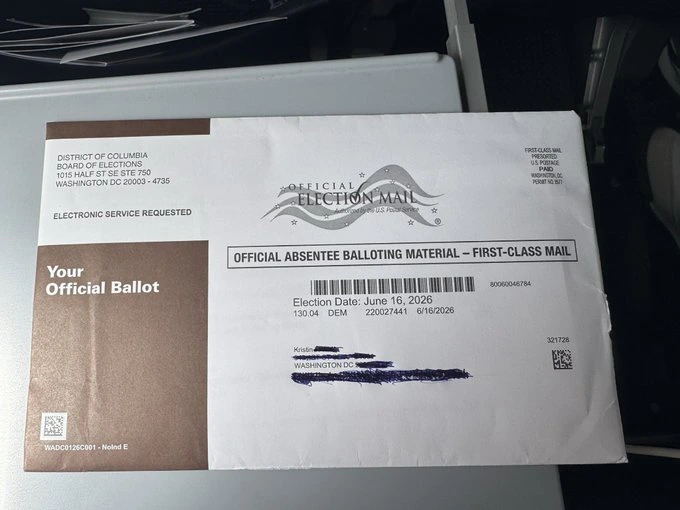
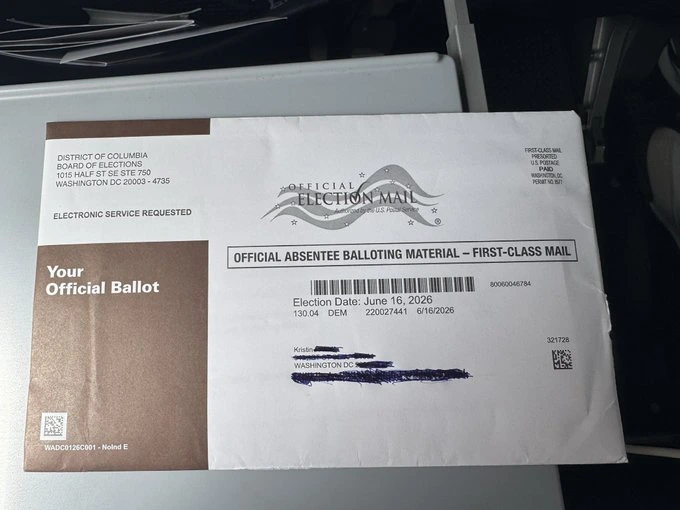
The rhetoric regarding voter fraud reached a fever pitch when Congressman Randy Fine (R-FL) took to social media (X) to complain that a ballot for a former tenant was mailed to his current address. Fine used the incident to claim that voter fraud was "easy," prompting a backlash from election officials who noted that signing and returning a ballot that does not belong to you is a felony—a crime that would be easily caught during signature verification processes.
Implications for the 2026 Election Cycle
The convergence of these issues suggests a volatile road ahead for both the Republican party and the federal government.
The Tuberville Precedent
If Senator Tuberville is found to have voted illegally in Florida while claiming Alabama residency for tax exemptions, he faces a "Catch-22." Admitting to Alabama residency in 2018 to satisfy the seven-year gubernatorial rule would effectively be a confession of illegal voting in Florida. Conversely, maintaining that he was a Florida resident in 2018 to avoid voter fraud charges would disqualify him from the Alabama governor’s race. This legal paradox threatens to alienate a base that has been told for years that "voter integrity" is the party’s highest priority.
The Erosion of Administrative Trust
The reliance on "Acting" officials like Bill Pulte to lead critical agencies like the DNI suggests a growing breakdown in the traditional "advice and consent" relationship between the Executive and Legislative branches. This vacancy of permanent, qualified leadership may have long-term effects on national security and inter-agency cooperation.
International Reputation and Economic Impact
Finally, the failures surrounding the 2026 World Cup—from the "sunsetting" health of the President to the aggressive tactics of ICE—have broader implications for America’s "soft power." The inability to host a seamless international sporting event reflects poorly on the nation’s organizational capacity. As foreign fans opt for matches in Canada or Mexico to avoid U.S. customs hassles, the economic windfall expected from the tournament is rapidly evaporating.
As the "Comic Strip of the Day" columnist Mike Peterson noted, the current administration seems to be struggling with the "Boy Who Cried Wolf" phenomenon. By repeatedly disseminating misinformation—whether about SNAP benefits, election fraud, or the President’s own physical health—the administration has created a environment where even their factual claims are met with deep skepticism. In the high-stakes arena of 2026 politics, that loss of credibility may be the most difficult deficit to overcome.