
The Art of Resistance: Gord Hill and the Unvarnished History of the Antifascist Struggle
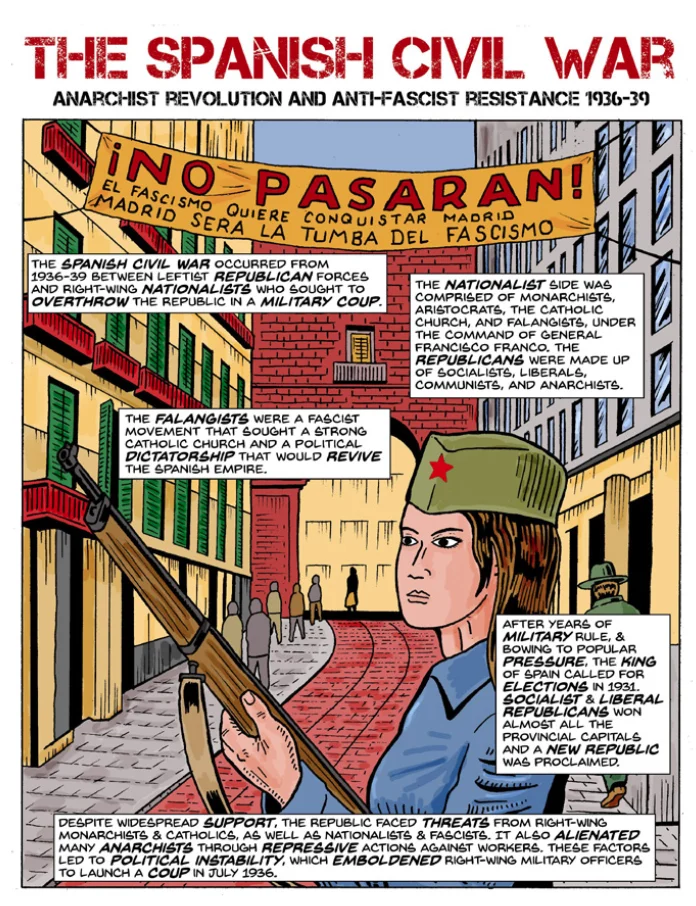
In an era where the boundary between commercial art and political activism is increasingly blurred by corporate interests, Gord Hill stands as a defiant outlier. While mainstream cultural productions often sanitize radical ideologies into digestible fables of individual heroism, Hill—a Kwakwaka’wakw artist, author, and activist—utilizes the medium of comics to deliver a raw, instructional, and unapologetically partisan history of resistance. With the release of the revised and expanded edition of The Antifa Comic Book (Arsenal Pulp Press, 2025), Hill reaffirms his position that art is not merely a reflection of struggle, but a primary tool within it.
Main Facts: Art as a Weapon in the Age of "Agit-Prop"
The contemporary cultural landscape is currently dominated by a specific brand of "prestige" storytelling. At the 2026 Academy Awards, Paul Thomas Anderson’s One Battle After Another—a sweeping adaptation of Thomas Pynchon’s Vineland—secured six Oscars. Yet, for all its technical brilliance, critics note that the film stops short of articulating a clear revolutionary vision, opting instead for the safety of allegory. This "commercial milieu," as Hill’s work suggests, often neuters political usefulness to maintain mass appeal.
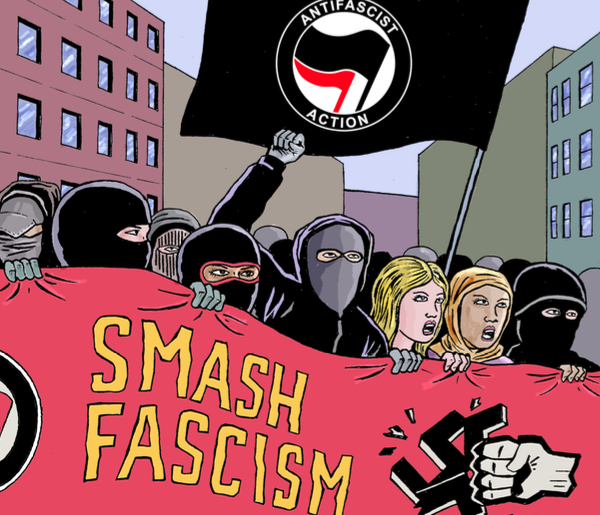
In contrast, Gord Hill embraces the label of "agit-prop" (agitational propaganda). His work does not shy away from naming villains, unfurling specific banners, or advocating for direct action. Hill’s bibliography, including The 500 Years of Indigenous Resistance Comic Book and The Anti-Capitalist Resistance Comic Book, serves as a visual archive of global dissent.
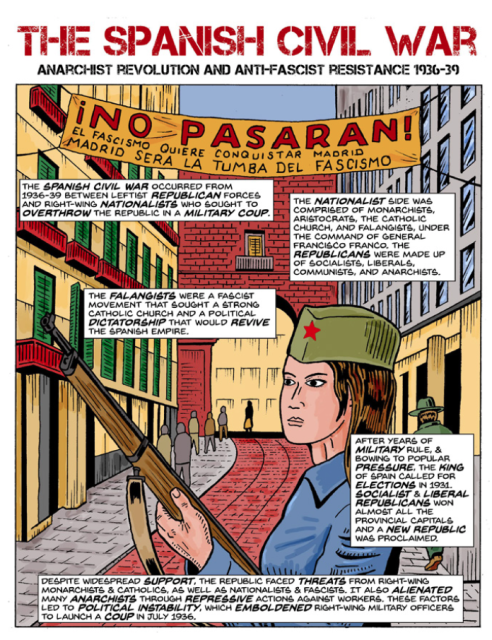
The latest edition of The Antifa Comic Book arrives at a precarious moment in global politics. It provides an international framework for understanding fascism—not as a historical relic of 1940s Europe, but as a recurring symptom of the capitalist system. By documenting events from the Spanish Civil War to the rise of the "second Trump regime" in the mid-2020s, Hill argues that the fight against the far-right is a permanent feature of modern existence.

Chronology: From the Reserve to the Global Stage
Gord Hill’s trajectory as an artist is inseparable from his lived experience within the settler-colonial framework of Canada. Born in the central interior of British Columbia, Hill’s formative years were spent on the Fort Rupert reserve and in the industrial town of Port Hardy on North Vancouver Island. In the early 1970s, his environment was defined by the primary industries of fishing, mining, and forestry—the literal extraction of resources from Indigenous lands.
The Evolution of an Activist-Artist:
- Early 1980s: Hill moved to Vancouver and became immersed in El Salvadoran solidarity groups, designing posters that married graphic design with internationalist politics.
- The Anarchist-Punk Era: He became a central figure in the Vancouver anarchist scene, founding the zine Secret Burial (later Endless Struggle). This period cemented his commitment to anti-fascist and anti-imperialist organizing.
- The 1990 Oka Crisis: This pivotal moment in Canadian history shifted Hill’s focus toward Indigenous sovereignty. He joined the Native Youth Movement (NYM) and began producing small-scale comics to be distributed at pow-wows and conferences.
- 2010–Present: Partnering with Arsenal Pulp Press, Hill transitioned from "underground" zines to globally distributed graphic novels. His work has since been translated and updated to reflect the rapid shifts in the global political climate, culminating in the 2025/2026 expanded editions.
Supporting Data: Expanding the Archive of Resistance
The revised edition of The Antifa Comic Book is not merely a reprint; it is a significant expansion that accounts for the violent shifts of the last decade. Hill’s research method involves a "matter-of-fact" tone influenced by Joe Sacco’s journalistic comics, yet his visual style retains the kinetic energy of Jack Kirby and the gritty underground aesthetic of Spain Rodriguez.

Key Additions in the Revised Edition:
- The 2011 Norway Massacre: Hill addresses the horrific neo-Nazi mass shooting, framing it as a precursor to the modern "lone wolf" accelerationist tactics.
- The "Freedom Convoy" Analysis: Hill provides a sociological critique of the Canadian convoy movement. He argues that the movement exploited "extreme individualism"—a byproduct of Western capitalism—to recruit privileged individuals into far-right milieus under the guise of anti-vaccination sentiment.
- Global Islamophobia: The book now includes chapters on anti-Muslim massacres in New Zealand and Canada, illustrating the international shared knowledge and tactics of white supremacist movements.
- The Middle East and Israel: For the first time, Hill incorporates a chapter on the rise of the far-right within the Israeli state, linking it to broader themes of settler-colonialism.
- The Second Trump Regime: The book concludes with a contemporary analysis of the 2024 U.S. election and the subsequent institutionalization of fascist narratives within the Republican Party.
Hill’s artistic choices—using a vivid, bright palette for anonymous street protesters—serve to bridge the gap between "historicity" and the present. He challenges the reader to see the continuity between the 1930s "No Pasaran" defenders in Spain and the modern protesters whose actions are captured on shaky smartphone footage today.
Official Responses and Political Friction
The reception of Hill’s work and the movement it documents reflects a deep-seated tension in Western governance. While the "culture industry" often celebrates the idea of fighting Nazis (e.g., Indiana Jones or Inglourious Basterds), the state’s response to actual anti-fascist organizing is frequently hostile.
The Domestic Terrorist Designation
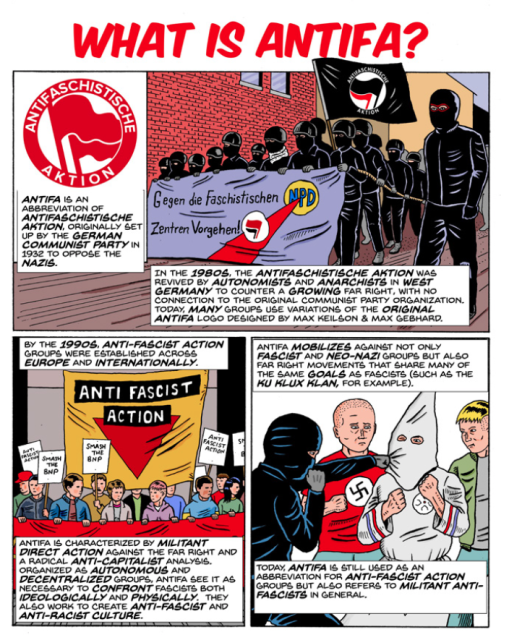
During the first and second Trump administrations, federal efforts were made to designate "Antifa" as a domestic terrorist organization. Hill argues that this was a "calculated framing" designed to appeal to the MAGA base while revealing a fundamental misunderstanding of the movement’s decentralized, non-hierarchical nature. Despite the rhetoric, the state has struggled to dismantle a movement that has no central headquarters or formal leadership.
The Liberal Quagmire
Hill is equally critical of the centrist and liberal response to fascism. He notes that while Democrats may quibble with the "terrorist" label, they rarely defend anti-fascist actions and often oversee the same militarized police forces used to suppress radical dissent. As antifascist scholar Mark Bray notes in the book’s foreword, mainstream society is conditioned to believe that "rational discourse" and the police will stop fascism—a theory Hill argues is debunked by the recent high-profile federal occupations of cities like Minneapolis and Chicago.
Implications: The Inevitability of the Struggle
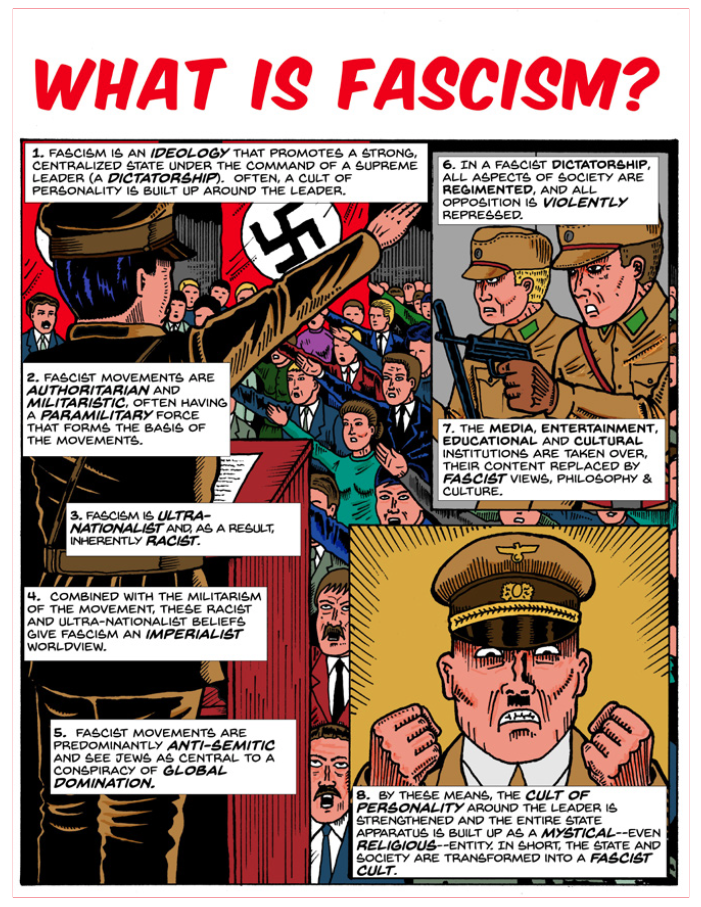
Hill’s core thesis is that fascism is not an "aberration" or a historical accident, but a logical endpoint of capitalism. "I believe [the struggle] will be ongoing so long as the capitalist system remains," Hill states, "because it is from capitalism that fascist movements arise."
Colonialism Turned Inward
Perhaps Hill’s most profound contribution to the discourse is his linkage of fascism to colonialism. He describes fascism as "colonialism turned inward," where the surveillance technologies and genocidal strategies perfected in the colonies (such as British tactics in Northern Ireland or German camps in Namibia) are eventually brought back to the metropole to be used against the domestic population.
The Role of Social Media
Looking forward, Hill acknowledges the "pros and cons" of the digital age. While platforms like X (formerly Twitter) allow for the rapid dissemination of memes and information, they are also owned by figures like Elon Musk, who Hill identifies as openly embracing fascist narratives. The "transient" nature of social media, he warns, can dilute the focus of regional organizing, making resistance feel more like a spectacle than a sustained movement.
Conclusion
Gord Hill’s The Antifa Comic Book serves as a reminder that the "heroic" figures of history were often regular, working people whose names have been lost to time. By refusing to sanitize the violence of the state or the necessity of the response, Hill provides a roadmap for future generations. His work asserts that as long as the structures of white supremacy and capital remain intact, the "antifascist" will remain a necessary, if embattled, figure in the global landscape. For Hill, the goal is simple: to maintain a visual history of resistance that inspires others to act before the "fable" of democracy is entirely eclipsed by the reality of the far-right.


Leave a Comment