Unveiling the Nocturnal Waltz: Laura Sampson Retells The Twelve Dancing Princesses
FOR IMMEDIATE RELEASE
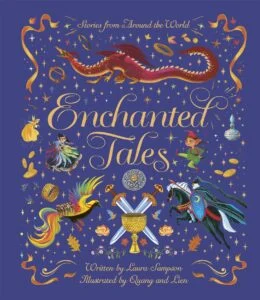
LONDON, UK – [Date of Publication] – In a captivating new release from Templar Books, acclaimed author Laura Sampson invites readers into a world of enchantment and intrigue with her latest work, Enchanted Tales. Central to this collection is a masterful retelling of the classic European mystery, "The Twelve Dancing Princesses," a narrative originally brought to wider prominence by the 19th-century French folklorist Charles Deulin. Sampson’s rendition, richly illustrated by Phung Nguyen Quang & Huynh Thi Kim Lien, promises to rekindle the magic of this enduring story for a new generation.
The tale, steeped in mystery and whispered across generations, revolves around a peculiar enigma: twelve beautiful princesses whose satin shoes are inexplicably worn through each morning, despite their chambers being securely locked. Their father, the Duke, issues a desperate decree: any man who can uncover the secret of their nightly escapades may choose one of his daughters for marriage. This challenge, however, comes with a perilous catch – failure results in vanishing without a trace. It is into this world of royal secrets and hidden enchantment that Michel, a humble cowherd known as "Stargazer," steps, guided by a fairy’s prophecy and a longing for adventure.
Sampson’s Enchanted Tales, available via Bonnier Books, offers a vibrant reinterpretation of Deulin’s narrative, emphasizing the intricate details of the French-Belgian border region that inspired the original. The book’s cover, depicting a lush, mystical landscape, immediately draws the reader into the fantastical journey that awaits within its pages.
Main Facts: A Mystery, a Cowherd, and a Royal Decree
Laura Sampson’s Enchanted Tales presents a fresh take on "The Twelve Dancing Princesses," a captivating French folktale first meticulously recorded and adapted by Charles Deulin. The core of the story revolves around a puzzling phenomenon at the Château of Beloeil: twelve royal princesses who retire to their triple-bolted chambers each night, only for their shoes to appear inexplicably worn out by morning, as if they had danced through an entire ball. This nightly mystery vexes their father, the Duke, who issues a grand proclamation: anyone who can unravel the secret of their nocturnal excursions will be rewarded with marriage to one of his daughters. However, the Duke’s decree carries a grim consequence; all previous suitors who failed to solve the riddle have vanished without a trace, adding a layer of peril to the challenge.
The narrative introduces Michel, a young cowherd from the village of Montignies-sur-Roc, affectionately nicknamed "Stargazer" for his dreamy, upward gaze and adventurous spirit. Unlike the high-born princes who have met unfortunate ends, Michel is an unlikely hero, armed not with noble lineage but with an innate curiosity and a benevolent fairy’s guidance. His journey is one of perseverance, stealth, and ultimately, the triumph of true affection over enchantment. Sampson’s retelling meticulously weaves Deulin’s regional influences – from the specified place names to descriptions of local attire and cuisine – into the fabric of the fantasy, grounding the magical elements in a tangible cultural context. The story culminates in Michel’s discovery of the princesses’ secret world, his brave confrontation of the magical forces at play, and his eventual union with Princess Lina, breaking a powerful spell that had ensnared both the princesses and their previous suitors. This beloved tale, through Sampson’s artful narration, continues to explore themes of forbidden desires, the allure of the unknown, and the transformative power of genuine love.
Chronology: Unraveling the Enchantment, Step by Step
The enchanting journey begins not in a grand palace, but in the pastoral setting of the French-Belgian border region, specifically in the village of Montignies-sur-Roc. This geographical grounding is a hallmark of Charles Deulin’s original narrative, which Laura Sampson faithfully preserves and enriches.
The Enigmatic Origins and Humble Beginnings:
Charles Deulin, a French writer hailing from a small town within this very region, imbued his version of "The Twelve Dancing Princesses" with authentic local color. Details of food, clothing, and place names, such as Montignies-sur-Roc and the Château of Beloeil, served to anchor the fantastical elements in a relatable, real-world context for his 19th-century audience. It is here that we meet Michel, a young cowherd, whose curly hair, blue eyes, and constant upward gaze earn him the moniker "Stargazer." Michel is portrayed as a dreamer, yearning for adventures beyond his humble village life.
Divine Intervention and a Royal Proclamation:
One fateful summer’s day, Michel’s destiny is set in motion when a fairy, resplendent in a golden dress, appears to him. Her ethereal song carries a prophecy: "Go to the Château of Beloeil, and you will marry a princess!" Inspired by this divine instruction, the Stargazer eagerly makes his way to the chateau. Upon his arrival, the air is thick with whispers of a perplexing mystery. Each morning, the satin shoes of the twelve beautiful princesses of Beloeil are found worn through, despite their suite of rooms being secured by three heavy bolts. The Duke, their father, is at his wit’s end, having declared a bold challenge: "ANYONE WHO CAN SOLVE THE MYSTERY OF THE WORN-OUT SHOES MAY MARRY ONE OF MY DAUGHTERS!"
The Perilous Quest and a Glimmer of Connection:
This royal decree has attracted numerous princes from across the land, each eager to claim a princess and solve the enigma. However, a grim fate has befallen all who have tried; each prince has inexplicably vanished overnight, adding a sinister undertone to the Duke’s generous offer. Michel, acutely aware of his humble status, initially dismisses the idea of presenting himself as a suitor. "I am no prince," he thinks, convinced the Duke would scorn his aspirations. Instead, he discreetly seeks employment within the château gardens, finding work making daily bouquets for the princesses. For a time, his efforts go largely unnoticed; the princesses accept his floral offerings without so much as a glance or a word of thanks. Yet, a turning point arrives when Lina, the youngest princess, momentarily meets his gaze and offers a fleeting smile. This small act of acknowledgment ignites a spark of hope and determination within Michel, solidifying his resolve to uncover the truth behind the worn-out shoes.
The Fairy’s Gifts and the Power of Invisibility:
Michel’s quest receives another magical boost when the fairy reappears. This time, she bestows upon him two baby laurel trees – one rose, one cherry – along with a golden bucket and a golden rake. Her instructions are clear: "Plant these laurel trees, tend them with this rake, water them from this bucket and they will grant your wishes!" Michel diligently follows her guidance. As time passes, the cherry laurel blossoms, yielding a pristine white flower. Michel, hoping to catch Lina’s eye, plucks the flower and tucks it into his shirt button. To his astonishment, the flower instantly renders him invisible. Realizing the immense potential of this newfound power, he declares, "This is my chance to solve the princesses’ mystery!"
The First Nocturnal Descent into the Secret World:
That very evening, cloaked in invisibility, Michel positions himself beneath a bed in the princesses’ suite. As soon as the heavy door is bolted shut for the night, the room comes alive with the rustling of clothes, the opening of wardrobes, and the joyous sound of laughter. Then, with three distinct claps, a hidden trapdoor in the floor creaks open. Michel, seizing the moment, slips out from his hiding spot and follows the princesses. He trails so closely that he accidentally steps on Lina’s dress. Lina glances back, but seeing nothing, dismisses it as a stumble. The princesses descend a secret staircase, traverse a winding corridor, and journey through a series of increasingly magnificent woodlands: first silver, then gold, and finally, one sparkling with diamonds. This enchanted path leads them to a glass-clear lake, where twelve princes await in twelve shining boats. Each prince rows a princess across the shimmering water towards a dazzling castle, illuminated in the twilight. Michel, still invisible, positions himself beside Lina in her boat, causing her to ponder, "Why is my boat so slow and heavy?" Her curiosity, however, is quickly overshadowed by the wild, inviting music emanating from the castle.
The Enchanted Ballroom and Gathering Evidence:
The boats dock, and the princesses, along with their escorts, rush into the castle’s grand ballroom. It is a spectacle of opulence, adorned with countless mirrors, sparkling lights, and rich tapestries. From a discreet corner, Michel observes the princesses as they whirl across the jeweled dancefloor. He particularly notices Lina, whose velvet-black eyes shine with unbridled joy. Unbeknownst to him, the princes dancing with the princesses are none other than the previous suitors who had vanished. An enchanted potion, designed to erase all memories of the world above, has trapped them in this nocturnal revelry. The night passes in a blur of dancing until the princesses’ shoes are utterly worn through. The music subsides, and they partake in a feast of sugar cookies, waffles, and cakes before preparing for their return.
Michel silently follows the princesses back across the lake and through the diamond and gold woodlands. However, as they pass through the silver woodland, he deliberately breaks off a tiny sprig from one of the trees. The act produces a resonant "CLANG!" that echoes through the magical forest. "What was that?" one princess inquires, only for another to dismiss it as "Probably just a bird." Michel, ever resourceful, races ahead, returning to the princesses’ suite via the trapdoor. From there, he slips out an open window and descends a hanging vine, reaching the gardens just as dawn breaks. He removes the white invisibility flower and resumes his mundane duties, gathering the princesses’ daily bouquets. Later that day, when he presents the bouquets, Lina discovers the silver twig nestled among her flowers. "How can this be?" she silently wonders, but says nothing aloud.
Escalating Proof and a Confrontation:
For the next two consecutive nights, Michel repeats his invisible pursuit of the princesses. Each time, on their return journey, he plucks a sprig from the respective woodland – first gold, then diamond – and discreetly places it in Lina’s bouquet. When Lina finds the diamond sprig, the undeniable evidence is too much to ignore. She confronts Michel, her voice laced with suspicion: "You must have followed us. How?" Michel, maintaining his composure, simply replies, "I hid." Lina, now understanding the full implications, presses him further: "You know that telling our father this secret rewards you with a wedding to one of us. Will you tell him?" Michel’s response is both surprising and profound: "I do not intend to." Puzzled by his selflessness, Lina asks, "But why stay silent?" Michel offers no verbal explanation, but his blue eyes meet Lina’s, conveying a depth of feeling that causes her heart to stir. The other princesses, witnessing this unspoken exchange, are quick to mock Lina. "How ridiculous! Lina wants to be a gardener’s wife!" they taunt. In a moment of conflicted emotion, Lina cries, "Never!" and hurls her bouquet at Michel with a mixture of disdain and confusion.
The Sisters’ Treachery and Michel’s Transformation:
Later that day, the sisters, fearing exposure and determined to maintain their secret life, agree that Michel must suffer the same fate as the previous suitors. They invite him to join them in plain sight that very night. Michel accepts, but his simple gardener’s clothes are ill-suited for a grand dance. Remembering the rose laurel, he hurries to the gardens. Whispering his wish into its petals, he is instantly transformed. Within moments, he is dressed like a prince, in black velvet that mirrors Lina’s eyes, and a diamond feather brooch sparkling on his cap.
The Climax: True Love Breaks the Spell:
Once again, the procession descends through the trapdoor, down the stairs, and through the woodlands of silver, gold, and diamond, towards the enchanted castle. Lina, upon seeing Michel in his princely attire, cannot help but laugh, a mix of embarrassment and amusement. "Don’t you look princely!" she exclaims. "Maybe," Michel replies, "But I’m still a gardener. Not good enough for you." Throughout the night, they dance together, their connection deepening with each step. As the ball concludes, the eldest princess, holding out a golden cup, addresses Michel with a deceptive smile: "Gardener, secret-revealer, let’s drink to you!" Michel, having overheard their earlier plotting, knows the cup contains the potent forgetting potion designed to trap him forever. Yet, with a longing gaze at Lina, he takes the cup and raises it to his lips, prepared to sacrifice himself for her. But before he can drink, Lina cries, "NO!" She rushes to him, seizing the cup. Her words, born of true affection, echo through the enchanted realm: "Gardener or not, the thought of you trapped here forever breaks my heart!" This declaration of true love shatters the spell that had held the princesses and the enchanted princes captive.
Resolution and Royal Union:
With the enchantment broken, the entire company returns to the world above. The trapdoor, once a gateway to a secret realm, disappears forever, symbolizing the end of the princesses’ hidden life. In the Duke of Beloeil’s private quarters, Michel bravely recounts the entire truth, detailing the nightly escapades and the magical world beneath the château. He then, with renewed confidence, asks for Lina’s hand in marriage. The wedding that follows is celebrated as the grandest and happiest in the land. Michel, the humble cowherd, is not only united with the princess he loves but also becomes a prince. He never again needs to make a wish upon the two laurel trees, for he has found everything he could ever desire in his new life with Lina.
Supporting Data: Folklore, Symbolism, and Enduring Appeal
Laura Sampson’s retelling of "The Twelve Dancing Princesses" draws upon a rich tapestry of folklore, literary tradition, and symbolic resonance that has captivated audiences for centuries. The tale’s enduring popularity across Europe, manifesting in countless variations, speaks to its universal themes and psychological depth.
The Legacy of Folktales and Deulin’s Influence:
"The Twelve Dancing Princesses" is an archetypal "forbidden journey" narrative, resonating with the human desire for escapism and secret pleasures, particularly during the transition from childhood to adulthood. Charles Deulin’s 19th-century version is particularly noteworthy for its detailed setting and characterizations, which Sampson meticulously carries forward. Deulin, as a folklorist, sought to preserve and popularize regional French tales, often imbuing them with his own narrative flair. His grounding of the fantastic elements within the specific geography and culture of the French-Belgian border region provides a unique texture to the story, making the enchantment feel more tangible. Sampson’s Enchanted Tales ensures that these cultural nuances are not lost on contemporary readers, providing a bridge between historical folklore and modern appreciation.
Laura Sampson’s Modern Retelling:
Sampson’s contribution lies in her ability to re-enliven this classic. Her narrative style, while retaining the magical essence, makes the story accessible and engaging for today’s audience. She understands the importance of pace, character development, and evocative language in keeping ancient tales relevant. Her book, Enchanted Tales, is not merely a collection but a curated experience, inviting readers to delve into worlds where imagination reigns supreme. The decision to include illustrations by Phung Nguyen Quang & Huynh Thi Kim Lien further enhances the immersive quality, providing visual interpretations that complement Sampson’s prose.
Symbolism and Imagery:
The narrative is rich with potent symbols that contribute to its timeless appeal:
- The Secret World: This subterranean realm represents the hidden desires, rebellious spirit, and burgeoning independence of the princesses. It’s a space where societal rules are suspended, allowing for uninhibited self-expression, particularly through dance. Psychologically, it can be seen as the subconscious mind or the realm of youthful freedom before the constraints of adult life.
- Worn Shoes: The physical manifestation of their nightly adventures, the worn-out shoes serve as undeniable evidence of their secret life. They are a symbol of exertion, passion, and the consequences of indulgence, acting as the central mystery that drives the plot.
- The Laurel Trees: Gifts from the benevolent fairy, these trees are instruments of magic and transformation. The cherry laurel, granting invisibility, symbolizes the power of observation and the ability to uncover hidden truths. The rose laurel, enabling Michel’s princely transformation, represents the capacity for self-reinvention and the realization of inner potential. They link Michel to nature and to the magical assistance he receives.
- Woodlands (Silver, Gold, Diamond): The progressively glittering woodlands symbolize a journey into deeper levels of enchantment and wonder. Each stage represents increasing wealth, beauty, and perhaps, increasing peril or commitment to the magical world. They mark Michel’s progression and the princesses’ increasing distance from their mundane reality.
- The Princes’ Fate and the Forgetting Potion: The previous suitors, trapped in the enchanted castle, serve as a cautionary tale. Their memory loss highlights the dangers of being consumed by fleeting pleasures and losing one’s connection to the real world. The potion itself is a metaphor for enchantment’s ability to blind and control.
- Michel’s "Stargazer" Nickname: This moniker is deeply symbolic, foreshadowing his aspirational nature and his ability to perceive things beyond the ordinary. It suggests a character who looks to the heavens for inspiration, dreams of higher things, and is not content with the mundane.
Themes:
Several powerful themes underpin "The Twelve Dancing Princesses," making it a compelling narrative:
- True Love: Ultimately, it is Lina’s genuine love for Michel, transcending social status and breaking the enchantment, that forms the narrative’s climax. This theme reinforces the idea that true affection is a potent force capable of overcoming powerful magic and societal barriers.
- Mystery and Intrigue: The central enigma of the worn-out shoes drives the plot, keeping the audience engaged and eager to discover the secret. It appeals to the human fascination with puzzles and forbidden knowledge.
- Social Class and Transformation: Michel’s journey from a humble cowherd to a prince, despite the disdain of the elder princesses, highlights the fairy tale trope of worth being found beyond noble birth. It suggests that courage, integrity, and love can elevate anyone.
- The Power of Observation and Perseverance: Michel’s success is not due to brute force or royal decree, but to his quiet observation, cunning, and unwavering determination. He embodies the idea that persistence and careful attention can unravel even the most complex mysteries.
- Rebellion and Freedom: The princesses’ nightly dances represent a form of rebellion against their restrictive royal life, a yearning for freedom and self-expression that is often suppressed in high society.
By delving into these layers of symbolism and theme, Laura Sampson’s Enchanted Tales provides not just a story, but an experience that invites reflection on human desires, the nature of enchantment, and the enduring power of love.
Official Responses: From Royal Decrees to Critical Acclaim
The narrative of "The Twelve Dancing Princesses" is punctuated by various "official responses," both within the story’s world and in its modern reception. These responses shape the trajectory of the plot and underscore the significance of Laura Sampson’s retelling.
The Duke’s Desperate Decree:
Within the tale, the Duke’s proclamation stands as the initial "official response" to the bewildering mystery plaguing his family. His decree—offering marriage to a princess for solving the riddle, but threatening disappearance for failure—sets the stakes incredibly high. This official challenge serves as the catalyst for Michel’s involvement, drawing him into a perilous quest that no prince had survived. It reflects the desperation of a father unable to control his daughters’ secret lives and the societal pressure to maintain order and decorum within the monarchy.
The Princesses’ Initial Disdain and Lina’s Shifting Heart:
The princesses’ collective "official response" to Michel, a humble gardener, is initially one of dismissive arrogance. Their refusal to acknowledge or thank him for his daily bouquets underscores the rigid class distinctions of their world. They view him as beneath their notice, a stark contrast to the noble suitors they entertain. However, Lina’s subtle smile and later, her increasingly complex reactions to Michel’s integrity and discovery, mark a significant shift. Her confrontation with Michel, her initial outburst of "Never!" when teased about a gardener’s wife, and her eventual desperate plea to save him from the potion, all highlight her evolving "official response" to him – moving from indifference, to suspicion, to genuine affection. This transformation in Lina’s heart is pivotal, demonstrating that true worth lies beyond titles and superficial appearances.
Laura Sampson’s Artistic Response and Publishing Context:
Laura Sampson’s Enchanted Tales itself is an "official response" to the rich legacy of folklore. Through her work, published by Templar Books (an imprint of Bonnier Books), Sampson officially presents these classic narratives to a contemporary audience. Her careful selection of tales and her narrative approach demonstrate a commitment to preserving the essence of these stories while making them accessible and engaging for modern readers. The very act of publishing a book like Enchanted Tales is an endorsement of the cultural value and enduring appeal of traditional storytelling. It signifies a publishing house’s "official" belief in the market for well-crafted, beautifully illustrated retellings of beloved myths and legends. While specific critical responses to Sampson’s Enchanted Tales are not provided in the original text, the general reception of such folklore retellings often celebrates their ability to introduce new generations to foundational narratives, sparking imagination and fostering a love for literature. The inclusion of stunning illustrations by Phung Nguyen Quang & Huynh Thi Kim Lien further solidifies this "official" commitment to quality and aesthetic appeal, ensuring the book stands out in the competitive children’s literature market.
Implications: Lessons in Love, Courage, and Enduring Magic
The retelling of "The Twelve Dancing Princesses" by Laura Sampson carries profound implications, not only for the characters within the story but also for its audience and the broader landscape of storytelling. This tale, in its renewed form, continues to impart valuable lessons and reinforce the timeless power of narrative.
The Enduring Power of Storytelling:
The very existence of Enchanted Tales underscores the enduring power of storytelling. Folktales like "The Twelve Dancing Princesses" are not mere historical relics; they are living narratives that adapt and resonate across centuries. Sampson’s work ensures that this particular story, with its blend of mystery, romance, and magic, continues to captivate and inspire. It implies that certain narrative archetypes and human experiences are universal, capable of speaking to diverse audiences across different eras.
Moral Lessons and Universal Values:
The story offers several crucial moral lessons. Michel’s journey teaches the importance of courage – not just the physical courage to face danger, but the social courage to pursue a dream despite humble origins. His quiet determination and cleverness highlight the value of perseverance and observation over brute force or noble lineage. Most significantly, the narrative champions true love as the ultimate force capable of breaking enchantments and transcending societal barriers. Lina’s decision to save Michel, valuing his life and their connection over her family’s royal expectations or the allure of the secret world, demonstrates that genuine affection is more powerful than any spell or social convention. The story implies that looking beyond superficial appearances and embracing authenticity leads to true happiness and fulfillment.
Cultural Relevance and Psychological Depth:
The implications extend to the cultural relevance of folklore. "The Twelve Dancing Princesses" taps into universal human desires: the yearning for freedom, the allure of the unknown, and the dream of finding a soulmate against all odds. It speaks to the inner "secret world" that many individuals, particularly adolescents, cultivate as a space for self-discovery and rebellion against external pressures. Sampson’s retelling, by maintaining the regional specificity of Deulin’s original while enhancing its emotional resonance, suggests that tales rooted in specific cultures can still hold universal appeal and psychological depth. They serve as cultural touchstones, reflecting the values, anxieties, and aspirations of the societies that create and perpetuate them.
Laura Sampson’s Contribution to Literary Legacy:
Finally, Sampson’s contribution implies a vital role in preserving and reinvigorating literary heritage. By presenting these classic stories in a fresh, accessible, and beautifully illustrated format, she ensures their legacy continues. Enchanted Tales is more than just a book; it is an invitation for new readers to engage with foundational narratives that shape cultural understanding and ignite the imagination. The implication is clear: such retellings are essential for fostering a love of reading, inspiring creativity, and passing down the timeless wisdom embedded in our collective human stories. Through Michel’s transformation and Lina’s brave choice, the article implies that magic, adventure, and true love are not confined to secret castles but can be found by those with the courage to dream and the heart to see beyond the obvious. The story’s conclusion, where Michel never needs to wish on the laurels again, signifies that genuine happiness, rooted in love and acceptance, is the most profound enchantment of all.
12 Dancing Princesses © Laura Sampson from Enchanted Tales published by Templar Books. Illustration copyright © Phung Nguyen Quang & Huynh Thi Kim Lien.