No Law: Neon Giant’s Ambitious Unreal Engine 5 Project Aims for Unprecedented World Density

State of Unreal 2024 showcased a bold new vision for open-world game design with "No Law," a cyberpunk shooter from Neon Giant, the acclaimed developers behind "The Ascent." Moving away from sheer scale, the studio is leveraging the cutting-edge capabilities of Unreal Engine 5 to create what they promise will be the "densest" and most reactive open world ever realized, where intricate detail and emergent gameplay take precedence over vast, often empty, landscapes.
The announcement, made during the annual State of Unreal event, has sent ripples of excitement through the gaming community. "No Law" isn’t just another open-world title; it’s a testament to the evolving potential of game development tools and a deliberate counterpoint to the trend of ever-expanding game maps. Neon Giant’s ambition is clear: to craft a living, breathing metropolis where every corner tells a story and player actions have tangible consequences.
The Dawn of Unprecedented Density: "No Law" Unveiled
At this year’s State of Unreal, held during Unreal Fest, the spotlight was firmly on "No Law," a project from indie darlings Neon Giant. Building on the success of their previous title, the cyberpunk action RPG "The Ascent," the studio is charting a new course with "No Law." The core premise is revolutionary: to create the most "dense" and alive open world to date, prioritizing granular detail and reactive environments over sheer geographical size. This ambitious undertaking is powered by the latest advancements in Unreal Engine 5, including technologies like Nanite, Lumen, MegaLights, and the Mass Framework, all working in concert to breathe life into a sprawling, intricate city.
This stands in stark contrast to some of the more traditional open-world reveals seen in previous years. For instance, the reveal of "The Witcher 4" tech demo at last year’s event, while visually stunning, emphasized a sense of vastness and traditional open-world exploration. "No Law," on the other hand, has adopted an inverse approach, demonstrating how Unreal Engine 5’s capabilities can be harnessed to forge profoundly dense, meticulously detailed, and dynamically responsive spaces. Tor Frick, a key figure at Neon Giant, articulated this vision with a striking statistic: "There are more objects visible in one frame of No Law than in all of its previous game, The Ascent." This statement underscores the sheer level of detail and complexity the developers are aiming to achieve.
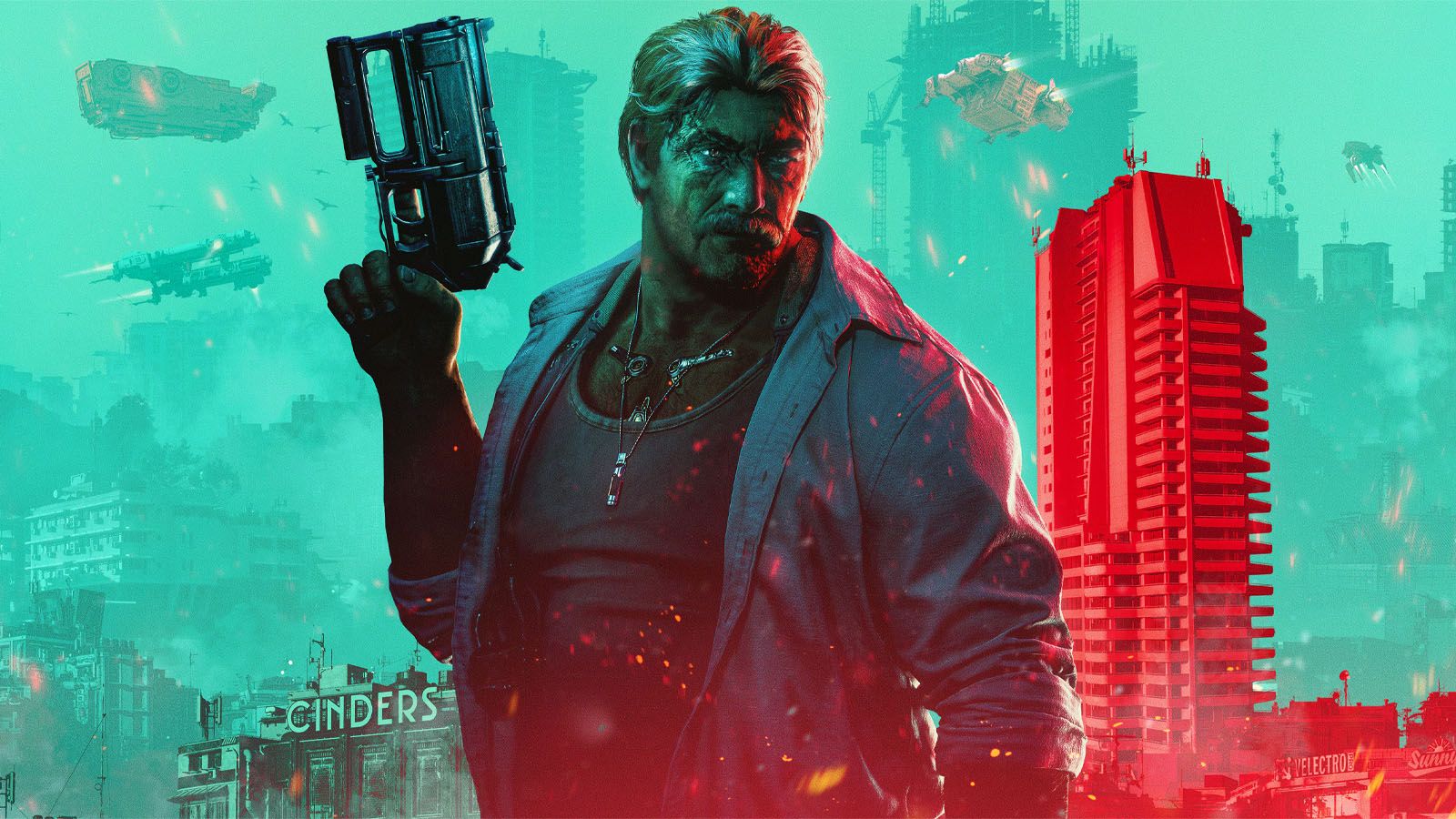
State of Unreal events have consistently served as a powerful platform for showcasing how cutting-edge technology can be translated into tangible, awe-inspiring game experiences, making complex innovations accessible to a wider audience. This year, the focus shifted to an immersive first-person shooter that promises to build its depth and realism through a sophisticated blend of procedural generation and a bespoke Unreal Engine 5 workflow. The integration of Nanite for unparalleled geometric detail, Lumen for dynamic global illumination, and MegaLights for advanced lighting effects are central to this vision, promising a visual fidelity and environmental interactivity that could redefine player immersion.
The Philosophy of Density: Beyond Mere Scale
"No Law" is not about creating the largest possible game world; it’s about creating the most dense and complex one. The game’s setting, a cyberpunk megalopolis named Port Desire, is envisioned as a sprawling urban environment teeming with gangs, corruption, and an overwhelming amount of neon-drenched detail. Tor Frick elaborated on this philosophy at State of Unreal, stating, "We didn’t want the largest world, but the densest. A city that feels lived-in at every scale, where every corner carries history, and every surface tells a story." This focus on lived-in authenticity is a departure from many open-world games that, despite their size, can often feel artificial or repetitive.
The developer’s commitment to making Port Desire feel genuinely alive and reactive is a crucial differentiator. While this might sound like a basic tenet of open-world design, it’s often an area where games fall short. The common critique of many sprawling open worlds is that they become mere canvases for repetitive tasks and checklist-style completionism. The debate over whether "bigger is always better" in open-world games has been ongoing for years. While titles like "Crimson Desert" may offer immense scale, they can sometimes devolve into repetitive gameplay loops that cater more to completionists than to players seeking a truly immersive experience.
Neon Giant’s strategy is to prioritize density, intricate interiors, and compelling environmental storytelling. The goal is to create spaces that are not just large but intrinsically interesting and imbued with a sense of history and purpose. This approach is rooted in a deep understanding of their development constraints and aspirations. Frick explained, "We knew that our best starting point would be building a game around the core feature set of Unreal 5, because a small team like ours needs to work with the engine, not against it. We realized early on that ‘out of the box’ wouldn’t be enough. We had to push beyond the defaults and build our own workflow within UE5 to make the world we wanted." This highlights a pragmatic yet ambitious approach, leveraging the power of the engine while tailoring it to their specific creative vision.

Technological Pillars of "No Law"
The realization of Port Desire’s unprecedented density hinges on Neon Giant’s masterful implementation of several key Unreal Engine 5 technologies:
- Nanite: This virtualized geometry system allows for the rendering of film-quality, incredibly detailed assets with an effectively unlimited polygon count. For "No Law," this means that every surface, from the grimy alleyways to the towering skyscrapers, can be rendered with an astonishing level of geometric fidelity, contributing significantly to the feeling of a truly lived-in environment. Frick emphasized this, stating, "Nanite is what made that approach viable. It lets us keep a high level of detail across surfaces without treating every asset as a tradeoff between fidelity and performance." This allows artists to focus on crafting detailed environments without the constant worry of polygon budgets.
- Lumen: The dynamic global illumination and reflections system in Unreal Engine 5 provides incredibly realistic and responsive lighting. In "No Law," Lumen will ensure that light behaves naturally, casting dynamic shadows and reflecting off surfaces with stunning accuracy. This is crucial for creating the moody, atmospheric cyberpunk setting of Port Desire.
- MegaLights: This technology enables the creation of massive, high-fidelity lighting setups, essential for depicting the vibrant and often overwhelming neon signage and illumination that defines a cyberpunk city. The interplay of MegaLights and Lumen will create a visually rich and immersive urban landscape.
- Mass Framework: This system is designed to handle the simulation of large numbers of AI-driven agents and objects within the game world. For "No Law," this is critical for populating Port Desire with a believable ecosystem of citizens, vehicles, and wildlife, making the city feel truly alive and reactive to the player’s presence and actions.
These technologies are not merely implemented; they are woven into a bespoke Unreal Engine 5 workflow. Neon Giant has developed custom pipelines and workflows to maximize the benefits of these tools, ensuring that their ambition for density and detail is achievable without sacrificing performance. This commitment to innovation extends to how player actions impact the world.
Interactivity and Emergence: A World That Responds
A key promise of "No Law" is that player actions will leave visible and meaningful marks on the city of Port Desire. Individual districts are being meticulously crafted with distinct identities and purposes, further enhancing the feeling of a complex, interconnected urban environment. The integration of Lumen and MegaLights isn’t just for aesthetic purposes; it’s tied directly into gameplay. For instance, if players disrupt streetlights, use torches, or deliberately plunge areas into darkness, the game’s AI will dynamically react to these changes. This level of environmental interaction promises a more organic and emergent gameplay experience, where the player’s choices have tangible and observable consequences within the game world.
The challenge for any open-world game is to translate ambitious claims of reactivity and immersion into tangible gameplay. "No Law" aims to differentiate itself by building this density from the ground up, employing advanced Unreal Engine 5 tools to achieve its goals. The focus on a tailored workflow, rather than relying solely on out-of-the-box solutions, suggests a deep commitment to pushing the boundaries of what’s possible. Frick elaborated on this, stating, "We prioritised density over scale, and we built a pipeline that lets artists handcraft spaces without constantly stripping detail back and without relying on procedural generation." This indicates a balanced approach, where artistic intent guides the creation of detailed environments, supported by powerful procedural tools and the efficiency of Nanite.

The team’s strategic decision to leverage Unreal Engine 5’s capabilities for a smaller studio is particularly noteworthy. By working with the engine’s strengths rather than against them, Neon Giant can achieve a level of detail and complexity that might otherwise be out of reach for an independent developer. This philosophy of smart technological integration is likely to be a cornerstone of "No Law’s" success.
Looking Ahead: The Future of Open-World Design?
"No Law" represents a potential paradigm shift in open-world game design. By prioritizing density, reactivity, and meticulous detail over sheer scale, Neon Giant is challenging established conventions. If they succeed in delivering on their ambitious promises, "No Law" could serve as a blueprint for future open-world titles, demonstrating that true immersion comes not from vastness, but from a world that feels alive, responsive, and rich with detail at every level.
The game is still in development, and details regarding a release date are yet to be announced. However, the early glimpses and the technical underpinnings revealed at State of Unreal paint a compelling picture of a game that could redefine player expectations for open-world experiences. The Steam page for "No Law" is available for those seeking more information and to keep track of future updates. The gaming world will be watching closely to see if Neon Giant can truly deliver on its promise of the densest, most alive open world ever created.
The approach taken by Neon Giant in "No Law" signifies a maturing of the open-world genre. As technology advances, the focus is shifting from simply making worlds bigger to making them more believable and engaging. The emphasis on player agency and environmental storytelling, powered by cutting-edge tools like Unreal Engine 5, suggests a future where virtual worlds offer deeper, more meaningful experiences. The success of "No Law" could inspire a wave of similar projects, pushing the boundaries of what players expect from their interactive adventures.