Radhika Singh’s "Earthly Playing Field": A Timely Speculative Dive into Global Resistance and Intellectual Awakening
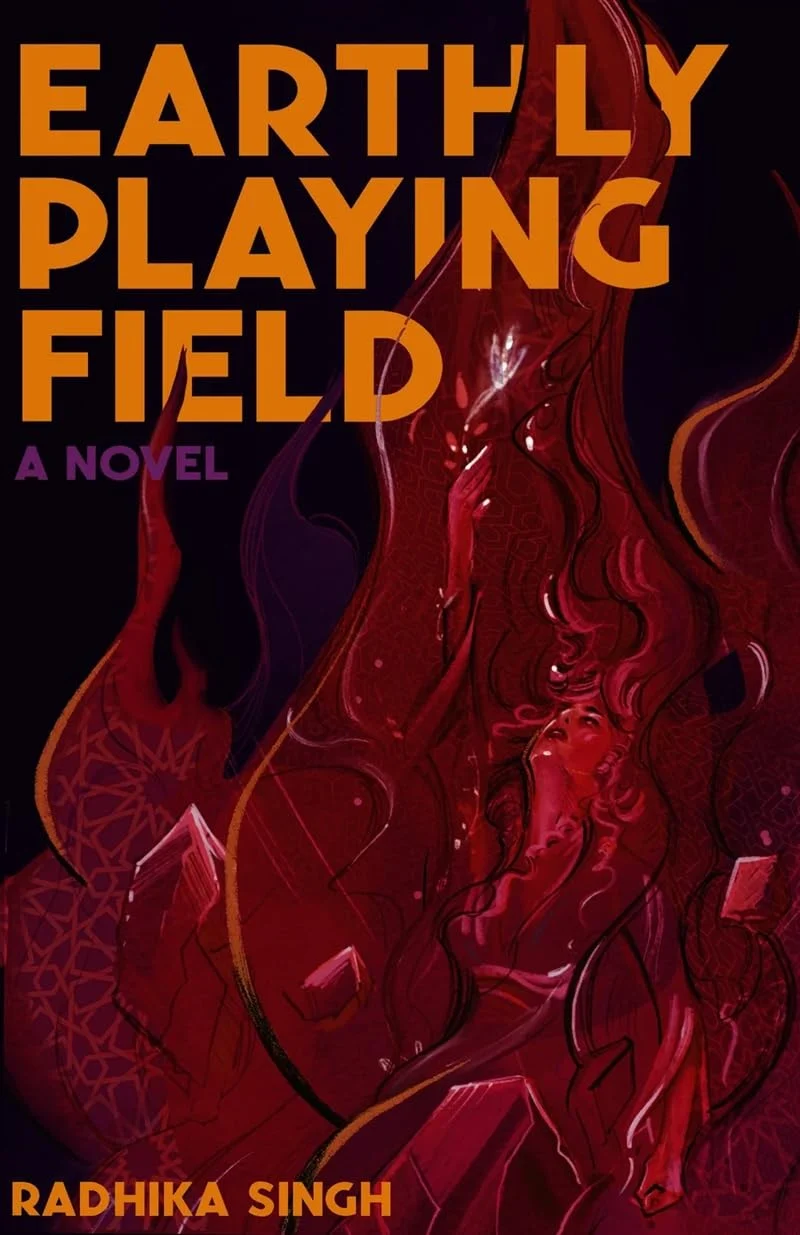
NEW YORK, NY – Radhika Singh’s recently published novel, Earthly Playing Field, emerges as a potent and ambitious work of speculative fiction, firmly embedding itself within the tumultuous geopolitical landscape of the present moment. Set in the immediate future of 2024, the book meticulously constructs a sprawling narrative that traverses continents, exploring themes of resistance, surveillance, anti-colonialism, and personal quest against a backdrop of escalating global crises. While lauded for its intellectual depth and unwavering political commitments, the novel has also sparked critical discourse regarding its narrative execution and the efficacy of its chosen literary forms.
Main Facts: A Global Tapestry of Resistance and Connection
Earthly Playing Field introduces readers to Roma, a woman living in Queens, New York, who finds herself grappling with the profound injustices of her era. Her personal struggles are intricately linked to global events, notably the ongoing humanitarian crisis in Gaza and the pervasive, "tentacular" reach of advanced surveillance technologies. Simultaneously, the narrative shifts to Amarpur, India, where Roma’s brothers are deeply embroiled in farmers’ resistance movements, confronting the dual pressures of the Hindutva state and the encroaching influence of American multinational corporations.
The connective tissue between these disparate worlds is a revolutionary bioengineered plant known simply as "the cell." This extraordinary botanical innovation transcends conventional communication, facilitating instantaneous links across vast distances and even time, serving as a critical vector for resistance movements worldwide. Through the cell, Roma embarks on a profound journey of self-discovery and connection, engaging in deep conversations with an eclectic cast of characters—both human and "magical beings." These dialogues delve into leftist political theory, anti-colonial history, and Sufi philosophy, forming the central arc of her search for purpose. Woven into this intellectual tapestry is an unconventional queer love story and the enigmatic introduction of extraterrestrial entities, whom Roma aptly dubs "the djinn."
Published amidst a heightened global awareness of social and political unrest, Earthly Playing Field has quickly positioned itself as a significant, albeit challenging, contribution to contemporary speculative fiction. Its immediate impact stems from its audacious premise and its direct engagement with the most pressing issues of our time, prompting both fervent admiration for its thematic courage and nuanced critique of its narrative choices.
Chronology: Unfolding Crises and Interconnected Struggles in 2024
The narrative of Earthly Playing Field is anchored in a meticulously imagined 2024, a year characterized by a confluence of escalating global crises that directly mirror and extrapolate from current events. The novel’s timeline unfolds across two primary geographical axes, interconnected by both kinship and a groundbreaking technological-biological marvel.
In Queens, New York, Roma’s personal journey begins, reflecting the anxieties and intellectual ferment of a young woman acutely aware of the world’s unfolding tragedies. Her daily life is punctuated by the grim realities reported from the Middle East, specifically the harrowing “ongoing genocide in Gaza,” which serves as a constant, somber backdrop to her existence. This immediate crisis is compounded by her lived experience of ubiquitous surveillance technology, an oppressive force that extends its reach into every corner of modern life, eroding privacy and autonomy. Roma’s initial state is one of intellectual curiosity blended with a search for deeper meaning and practical engagement, as she grapples with the theoretical frameworks that might explain and offer solutions to the systemic oppressions she perceives.
Parallel to Roma’s urban experience, the narrative transports readers to Amarpur, a fictional locale in India. Here, her brothers are at the forefront of a burgeoning farmers’ resistance movement. This struggle is portrayed as a multifaceted battle against the rising tide of the Hindutva state, a nationalist ideology increasingly asserting its dominance, and the insidious economic pressures exerted by powerful American multinational corporations. The farmers’ movement is not merely a local protest but a microcosm of broader global battles against neo-liberal exploitation and authoritarianism, echoing historical and contemporary land and labor struggles across the Global South.
The critical nexus point that binds these geographically distant yet ideologically intertwined struggles is "the cell." Developed by Roma’s revolutionary brother, Ranbir, this bioengineered plant is far more than a simple communication device. It represents a radical leap in speculative biology and technology, enabling instantaneous, cross-temporal and cross-spatial communication. Functioning as a living network, the cell becomes a vital tool for organizing, sharing intelligence, and fostering solidarity among resistance movements globally. It embodies the novel’s core idea of interconnectedness, suggesting that solutions to global problems might emerge from a synthesis of nature, technology, and collective consciousness.
As the plot progresses, Roma’s personal quest for purpose and connection deepens. Her conversations, often facilitated by the cell network, extend beyond human interlocutors to include "magical beings," enriching the narrative with elements of magical realism and myth. These dialogues are not mere exchanges but intellectual explorations, delving into a rich tapestry of thought that spans leftist political theory, providing frameworks for understanding power structures and revolutionary action; anti-colonial history, offering lessons from past struggles against imperial domination; and Sufi philosophy, introducing spiritual dimensions of interconnectedness, devotion, and the pursuit of truth beyond material reality.
Further complicating and enriching Roma’s journey is the development of an "unconventional queer love story," which challenges traditional romantic narratives and underscores the novel’s commitment to diverse forms of connection and liberation. The introduction of "extraterrestrial beings" whom Roma names "the djinn" pushes the boundaries of the speculative genre even further, injecting an element of cosmic scale into the earthly struggles and hinting at a broader, perhaps universal, network of intelligence and resistance. This chronological unfolding of events and ideas paints a picture of a world in crisis, yet also brimming with the potential for revolutionary solidarity and profound intellectual awakening, all filtered through the unique lens of Roma’s evolving consciousness.
Supporting Data: The Intellectual Framework and Speculative Innovations
Earthly Playing Field is distinguished by its robust intellectual scaffolding, drawing heavily from a diverse array of thinkers and traditions to ground its speculative narrative in real-world political and philosophical discourse. The novel transparently cites figures such as V. I. Lenin, whose theories on imperialism and revolutionary struggle inform the critiques of corporate and state power; Guru Gobind Singh, the tenth Sikh Guru, whose emphasis on justice, spiritual devotion, and resistance against tyranny resonates with the farmers’ movement; and Assata Shakur, a prominent figure in the Black Liberation Army, whose writings on political imprisonment and anti-racist struggle provide a voice for marginalized resistance. These citations are not merely academic references but are woven into the narrative, often delivered through characters’ dialogues from memory, suggesting a living, breathing tradition of radical thought.
The novel’s placement within the lineage of leftist speculative fiction is both intentional and significant. As critical theorist Samuel Delany once posited, speculative fiction serves as a "tool to think about the present." Singh’s work exemplifies this function, utilizing the genre not merely for escapism but as a powerful vehicle for social extrapolation and political allegory. It directly confronts contemporary geopolitical realities, from the "ongoing genocide in Gaza" to the "tentacular reach of surveillance technology" and the "farmers’ resistance movements against both the Hindutva state and American multinational corporations." By setting the story in the immediate future, Singh provides a slightly altered but deeply recognizable mirror to our own world, inviting readers to consider the trajectories of current conflicts and the potential for collective action.
Furthermore, Singh aligns with a contemporary movement advocating for transparently didactic fiction. As articulated by writer Margaret Killjoy, stories that aim to teach and openly espouse their political commitments can be profoundly effective, even if they deviate from prevailing literary trends. Earthly Playing Field embraces this philosophy, offering models for understanding systemic oppression and pathways towards liberation, rather than merely portraying them implicitly. This approach underscores the novel’s commitment to explicit political engagement, making it a deliberate intervention in current political and literary conversations.
The speculative element of "the cell" is a particularly rich area of the novel’s innovation. Developed by Roma’s brother Ranbir, this bioengineered plant network blurs the boundaries between technology and magic, functioning as an "element of science fantasy." Its primary role as an Earth-based mechanism for "cross-temporal organizing" speaks to a profound desire for historical continuity in resistance and the ability to learn from past struggles while influencing future outcomes. The cell thus acts as a symbolic and literal bridge between the novel’s key themes: "devotional embodiment" (connecting individuals physically and spiritually to a larger cause) and "political praxis" (translating theory into action). Intriguingly, the narrative subverts pure techno-optimism by revealing that the cell technology is eventually "co-opted by Empire in the future," a critical turn that adds layers of complexity and realism to its speculative vision, acknowledging that even tools of liberation can be weaponized.
Beyond its explicit political and technological dimensions, the novel also engages with a Sufi poetics of longing, particularly evident in Roma’s "unconventional queer love story" with Leila, an Iranian revolutionary. Their connection, often mediated by cell projections, is characterized by absence and an yearning that becomes generative, echoing Sufi mystical traditions where longing for the divine or the beloved transcends physical presence. This adds a deeply spiritual and emotional layer to the political narrative, suggesting that revolutionary commitment and personal yearning can coexist, and that desire itself can be a force for profound connection and change. The combination of rigorous intellectual engagement, bold speculative elements, and deep philosophical exploration establishes Earthly Playing Field as a text rich with "supporting data" for its central arguments and themes.
Official Responses: Critical Reception and Literary Discourse
While Earthly Playing Field has been widely acknowledged for its ambitious scope and admirable political commitments, its reception within literary circles has been marked by a nuanced critical discourse. Reviewers have generally celebrated the novel’s "rich premise" and its capacity to thread "meaningful intersections between ongoing and historical struggles," recognizing its potential as a powerful educational tool. However, the critical commentary often pivots to questions regarding the novel’s narrative efficacy in translating its profound intellectual content into a compelling fictional experience.
A recurring point of critique centers on the novel’s narrative momentum, which is frequently "stymied" by the "density and frequency of dialogues." Reviewers note that these extensive conversations, while rich in intellectual content and laden with quotations from influential thinkers, often "replace dramatization with explanation." This structural choice, critics argue, leads to a situation where significant "events in the novel—from the farmers’ uprising in India to Roma’s past relationships—happen off the page and are described only in their reflections." This narrative technique, where crucial actions are recounted rather than shown, is perceived to "flatten their significance and create a sense of lag," preventing readers from viscerally experiencing the unfolding drama.
A fundamental question raised by the critical reception concerns the "utility of both fiction and the speculative mode to elaborate its politics." While the reviewer explicitly shares Singh’s "clear and admirable political commitments" and appreciates "ardently leftist fiction" that transparently espouses its ideals, there is an underlying query about whether Earthly Playing Field fully leverages the unique strengths of its chosen forms. The novel’s central process appears to be "ideological and discursive," primarily developed through extensive dialogues that articulate rather than embody political transformation.
Furthermore, the character development of Roma, while intellectually engaging, is noted for its focus on interiority rather than an experienced ideological journey. When readers encounter Roma, she is already deeply immersed in her studies of Islamic history and political theory. While "some sense of Roma’s ideological transformation in the past" is granted, critics suggest that readers "never experience that with her ourselves." This approach, coupled with the novel’s heavy investment in "citation and argument," means that "the narrative expectations it seeds are not always given room to develop." For instance, Roma’s recurring assertion that life within "Empire" is not "real life" and that global South movements are deepening its fault lines, an idea introduced early, is not seen to evolve or be tested through her experiences. The novel’s ending, with Roma immersing herself in reading and meditation in Amarpur, is interpreted as reiterating rather than resolving this initial perspective, leading to a perceived lack of "friction between Roma’s ideas and the world." A character’s worldview, critics argue, is most satisfyingly portrayed when it has been "tested, pressured, complicated, or transformed by experience."
The speculative elements, particularly the plant-based "cell" network, also draw critical scrutiny. While recognized for its immense "potential for narrative complexity" as a convergence of technology and magic and a "beautiful bridge" between themes, critics feel its unique "animacy" and capacity for "sensuous, not literal, meaning" are "underexamined." Instead, the cell often "functions as a communications technology," its deeper implications quickly overshadowed by the introduction of the djinn. This suggests a missed opportunity to fully explore the ecological and embodied dimensions of its speculative premise.
Applying the Marxist critic Georg Lukács’s distinction between "narration" and "description," the critical consensus notes that the novel tends to "describe" rather than "narrate." Lukács argued that "narration establishes proportions, description merely levels," and this is seen as a central issue. Despite the "necessary urgency to the topics," the novel "never reaches an emotional threshold because much of the heart-racing action happens off the page." The preference for "description and explanation… over action and uncertainty" results in "fascinating questions only to answer them immediately," thereby preventing "meaning to remain unstable enough for the reader to participate in producing it." Even the "longing for the Iranian revolutionary Leila," a poignant aspect of Roma’s journey, is perceived as "contemplated rather than lived," reinforcing the novel’s discursive nature over its dramaturgical potential. These critical observations, while acknowledging the novel’s intellectual ambition, collectively point to a perceived gap between its thematic aspirations and its narrative execution.
Implications: The Enduring Resonance and Future Directions of Politically Engaged Fiction
The critical reception of Radhika Singh’s Earthly Playing Field carries significant implications for the broader landscape of politically engaged speculative fiction and contemporary literary discourse. The novel serves as a powerful case study, demonstrating both the profound potential and the inherent challenges in crafting fiction that is overtly didactic and committed to specific political ideologies.
One of the most compelling implications of Earthly Playing Field lies in its unwavering commitment to foregrounding crucial global issues that are often marginalized or superficially treated in mainstream literature. By directly addressing the "ongoing genocide in Gaza," the pervasive nature of "surveillance technology," and the struggles of "farmers’ resistance movements" in the Global South, Singh unequivocally asserts the role of fiction as a platform for socio-political critique and consciousness-raising. This approach reinforces the idea that literature can and should be a "tool to think about the present," as Samuel Delany articulated, offering readers not just escape but also intellectual frameworks for understanding and engaging with complex realities. The novel’s engagement with figures like Lenin, Guru Gobind Singh, and Assata Shakur also implies a call for readers to delve into these rich intellectual traditions, suggesting that historical and theoretical knowledge are essential components of contemporary resistance.
However, the critiques leveled against the novel’s narrative choices—specifically the preference for dialogue and explanation over dramatization, and the off-page unfolding of key events—highlight a perennial tension in didactic fiction. The challenge, as Earthly Playing Field illustrates, is to integrate political argument and intellectual discourse seamlessly into a narrative structure that still allows for reader immersion, emotional resonance, and a sense of unfolding discovery. The absence of "friction between Roma’s ideas and the world" and the lack of a directly experienced ideological transformation for the protagonist suggest that while the novel is rich in intellectual content, it may inadvertently distance the reader from the visceral experience of political struggle and personal growth. This opens up a vital discussion about how politically committed writers can balance the imperative to educate with the art of storytelling, ensuring that the message is conveyed not just intellectually but also emotionally and experientially.
Furthermore, the perceived underexamination of the "cell" technology’s potential, particularly its "animacy" and capacity for "sensuous, not literal, meaning," points to a broader implication regarding the utilization of speculative elements in politically charged narratives. When a speculative premise holds such profound thematic potential—linking ecology, technology, politics, and spirituality—its underdevelopment can be seen as a missed opportunity to deepen the novel’s unique contribution. This suggests that the speculative mode is most powerful when its fantastical elements are fully integrated and explored, allowing them to serve as more than just narrative devices, but as integral components of the story’s philosophical and emotional core.
Ultimately, the most affecting aspect of the novel, as noted by the reviewer, is the "quiet story of Roma," her "aching romance" with ideas, and her realization of the "limitations of thought alone." This deeply human thread implies a profound recognition that while intellectual engagement and historical understanding are crucial, they are not sufficient to navigate the complexities of existence. The heartbreaking realization "that interpreting the world cannot save us from having to live within it" offers a poignant and universal truth that transcends the novel’s specific critiques. It suggests that Earthly Playing Field, despite its structural challenges, succeeds in touching upon a fundamental human condition: the perpetual struggle to reconcile intellectual understanding with lived experience, and the quest for meaning in a world rife with injustice.
In conclusion, Earthly Playing Field stands as an important, thought-provoking work that actively participates in the ongoing global dialogue about resistance, interconnectedness, and the future of humanity. Its critical reception encourages a deeper reflection on the craft of politically engaged fiction, urging authors to consider how narrative form can best serve radical content. As readers continue to grapple with its challenging themes and narrative choices, the novel will undoubtedly contribute to evolving conversations about how literature can effectively inspire, educate, and move us to confront, interpret, and ultimately change the world we inhabit.