City of Stone: A SPFBO Semi-Finalist Navigating the Intricacies of Found Family and Empire’s Fate
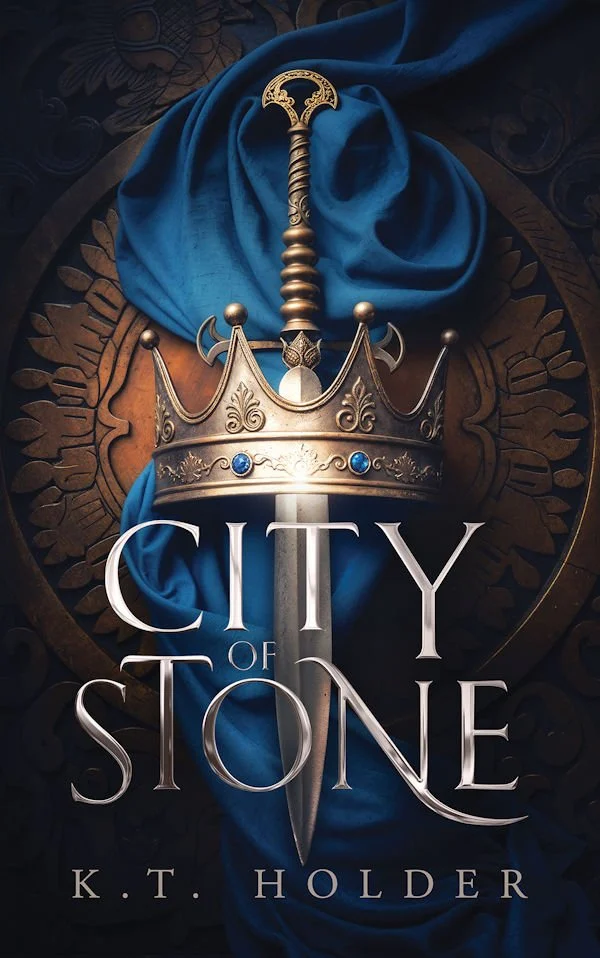
FOR IMMEDIATE RELEASE
[City, State] – [Date] – As the Self-Published Fantasy Blog-Off (SPFBO) Round One draws to a close, a compelling new voice in fantasy, City of Stone, has captivated the judging panel, prompting a robust discussion about its strengths and areas for refinement. This epic tale, centered on a young man’s journey from forced servitude to potentially pivotal player in an empire’s destiny, has garnered significant attention for its rich emotional core, intricate plotting, and a profound exploration of "found family."
Authored by an emerging talent, City of Stone has been lauded by several judges for its ability to quietly build strength through relatable characters and genuine warmth, making it a memorable contender in a highly competitive field. While not without its minor imperfections, the book stands as a testament to the vibrant creativity flourishing within the self-published fantasy landscape.
The Narrative Unveiled: A Synopsis of Power, Betrayal, and Duty
City of Stone plunges readers into a world where magic is not merely a force, but a measure of might, and ancient shadows guard dangerous secrets. At the heart of this volatile realm is Kasperi Ironstone, a seemingly ordinary individual destined to become either the Empire’s salvation or its ultimate downfall.
Kasperi’s arduous journey begins with an act of desperate love. Caught stealing to secure a better life for his younger brother, Soli, he is condemned to the brutal existence of the dreaded labor camps. Eight years later, the man who emerges is hardened but unbroken, returning to a world teetering on the precipice of war. The shock of his return is compounded by the revelation that his long-lost brother, Soli, has not only survived but has risen to lead a burgeoning rebellion against the very Empire that imprisoned Kasperi.
As an unstoppable invading army looms, threatening to engulf the land, Kasperi finds himself thrust into a perilous alliance. Alongside a diverse band of unlikely allies—each with their own history and motivations—he must navigate a treacherous web of political intrigue and sabotage. Their mission is clear: expose a hidden traitor whose machinations threaten to tear the fractured realm apart, and unite its disparate factions before it’s irrevocably too late.
However, the stakes escalate dramatically when a shocking betrayal strikes devastatingly close to home. Faced with an agonizing choice between the brother he deeply loves and the onerous duty to the Empire he is bound to protect, Kasperi must confront the ultimate dilemma. Will he embrace the heavy mantle of his destiny and strive to save the realm, or will he allow personal loyalty to precipitate the Empire’s catastrophic collapse? This core conflict promises a narrative rich with emotional resonance and high-stakes decision-making.
The Crucible of Criticism: The SPFBO Review Process
The Self-Published Fantasy Blog-Off (SPFBO), now in its eleventh year, stands as a pivotal event in the independent publishing world. Conceived by acclaimed author Mark Lawrence, the competition aims to shine a spotlight on the often-overlooked talent within the self-published fantasy genre, providing authors with invaluable exposure and readers with a curated list of exceptional new books.
The process is rigorous and multi-staged. Thousands of submissions are whittled down through preliminary rounds by a diverse panel of volunteer judges from various fantasy blogs and communities. Each judge brings their unique preferences and critical eye, ensuring a broad spectrum of perspectives on the submitted works. City of Stone has successfully navigated these initial hurdles, earning its place as a semi-finalist—a significant achievement in itself.
The current phase involves detailed reviews of these semi-finalists by designated judging teams. These reviews are not merely summaries, but in-depth analyses covering plot, character development, world-building, pacing, prose, and overall impact. The Fantasy-Faction blog, one of the participating judging teams, has now released its collective thoughts on City of Stone, offering a mosaic of opinions that highlight the book’s multifaceted nature and the subjective experience of reading. The scores for all semi-finalists are held until all reviews are published, building anticipation for the eventual announcement of the single finalist who will advance to Round Two.
Judges’ Insights: A Deep Dive into "City of Stone"
The Fantasy-Faction judging panel offered a diverse array of opinions on City of Stone, underscoring the book’s ability to resonate differently with individual readers. Despite varied reactions, a strong thread of appreciation for the book’s core strengths emerged.
Maureen: The Enthusiast for Found Family and Intricate Plotting
Maureen’s review was unequivocally positive, starting with a declaration: "I loved this book—I’m a sucker for found family." This theme, central to City of Stone, clearly struck a chord. She praised the novel’s layered plotting, noting that "All the major players had a plan, a scheme, or an agenda," which suggests a complex political landscape that promises further development in subsequent books. Maureen specifically highlighted the distinct motivations of key characters: Kas’s desire to save his brother, Emelia’s mysterious agenda against the Empire, Cassandra’s ambition to rule free from obstruction, and Francisco’s elusive hope for peace.
The worldbuilding also received commendation for being "completed without info-dumps," allowing the various cities, towns, and their political affiliations to unfold naturally. While admitting some remaining questions about the magic system, she affirmed a "decent handle on it." Pacing was another strong point, with Maureen noting that "something was always afoot," even during the seemingly mundane scenes in the labor camps. The "frenetic" pace of the final chapters left a lasting impression, cementing her anticipation for the sequel.
Julia: The Appreciator of Nuance and Emotional Depth
Julia’s detailed analysis offered a comprehensive look at City of Stone‘s strengths, particularly its emotional core and character development. She found the book highly engaging, moving through it "in long stretches without losing interest." For Julia, the "strong emotional core, a cast that’s easy to care about, and a clear love for found family and loyalty" were the book’s defining features. The post-labor camp journey of the young protagonists, figuring out their identities and forging bonds, was particularly impactful. She lauded the natural and warm connection between characters from diverse backgrounds, highlighting their banter, friendship, and quiet loyalty as significant strengths that carried the narrative.
Julia particularly appreciated the book’s gentle approach to "unlearning." She cited Kas’s evolution in respecting the self-names of different peoples (Jatte and Kikachi) as an example of quiet, respectful adjustment rather than a dramatic moral lesson. This sensitivity extended to the portrayal of romance and LGBT existence, which was handled with a refreshing "lightness." A scene where a character’s romantic assumption is gently corrected, leading to "friends recalibrating, teasing a little, and moving on," underscored the book’s "baseline of acceptance and willingness to learn," which Julia found "genuinely comforting to read."
The novel’s multiple perspectives also enriched the story for Julia. She found the young Empress’s POV "engaging and emotionally grounded," depicting her struggle against entrenched entitlement and patriarchy, adding crucial "political weight." While appreciating the theoretical value of the opposing side’s POV for "added perspective and moral tension," she felt this arc "moved a little too quickly." This led to her primary critique: the book sometimes felt "a bit too easy," with conflicts resolving quickly and convenient answers appearing. Despite these "rougher edges," Julia concluded that City of Stone possesses "a solid foundation, a lot of heart, and characters I genuinely enjoyed spending time with," recognizing its potential for "something truly excellent" with further refinement.
Stacey: The Character-Focused Page-Turner
Stacey’s review echoed the sentiment of many, praising the book’s compelling opening and its strong emphasis on relationships. She found the "found family story" so compelling that she could "ignore almost anything that needed a little polish." Her summary of Kas’s initial plight—stealing for his brother, the eight years in labor camps, and his quest to find Soli—underscored the emotional hooks of the narrative. Stacey highlighted the transformation of Solamon and Kas’s struggle to reconcile with his changed brother while also recognizing the realm’s desperate need for a hero.
A standout character for Stacey was Emilia, a Controller, whose "cool magic" was secondary to her emotional journey. Emilia’s initial unpreparedness "to FEEL for the people she’s seeing around her" and her subsequent learning curve made her journey a highlight. Stacey appreciated the multiple POVs that allowed different sides of the story to converge, emphasizing that "magic but it’s not the core of the novel, people and relationships are," a characteristic she "love[d]." Her overall impression was that City of Stone offers "really enjoyable pages" and left her "excited to continue the series."
Kerry: The Engrossed Reader
Kerry’s experience with City of Stone mirrored that of Maureen, Julia, and Stacey in its eventual captivating power. While it took a "wee while to get wholly immersed," around the 15-20% mark, she became "engrossed and ended up reading it in one sitting." The urgent need "to find out what happened next" was so strong that she promptly downloaded and read the second book immediately, attributing this to a bout of insomnia. Kerry also gave a "big shout out to the druids," noting their unconventional and "seriously disturbed and disturbing" portrayal, suggesting a unique twist on a common fantasy archetype. Her eagerness for book three further solidifies the series’ appeal.
EG: The Disengaged Reader
Not all judges shared the same enthusiastic reception. EG offered a contrasting perspective, articulating her struggle to connect with the narrative despite its promising premise. She admitted, "I really wanted to get into this book," drawn by its potential for rebellion, political maneuvering, and a wide cast of characters—elements she typically enjoys. However, she found herself "bored" by the 50% mark.
EG’s primary criticism centered on the character dynamics, which she felt were "spelled out over and over again, as though I couldn’t follow what was going on," leading to "various plot twists being quite obvious." She also found characters that initially seemed interesting to be "instead just angry or childish," causing her to lose interest and ultimately "didn’t care about how it would turn out." This review highlights the subjective nature of reader engagement and how elements like pacing and character depth can significantly impact the overall experience for different individuals.
The SPFBO Framework: A Platform for Discovery
The SPFBO competition serves a crucial role in the ever-expanding landscape of self-published fantasy. It acts as a curated gateway, sifting through a vast number of submissions to unearth hidden gems and bring them to the attention of a wider audience. The diverse panel of judges, representing different reading tastes and critical approaches, ensures that the selection process is robust and multifaceted, preventing any single viewpoint from dominating the assessment.
The Fantasy-Faction blog’s transparent approach to reviewing, acknowledging the subjective nature of reading ("What didn’t click for us might be exactly your kind of story"), is a testament to the competition’s ethos. It encourages readers to explore based on what sounds appealing to them, rather than solely relying on a single verdict. This "official response" from the judging panel is not a definitive pronouncement but an informed recommendation, framed within the context of a rigorous competition.
Moreover, the competition itself is an "official response" to the challenges faced by self-published authors. It provides a structured, high-profile platform for validation and visibility that can be incredibly difficult to achieve through traditional channels. The courage of every author who submits their work, knowing it will be subjected to intense scrutiny, is consistently acknowledged by the SPFBO organizers and judges.
Looking Ahead: The Road to Round Two and Beyond
As Round One of SPFBO draws to a close, the anticipation for the announcement of the single finalist from this batch of semi-finalists is palpable. For City of Stone, regardless of whether it progresses to Round Two, the comprehensive feedback from the Fantasy-Faction judges provides invaluable insights. The collective praise for its found family dynamics, emotional resonance, and intricate world-building offers significant validation, while the noted "rougher edges" point towards areas for potential refinement in future installments.
A strong showing in SPFBO, even reaching the semi-finalist stage, can provide a significant boost to an author’s career. It enhances visibility, generates increased sales, and lends an air of legitimacy to their work within the broader fantasy community. The enthusiastic mentions of sequels by several judges for City of Stone further underscore its potential as a series with lasting appeal.
The SPFBO continues to shape the fantasy genre by fostering new talent and broadening the scope of what is celebrated within the literary world. It stands as a beacon for independent creators, demonstrating that quality storytelling can emerge from any corner of the publishing industry. For City of Stone, the journey through SPFBO has undoubtedly been a pivotal moment, introducing Kasperi Ironstone’s world to a wider audience eager for new adventures and emotionally rich narratives. The future for this series and its author looks promising, fueled by the passionate discussions sparked by this rigorous competition.
Further updates on SPFBO 11, including the announcement of finalists and subsequent rounds, can be followed on the official SPFBO website and the participating blogs. Inquiries regarding the Fantasy-Faction reviews or the competition can be directed to editor Jennie Ivins.