Evolution of the Sandbox: Raph Koster’s ‘Stars Reach’ Unveils Major Visual Overhaul and Simulation Depth
By Senior Tech Correspondent
In the rapidly evolving landscape of massively multiplayer online role-playing games (MMORPGs), few names carry as much weight as Raph Koster. As the lead designer behind genre-defining titles like Ultima Online and Star Wars Galaxies, Koster’s latest venture, Stars Reach, has been under intense scrutiny since its announcement. Developed by Playable Worlds, the project aims to deliver a "living, breathing world" that prioritizes deep simulation over static environments. However, early previews of the game faced criticism regarding visual fidelity.
In a comprehensive update released this week, Koster and his team showcased a massive visual overhaul intended to silence skeptics. The update reveals a significant leap in graphical quality, powered by a sophisticated suite of new shaders, lighting models, and a commitment to "stylized realism." Crucially, the team asserts that this aesthetic upgrade does not come at the expense of the game’s core promise: a fully simulated, player-modifiable universe.
Main Facts: The Intersection of Fidelity and Simulation
The core of the recent Stars Reach update is a total reconstruction of the game’s visual pipeline. For months, the art and engineering teams at Playable Worlds have been retouching every asset in the game, from the smallest blade of grass to the most massive planetary structures.
The Flora and Fauna Revolution
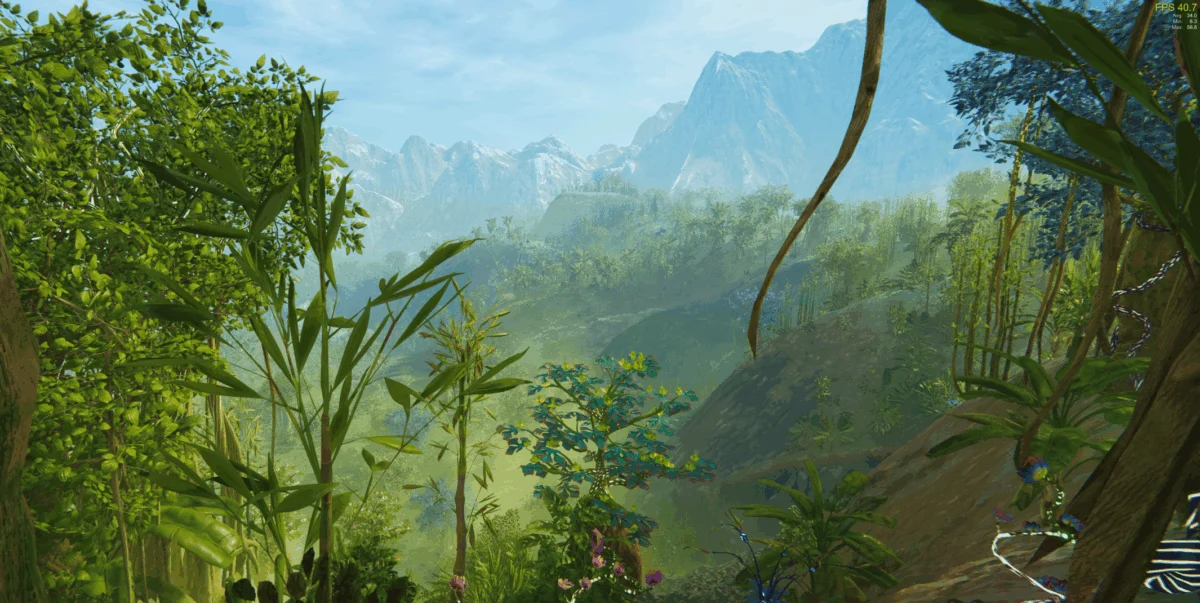
The most immediate change is visible in the game’s plant life. Hundreds of individual assets have been redone. Unlike traditional MMORPGs, where trees and bushes are static decorations, the flora in Stars Reach is inextricably linked to the game’s underlying simulation.
- Dynamic Growth: Plants grow in real-time, responding to seasonal shifts.
- Environmental Reactivity: Every piece of vegetation is programmed to respond to stimuli—they can catch fire, freeze, shed leaves, or die based on localized environmental data.
- Emergent Biomes: Developers do not "paint" forests onto the map. Instead, biomes are derived on the fly. The engine calculates temperature, humidity, and soil composition—of which there are twelve distinct types—to determine exactly where and how plants should propagate.
A Modifiable Universe
The visual update also highlights the game’s "living world" mechanics. In Stars Reach, the landscape is not a static backdrop but a dynamic playground. Players have the agency to flatten mountains, construct roads, and fundamentally alter the geography of a planet.
- Material States: The engine supports state changes for terrain. A sheer cliff face is not just a vertical wall; it is a collection of matter that can be melted into lava or frozen over.
- Physics-Based Interaction: Pouring water on high-altitude terrain causes it to freeze, creating ice surfaces that affect player movement, such as allowing for skating.
Technical Enhancements
On the technical front, Playable Worlds has introduced volumetric fog, improved lighting models, and is currently implementing a new global illumination system. These upgrades are designed to facilitate "truly dark caves" and more immersive atmospheric effects, all while undergoing significant optimization to ensure smoother framerates across a variety of hardware configurations.
Chronology: The Journey from Prototype to "Paperback Realism"
The path to the current visual state of Stars Reach has been one of iterative development and public feedback. Koster provided a rare look at the game’s evolution, tracing its progress from 2021 to the present.
2021–2022: The Foundation
In the early stages, Stars Reach (then often referred to by its internal codename) focused heavily on the "plumbing" of the simulation. Visuals were rudimentary, serving primarily as a proof of concept for the server-side architecture. When the first screenshots were made public, the gaming community expressed concern that the graphics appeared dated compared to modern AAA standards.
2023: Iterative Refinement
By 2023, the team began implementing the first iterations of their custom terrain shaders. This period saw the introduction of more complex textures and the initial testing of the "emergent biome" system. The goal was to prove that a world could be both procedurally generated by a simulation and aesthetically pleasing.
2024: The Strategic Pivot
As the game moved into 2024, the team finalized the decision to move toward "stylized realism." Koster noted that the current market is "chock full of photorealistic games that are indistinguishable from one another." To stand out, Stars Reach began adopting an aesthetic reminiscent of classic sci-fi paperback covers—vibrant, distinct, and readable, yet grounded in realistic physics.
2025: The Current Overhaul
The current phase represents the culmination of this journey. Having stabilized the simulation, the team is now "retouching every asset." The environments are largely complete, with the team now shifting focus to "hard surface objects" (buildings and vehicles), followed by a total refresh of character and creature models.
Supporting Data: The Mechanics of a Living World
The complexity of the Stars Reach simulation is best understood through its granular data points. While many games use procedural generation to create a map once, Stars Reach uses it to govern the world continuously.
| Feature | Technical Implementation | Gameplay Impact |
|---|---|---|
| Soil Composition | 12 distinct soil types with varying nutrient levels. | Determines crop yield and natural forest density. |
| Atmospheric Simulation | Real-time calculation of humidity and temperature. | Causes dynamic weather patterns and seasonal plant cycles. |
| Voxel-based Terrain | Fully destructible and transformable geometry. | Allows for mining, terraforming, and player-driven urban planning. |
| Propagation AI | Seed-fall and growth algorithms for all flora. | Forests can recover from fires or expand into new territories over time. |
The optimization efforts mentioned by Koster are equally vital. By moving much of the heavy lifting of the simulation to the server side and optimizing the client-side rendering of these dynamic assets, Playable Worlds aims to maintain high performance even when dozens of players are simultaneously altering the environment.
Official Responses: Raph Koster on Visual Compromise
In his official update, Raph Koster addressed the long-standing tension between simulation depth and graphical fidelity.
"We are finally at a place where we do not need to compromise on the visual quality in order to deliver the simulated living world we have had working for years now," Koster stated. He acknowledged that the team took the early "pushback on the graphics" to heart, viewing it as a challenge rather than a setback.
Koster further explained the philosophy behind the game’s look: "Iteration takes time. But I think it’s really cool to see the incremental steps forward over time. We are sticking to a somewhat stylized realism look… it should all add up to a pretty significant change in the game’s style."
Regarding the progress of the game beyond visuals, Koster emphasized that the "gameplay" team has not been idle. "Banks, player-run shops, combat updates, and more have been rolled out. Multiple player cities have been built and destroyed this year so far, and we have even blown up a few entire planets."
Implications: A New Benchmark for the Sandbox Genre?
The implications of the Stars Reach visual overhaul extend far beyond simple aesthetics. If Playable Worlds successfully marries high-end visuals with a deep, player-alterable simulation, it could represent a paradigm shift for the MMORPG genre.
Challenging the "Static" Standard
For decades, MMORPGs have relied on static maps to ensure performance and visual consistency. Games like World of Warcraft or Final Fantasy XIV offer beautiful worlds, but they are essentially "museums" where players can look but not touch. Stars Reach is attempting to break this mold by proving that a "sandcastle" world—where everything can be built or broken—doesn’t have to look like a low-fidelity prototype.
The Sustainability of Stylized Realism
By opting for stylized realism over photorealism, Playable Worlds is making a strategic bet on longevity. Photorealistic games often age poorly as hardware advances. Stylized games, such as Legend of Zelda: Breath of the Wild or Sea of Thieves, maintain their visual appeal much longer. For a game intended to run for a decade or more, this "paperback sci-fi" aesthetic may be the key to staying relevant.
Player Agency and Political Systems
The mention of "player governments" coming soon suggests that the environmental simulation is merely the foundation for a complex social simulation. When players can destroy planets or build cities, the need for governance becomes a gameplay mechanic rather than just lore. The ability to melt a cliff into lava isn’t just a visual trick; it’s a tactical tool in a player-driven war.
Conclusion
Stars Reach is entering a critical phase of development. The transition from a "working simulation" to a "visually stunning product" is a hurdle that many ambitious indie projects fail to clear. However, with Raph Koster at the helm and a clear vision for "stylized realism," Playable Worlds is positioning Stars Reach not just as a game, but as a technical showcase for the future of virtual worlds. As the team moves from environments to characters and creatures, the industry will be watching to see if this ambitious sandbox can truly have it all: beauty, brains, and the power to let players reshape the stars.