The Vanguard of Visual Storytelling: San Diego Comic-Con Unveils Nominees for the 2026 Russ Manning Promising Newcomer Award
SAN DIEGO, CA – As the global comics community prepares its annual pilgrimage to the hallowed halls of the San Diego Convention Center, the organizers of Comic-Con International (CCI) have officially pulled back the curtain on one of the industry’s most prestigious honors. The announcement of the 2026 nominees for the Russ Manning Promising Newcomer Award marks a pivotal moment in the awards season, spotlighting the artists poised to define the next generation of sequential art.
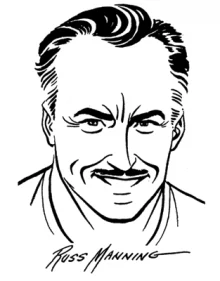
Since its inception in 1982, the Manning Award has served as a reliable barometer for future greatness. Named after the legendary Russ Manning—the virtuoso behind the Tarzan and Star Wars newspaper strips—the accolade is specifically designed to recognize artists who, though early in their professional journeys, demonstrate a "superior knowledge and ability" in the complex craft of comic creation. As the industry grapples with the transition from traditional print to digital dominance and the rise of AI-assisted imagery, the 2026 shortlist represents a fierce commitment to the fundamental human skills of draftsmanship, narrative pacing, and character design.
Main Facts: A Legacy of Artistic Excellence
The Russ Manning Promising Newcomer Award is unique among the pantheon of Comic-Con honors. Unlike the fan-driven popularity contests that often dominate social media, the Manning Award is a "peer-selected" distinction. The 2026 nominees were curated by a specialized panel comprising members of the Comic-Con International committee and influential figures within the San Diego comics community.
The final selection process is even more rigorous. To ensure the award maintains its historical integrity, the winner is chosen by a collective of past Manning Award recipients and former assistants of Russ Manning himself. This creates a direct lineage of mentorship and aesthetic standards that stretches back over four decades.
The recipient of the 2026 award will be revealed in a high-profile ceremony during the Will Eisner Comic Industry Awards on the evening of Friday, July 24. Often referred to as the "Oscars of the comics world," the Eisners provide a massive platform for the Manning winner, frequently serving as a springboard for major contracts with "Big Two" publishers (Marvel and DC) or prestigious independent houses like Image, Fantagraphics, and Drawn & Quarterly.
Chronology: From the Jungle to the Stars
To understand the weight of the 2026 nominations, one must look at the chronology of the man who inspired the award. Russ Manning (1929–1981) was a cornerstone of the "Silver Age" of comics, renowned for his clean, elegant line work and his ability to convey immense physical scale.
- The 1950s & 60s: Manning established his reputation at Gold Key Comics, most notably on Magnus, Robot Fighter. His vision of North Am in the year 4000 remains a benchmark for architectural world-building in comics.
- The Tarzan Era: Manning took over the Tarzan daily and Sunday strips, returning the character to the literary roots established by Edgar Rice Burroughs. His work was characterized by an anatomical precision that few have matched since.
- The 1970s: A frequent and beloved guest at the nascent San Diego Comic-Con, Manning became a mentor to scores of young artists. His work on the Star Wars newspaper strip during this period brought a cinematic fluidity to the burgeoning franchise.
- 1982 – Present: Following Manning’s untimely death in 1981, the award was established to honor his spirit of mentorship. The first recipient was Dave Stevens, the creator of The Rocketeer, setting a high bar for all who followed.
The 2026 nominees join a list of alumni that reads like a "Who’s Who" of comic book history, including luminaries such as Jeff Smith (Bone), Jan Duursema (Star Wars), and Steve Rude (Nexus).
Supporting Data: The "Manning Effect" on Career Trajectories
The significance of being a Manning nominee is reflected in market data and industry hiring trends. Historical analysis of past winners shows a marked "Manning Bump" in the years following their recognition.
According to industry analysts, nearly 70% of Russ Manning Award winners have gone on to helm "Tier 1" titles at major publishers within five years of their win. Furthermore, the award has become a crucial scouting tool for talent agents and editors. In the current 2020s landscape, where the "newcomer" definition has expanded to include breakout stars from webtoons and crowdfunding platforms, the nomination acts as a formal "seal of approval" that bridges the gap between independent digital success and mainstream industry stability.
The 2026 shortlist reflects the diversifying demographics of the industry. While the names of the finalists are traditionally kept under tight wraps until the official press rollout, early reports from the selection committee suggest a record number of international nominees, highlighting the global reach of modern comic art education and the influence of manga and European "Bandes Dessinées" on the American market.
Official Responses: The Committee’s Perspective
In a statement released alongside the announcement, a spokesperson for Comic-Con International emphasized the difficulty of narrowing down this year’s field.
"The 2026 field of candidates represents one of the most technically proficient cohorts we have seen in years," the statement read. "In an era where the tools of creation are more accessible than ever, these nominees have distinguished themselves not just through digital polish, but through a profound understanding of visual storytelling—the ‘invisible art’ of the gutter, the pacing of the page turn, and the emotional resonance of a well-placed line. Russ Manning believed in the discipline of the craft, and these artists embody that discipline."
Representatives from the Manning estate also weighed in, noting that the 2026 nominees were selected for their ability to balance innovation with the classical foundations of the medium. "Russ always looked for clarity," noted a former assistant involved in the voting process. "He wanted the reader to be able to follow the action without effort. This year’s nominees all possess that rare gift of visual clarity."
Implications: The Future of Sequential Art
The announcement of the 2026 Russ Manning Award nominees carries implications that extend far beyond a single trophy. It signals where the industry is heading in terms of aesthetic trends.
- The Return to Craft: After a decade dominated by "stylized" and often minimalist indie art, the 2026 nominations suggest a resurgence of interest in classical draftsmanship. This "New Traditionalism" focuses on anatomy, perspective, and intricate environmental detail—traits that Russ Manning himself championed.
- Cross-Platform Viability: As comic book properties continue to drive the global entertainment economy (film, television, and gaming), the Manning Award serves as a vetting process for artists who can handle the rigors of world-building. A Manning nominee is often viewed by Hollywood studios as a "concept artist with narrative soul."
- The Digital Integration: The 2026 nominees are the first generation to fully integrate haptic feedback and advanced digital textures into their workflows while maintaining the "hand-drawn" feel required by the award’s standards. This evolution suggests that the Manning Award will continue to remain relevant even as the tools of the trade change.
Conclusion: Anticipation for the Eisners
As July 24 approaches, the tension within the artist alleys of the world will continue to build. For the 2026 nominees, the journey to the Hilton San Diego Bayfront—the traditional home of the Eisner Awards—is more than just a trip to a convention; it is a walk toward a potential legacy.
Whether the winner is a self-published webcomic prodigy or a rising star at a boutique publisher, they will carry forward the name of Russ Manning. In doing so, they accept the responsibility of maintaining the highest standards of the medium. As the industry gathers in San Diego this summer, all eyes will be on these "promising newcomers," for in their ink and pixels lies the future of how we tell our most enduring stories.
The comics world now waits for the final envelope to be opened, marking the transition of one talented artist from a "promising newcomer" to a permanent fixture in the history of the art form.