"The Last of Us" Season 3 Production Hiatus Triggers Cancellation Rumors, Truth Revealed as World Cup Logistics
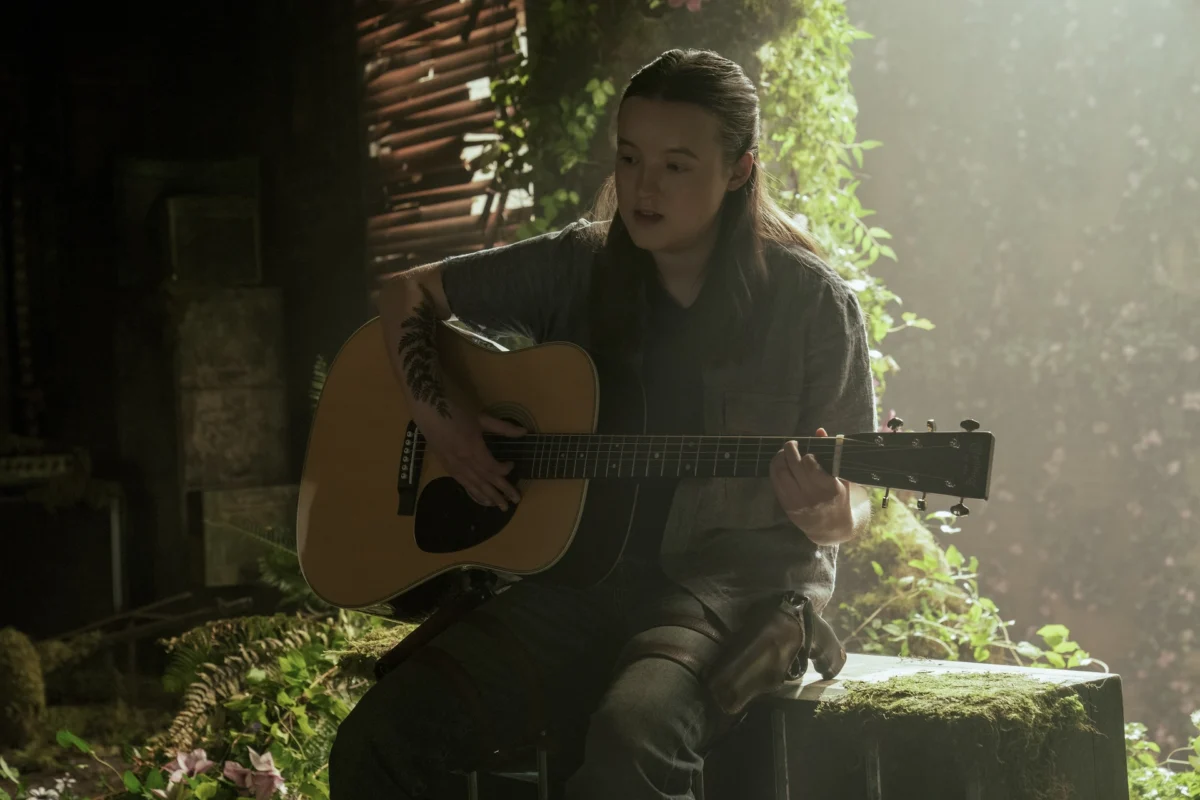
Vancouver, B.C. – A recent production pause for HBO’s critically acclaimed series, The Last of Us Season 3, ignited a furious blaze of cancellation rumors across social media, only for the flames to be doused by the revelation of a rather mundane, albeit significant, scheduling conflict: the logistical demands of the upcoming FIFA World Cup 2026. The incident serves as a stark reminder of the volatile landscape of online discourse, where a lack of clear information can quickly be exploited by "bad faith" actors, transforming routine industry developments into sensational, unfounded speculation.
The saga began earlier this month when an update to the British Columbia directory for film and television productions, maintained by the Directors Guild of Canada (DGC) BC, indicated that filming for The Last of Us Season 3 would enter a temporary hiatus, set to conclude on June 28. In the absence of an immediate official explanation for this pause, the digital vacuum was swiftly filled with alarmist theories, propagating the notion that the highly anticipated third season of the post-apocalyptic drama was facing an abrupt and permanent shutdown.
While the cancellation rumors have been decisively debunked, the episode highlights the susceptibility of major productions to external, real-world events and also brings into focus the true, less dramatic, implications for the series’ future, including a likely later premiere date and the strong possibility that Season 3 will indeed mark the show’s conclusion.
Main Facts: A Brief Halt, A Torrent of Rumors, and the World Cup Connection
At its core, the situation involved a standard, albeit unexpected, production hiatus for The Last of Us Season 3. The pause, initially unexplained, led to widespread rumors of the show’s cancellation, primarily fueled by specific segments of its online fandom. The truth, however, emerged shortly thereafter: the hiatus was a direct consequence of scheduling conflicts and logistical adjustments necessitated by preparations for the FIFA World Cup 2026 in Vancouver, one of the host cities. Production is fully expected to resume as planned on June 28, with recent casting announcements further solidifying the show’s ongoing development.
Despite the swift clarification, the incident underscores two genuine, though less dramatic, implications for the series: first, a 2026 premiere for Season 3 now appears highly improbable, with an early 2027 debut being a more realistic expectation. Second, the long-term outlook for the show remains consistent with previous hints that Season 3 will likely be its final installment, a sentiment echoed by HBO executives and the natural progression of its source material.
Chronology of a Rumor and Its Unraveling
The timeline of events illustrates how quickly an information void can lead to misinformation and how quickly factual updates can restore clarity.
Early June: The British Columbia production directory, a key resource for industry professionals and enthusiasts alike, updates its listing for The Last of Us Season 3. The update reveals a temporary cessation of filming, with production slated to restart on June 28. Critically, the directory provides no explicit reason for the hiatus. This initial lack of context proves to be the fertile ground for speculation.
Mid-June: Almost immediately following the directory update, a segment of The Last of Us fandom, particularly vocal on social media platforms, begins to interpret the hiatus as a covert sign of cancellation. These rumors gain rapid traction, propelled by what has been described as "bad faith theories." These theories often conflated the production pause with pre-existing grievances some viewers held against the series, particularly regarding perceived "social agendas" or narrative choices made in the show’s second season (which itself garnered both critical acclaim and some divisive audience reactions). The sheer momentum of these unverified claims allows them to permeate wider online communities, leading to genuine concern among the show’s broader fanbase.
Shortly After (Mid-June): Industry insiders and various credible media outlets begin to report the true nature of the hiatus. It is revealed that the pause is not due to internal production issues or creative disputes, but rather external logistical challenges posed by the FIFA World Cup 2026. As Vancouver is a designated host city, city officials and infrastructure planners are actively engaged in preparatory activities, which can include regulating access to public spaces, managing traffic, and coordinating various large-scale events that impact film production permits and logistics. This necessitates a temporary adjustment to the filming schedule to accommodate the city’s broader commitments.
Mid-June (Further Confirmation): Adding further credence to the continuation of the series, entertainment news outlets, most notably Deadline, report that acclaimed actor Peter Sarsgaard has joined the cast of The Last of Us Season 3. Sarsgaard is set to portray a new character named Amon, believed to be a prominent figure within The Seraphites cult, a faction familiar to players of the game. This casting announcement, coming amidst and after the cancellation rumors, serves as a strong, indirect confirmation that production is indeed moving forward, albeit with a brief pause. The timing underscores the stability of the project and its long-term commitment.
Supporting Data: Unpacking the World Cup’s Impact and the Anatomy of Online Rumors
The intersection of a major global sporting event and a high-profile television production in a bustling metropolitan area provides crucial context for understanding the hiatus. Furthermore, the rapid spread of cancellation rumors offers a case study in the dynamics of contemporary online fandom and misinformation.
The FIFA World Cup 2026 and Vancouver’s Role:
The FIFA World Cup 2026 is set to be the largest in the tournament’s history, co-hosted by the United States, Canada, and Mexico. Vancouver, British Columbia, has been selected as one of two Canadian host cities (alongside Toronto). While the tournament itself is still two years away, the preparatory phases are already in full swing. Hosting an event of this magnitude requires extensive planning, infrastructure upgrades, security coordination, and logistical arrangements that often involve significant city resources and public spaces.
For a production like The Last of Us Season 3, which frequently utilizes real-world locations and requires permits for street closures, special effects, and large crews, these city-wide preparations can create unavoidable conflicts. It is plausible that certain areas or resources vital for filming are temporarily unavailable or subject to new restrictions as Vancouver gears up for the global spotlight. This could involve everything from permit approvals being delayed, public services being redirected, or even infrastructure work impacting filming locations. Such interferences, while frustrating for production, are often beyond the control of the film crew and necessitate temporary halts or schedule adjustments.
The Anatomy of Online Rumors and "Bad Faith" Fandom:
The swift amplification of the cancellation rumors, despite their lack of verifiable basis, highlights a troubling aspect of modern online communities. In the absence of definitive information, human nature often inclines towards filling the void with conjecture. However, in the context of The Last of Us, this tendency was exacerbated by a phenomenon often termed "bad faith" fandom.
Following its groundbreaking first season, The Last of Us garnered immense popularity, but its narrative themes and character representations, particularly those expected to be explored more deeply in an adaptation of The Last of Us Part II, have also become flashpoints for ideological debates online. Some vocal segments of the audience have expressed strong disapproval of certain elements perceived as "social agendas" or deviations from their personal interpretations of the source material. These criticisms, often rooted in socio-political rather than purely narrative discussions, create an environment where any perceived weakness or ambiguity in the show’s production can be seized upon and amplified as "proof" of its imminent failure or cancellation.
The DGC BC directory update, devoid of explanation, became a perfect storm for these "bad faith" actors. For those who wished to see the show cancelled due to their grievances, the hiatus served as a convenient, albeit false, narrative tool. This dynamic showcases how confirmation bias and the echo chamber effect of social media can rapidly transform an innocuous logistical detail into a widespread, emotionally charged, and utterly baseless rumor. The momentum of such rumors is often powered by the desire to validate pre-existing biases rather than an earnest search for truth.
Official Responses: Clarification and Ongoing Commitment
While HBO itself did not issue a formal press release specifically addressing the cancellation rumors (likely deeming them too unfounded to warrant such a response), the clarification of the World Cup-related hiatus came through various reputable industry sources, reflecting informal but authoritative communication channels. These reports effectively served as the "official response" from the production’s perspective, reassuring stakeholders and fans that the show’s future was secure.
Perhaps the most potent "official response," however, came in the form of a tangible development: the announcement of Peter Sarsgaard joining the cast. The casting of a prominent actor for a significant new role, particularly one tied to a key faction like The Seraphites cult, is a clear and undeniable signal of active, ongoing production. It is a powerful counter-narrative to any claims of cancellation, demonstrating a forward momentum that simply would not exist if the series were indeed facing an abrupt end. Sarsgaard’s involvement not only enriches the ensemble but also underscores the creative team’s continued dedication to bringing the complex narrative of The Last of Us to life. This move speaks volumes more than any direct refutation of rumors ever could, solidifying the series’ commitment to its third season.
Implications: A Delayed Debut and a Likely Farewell
With the cancellation rumors firmly put to rest, the focus shifts to the genuine implications of this production update for The Last of Us Season 3 and the series as a whole.
Delayed Debut: An Early 2027 Premiere More Likely
One of the most immediate and tangible consequences of the production hiatus, even a temporary one, is its impact on the show’s release schedule. Despite some initial optimistic projections, a 2026 debut for The Last of Us Season 3 now appears highly improbable. High-budget, visually complex productions like The Last of Us inherently demand extensive post-production timelines, including visual effects, sound design, musical scoring, and meticulous editing. Even without this recent delay, a 2026 release would have been an exceptionally ambitious target, requiring an almost uninterrupted filming and post-production schedule.
The current pause, though brief, adds to these inherent challenges. It pushes back the completion of principal photography, which in turn compresses the already tight post-production window. Factoring in the scale of the series, its commitment to cinematic quality, and the meticulous attention to detail that both showrunners Neil Druckmann and Craig Mazin are known for, an early 2027 premiere date now seems far more realistic. This allows the creative teams the necessary time to refine the season without rushing, ensuring the high standards viewers have come to expect are maintained.
The End of the Road? Season 3 as the Grand Finale
Beyond the immediate scheduling impact, the conversation around Season 3 naturally circles back to its long-term implications for the series. There remains a strong indication that The Last of Us Season 3 will, in all likelihood, be the final season of the acclaimed HBO drama. This sentiment is not new; it has been hinted at and discussed within industry circles for some time.
HBO’s Chief Content Officer, Casey Bloys, has previously made comments suggesting that the series has a natural narrative arc that aligns with the existing game material. Bloys’ statements have consistently pointed towards a measured approach, prioritizing story integrity over indefinite extension. The show’s co-showrunner, Craig Mazin, who has been instrumental in translating the game’s intricate narrative to television, is also understood to envision a definitive conclusion for the story within a certain framework. While he remains deeply involved in Season 3, the implication is that his narrative vision, aligned with the existing games, points towards a natural endpoint after this season.
The primary factor underpinning this expectation is the source material itself. Naughty Dog, the developer of The Last of Us video games, has released two main installments: The Last of Us Part I and The Last of Us Part II. Season 1 of the HBO series meticulously adapted the entirety of Part I. Season 2 is currently in production, covering a significant portion of Part II, and Season 3 is expected to conclude the adaptation of Part II‘s sprawling and emotionally complex narrative.
While the HBO series has skillfully woven in original stories and expanded upon the game’s lore, there are inherent limitations to how far a direct adaptation can stretch without new source material. To continue beyond a faithful adaptation of both games would require a substantial "creative upheaval" – essentially, crafting entirely new storylines, characters, and plot points that extend beyond Naughty Dog’s established universe. While not impossible, such a move would be a significant departure, potentially risking the very essence that has made the adaptation so successful. The current inclination, therefore, is to conclude the television series with Season 3, offering a complete and satisfying arc based on the beloved original story. This approach respects the integrity of the source material and provides a definitive, impactful ending for one of television’s most compelling dramas.