Speculative Horizons: Unearthing Lost Art, Debating Digital Democracy, and Charting New Fandom Frontiers
The world of speculative fiction, scientific inquiry, and digital community is abuzz with a confluence of developments this week, from the ambitious resurrection of a legendary art collection tied to Harlan Ellison’s The Last Dangerous Visions to the unprecedented barring of a Wikipedia co-founder from editing the platform. Simultaneously, the cinematic landscape of the DC Universe faces critical scrutiny while expanding into new animated territories, and the broader SFF community continues its vital work of preservation, mentorship, and celebration. This dynamic week underscores the genre’s enduring power to inspire, provoke, and connect, reflecting both its rich history and its evolving future.
Main Facts: A Week of Artistic Legacy, Digital Controversy, and Genre Evolution
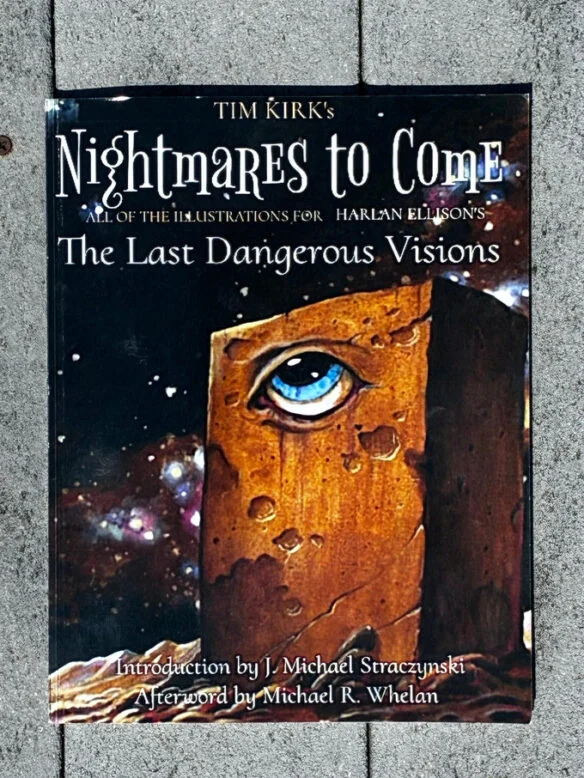
A Kickstarter campaign, "Nightmares to Come by Flights of Imagination," has launched to print over one hundred previously unseen illustrations by Tim Kirk for Harlan Ellison’s famously elusive anthology, The Last Dangerous Visions. This effort promises to unveil a significant artistic legacy, with the project nearing its initial funding goal of $1,950, having already secured $1,374 as of reporting.
In a development that has sent ripples through the digital sphere, Larry Sanger, a co-founder of Wikipedia, has been permanently barred from editing the platform he helped create. The decision, stemming from alleged violations of canvassing guidelines and a determination that he was "not here to build an encyclopedia," highlights ongoing debates about Wikipedia’s governance and neutrality.
Meanwhile, the nascent DC Universe reboot faces its first critical hurdle with a scathing review of the new Supergirl film, even as DC Studios announces an ambitious slate of adult animated projects, including "Absolute Batman" and a "Joker Anime," signaling a strategic pivot in its storytelling approach.
Further enriching the speculative landscape, India’s first community-curated database for speculative fiction, KalpaDB, has launched to document the genre across diverse Indian languages, while the Speculative Literature Foundation (SLF) opens applications for its Diverse Writers and Diverse Worlds Grants, championing inclusive voices. The week also brought news of profound losses to the community: Inge Heyer, co-chair of the Shore Leave convention and a pivotal figure bridging science and fandom, passed away, as did Jerry Moriarty, a groundbreaking painter whose "brushstrokes elevated comics" in the influential Raw magazine.
Chronology: Unpacking Key Developments
Reclaiming a Vision: Tim Kirk’s Lost Art for The Last Dangerous Visions
The enduring saga of Harlan Ellison’s The Last Dangerous Visions continues to unfold, nearly a decade after the legendary author’s passing. This week, a Kickstarter campaign titled "Nightmares to Come by Flights of Imagination" offers a tantalizing glimpse into what might have been, presenting a comprehensive collection of artwork created by Tim Kirk for the fabled, often-delayed anthology. This project aims to print over one hundred illustrations, the vast majority of which have remained unseen by the public, offering a crucial visual companion to one of speculative fiction’s most mythologized uncompleted works.

Kirk’s involvement with The Last Dangerous Visions spanned more than a decade, a testament to his dedication and Ellison’s notoriously protracted editorial process. As Jan Strnad, who provided a summary of the project, explained, Ellison had originally commissioned Kirk to illustrate every story in the anthology. However, the contents of TLDV were in constant flux; many stories were eventually withdrawn with Ellison’s blessing and published elsewhere. This shifting landscape meant Kirk produced a prodigious volume of art—more than one hundred illustrations—far exceeding the thirty-one stories that eventually appeared in the volume finally completed by J. Michael Straczynski after Ellison’s death. These drawings, once scattered throughout Ellison Wonderland in various folders, boxes, and even "under the bed," represent a significant, largely untapped archive.
The Kickstarter aims to bring this artistic treasure trove to light, with fewer than a third of the included illustrations having ever seen print before. Strnad highlights the remarkable range of Kirk’s black-and-white talents, noting his versatility from "fanciful cartoons to dramatic tableaux and realistic portraits—even including a keen homage to Aubrey Beardsley." Each illustration was meticulously tailored to the specific story, reflecting the depth of Kirk’s engagement with Ellison’s vision. The current funding stands at $1,374 towards a modest goal of $1,950, underscoring the fervent desire within the SFF community to preserve and celebrate this unique collaboration.
Wikipedia’s Founder Faces Exclusion: A Clash Over Governance and Neutrality
In a rare and highly symbolic move, Larry Sanger, who co-founded Wikipedia alongside Jimmy Wales in 2001, has been formally barred from editing articles on the expansive online encyclopedia. The New York Times reported on the decision, which stems not from Sanger’s long-standing public criticisms of Wikipedia – which he has frequently lambasted for what he perceives as a "left-wing bias" and even "one of the most effective organs of Establishment propaganda" – but from a procedural violation.
Sanger, who famously left Wikipedia in 2002, had recently returned to the platform "with the aim of helping Wikipedia in various ways to reform." His efforts culminated in a proposal titled "WikiProject Intellectual Diversity," intended to foster a broader range of viewpoints on the site. However, his decision to publicize this initiative to his 93,000 followers on X (formerly Twitter) was deemed a violation of Wikipedia’s strict "canvassing guidelines." These rules prohibit editors from soliciting outside audiences to influence internal policy votes, ensuring that decisions are made through consensus within the active editor community rather than by external pressure. Consequently, Sanger was declared "not here to build an encyclopedia," a serious infraction within the platform’s self-governing framework.
Sanger vehemently disputed the decision, asserting on X that "There was no due process, no prosecutor, no dispassionate judge, no jury, no interpretation of law." However, a Wikimedia Foundation press officer clarified that Wikipedia operates as a nonprofit with a decentralized system, where "volunteers develop and enforce policies through open, transparent discussions and consensus-based decision-making." These policies, the foundation emphasized, "apply uniformly to all contributors, regardless of their affiliation or history with Wikipedia." The incident reignites crucial conversations about the challenges of maintaining neutrality, managing community governance, and balancing accessibility with editorial integrity on one of the world’s most influential information sources.
DC Universe: A Mixed Bag of Critical Reception and Animated Ambitions
The ambitious reboot of the DC Universe by James Gunn and Peter Safran is navigating its initial phases with both critical praise and significant setbacks. Following the largely positive reception for 2025’s Superman, the second film in the new slate, Supergirl, has landed with a resounding "thumb down" from critics. Reactor’s Emmet Asher-Perrin, in a piece titled "Supergirl Should Be Ashamed of Itself," critiques the film despite its promising foundation.

The Supergirl movie introduced Milly Alcock in a cameo in Superman, portraying Clark Kent’s "hard-drinking little cousin" who frequents red sun planets for intoxication, humorously explaining Krypto’s lack of training. The film was also based on the critically acclaimed comic run Supergirl: Woman of Tomorrow by Tom King and Bilquis Evely, a source material widely regarded as offering a clear path to success. Yet, the review points to a familiar struggle in Hollywood: its inconsistent track record with female-led superhero films. While the specific spoilers detailed in the original review are omitted here, the overall sentiment suggests a significant misstep in adapting compelling source material, raising questions about the creative execution within the new DCU.
In stark contrast to the Supergirl film’s struggles, DC Studios is simultaneously making significant strides in its animated offerings. At the Annecy International Animation Film Festival, Peter Safran of DC Studios and Sam Register of Warner Bros. Animation announced an ambitious new slate of adult animated series. Headlining this expansion is "Absolute Batman," with the celebrated comic writer Scott Snyder attached as showrunner and executive producer, and artist Nick Dragotta serving as producer. The "Absolute Batman" comic series has been a phenomenal success, selling millions and significantly boosting DC’s comic sales, attracting both returning and new readers. The announcement was further amplified by the viral success of fan-made animated videos by Alex Babb, whose "Absolute Batman: Animated" garnered over 700,000 views, showcasing a fervent fan appetite for this particular take on the Caped Crusader. Alongside "Absolute Batman," a "Joker Anime" and a "Krypto Series" are also in development, signaling a strategic embrace of diverse animation styles and narratives to broaden the DC franchise’s appeal and tap into mature storytelling potential. This dual approach reveals a DC Universe in flux, navigating the complexities of live-action reception while aggressively pursuing new creative avenues in animation.
Supporting Data: Enriching the Speculative Ecosystem
Mapping India’s Speculative Narratives: The Launch of KalpaDB
The vast and diverse landscape of Indian speculative fiction has long yearned for a centralized, accessible resource, and this week saw a significant step towards fulfilling that need with the launch of KalpaDB. Positioned as "India’s first community-curated database dedicated to speculative fiction across Indian languages," KalpaDB promises to be a groundbreaking platform for authors, readers, and scholars alike. The sheer linguistic diversity of India—with hundreds of languages and numerous literary traditions—means that much of its speculative output has historically been siloed. KalpaDB aims to bridge these divides, offering a comprehensive repository that will enhance the visibility and understanding of SFF from various regional contexts.
The decision to make KalpaDB a community-curated database is a strategic one, inviting volunteers to contribute to its growth and accuracy. This model, while presenting organizational challenges, also fosters a sense of ownership and collaboration among enthusiasts, ensuring that the database benefits from a wide array of expertise and local knowledge. By systematically cataloging works across languages, KalpaDB has the potential to foster cross-cultural dialogue, inspire new scholarship, and introduce a global audience to the rich, often unexplored, speculative narratives emerging from India. Its existence will not only celebrate existing works but also encourage future creation, firmly positioning Indian SFF on the world stage.
Fostering Talent and Deepening Insights: SLF Grants and "Eating the Fantastic"
The speculative fiction community continues to actively cultivate new talent and provide platforms for critical engagement. The Speculative Literature Foundation (SLF) has announced that its highly anticipated Diverse Writers and Diverse Worlds Grants will accept submissions from July 1-31. These $500 grants are crucial mechanisms for promoting inclusivity and representation within the genre. The Diverse Writers grant specifically targets writers from underrepresented and underprivileged groups—including writers of color, women, queer writers, and writers with disabilities—who often face additional systemic obstacles in their writing and publishing journeys. Complementing this, the Diverse Worlds grant supports works that explicitly present diverse worlds and narratives, irrespective of the author’s background, thus encouraging broader imaginative scope within speculative fiction. These initiatives underscore the SLF’s commitment to shaping a more equitable and imaginative future for the genre.
Concurrently, Scott Edelman’s long-running podcast, "Eating the Fantastic," continues to offer intimate glimpses into the lives and minds of SFF creators. Episode 285 features an engaging conversation with award-winning writer Mark L. Van Name, recorded during Balticon. Van Name, known for his "Jon and Lobo" series (which began with the Compton Crook Award-winning One Jump Ahead), discussed his prolific career, including his role as co-founder of the Sycamore Hill Writer’s Workshop with John Kessel and editor of Short Form. The interview delved into fascinating anecdotes, such as his first short story sale to a 1979 Clarion classmate, the painstaking process that can see a story take decades to feel ready for submission, and a memorable 17-minute encounter where Harlan Ellison savaged one of his stories. Van Name also shared insights into balancing a demanding day job with his writing life and his philosophical approach to not requiring advances on his novels. These candid discussions provide invaluable perspectives on the craft, business, and emotional realities of being a speculative fiction writer, enriching the collective understanding of the genre’s practitioners.

Implications: Reflections on Legacy, Creativity, and the Future of Fandom
Reflecting on the Giants: Obituaries and Enduring Legacies
This week brought news of the passing of two remarkable individuals whose contributions profoundly shaped their respective fields and touched the world of speculative fiction: Inge Heyer and Jerry Moriarty.
Inge Heyer (1964-2026): A Scientist, Scholar, and Fandom Pioneer
The Shore Leave convention committee announced the passing of its Co-Chair, Inge Heyer, a figure whose life exemplified the harmonious blend of scientific rigor and passionate fandom. Born and raised in Berlin, Germany, Heyer’s journey was one of ceaseless intellectual curiosity and dedication. Her early studies included martial arts and Japanese language at Tenri University in Japan, followed by a BA in physics and astronomy from Smith College and a master’s from the University of Hawaii at Manoa—a path sparked by her love for Star Trek.
Heyer’s professional career was equally stellar. From 1992 to 2006, she served as a senior data analyst at the Space Telescope Science Institute in Baltimore, where she played a crucial role in analyzing images from the Hubble Space Telescope’s Wide-Field and Planetary Camera 2. Notably, she was instrumental in getting iconic Hubble images featured in episodes of Babylon 5 and Star Trek, bridging the gap between cutting-edge astronomy and beloved science fiction. She later became the Public Information Officer for the Joint Astronomy Centre in Hilo, Hawaii, disseminating press releases worldwide in multiple languages. After earning her PhD in Science Education from the University of Wyoming in 2012, she returned to Baltimore to teach at Loyola University, becoming a Full Teaching Professor.
Beyond her scientific achievements, Heyer was a pillar of the Star Trek fandom, joining the Shore Leave family in 1992. She firmly believed that fandom provided a vital space for exploring new ideas and envisioning the future, actively working to unite people who shared a love for science, space, and new possibilities. Her special interest in public outreach found its perfect expression in her passion for giving science lectures and presentations at science fiction conventions. Inge Heyer will be remembered as a scientist, educator, and a cherished member of the SFF community who passionately demonstrated that curiosity and imagination are intertwined, whether exploring the cosmos or crafting speculative narratives.
Jerry Moriarty (1938-2026): Elevating Comics to High Art

The world of graphic storytelling mourns the passing of Jerry Moriarty, a painter whose unique vision and "brushstrokes elevated comics" to an unprecedented artistic plane. Moriarty died on March 25 at the age of 88, though his death was only widely reported this week by the New York Times. His profound impact on the nascent alternative comics movement of the late 1970s and early 1980s is undeniable.
Moriarty’s work was famously discovered by Art Spiegelman and Françoise Mouly, who were then in the process of creating Raw, a groundbreaking magazine intended to push cartooning into the realm of high art. Spiegelman described his encounter with Moriarty’s painted comics as "totally mind-blowing," precisely the artistic fusion they had been "groping for." Raw debuted in 1980 featuring Moriarty’s "Jack Survives," a series depicting a stoic Everyman navigating life’s indignities in a hat and tie, imbued with a quiet resilience.
The influence of Moriarty’s style was immediate and far-reaching. Celebrated comic artist Chris Ware famously wrote in The Believer magazine in 2009 that Moriarty’s work was "as if Edward Hopper had taken up songwriting," describing it as "poetry—I believe the first that comics has ever seen—and poetry as fresh and affecting now as when first drawn." Moriarty’s pioneering integration of fine art aesthetics into sequential storytelling profoundly influenced a generation of cartoonists, including Spiegelman himself (whose Maus would win a Pulitzer Prize) and Ware. He demonstrated that comics could be a vehicle for profound, painterly introspection, challenging conventional boundaries and forever changing perceptions of the medium’s artistic potential.
The Creative Process and the Evolution of Genres
The week’s news also offered diverse insights into the creative process and the ongoing evolution of genre. The tragic loss of Eugie Foster in 2014, detailed in a "Memory Lane" item, reminds us of the profound impact of individual creators and community builders. Foster, a managing editor for prominent online short fiction review magazines The Fix and Tangent Online, and a director for Dragon Con, was a significant force in the SFF community. Her Nebula-winning story, "The Sinner, Baker, Red Mask, Black Mask, Gentleman, Beast," and her collection Returning My Sister’s Face and Other Far Eastern Tales of Whimsy and Malice, showcased her unique voice. Most poignantly, her story "The Art of Victory When the Game is All the World" was published posthumously, having been written while she battled cancer, a testament to her unwavering dedication to storytelling even in the face of immense adversity. Her legacy underscores the resilience of the creative spirit and the importance of community support for writers.
In a more contemporary exploration of creativity, SF writer Ernst Hogan shared a "Gonzo Writing Diary" on "Mondo Ernesto: CHICANONAUTICA." Hogan, known for works like Smoking Mirror Blues, offers a raw, immersive look into his writing process, particularly how he develops a story during his classes for Palabras del Pueblo. Inspired by a writing exercise involving a text from one’s 2070 self, Hogan’s "gonzo" approach—a style characterized by subjective, first-person narrative and a blurring of reporter and subject—reveals the organic, often spontaneous genesis of his characters and plots. This method highlights how personal experience and creative prompts can converge to form compelling narratives, particularly within the context of Chicano speculative fiction, where Hogan is a leading voice.
Finally, an intriguing piece in Physics World by Robert Crease, "Meet the demons: four mythical creatures that inhabit science," explores the vital role of thought experiments in scientific inquiry. The article delves into the history of "demons" in science, most famously James Clerk Maxwell’s demon, which challenged the second law of thermodynamics. Crease discusses an interdisciplinary course at Stony Brook University, "Demons to think with," co-taught with Elyse Graham, which studies these conceptual entities across humanities