"Evil Dead Burn" Ignites Franchise with Intense Family Drama and Visceral Horror
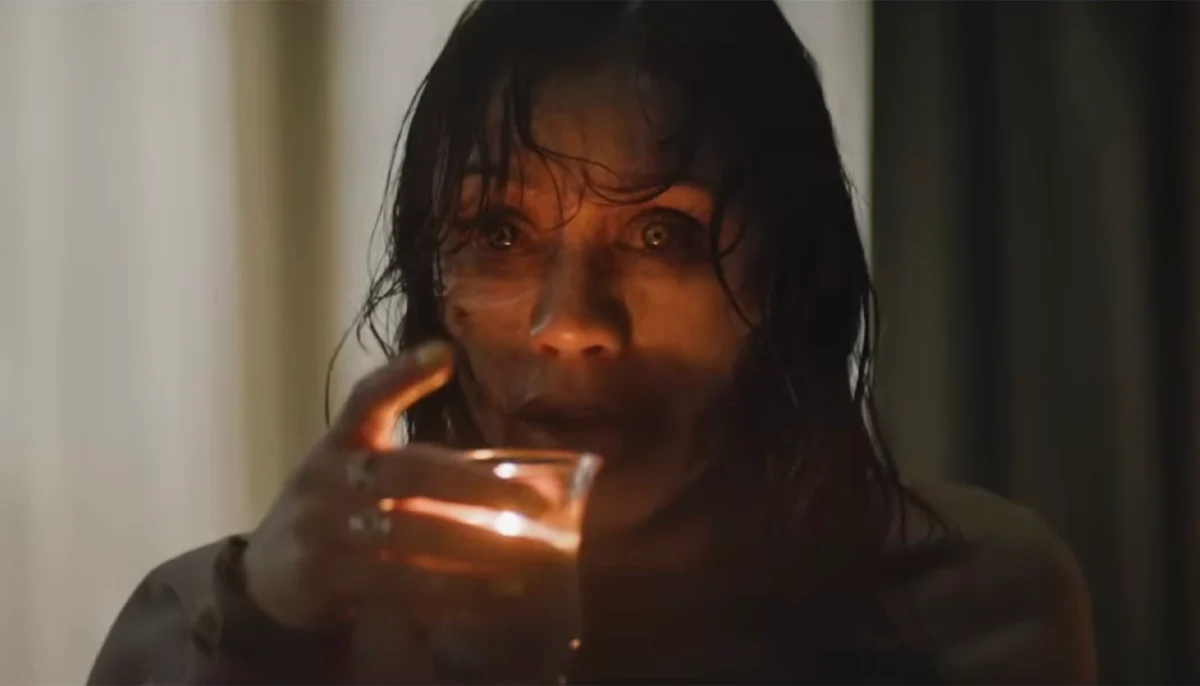
LONDON, UK – The highly anticipated latest installment in the iconic Evil Dead franchise, Evil Dead Burn, is poised to redefine expectations, blending the series’ signature visceral horror and dark humor with a deep dive into complex familial trauma. Directed by Sébastien Vaniček, known for his critically acclaimed horror Infested, and co-written with Florent Bernard, the film marks a significant evolution, venturing into a narrative that intertwines supernatural terror with the agonizing realities of a troubled family grappling with loss.
Early screenings suggest Evil Dead Burn is a testament to the franchise’s remarkable flexibility, demonstrating its capacity to pivot from slapstick comedy and medieval fantasy to a gritty exploration of addiction, a gory examination of familial bonds, and now, a film tinged with the psychological intensity often associated with French extremity horror. The narrative, centering on a grieving widow confronting her late husband’s toxic family amidst a demonic invasion, promises to deliver both the shocking gore fans crave and a compelling emotional core.
The Genesis of "Evil Dead Burn": A New Vision for a Classic Franchise
The Evil Dead franchise, born from Sam Raimi’s 1981 low-budget cult classic, has consistently defied conventional horror tropes. From the raw, unrelenting terror of its origins to the comedic brilliance of Evil Dead II and Army of Darkness, and the brutal realism of Fede Álvarez’s 2013 reboot, the series has proven its adaptability. Evil Dead Rise (2023) further expanded this universe, introducing new characters and settings while retaining the core elements of Kandarian demons and the infamous Necronomicon.
Evil Dead Burn emerges from this rich legacy, propelled by the vision of director Sébastien Vaniček. His previous work, Infested, garnered international acclaim for its ingenious creature design and its unsettling exploration of xenophobia within Parisian culture, using a terrifying spider infestation as a potent metaphor. This background hints at Vaniček’s propensity for leveraging genre horror to address deeper societal or psychological anxieties. With Burn, Vaniček and co-screenwriter Florent Bernard reportedly aimed to embed a story of familial implosion within the established Evil Dead mythos, promising a fresh, yet familiar, take on the demonic possession narrative.
"We wanted to push the boundaries not just of gore, but of emotional resonance," Vaniček reportedly stated in an interview, reflecting on the film’s development. "The Evil Dead universe is perfect for exploring how real-world pain and trauma can manifest, even invite, supernatural horrors. The family dynamic in Burn is a horror in itself, even before the Deadites arrive." This approach aligns with the growing trend in contemporary horror to use the supernatural as a mirror for human suffering and societal ills.
A Funeral, a Family, and the Descent into Hell: The Film’s Chronology
Evil Dead Burn opens with a tragedy that sets the stage for its dual-layered horror. Restaurateur Will Price (George Pullar) dies in a car accident, leaving his wife Alice (Souheila Yacoub) to navigate not only her profound grief but also the labyrinthine resentments of his deeply dysfunctional family. Alice reluctantly joins them for a funeral and memorial weekend at the ancestral family home, now inherited by Will’s younger brother, Joe (Hunter Doohan).
Alice shares a close bond with Joe and his girlfriend, Thya (Luciane Buchanan), offering a brief respite from the suffocating atmosphere. However, her relationships with Will’s parents, Susan (Tandi Wright) and Edgar (Erroll Shand), are fraught with tension and thinly veiled hostility. Susan, a figure consumed by a martyred sense of self-sacrifice, sees Alice as a potential successor to her own caretaking burden, even in Will’s absence. Edgar, gruff and menacing, embodies a silent, judgmental authority, while Will’s grandmother, Polly (Maude Davey), suffering from dementia, adds another layer of unsettling delusion, frequently mistaking Susan for her deceased sister, Bonnie.
The family’s resentment runs deep, with Joe bearing the brunt of his parents’ disappointment over his stalled writing career and the perceived disrepair of the family home. Alice, a French woman, is explicitly treated as an outsider, her marriage to Will a source of disdain for Susan and Edgar. This simmering animosity reaches a boiling point during a post-funeral lunch, where insults are hurled, and Alice is berated for even considering not continuing Will’s restaurant. This initial act of psychological torment is presented as the film’s first, very human, horror, a masterclass in domestic dread.
However, the domestic nightmare soon gives way to something far more ancient and malevolent. It is revealed that Will’s long-deceased grandfather harbored a secret fascination with the occult, conducting "interesting work" in the attic. This hidden history has left a lingering, malevolent presence within the home. As the family’s internal strife escalates, ancient Kandarian entities, already targeting the Price family, begin to manifest, feeding on their grief, anger, and dysfunction. The family home, intended as a place of remembrance, quickly transforms into a battleground for survival against both their own demons and literal ones.
Supporting Data: A Tapestry of Terror, Trauma, and Technical Brilliance
Evil Dead Burn is not merely a rehash of familiar tropes but a carefully constructed horror experience, lauded for its unflinching portrayal of violence and its intelligent thematic underpinnings.
Visceral Gore and Black Humor: True to the Evil Dead legacy, the film delivers a relentless onslaught of over-the-top, operatic gore. The trailer, offering just a glimpse from the film’s midpoint, barely scratches the surface of the "un-survivable" violence that characterizes the final two-thirds of the movie. Critics highlight the filmmakers’ commitment to exploring "all the ways a human body can be ripped apart," often with a darkly comedic edge. Household objects, from weed-whackers and power drills to serrated turkey carving knives and even an open dishwasher, are repurposed into instruments of horrific ingenuity, echoing the franchise’s penchant for turning mundane items into memorable weapons. One particularly lengthy sequence involving the entire interior of a car is singled out as a standout. This creative use of practical effects and inventive kills ensures the film maintains the franchise’s signature blend of terror and morbid fascination.
French Extremity Influence: Vaniček’s background is subtly woven into the film’s fabric, lending it a "slightly French extremity-tinged" feel. This influence suggests a willingness to delve into transgressive themes, intense psychological torment, and often explicit depictions of violence, pushing boundaries beyond conventional horror. It imbues Burn with a raw, unflinching quality that distinguishes it from some of the franchise’s more overtly campy entries.
Exceptional Performances: The ensemble cast delivers what are described as "incredible horror movie performances." Souheila Yacoub, as Alice, receives particular acclaim for her nuanced portrayal of a woman navigating an emotional gauntlet of sorrow, regret, rage, numbness, bitterness, and shock. Her journey through the grieving process, while simultaneously fending off her monstrous in-laws and confronting demonic entities, is rendered with a realism that anchors the escalating madness. The complex relationship between Alice and her mother-in-law, Susan, is highlighted as especially rich, with Tandi Wright embodying Susan’s wounded, accusing eyes and long-suffering sighs, even managing "stellar passive-aggression" amidst the demon invasion. Hunter Doohan’s Joe and Luciane Buchanan’s Thya also contribute to the emotional weight, providing relatable anchors amidst the chaos.
Thematic Depth: Beyond the splatter, Vaniček and Bernard explore profound themes. The demons are not a simplistic metaphor for grief, but rather a catalyst for examining an "imploding family" structure. The pre-existing traumas—an absentee father, a terminally ill sister, a mother battling dementia—are presented as real, difficult human experiences. The twist, that the father’s absence was due to researching very real demons, adds a terrifying dimension, suggesting that generational trauma can literally invite supernatural evil. By dropping the audience into the story at the peak of family resentment and anger, the film cleverly positions the demonic invasion as a grotesque, yet fitting, feast on pre-existing wounds, using supernatural horror as a powerful lens to discuss real-life emotional turmoil.
Official Responses and Critical Acclaim
Initial reactions from critics and test audiences have been overwhelmingly positive, praising Evil Dead Burn for its boldness and its ability to innovate within a beloved franchise.
"Sébastien Vaniček and Florent Bernard have delivered an Evil Dead film that feels both classic and terrifyingly fresh," lauded a prominent horror critic after an early press screening. "They’ve taken the core DNA of the series – the relentless gore, the dark humor, the sheer terror – and infused it with a profound emotional depth that elevates it beyond mere spectacle."
Producers have also expressed excitement about the film’s potential impact. "We always believed the Evil Dead universe had room to grow, to explore different facets of horror," stated a representative from the production team. "Vaniček’s vision for Burn is exactly what we hoped for: a film that respects its heritage while boldly forging a new path, demonstrating how flexible and enduring this franchise truly is."
Souheila Yacoub’s performance, in particular, has been singled out as a highlight, solidifying her status as a formidable presence in the horror genre. "Alice’s journey is a microcosm of the film’s ambitions," another reviewer commented. "She embodies a strength born from absolute despair, fighting not just for survival, but for a semblance of moving forward in a world utterly consumed by evil, both human and demonic."
Implications for the "Evil Dead" Franchise and Beyond
Evil Dead Burn not only stands as a formidable entry in the series but also carries significant implications for the future direction of the franchise and the horror genre as a whole.
Franchise Expansion and Narrative Cohesion: While largely a standalone story, Evil Dead Burn cleverly links back to Evil Dead Rise through an opening scene and a post-credits sequence, solidifying a shared cinematic universe. This approach allows new viewers to engage without prior knowledge while rewarding long-time fans with deeper connections. The film’s dark, tragic tone aligns more closely with the 2013 reboot than the campier antics of Rise, further showcasing the franchise’s tonal versatility. This ability to deliver varied experiences within a consistent mythos suggests a vibrant future, potentially allowing for multiple creative teams to explore different facets of Kandarian lore.
Elevating Horror Through Thematic Depth: The film’s commitment to exploring complex family trauma through the lens of supernatural horror sets a new benchmark for the franchise. It proves that extreme gore and shocking violence can coexist with profound emotional narratives, offering more than just jump scares and visceral thrills. This thematic richness could inspire future Evil Dead installments and influence the broader horror landscape, encouraging filmmakers to delve deeper into the human condition while still delivering terrifying experiences.
The Power of Resilience: At its heart, Evil Dead Burn is presented as a story about finding strength and moving on, even when faced with overwhelming odds. Alice’s journey, forced to confront literal demons while battling the metaphorical ones of her in-laws, embodies a powerful message of resilience. This underlying message of empowerment, amidst the carnage, provides an unexpected emotional payoff, resonating with audiences who appreciate horror that explores the triumph of the human spirit.
As Evil Dead Burn prepares for its wider release, it stands as a testament to the enduring appeal and innovative spirit of the Evil Dead franchise. It’s a film that promises to entertain, terrify, and perhaps even move its audience, proving that the horror genre, in the right hands, can be a potent vehicle for both visceral thrills and profound human drama. The question now remains: where will the Necronomicon, and the creative minds behind it, take us next?