The Carbon Giant: Amazon’s Emissions Surge Amidst the AI Revolution
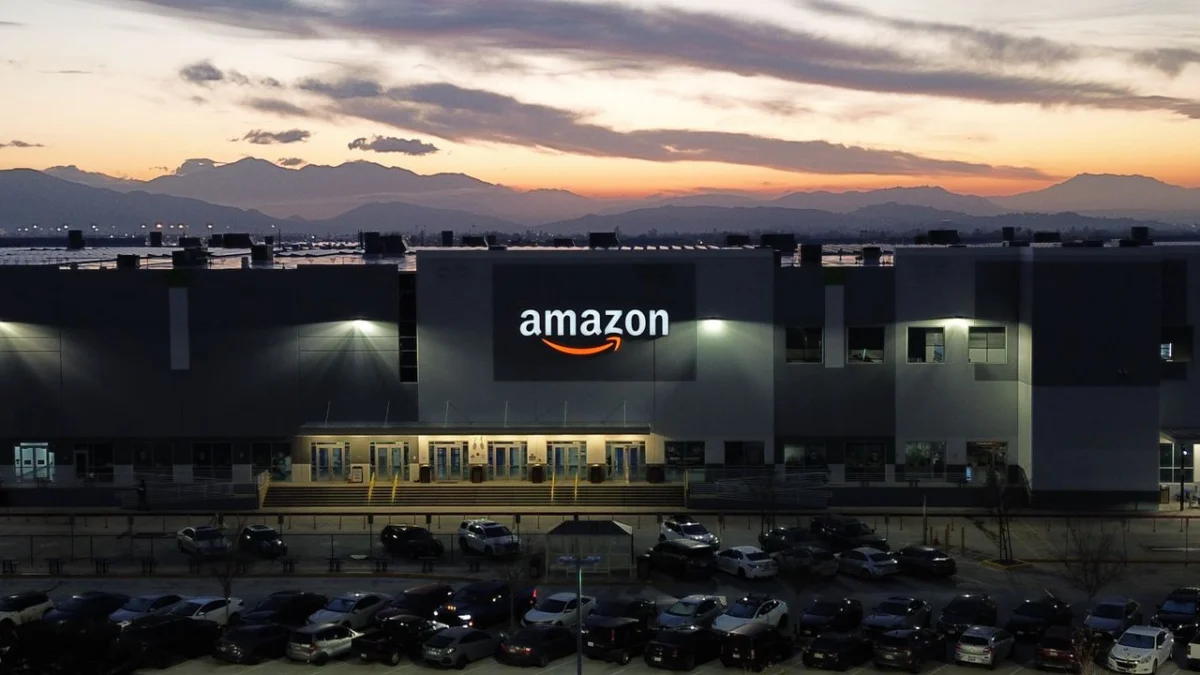
In the landscape of global environmental corporate responsibility, few names carry as much weight—or as much scrutiny—as Amazon. As a titan of both global logistics and cloud computing, the company’s environmental footprint has long been a bellwether for the broader tech industry’s ability to decouple economic growth from ecological impact. However, according to Amazon’s 2025 Sustainability Report, that decoupling has hit a significant and perhaps systemic roadblock.
The report reveals a stark reality: Amazon’s absolute carbon emissions surged by 16% over the past year, reaching a staggering 80.9 million tonnes of carbon dioxide equivalent (CO2e). To put this figure into perspective, a single corporation now generates more greenhouse gas emissions than the entire nation of New Zealand, which recorded approximately 77.8 million tonnes in 2024. This spike represents the largest annual increase in emissions since Amazon co-founded The Climate Pledge in 2019, casting a shadow over its ambitious goal to reach net-zero carbon by 2040.
Main Facts: The Anatomy of a 16% Surge
The 2025 Sustainability Report outlines a complex picture of a company growing faster than its green energy initiatives can keep pace with. While Amazon has successfully branded itself as the world’s largest corporate purchaser of renewable energy, the sheer scale of its expansion—driven primarily by the insatiable energy demands of Artificial Intelligence (AI) and a sprawling global logistics network—has pushed its total emissions to record highs.
The AI Energy Crisis
At the heart of this increase is the explosion of Generative AI. Amazon Web Services (AWS), the company’s cloud computing arm, has seen unprecedented demand for the specialized chips and high-density data centers required to train and deploy Large Language Models (LLMs). These facilities require significantly more power than traditional data storage centers, not only for the processors themselves but for the advanced cooling systems needed to manage the heat they generate.
The Supply Chain Dominance
While data centers dominate the headlines, they represent only a fraction of the problem. The report highlights that approximately 76% of Amazon’s total carbon footprint is embedded within its supply chain (Scope 3 emissions). This includes the manufacturing of products, the construction of warehouses, and the vast transportation network that moves goods across oceans and continents. Supply chain emissions grew by 20% year-over-year, indicating that the company’s "last-mile" delivery and global shipping operations remain its most difficult decarbonization challenge.
Carbon Intensity vs. Absolute Emissions
Amazon often points to "carbon intensity"—the amount of carbon emitted per dollar of revenue—as a sign of progress. In 2025, AWS revenue grew by 20%, but carbon intensity also increased by 3%. While the company notes that its intensity is still 38% lower than in 2019, the reversal of the downward trend suggests that the efficiency gains of the last five years are being eroded by the resource-heavy nature of AI infrastructure.
Chronology: From the Climate Pledge to the AI Pivot
To understand how Amazon reached this juncture, one must look at the trajectory of its environmental commitments over the last half-decade.
- 2019: The Genesis of the Pledge. Amazon co-founded The Climate Pledge, committing to reach net-zero carbon by 2040—ten years ahead of the Paris Agreement. This was a period of optimism, with the company investing heavily in electric delivery vans (Rivian) and early-stage renewable energy projects.
- 2020–2022: Pandemic Expansion. The COVID-19 pandemic led to a massive surge in e-commerce. Amazon doubled its fulfillment network in just 24 months. While emissions rose, the company argued this was a "step-function" change that would eventually stabilize as green technologies matured.
- 2023: The Efficiency Drive. Amazon began reporting significant drops in carbon intensity and focused on optimizing its packaging and routing algorithms to reduce waste.
- 2024: The AI Inflection Point. The tech industry’s pivot toward Generative AI began to manifest in physical infrastructure. Amazon announced tens of billions of dollars in new data center investments globally.
- 2025: The Reality Check. The current report confirms that the "AI gold rush" has a heavy environmental price. Despite adding 80 new renewable energy projects in a single year, the company’s energy consumption outpaced its ability to bring carbon-free power onto the grid.
Supporting Data: Efficiency and Infrastructure Metrics
The 2025 report provides a granular look at the metrics defining Amazon’s environmental performance. When compared to its peers, these numbers reveal both the scale of Amazon’s investment and the areas where it is lagging.
Power Usage Effectiveness (PUE)
PUE is a standard industry metric for data center efficiency; a score of 1.0 is a perfect rating. Amazon reported a PUE of 1.14 for its data centers in 2025. While this is respectable by industry standards, it falls short of Google’s 2024 performance of 1.09. This gap suggests that as Amazon scales its AWS infrastructure, it is prioritizing speed to market over the ultra-efficient cooling and power management designs of some of its competitors.
Renewable Energy Portfolio
Amazon’s strategy relies heavily on its renewable energy portfolio, which is now the largest in the world:
- Total Capacity: 42GW across 712 projects.
- New Projects (2025): 80 new renewable and carbon-free energy projects.
- Electricity Emissions: Despite the 16% overall rise, emissions from purchased electricity (Scope 2) only account for about 5% of the total footprint. However, even this category saw a 34% increase in absolute terms over the previous year.
Sustainable Construction
To address Scope 3 emissions, Amazon is increasingly focusing on the "embodied carbon" of its buildings. In 2025, 61 construction projects utilized lower-carbon materials, such as "green" steel and carbon-cured concrete. While these are positive steps, they have yet to offset the sheer volume of new construction required to house AI hardware.
Official Responses: Amazon’s Defense and Long-term Vision
In the wake of the report, Amazon executives have maintained a defensive yet committed posture. The company’s leadership argues that the current spike in emissions is a necessary byproduct of a technological transition that will eventually lead to greater global efficiencies.
"We are at a unique moment in the history of technology," an Amazon spokesperson noted in a statement accompanying the report. "The energy demand for AI is unprecedented, but we believe that AI itself will become one of the most powerful tools in our arsenal to solve climate change—through better weather modeling, optimized logistics, and the discovery of new carbon-capture materials."
Amazon insists that its 2040 net-zero goal remains "realistic and achievable." The company’s argument hinges on the idea of a "long-term investment curve." By building the infrastructure now and securing massive amounts of renewable energy through Power Purchase Agreements (PPAs), Amazon believes it is setting the stage for a rapid decline in emissions in the 2030s, once the initial build-out of AI clusters is complete and the global electrical grid becomes greener.
Furthermore, Amazon highlighted its "Climate Pledge Fund," which continues to invest in startups focused on circular economy technologies, hydrogen aviation, and carbon sequestration, suggesting that the company is looking for "moonshot" solutions to bridge the gap that current technology cannot.
Implications: The AI-Sustainability Paradox
The surge in Amazon’s emissions has profound implications for the tech industry, global climate goals, and the future of corporate accountability.
The Industry-Wide Challenge
Amazon is not alone in this struggle. Microsoft and Google have also reported difficulties in maintaining their climate goals in the face of AI expansion. This suggests a systemic "AI-Sustainability Paradox": the very technology promised to optimize the world is currently making the world’s most influential companies less sustainable. If the leaders of the industry cannot meet their targets, the feasibility of the 1.5-degree Celsius global warming limit becomes increasingly tenuous.
The Pressure on the Grid
Amazon’s demand for 42GW of power places immense pressure on national energy grids. In many regions, the rapid arrival of massive data centers can crowd out other users or force utilities to keep aging fossil-fuel plants online longer than planned to meet the "baseload" demand that intermittent wind and solar cannot always satisfy. This has led to calls for Big Tech to invest more in "firm" carbon-free energy, such as small modular nuclear reactors (SMRs) or geothermal energy.
Supply Chain Accountability
The fact that 76% of emissions come from the supply chain underscores the limit of what a company can achieve through renewable energy credits alone. To truly reach net zero, Amazon must force its thousands of vendors, shipping partners, and construction firms to decarbonize. As the world’s largest retailer, Amazon has the "buying power" to dictate these terms, but doing so risks increasing costs for consumers—a trade-off the company has been hesitant to make.
Regulatory Scrutiny
Finally, the comparison to New Zealand’s national emissions is likely to attract the attention of regulators. As corporate emissions reach the scale of sovereign states, the calls for mandatory carbon taxes or stricter "cap-and-trade" systems for tech giants are growing louder. The 2025 report may serve as a catalyst for new legislation in the EU and the US aimed at curbing the environmental impact of the digital economy.
In conclusion, Amazon’s 2025 Sustainability Report is a sobering reminder that the path to a green future is not linear. While the company continues to break records in renewable energy procurement, its core business drivers—AI and global consumption—are currently moving in the opposite direction of its climate goals. The next five years will determine whether Amazon’s 2040 pledge was a visionary roadmap or an unattainable corporate mirage.