The High-Capacity Storage Shift: Analyzing the Seagate IronWolf Pro 20TB Market Correction
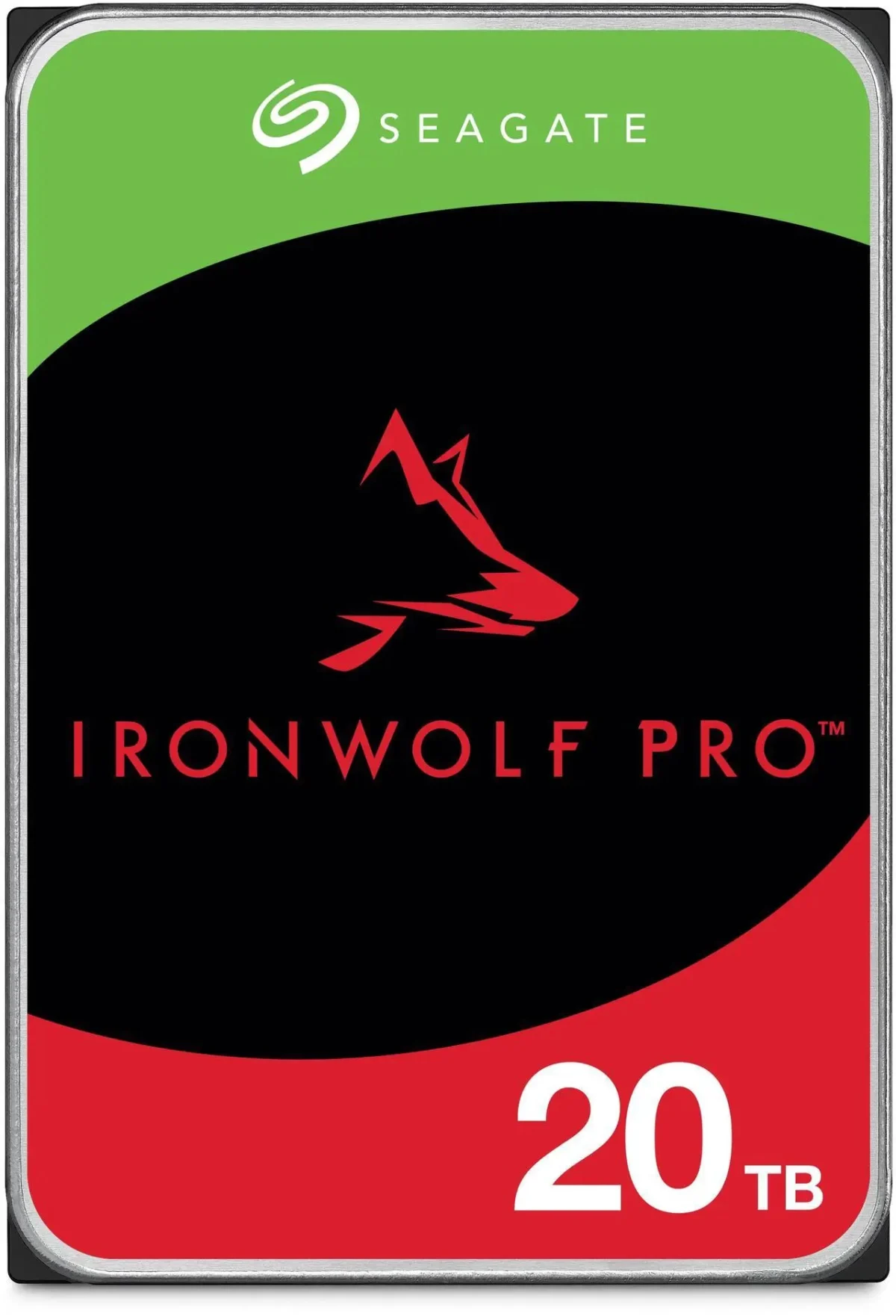
In the rapidly evolving landscape of data storage, few components are as critical yet as frequently overlooked as the high-capacity mechanical hard drive. While Solid State Drives (SSDs) have claimed dominance in the consumer boot-drive market, the enterprise and Network Attached Storage (NAS) sectors remain firmly anchored in the reliability and cost-per-terabyte advantages of traditional spinning rust. Recently, a significant market movement occurred as the Seagate IronWolf Pro 20TB HDD (ST20000NT001) saw a notable price reduction, dropping to $669.99 at major retailers like Newegg, down from its previous positioning near the $764 mark.
This price adjustment serves as a bellwether for the storage industry, signaling both the maturation of 20TB platter technology and a strategic push to make ultra-high-capacity drives accessible to the "prosumer" and small-to-medium enterprise (SME) markets.
Main Facts: The Specifications of the IronWolf Pro 20TB
The Seagate IronWolf Pro 20TB is not merely a standard hard drive with expanded capacity; it is a precision-engineered instrument designed for multi-bay environments. Unlike entry-level drives, the IronWolf Pro series is built to withstand the unique mechanical stresses of being packed into a chassis with up to 24 other vibrating drives.
Key Technical Specifications:
- Capacity: 20TB (formatted capacity slightly lower depending on file system).
- Technology: Conventional Magnetic Recording (CMR).
- Spindle Speed: 7,200 RPM.
- Interface: SATA 6Gb/s.
- Cache: 256MB.
- Sustained Transfer Rate: Up to 285 MB/s.
- Reliability: 2.5 million hours MTBF (Mean Time Between Failures).
- Warranty: 5-year limited warranty with 3 years of Rescue Data Recovery Services.
The drive utilizes a 10-platter design, with each platter holding 2TB of data. This density is achieved through helium-sealed technology, which reduces internal friction and turbulence, allowing the drive heads to fly more accurately over the platters while consuming less power and generating less heat than air-filled counterparts.
Chronology: The Evolution of the 20TB Milestone
To understand the significance of the current $670 price point, one must look at the trajectory of the IronWolf Pro line over the last half-decade.
For years, the 10TB and 14TB models were the "sweet spots" for NAS enthusiasts. However, the explosion of 4K video content, the rise of high-resolution RAW photography, and the increasing size of local backups necessitated a jump in density. Seagate’s journey to 20TB was marked by incremental gains, moving from 16TB to 18TB, and finally refining the 20TB model.
When the 20TB IronWolf Pro first hit the market, it carried a significant early-adopter premium. It was positioned as an elite product for data centers and high-end creative studios. Throughout 2022 and 2023, the drive hovered at prices that often exceeded $750, making it difficult for small business owners to justify the jump over the more affordable 16TB or 18TB variants.
The recent shift to $669.99 represents a "market normalization." As manufacturing yields for 2TB platters have stabilized and Seagate prepares for the broader rollout of Heat-Assisted Magnetic Recording (HAMR) technology—which promises capacities of 30TB and beyond—the current 20TB CMR drives are transitioning from "cutting-edge" to "industry standard."
Supporting Data: Performance and Reliability Metrics
When evaluating the IronWolf Pro 20TB, the data reveals a drive that balances raw speed with mechanical endurance. In comparative testing against its 18TB predecessor, the 20TB model demonstrates a clear performance delta.
Performance Gains
Benchmark data indicates that the 20TB model offers a sequential read/write improvement of approximately 10% over the 18TB version. While 285 MB/s might seem slow compared to NVMe SSDs, it is near the theoretical limit of what SATA-based mechanical storage can achieve. For a NAS user, this means faster parity rebuilds—a critical factor when managing large RAID arrays where a drive failure can put data at risk for days during the reconstruction process.
Power Efficiency
One of the most surprising data points from the 20TB model is its power profile. Despite the increased capacity, the drive’s power draw under load is actually lower than some previous generations. This is attributed to the refined helium-sealing process and more efficient motor controllers. In a 24-bay server, a saving of even 1-2 watts per drive translates to significant reductions in heat output and long-term electricity costs.
The Workload Rating Nuance
A critical piece of supporting data that potential buyers must analyze is the 300TB per year workload rating. While the drive is rated for 24/7 operation, Seagate defines its "Workload Rate Limit" (WRL) at 300TB/year.
- The Math: Over a five-year warranty period, this allows for 1,500TB of total data transfer.
- The Context: For a standard media server or a daily backup target, 300TB/year is ample. However, for a high-traffic database or a surveillance system recording dozens of 4K streams simultaneously, a user could theoretically exceed this limit. In such high-intensity scenarios, the data suggests moving toward Seagate’s Exos enterprise line, which typically offers a 550TB/year rating.
Official Responses and Market Positioning
Seagate has historically positioned the IronWolf Pro as the bridge between consumer-grade drives and the "Exos" enterprise-class hardware. According to Seagate’s technical documentation, the IronWolf Pro’s primary differentiator is the "AgileArray" firmware.
AgileArray and RV Sensors
Official technical briefs emphasize that the IronWolf Pro is optimized for RAID. It includes Rotational Vibration (RV) sensors as standard. In a multi-drive enclosure, the vibrations from one drive can cause the read/write heads of adjacent drives to misalign, leading to "retry" errors and performance degradation. The RV sensors detect these vibrations and allow the drive’s actuator to compensate in real-time.
IronWolf Health Management (IHM)
Seagate’s official partnership with major NAS vendors like Synology, QNAP, and Asustor has resulted in the IronWolf Health Management system. Unlike standard S.M.A.R.T. data, which often only warns a user after a failure has occurred, IHM monitors environmental and usage conditions to suggest preventative actions. This software integration is a key part of Seagate’s value proposition to the SME market.
Implications: What This Means for the Storage Industry
The price reduction of the 20TB IronWolf Pro has several far-reaching implications for both consumers and the broader technology market.
1. The Democratization of Mass Storage
By bringing 20TB of CMR storage down to the $670 range, the barrier to entry for massive local archives has been lowered. This is particularly relevant in an era of "Cloud Fatigue," where many businesses are realizing that the long-term egress fees and subscription costs of cloud storage are becoming unsustainable compared to on-premise hardware.
2. The CMR vs. SMR Debate
The IronWolf Pro’s continued use of CMR (Conventional Magnetic Recording) is a significant win for reliability. Many high-capacity consumer drives have moved toward SMR (Shingled Magnetic Recording), which overlaps data tracks to increase density. While SMR is cheaper, it suffers from abysmal write speeds during sustained tasks and can cause RAID arrays to "kick" the drive due to timeout errors. Seagate’s commitment to CMR at the 20TB level ensures that these drives remain suitable for professional RAID environments.
3. The Future of the 18TB Market
With the 20TB model now priced aggressively, the 18TB model is likely to see further price drops or be phased out entirely. For the end-user, the price-per-terabyte ratio is finally shifting in favor of the largest available capacities, making it more logical to buy fewer, larger drives rather than many smaller ones. This saves on "bay real estate" and reduces the total number of failure points in a system.
4. Data Recovery as a Standard
The inclusion of three years of "Rescue Data Recovery Services" at no extra cost is an implication of Seagate’s confidence in the drive’s mechanical integrity. In the event of a mechanical failure or even a natural disaster, Seagate provides access to their professional clean-room labs to recover data. This service, which could cost thousands of dollars independently, is now being treated as a standard feature, raising the bar for competitors like Western Digital and Toshiba.
Final Verdict: Is the 20TB IronWolf Pro Right for You?
The Seagate IronWolf Pro 20TB at $669.99 represents a peak in mechanical storage technology. It is an ideal choice for users who require massive headroom for media libraries, professional video editing scratch disks, or comprehensive business backups.
Buy it if: You operate a NAS with 4 to 24 bays, require the peace of mind of a 5-year warranty, and want the fastest possible sequential speeds available in a mechanical drive.
Avoid it if: Your workload is "write-heavy" and constant (e.g., a 24/7 high-traffic database), in which case the Seagate Exos series—which is often louder and lacks the specific NAS firmware optimizations but offers a higher workload rating—might be the more robust choice.
As we move toward a future of 30TB+ drives, the 20TB IronWolf Pro stands as a testament to how far magnetic storage has come, offering a sophisticated balance of capacity, speed, and reliability at a price point that finally makes sense for the modern digital architect.