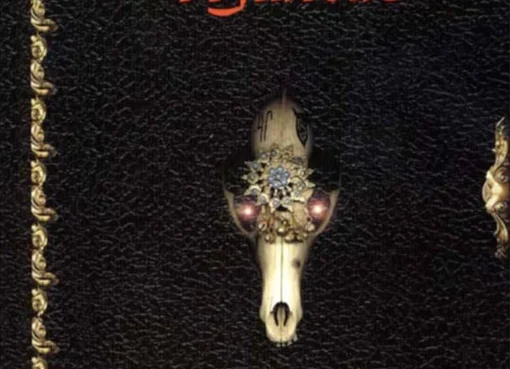
Unveiling the Primordial Horrors: The Enigmatic Lore of Abhoth and Ubbo-Sathla
In the shadowed annals of forbidden knowledge, where sanity frays and reality bends, lurk entities of such profound cosmic horror that their mere conceptualization threatens the foundations of mortal understanding. Among the most unsettling are Abhoth, the Source of All Filth, and Ubbo-Sathla, the Unbegotten Source. These primordial masses, described in ancient, fragmented texts, represent the ultimate wellsprings of miscreation and abomination, their very existence a festering wound upon the cosmos. This report delves into the chilling lore surrounding these entities, examining their grotesque forms, their monstrous progeny, and the profound, often contradictory, theories regarding their interrelation.
Main Facts: The Core of Cosmic Abomination
At the heart of this dark mythology lies Abhoth, often depicted as a colossal, quivering mass of grayish, putrescent sludge – a "choking river of mud marled with obscene offal," a "horrid protean mass of dark muck." This abhorrent entity is universally known as the Source of All Filth and the Lord of the Zaug, a name that resonates with primordial terror. From its perpetually swelling and quobbling bulk, an endless stream of malformed anatomies is spawned through "manifold fission," crawling forth into the subterranean grottoes it inhabits. These creations range from the utterly dysfunctional to colossal horrors, many of which are reabsorbed by Abhoth’s own myriad tentacles and mouths, while others escape into the darkest corners of the world.
Complementing this horror is Ubbo-Sathla, an entity whose antiquity often surpasses even Abhoth in some accounts. Known as the Unbegotten Source, Ubbo-Sathla is similarly described as a colossal, protoplasmic mass, resting in deep grottoes far beneath the conventional understanding of reality. Unlike Abhoth’s explicit association with "filth," Ubbo-Sathla’s lore centers around its role as the progenitor of all life, or conversely, all dark life and demon-kin. It is also the murky guardian of ancient, star-quarried tablets inscribed with the inconceivable wisdom of demon gods – lore deemed too dangerous for mortal minds.
The central mystery that confounds scholars and cultists alike is the precise relationship between Abhoth and Ubbo-Sathla. Are they one and the same entity, merely perceived through different cultural lenses or across vast epochs? Are they distinct, yet profoundly connected beings, perhaps mother and father, siblings, or even fractured aspects of a single, older horror? The answers, buried in disparate, often contradictory texts, remain elusive, contributing to the profound dread they inspire.
Chronology: A Tapestry of Ancient Dread
The understanding of Abhoth and Ubbo-Sathla is not a singular, cohesive narrative, but rather a fragmented tapestry woven from millennia of esoteric texts, whispered cultic traditions, and horrifying personal accounts. The earliest references to such primordial entities often lack specific nomenclature, instead speaking of an "ultimate source of miscreation" or an "unbegotten progenitor."
The figure of Ubbo-Sathla appears in what are considered "even older texts," suggesting its conceptualization predates the more defined lore of Abhoth. These foundational myths, such as those alluded to in the Xillian Fragments or the more abstract "Visions of Dezzerak’s Blood," speak of a cosmic womb from which all existence, or at least its darkest aspects, first emerged. The descriptions of Ubbo-Sathla’s resting places—"deep grottoes beneath the frozen surface of man’s mind," "gray-litten crypts of Y’qaa," or "beneath the depths of four-coned Mithradeth"—hint at both literal and metaphorical interpretations of its primordial presence, existing perhaps outside conventional space-time.
Abhoth’s distinct identity seems to coalesce in later, though still ancient, lore. Texts like the Parchments of Bido provide explicit, detailed accounts of its physical manifestation, its grotesque reproductive process, and its psychic influence. The association with the Zaug and its worship by ratmen as the "Rat God" further grounds Abhoth in more localized, albeit still deeply unsettling, cultic practices.
The confluence of these two mythologies, and the attempts to reconcile them, represents a later, more sophisticated (or desperate) phase of scholarly inquiry. As disparate texts were discovered and compared, the stark similarities between the two entities became undeniable, leading to the various theories of their relationship: unitary being, distinct progenitors, or fragmented aspects. The Dasha Codex, a relatively more recent compilation, attempts to synthesize some of these terrifying narratives, describing a "loathsome, night-spawned flood of organic corruption" that encompasses the essence of both horrors. This chronological progression highlights humanity’s slow, agonizing realization of the sheer scale and complexity of the cosmic terrors lurking beyond perception.
Supporting Data: The Anatomy of Abomination
To truly grasp the horror of Abhoth and Ubbo-Sathla, one must examine the specific attributes and manifestations attributed to them across various forbidden texts.
The Children of Abhoth: A Bountiful Harvest of Filth
The most visceral aspect of Abhoth is its ceaseless generation of life. As the Parchments of Bido grimly declare, "And from the broken, turgid mass there is given life of dark bounty." This "bounty" is a torrent of obscene monsters, constantly writhing forth from Abhoth’s gray, quivering bulk. These "warped and twisted progeny" assume an unimaginable array of forms, defying biological classification. Eyewitness accounts, often from those driven mad by the sight, describe "things like bodiless legs or arms that flailed in the slime, or heads that rolled, or floundering bellies with the fins of fishes." Others are described as "half-functional," their limbs barely capable of locomotion, while some are "mammoth-like horrors," titanic aberrations of flesh and bone.
The fate of these offspring is equally dire. Many are seized by Abhoth’s own "tentacles and many-formed limbs" and dragged back into the "parent bulk" to be reabsorbed and recycled in its perpetual cycle of creation and consumption. Of those that manage to escape this immediate reabsorption, a select few become "attendants of the rivulets of muck," existing in the immediate vicinity of their progenitor, perhaps serving some unknown, horrifying purpose. The more resilient, or perhaps merely luckier, manage to "wander into the dark cracks of the world’s black heart," burrowing into hidden abysses, spreading potential contamination and madness wherever they eventually surface. These escaping progeny represent a perpetual, uncontainable threat, a biological contagion of cosmic scale.
The Dark Mind: A Psychic Contagion
Beyond its physical monstrosity, Abhoth possesses a profound and malevolent intelligence. Its mind is described as a "warped, twisted, and cynical thing," projecting immense telepathic waves that ripple through the abyssal spaces it inhabits. Those unfortunate souls who "Have Gazed Upon Filth"—a designation for cultists, scholars, or unwitting victims who have come too close—speak of their thoughts being flooded with "black rivulets of nether birth." These are not mere thoughts, but "twisted forms of mental energy" that squalm forth from the creature’s mind, mirroring the physical birth of its progeny.
Exposure to Abhoth’s dark mind induces not just madness, but a fundamental corruption of consciousness. Victims report intrusive, alien thoughts, visions of grotesque organic processes, and an overwhelming sense of cosmic nihilism. The psychic effluvia are as much a part of Abhoth’s being as its physical form, a mental ichor that seeks to infect and warp all sentient life it touches, turning reason into chaos and hope into despair.
Lord of the Zaug and the Rat God: Cultic Reverence
Abhoth’s influence extends beyond mere physical and psychic emanations; it is a focal point of worship for certain abhorrent cults. Among its many dreadful titles, "Lord of the Zaug" is frequently invoked. While the precise nature of the Zaug remains veiled in shadow, it is strongly implied that Abhoth is their creator, or at the very least, their ultimate sovereign. The Xillian Fragments go so far as to describe the Zaug as being "infested with the filth of All Filth," suggesting a symbiotic, perhaps even parasitic, relationship with their creator. Their existence serves as further evidence of Abhoth’s pervasive and corrupting influence.
Even more disturbingly, among certain subterranean communities of "ratmen," Abhoth is revered as the "Rat God." This is not merely a metaphor but a direct, if distorted, form of worship. The ratmen, themselves often denizens of the dark cracks of the world, see in Abhoth’s ceaseless procreation and primordial filth a reflection of their own desperate existence and fecundity. Their rituals, often involving unspeakable sacrifices and acts of degradation, are dedicated to this "guise" behind which Abhoth’s true, formless horror can be worshipped. This cultic devotion underscores the entity’s ability to warp perception and inspire fervent, if depraved, allegiance.
Ubbo-Sathla’s Creations: The Womb of All Darkness
Ubbo-Sathla, as the Unbegotten Source, presents a different, yet equally terrifying, aspect of primordial generation. Unlike Abhoth’s explicit association with "filth," Ubbo-Sathla’s lore is more about the fundamental act of creation itself, albeit through a blighting lens. Some myths claim Ubbo-Sathla "spawned all life," suggesting a universal genesis, yet chillingly add that "whatever her touch lay upon was blighted and no life could be seen in it again." This paradox implies a destructive creation, a gift of existence that carries the seed of its own annihilation.
Other texts refine this, limiting her creative scope to "all life which is dark," positing her as the primordial source of all monstrous, unnatural, or evil beings. Still others speak of her as "the womb of all demon-kin," making her the ultimate progenitor of infernal legions and creatures of nightmare. These varying accounts point to a profound and ancient entity whose creative power is immense but inherently tied to decay, corruption, and malformation.
The Tablets: Secrets of the Demon Gods
A critical, and highly coveted, aspect of Ubbo-Sathla’s lore is its role as the "murky guardian" of the "mighty tablets of star-quarried stone." These tablets, described as lying "prone or tilted in the mire" about its vast form, are inscribed with the "inconceivable wisdom of the demon gods." This lore, "lost to all mortal minds," is kept secret precisely "lest it be turned against them before the End of Days."
These tablets represent the ultimate forbidden knowledge, a compendium of cosmic truths, arcane rituals, and perhaps even the very laws governing the universe as understood by entities far beyond human comprehension. Sorcerers, scholars, and power-hungry cult leaders have "oft-sought" these tablets, driven by an insatiable hunger for power or enlightenment. However, no known record exists of anyone successfully acquiring them, suggesting Ubbo-Sathla’s guardianship is absolute, or that those who attempted it met fates far worse than failure. The mere existence of such knowledge, guarded by such an entity, speaks to the immense, terrifying power held by the forces of cosmic horror.
Official Responses: The Perilous Pursuit of Truth
The enigmatic nature of Abhoth and Ubbo-Sathla has long confounded those few scholars and occultists brave (or foolish) enough to delve into their lore. There is no "official response" in the conventional sense, as these entities exist beyond the purview of any human authority. Instead, there are divergent scholarly interpretations, desperate attempts to reconcile conflicting narratives, and a pervasive sense of dread among those who study them.
Reconciling the Primordial: Theories of Identity
The most pressing challenge for mythographers is the ultimate identity of Ubbo-Sathla and its relationship to Abhoth. As the texts reveal, this identity "remains hopelessly confused," leading to several competing theories:
-
The Unitary Entity Hypothesis: Some scholars propose that Abhoth and Ubbo-Sathla are, in fact, the same entity, viewed through different epochs, cultural filters, or given different names across vast cosmic distances. This theory posits a single, primordial, shape-shifting horror whose fundamental nature—that of a source of aberrant life—remains constant, even as its specific attributes and nomenclature evolve over time. This would imply an entity of immense age and adaptability, existing perhaps outside fixed forms.
-
The Progenitor Pair Hypothesis: Other texts, particularly those that refer to Ubbo-Sathla as the "Mother of All Filth" and Abhoth as the "Father of All Filth," suggest a "foul and horrid mating" between two distinct, yet equally ancient, beings. This theory implies a cosmic procreation event, leading to an even more terrifying lineage of abominations that would inherit the worst aspects of both parents. The offspring of such a union would be beyond mortal comprehension in their monstrosity.
-
The Sibling or Schism Hypothesis: A third school of thought describes them as siblings, born from an even older, unknown progenitor, or even as "schisms of the same being." This suggests a fractured primordial entity, where two or more aspects broke away, developing distinct characteristics while retaining a fundamental connection to their original source. This could explain both their similarities and their divergences, representing different facets of a single, ultimate horror.
Scholars have devoted lifetimes, often ending in madness or disappearance, to rectifying these discrepancies. Attempts to cross-reference ancient scrolls, decipher obscure glyphs, and interpret prophetic visions have largely failed to provide definitive answers, instead yielding more questions and deepening the profound mystery.
The Quest for the Tablets: A Dangerous Endeavor
The existence of the demon god tablets, guarded by Ubbo-Sathla, represents another focal point of scholarly and sorcerous endeavor. Fuller records of these tablets, or even the tablets themselves, have been "oft-sought" by those yearning for forbidden power or ultimate cosmic truth. The motivation is clear: to wield the "inconceivable wisdom" contained within, potentially turning it against the demon gods themselves, or to gain dominion over reality.
However, the "murky guardianship" of Ubbo-Sathla ensures their inaccessibility. Accounts of attempts to reach them are sparse and invariably end in tragedy. Expeditions into rumored grottoes beneath ancient ruins or into the "gray-litten crypts of Y’qaa" have vanished without a trace, their members presumably consumed by the entities, driven mad by proximity, or simply reabsorbed into the primordial mass. The impossibility of acquiring this lore serves as a stark warning against tampering with forces beyond human comprehension.
Implications: The Looming Shadow of Annihilation
The lore surrounding Abhoth and Ubbo-Sathla carries profound and terrifying implications for the fabric of existence itself. Their very nature suggests a universe far older, stranger, and more hostile than conventionally understood.
The End of Days: Reabsorption and Cosmic Nihilism
Perhaps the most terrifying implication stems from the prophecy found in texts like the Visions of Dezzerak’s Blood, which declare that Ubbo-Sathla "shall one day take back into her breast the life of all living things." This is not merely a localized catastrophe but a cosmic reabsorption, an ultimate undoing of all creation. All life, whether spawned by her or not, would be drawn back into her primordial mass, dissolving existence itself into the unbegotten source. This prophecy casts a shadow of cosmic nihilism over all forms of life, suggesting that existence is merely a temporary deviation from an original, formless void to which it will inevitably return.
A Perpetual Threat: Contamination and Corruption
The constant spawning of abominations from Abhoth, and the implied blighting touch of Ubbo-Sathla, represent a perpetual threat to all ordered life. The "dark cracks of the world’s black heart" where Abhoth’s progeny wander are potential conduits for cosmic contamination. Should these creatures emerge in significant numbers, or should their inherent corruption spread, entire ecosystems, societies, or even dimensions could be warped and twisted into grotesque parodies of their former selves. The telepathic waves of Abhoth further suggest a threat not just to physical forms but to the very sanity and integrity of consciousness.
The Fragility of Reality: Metaphor and Literal Truth
The conflicting descriptions of Ubbo-Sathla’s locations—some metaphorical, some literal—highlight the fragility of human understanding of reality. If these entities exist "beneath the frozen surface of man’s mind," it suggests that the boundaries between external reality and internal psyche are far more permeable than imagined, and that cosmic horrors might reside not just in distant voids but within the very architecture of consciousness. This blurs the line between mental illness and cosmic truth, implying that some forms of madness might be glimpses into these horrifying underlying realities.
The existence of Abhoth and Ubbo-Sathla, whether as distinct entities, intertwined progenitors, or facets of a singular primordial horror, underscores a chilling truth: that the universe harbors forces of creation and destruction so vast and alien that they defy comprehension. Their lore serves as a chilling testament to the insignificance of humanity in the face of truly cosmic dread, a reminder that beyond the veil of perceived reality, things "horrible it was, if there had been aught to apprehend the horror. And loathsome, if there had been any to feel loathing." The shadows they cast are long, and the secrets they guard, best left undisturbed.