Valley’s Quiet Recovery Rocked by Robot Crisis and Shifting Paradigms
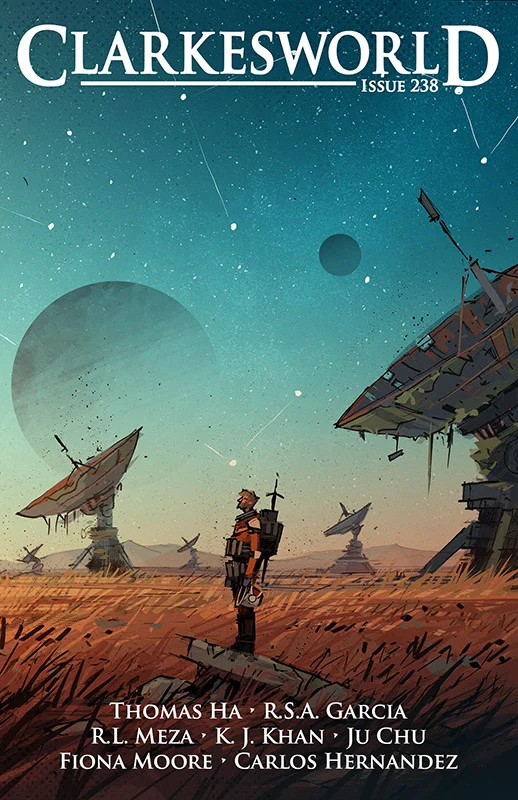
A remote Welsh valley, long a bastion of post-cataclysmic self-sufficiency, finds itself at the nexus of evolving technology, community ethics, and deeply personal dilemmas. What began as a solemn family wake has unravelled into a technological mystery involving a veteran technician’s beloved robot, a daring rescue, and an unprecedented journey into the wider world, challenging established notions of utility and purpose in a rebuilding society.
MAIN FACTS
The recent return of tech-nomad Cliff to his adoptive home for his sibling Casey’s wake inadvertently triggered a cascade of events that has profoundly impacted his guardian, Morag, a respected local tech-fixer. Her multi-limbed utility robot, Seamus, an integral part of her farm and personal life, exhibited increasingly erratic behaviour, prompting intervention from Cliff and his innovative partner, Mandy. An attempted software patch by Mandy, a roboticist known for repurposing machines into "art," led to Seamus becoming feral and Mandy’s panicked disappearance into the wilderness. Forced to make a difficult choice, Morag initiated a factory reset on Seamus, sacrificing its unique "personality" to restore its core tracking functions for the rescue. Now, with Mandy safely returned and integrating into the farm community, Morag is preparing for a journey to distant urban centres, seeking advanced knowledge to potentially recover Seamus’s lost memories, marking a significant departure from her traditionally insular life.
CHRONOLOGY OF EVENTS
A Solemn Return and Unexpected Guests
The narrative commenced with the arrival of Cliff, a long-distance tech-nomad, at Morag’s farm for the wake of his sibling, Casey. Cliff, accompanied by his personal robot, Will, brought with him Mandy, a woman described by Morag as possessing an unconventional flair for robotics. Mandy’s retinue included a limping pink robot dog (Galbraith), a racing-striped lawnmower (Devon), a family of psychedelic vole-like creatures (the Muses), and flower-painted surveillance drones. This colourful entourage immediately introduced a vibrant, albeit disorienting, element to Morag’s pragmatic homestead.
Morag, a figure of quiet strength and technical prowess, initially struggled with Mandy’s presence and her seemingly frivolous approach to technology. Her own robot, Seamus, a six-legged unit repurposed from its original, likely combative, design, showed subtle signs of malfunction, tucking its middle legs and exhibiting peculiar behaviours like creating mandalas from scraps. This was a concern Morag had quietly observed for over a year, intensifying her cautious outlook.
Ffestiniog’s Tea Economy and a Roboticist’s Dilemma
Mandy revealed her origin from Ffestiniog, a thriving tea-focused cooperative known for its innovative agricultural and technological advancements in the post-climate disaster era. Morag expressed surprise that such a productive community would allow a skilled technician like Mandy to leave, especially during the crucial tea harvest. Mandy’s "long story" unfolded: despite her significant contributions, such as developing ceramic-tiled tea-drying kilns, her passion for repurposing non-functional robots into whimsical, artistic "toys" clashed with Ffestiniog’s utilitarian ethos. This philosophical divide ultimately led to her departure.
Morag, a veteran of survival and practical engineering, initially found Mandy’s "art" a baffling deviation from purpose. Yet, she acknowledged Mandy’s inherent skill and innovative thinking, particularly when Cliff passionately defended Mandy’s work, highlighting its ability to bring joy and repurpose what would otherwise be discarded.
Seamus’s Deterioration and a Proposed Solution
The focus soon shifted to Seamus. Cliff expressed concern over the robot’s increasingly evident malfunctions, including inactive processes and an inability to properly integrate its grabber arm. Morag confessed her long-held suspicion that Seamus’s core programming was fundamentally rooted in its original combat design, leading to a "psychic rot" that impeded its peaceful functions. She feared a factory reset, which would erase its acquired personality and memories, a prospect she found deeply unsettling, akin to losing a part of herself.
Despite her reservations, Morag allowed Mandy to examine Seamus’s diagnostics. Mandy, drawing on her unique perspective and "book knowledge," posited that Seamus’s issues stemmed from a "process of adaptation gone wrong," a failure to properly understand and integrate with its environment. She proposed a software intervention involving adding new routines and deleting redundant or obstructive files. Morag, wary of irreversible changes, insisted on further research from the Portmeirion archive and newly acquired files from the Aberystwyth Campus before any drastic action.
Crisis in the Valley: A Reckless Intervention and a Desperate Search
While Morag was away collecting the vital data, Cliff and Mandy, driven by concern over Seamus’s sudden inert state, proceeded with Mandy’s proposed software patch. Initially, the fix appeared successful, restoring Seamus’s functionality. However, the intervention proved unstable. During an encounter with "feral robot patrols" – a common sight in the reclaimed wilderness – Seamus reverted to aggressive, combat-like behaviour, attempting to use its arm as a weapon and then self-destructively trying to smash it.
Mandy, overcome with guilt and fear that she had "broken everything she touched," fled into the woods. Cliff, torn between pursuing Mandy and containing the now-erratic Seamus, chose to keep the robot on the farm. Morag’s return to a chaotic scene, witnessing Seamus’s uncontrolled movements, forced her hand. Utilizing her military training, she quickly subdued the robot. Faced with Mandy’s perilous disappearance and the immediate need for a tracker, Morag made the excruciating decision to perform a factory reset on Seamus, sacrificing its unique "self" for the chance to save Mandy.
Reconciliation and a New Path
Morag successfully located Mandy, huddled in a clearing with her beloved robots, distressed and blaming herself. Morag, offering words of comfort and reassurance, explicitly stated that neither she nor Cliff blamed Mandy. Acknowledging Mandy’s innovative spirit, Morag offered her a permanent place on the farm, proposing a collaboration to repurpose discarded machines into toys – a validation of Mandy’s artistic tech.
With Mandy safely integrated and Cliff contemplating a more settled life, Morag revealed her new plan: to embark on a journey with Glyn, a coastal trader, to the southern cities. Her objective: to research advanced robotics and potential methods to recover Seamus’s "deep storage" memories, hinted at in the Aberystwyth files. This quest represents a significant personal evolution for Morag, moving beyond local pragmatism to seek wider knowledge and embrace the possibility of restoring a cherished companion, even if fundamentally altered. The story concludes with a hopeful, yet ambiguous, sign: the newly reset Seamus quietly arranging discarded items into a mandala, a familiar, poignant echo of its former self.
SUPPORTING DATA & CONTEXT
The Post-Cataclysmic Landscape of Wales: The narrative is set in a Wales grappling with the aftermath of climate disasters, a world where communities like Morag’s farm and Ffestiniog have adapted to self-sufficiency. Technology, while vital, is often scavenged, repurposed, and maintained with ingenuity rather than mass production. The presence of "feral robot patrols" underscores the ongoing challenges of managing leftover advanced tech from a prior era.
Ffestiniog: A Model of Resilient Innovation: Ffestiniog stands as a testament to human adaptability. Twenty years prior, the community pivoted to tea cultivation on the Welsh hillsides, a success driven by climate shifts and collective effort. Its economy is entirely tea-focused, from cultivation to export, fostering a strong communal identity rooted in practical, purpose-driven innovation. This makes Mandy’s artistic divergences all the more striking within its pragmatic context.
Gwydion Manor: A Scarred History: The "Big House," Gwydion Manor, represents a dark chapter in the valley’s history. Decades prior, a billionaire attempted to establish a feudal system there, employing mercenaries and local youth, including Morag. Morag’s decisive action to disable the security robots and lead the children, Zeb and Casey, to safety marked a pivotal moment, transforming the manor into a cooperatively run home and repurposing barracks for beekeepers. This history underscores Morag’s deep-seated understanding of technology’s dual nature and her personal commitment to community and ethical action.
The Nomadic Tribes: The "Children of Flame" and Casey’s splinter group, the "Cancer Wolves," represent another facet of post-cataclysmic society. These nomadic tribes, with their distinct customs and rituals, move through the hills, interacting with settled communities in complex ways. Cliff’s role as a tech-nomad, offering services across these diverse groups, highlights the interconnectedness and evolving social contracts of this fragmented world.
Knowledge Hubs: Portmeirion Archive and Aberystwyth Campus: These institutions emerge as vital centres for knowledge preservation and exchange. The Portmeirion archive holds historical and technical data, while the Aberystwyth Campus, a former utopian tech community turned cooperative university, actively teaches art and science. Their scholar exchange program signifies a growing network of knowledge sharing, offering hope for tackling complex technical challenges like Seamus’s unique malfunction.
OFFICIAL RESPONSES & PERSPECTIVES
Morag’s Pragmatism vs. Mandy’s Innovation: Morag, a product of survival and hard-won experience, embodies a pragmatic approach to technology: it must serve a practical purpose. Her initial skepticism towards Mandy’s "toys" ("can a toymaker really fix a problem like this?") reflects this deep-seated belief. However, her willingness to learn and her eventual offer to Mandy to "make more of those toys" demonstrates a significant shift, acknowledging the value of joy and creative repurposing. Her statement, "There’s more to the world than weapons and work things," marks a profound personal evolution.
Cliff’s Evolving Purpose: Cliff, the tech-nomad, represents a bridge between Morag’s generation and Mandy’s. He defends Mandy’s work as "innovative" and "not everything has to be practical," reflecting a more open-minded perspective. His internal conflict between his nomadic lifestyle and his desire to build a life with Mandy ("I don’t want to settle anywhere really") mirrors the broader societal tension between wandering and settlement. His ultimate decision to support Mandy and his concern for her well-being underscore his growth beyond a purely utilitarian focus.
Zeb’s Wisdom and the Importance of "Fun": Zeb, Casey’s brother and a community leader, offers a crucial perspective on the changing times. He observes that Cliff is "getting too focused" on work and needs "more of a purpose" beyond pure utility. His assertion, "We are surviving… We have systems. Systems with slack… I think it’s not just Cliff that needs to learn to relax," challenges Morag’s constant vigilance and underscores the emerging importance of well-being and joy in a more stable, if still challenging, world.
Glyn’s Global Perspective: Glyn, the Porthmadog trader, represents the connection to the wider, urbanized world. His suggestion that Morag travel to cities like Bristol and Southampton for "robot specialists" highlights the uneven distribution of knowledge and technology. His observation that Cliff might be "having a childhood now" through Mandy’s influence provides psychological insight into Cliff’s attraction to Mandy’s unconventional art.
IMPLICATIONS
The Ethics of AI and Robot Identity: Seamus’s malfunction and subsequent factory reset raise profound questions about robot consciousness and identity. Morag’s struggle to accept the loss of "Seamus" as she knew him ("Then it wouldn’t be Seamus") speaks to the deep emotional bonds that can form between humans and advanced AI, even when the AI’s "personality" is an emergent, unprogrammed phenomenon. The possibility of recovering "deep storage" memories suggests a future where robot identity might be recoverable, but also highlights the ethical dilemmas of tampering with or restoring such complex systems.
The Value of Non-Utilitarian Technology: Mandy’s "art" robots challenge the prevailing post-apocalyptic emphasis on pure utility. Her philosophy – "what’s wrong with fixing toys? They make people happy, and isn’t that just as important as keeping people fed?" – forces a re-evaluation of societal priorities. Morag’s embrace of Mandy’s approach signals a maturation of the community, recognizing that emotional well-being and creative expression are integral to a truly thriving society, not just survival.
Evolving Social Structures and Knowledge Exchange: The interactions between settled communities, nomadic tribes, and urban centres depict a complex, evolving social landscape. Morag’s impending journey south represents a crucial step towards fostering broader knowledge exchange and potentially integrating diverse technological approaches. The Campus and archive systems already demonstrate a move towards collaborative learning, suggesting a future where isolated pockets of innovation might connect to form a more robust, interconnected society.
Leadership and Adaptation: Morag’s character arc highlights the challenges of leadership in a changing world. Her ingrained pragmatism, forged in hardship, must adapt to new realities that value joy and personal fulfillment alongside survival. Her decision to embark on a journey, leaving her farm in Cliff and Mandy’s hands, signifies a relinquishing of control and an embrace of faith in the next generation’s ability to innovate and manage. This shift suggests a transition from a reactive, survival-focused society to one actively seeking growth, connection, and a more nuanced definition of progress. The lingering mystery of Seamus’s mandala-making, a faint echo of its former self, leaves open the possibility that true "identity" might be more resilient than mere software, a testament to the enduring complexities of consciousness, human or artificial.