Nat Meade’s "Franklin" Exhibition at HESSE FLATOW Explores the Complex Tapestry of Family, Mortality, and Renewal
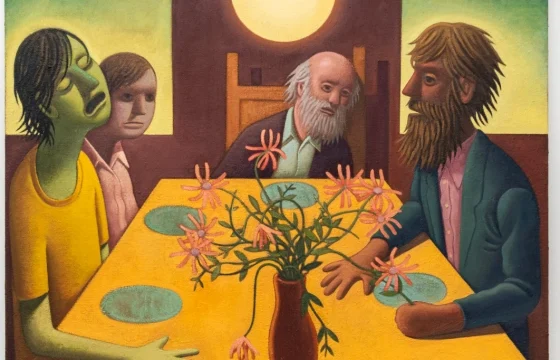
New York, NY – HESSE FLATOW gallery is currently hosting "Franklin," a compelling exhibition by artist Nat Meade, marking his third solo presentation with the esteemed gallery. The show, which opened its doors to the public on [Insert Opening Date if available, otherwise state "recently"] and will remain on view until April 18, 2026, delves into the profound and often challenging aspects of the human experience through a series of evocative paintings and works on paper. Meade’s artistic practice is characterized by its deeply personal yet universally resonant exploration of themes such as family dynamics, the contemplation of mortality, and the enduring spirit of hope and renewal.
The Emotional Landscape of Human Experience
Nat Meade’s figurative works serve as powerful visual metaphors for the emotional journeys of life, encompassing both its struggles and its triumphs. These pieces are not mere portraits of specific individuals but rather distillations of universal archetypes, reflecting the artist’s own lived experiences as he navigates the multifaceted roles of father, son, partner, and academic. The protagonists in his paintings often embody timeless narratives – a solitary figure on a quest for existential meaning, or the intricate interplay of intergenerational relationships. This allegorical approach, facilitated by the medium of painting, allows Meade to confront personal challenges through a lens of absurdity, somber introspection, and even dark humor. The resulting body of work offers a space for profound contemplation, drawing undeniable parallels with the shared landscape of human nature.
The exhibition’s thematic core is deeply rooted in Meade’s recent reflections on his relationship with his father, particularly following his passing. This personal loss has catalyzed a profound reevaluation of his own identity as a parent. The works on display openly confront themes of vulnerability, pain, and mortality, yet crucially, they are imbued with a nascent sense of hope. The introduction of younger male figures into this new body of work signifies a movement towards acceptance, reconciliation, and the promise of renewal, suggesting a cyclical understanding of life and legacy.
Unpacking the Symbolism: A Deep Dive into "Franklin"
The exhibition’s title, "Franklin," carries a subtle yet significant resonance, drawing a connection to the unsettling dynamics of family portrayed in the 1974 horror classic, The Texas Chainsaw Massacre. This deliberate allusion suggests an acknowledgment of the darker, more turbulent aspects of familial relationships and the inner turmoil that can arise from contending with one’s own primal, sometimes antagonistic, impulses. Meade masterfully sublimates these internal conflicts within his characters, depicting them as forces being managed, understood, or ultimately, brought into a state of equilibrium.
One striking example of this symbolic language is found in the painting Poise. Here, a pair of dangling legs suspended from a cloud invites viewers to ponder the ambiguity of ascension or descent. This imagery can be interpreted as a profound meditation on the interchangeability of birth and death, both in a physical and spiritual sense. Throughout the exhibition, ghostly specters are depicted hovering over certain figures, serving as potent metaphors for inherited trauma and the process of release. These spectral presences evoke the classic cartoon trope of a soul detaching from a dying body, prompting contemplation on whether the departing spirit views its former self with happiness or regret.
The exhibition is replete with potent allegorical imagery. A vulture preying on a corpse directly recalls the eternal punishment of Prometheus by Zeus, a myth that speaks to the consequences of transgressing divine boundaries and the enduring nature of suffering. In another piece, a bearded figure on his hands and knees echoes William Blake’s iconic depiction of Nebuchadnezzar, a biblical king who was driven mad and forced to live like an animal as a punishment for his hubris and lust for power. These references imbue Meade’s work with a rich historical and mythological context, inviting viewers to draw connections between his personal narratives and timeless human struggles.
A Shift Towards Harmony and Hope
In stark contrast to the often-burdened adult figures, Meade’s younger characters exude a palpable sense of harmony and burgeoning potential. A young boy, depicted steering a boat with a radiant torch, charts his own course, seemingly unburdened by the societal and familial pressures that can weigh down older generations. This imagery speaks to the innate drive for exploration and self-discovery inherent in youth. Elsewhere, an adolescent is shown ankle-deep in a secluded cove, their wonder evident as they reach down to touch a seabed teeming with life – starfish, anemones, and mussels. This scene evokes a sense of childlike curiosity and the pure joy of engaging with the natural world.
A related work further emphasizes the theme of intergenerational connection and guidance. In this painting, two pairs of legs, belonging to a father and son, are visible in a shallow pool. The father’s leg is tenderly positioned to guide the son, illustrating a nurturing and supportive relationship. This imagery marks a significant departure from Meade’s earlier works, which often depicted his figures struggling against or succumbing to the overwhelming forces of nature, such as turbulent winds and crashing waves. The focus on calmer seas and the gentle guidance of a child signals a pivotal turning point in Meade’s artistic trajectory.
Meade seems to suggest that true healing and the liberation of future generations from inherited burdens can only be achieved by acknowledging and processing one’s own "rocky histories." This process, though potentially fraught with difficulty, ultimately leads to a more harmonious and hopeful future. Despite the profound weight of the themes he explores, Meade consistently reminds us of the inherent resilience of the human spirit. His work ultimately conveys a powerful message of attainable progress, suggesting that even in the face of overwhelming challenges, the capacity for growth, healing, and renewal remains steadfast.
Supporting Data and Contextualization
Nat Meade’s artistic journey is characterized by a consistent engagement with the complexities of human relationships and the existential questions that arise throughout life. His previous solo exhibitions at HESSE FLATOW have laid the groundwork for the introspective and symbolically rich explorations presented in "Franklin." Each body of work has built upon the artist’s unique visual language, which combines raw emotional honesty with a sophisticated understanding of art historical and mythological references.
The current exhibition’s focus on the artist’s personal experiences, particularly in relation to his father and his own role as a parent, provides a compelling backdrop for understanding the emotional depth of "Franklin." This autobiographical element, while deeply personal, transcends individual circumstance to touch upon universal themes of love, loss, legacy, and the enduring search for meaning. Meade’s ability to translate these profound internal experiences into visually compelling and intellectually stimulating artworks is a testament to his skill and artistic vision.
The allegorical nature of Meade’s figurative work allows for multiple interpretations, inviting each viewer to engage with the pieces on a personal level. The recurring motifs of spectral presences, mythological allusions, and the contrasting depictions of adult and child figures create a rich tapestry of meaning that unfolds with continued observation. The exhibition’s duration, extending for a significant period, allows ample opportunity for the public to immerse themselves in Meade’s evocative world and to engage in a meaningful dialogue with the themes presented.
Official Responses and Critical Acclaim
While specific official responses from critics and institutions at the time of this article’s writing are not detailed in the provided content, the fact that HESSE FLATOW is presenting Nat Meade’s third solo exhibition signifies a strong and sustained commitment from the gallery to his work. Galleries typically only continue to represent and promote artists whose work they believe in, and whose exhibitions garner significant interest and critical appreciation. This long-standing relationship with HESSE FLATOW suggests a positive reception of Meade’s artistic output within the contemporary art world.
Curators and gallerists often select artists for solo shows based on their unique artistic voice, their thematic relevance, and their potential to engage audiences. The continued platform provided to Meade by HESSE FLATOW indicates that his work is perceived as significant, thought-provoking, and relevant to current artistic discourse. Further research into art reviews and gallery statements from the exhibition’s opening period would likely reveal more specific critical appraisals of "Franklin."
Implications and Enduring Significance
Nat Meade’s "Franklin" exhibition holds significant implications for both the contemporary art landscape and for viewers seeking to engage with profound human experiences through art. By confronting themes of mortality, inherited trauma, and the complexities of familial bonds with such unflinching honesty and artistic sophistication, Meade contributes to a vital ongoing conversation about what it means to be human.
The exhibition’s ultimate message of hope and renewal, emerging from a deep exploration of vulnerability and pain, offers a powerful counterpoint to the often-cynical narratives that can permeate contemporary culture. Meade’s work suggests that acknowledging the darkness is not an endpoint, but rather a necessary precursor to finding light and fostering growth. The emphasis on the resilience of human nature and the potential for reconciliation and healing provides a source of inspiration and encouragement.
Furthermore, "Franklin" underscores the enduring power of figurative painting as a medium capable of conveying complex emotional and philosophical ideas. Meade’s masterful use of symbolism, narrative, and evocative imagery demonstrates the continued relevance and vitality of this artistic tradition. The exhibition serves as a reminder that art has the capacity to not only reflect the world around us but also to offer new perspectives, foster empathy, and ultimately, to help us navigate our own life journeys with greater understanding and resilience. The prolonged viewing period of "Franklin" suggests an expectation of sustained public interest, allowing for a deeper and more prolonged engagement with the artist’s profound meditations on life, loss, and the enduring spirit of humanity.