Talisman Returns: Avalon Hill Unveils Fifth Edition of Classic Fantasy Adventure
FOR IMMEDIATE RELEASE
[City, State] – [Date] – A new era is dawning for one of tabletop gaming’s most enduring sagas. Avalon Hill, the acclaimed publisher behind the popular horror board game Betrayal at House on the Hill, has officially announced the upcoming release of Talisman: The Magical Quest Board Game – 5th Edition. This highly anticipated iteration promises to reintroduce the classic fantasy adventure to a new generation of players while offering a refined experience for long-time enthusiasts. Set to launch on August 1st with a retail price of $60 (£47), the fifth edition aims to streamline gameplay, feature all-new artwork, and update components, ensuring its legacy continues to thrive in the modern board game landscape.
Main Facts: A New Chapter for a Timeless Quest
Talisman: The Magical Quest Board Game – 5th Edition marks a significant milestone for the venerable franchise, which has captivated players for over four decades. Published by Avalon Hill, a subsidiary of Wizards of the Coast and Hasbro, this latest edition is poised to revitalise the core experience that has defined Talisman since its inception. The game retains its fundamental objective: two to six players embark on an epic journey across a mystical land, each vying to be the first to reach the perilous Crown of Command located at the very heart of the board.
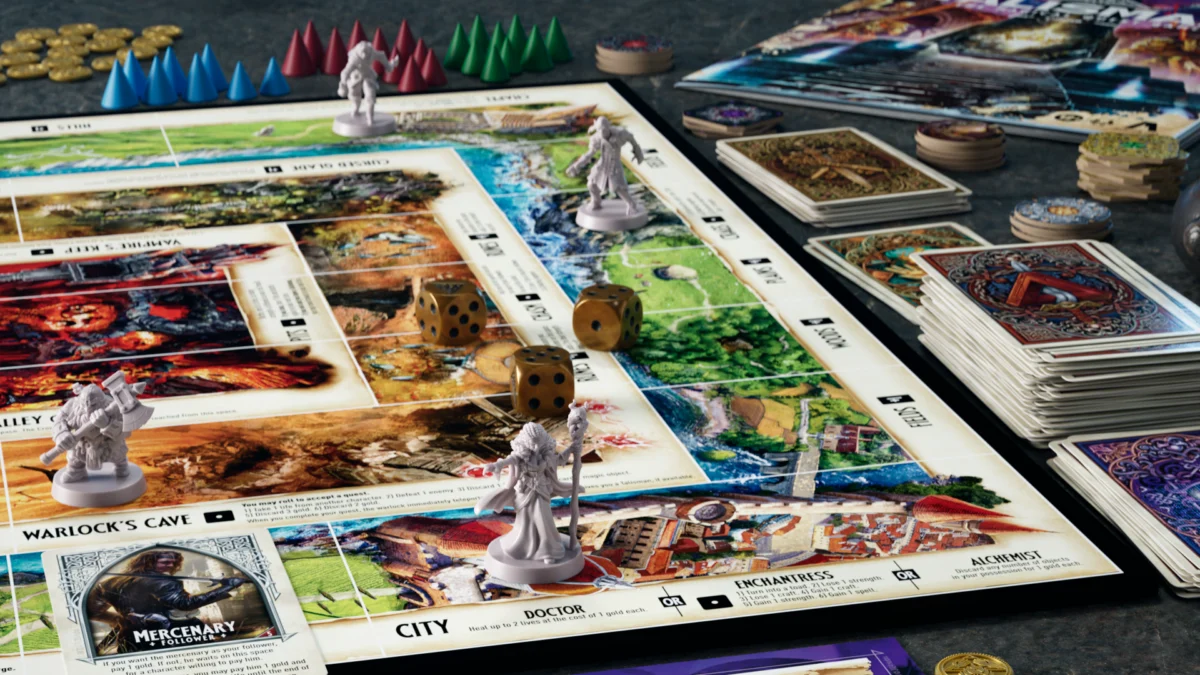
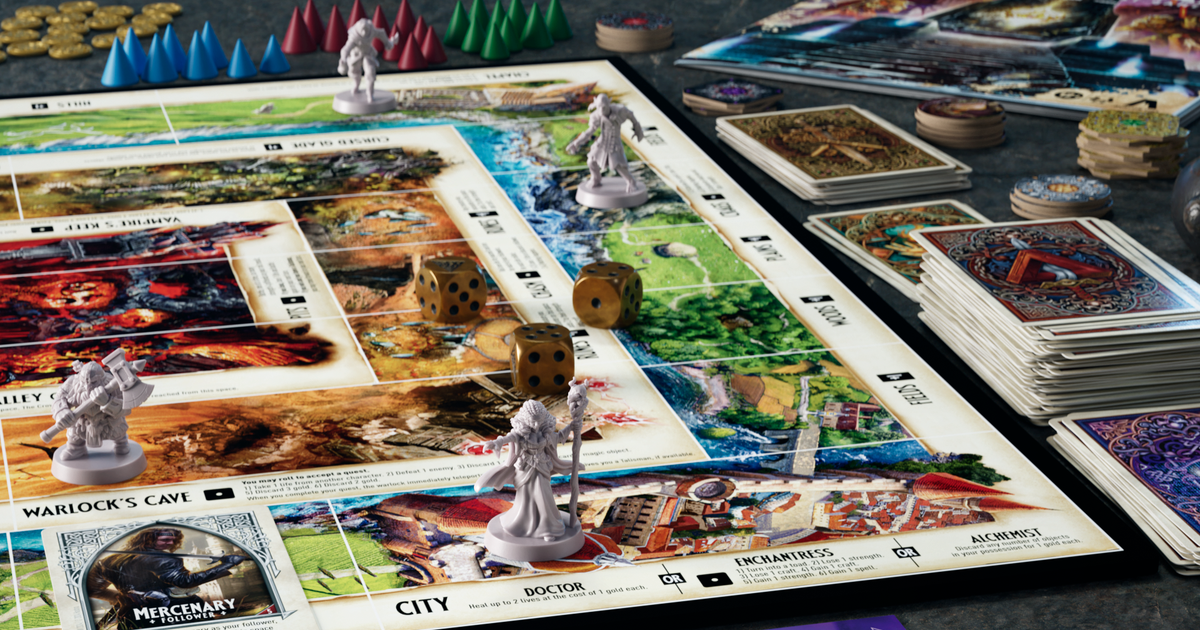
Key enhancements for the 5th Edition include a commitment to accessibility, with Avalon Hill stating that the gameplay has been "streamlined" to welcome less experienced players without alienating the dedicated fan base. This streamlining is expected to manifest in clearer rules, more intuitive mechanics, and potentially reduced playtime, addressing common feedback from previous editions. Visually, the game is undergoing a complete overhaul, featuring brand new artwork across its entire component set, from the board itself to the character cards and the impressive roster of 100 unique adventure cards. These updated illustrations, alongside new physical components, aim to elevate the immersive fantasy aesthetic that is central to the Talisman experience.
Players will once again choose from a diverse array of 12 iconic fantasy archetypes, including familiar faces such as the Thief, Monk, Warrior, Ghoul, and Sorceress. Each character possesses distinct statistics and special abilities, offering varied playstyles and strategic choices. The journey through the game board’s concentric rings remains a perilous one, fraught with challenges from a rogue’s gallery of monsters, magical encounters, and the ever-present threat of rival adventurers. The ultimate goal is to complete a Talisman quest, gaining entry to the inner world and eventually the Portal of Power, where the Crown of Command awaits. With its blend of competitive interaction, strategic resource management, and dice-rolling destiny, the 5th Edition is poised to continue Talisman‘s tradition as a quintessential adventure board game.
Chronology: The Enduring Saga of Talisman
The journey of Talisman is as rich and winding as the paths players traverse on its board, reflecting the evolution of the board game industry itself over the past forty years. From its humble beginnings with a legendary publisher to its modern reimagining, Talisman has consistently adapted while retaining its core identity.
The Genesis: Talisman’s Early Years with Games Workshop
Talisman first emerged onto the tabletop scene in 1983, a creation of designer Robert Harris and published by the then-burgeoning Games Workshop. At the time, Games Workshop was rapidly establishing itself as a powerhouse in the miniatures and fantasy gaming sphere, known for seminal titles like Warhammer Fantasy Battle and Warhammer 40,000. Talisman offered a distinct experience, blending elements of role-playing games with competitive board game mechanics, making it an instant classic.
The original edition presented a simple yet compelling premise: players assumed the roles of heroic (or villainous) fantasy archetypes – from mighty warriors and wise wizards to cunning rogues and mysterious sorceresses – each with unique starting stats and special abilities. Their quest was to navigate a fantastical realm, represented by a modular board divided into three concentric regions: the Outer, Middle, and Inner Rings. The ultimate prize, the Crown of Command, lay guarded in the innermost sanctum, accessible only after completing a specific Talisman quest. The game’s reliance on dice rolls for movement and combat, combined with the unpredictable nature of "Adventure Cards" drawn upon landing on specific spaces, created a narrative of chance, triumph, and often, frustrating defeat. This blend of simple rules, engaging theme, and high player interaction quickly cemented Talisman‘s status as a beloved title, fostering a dedicated community that would follow its development for decades to come.
Shifting Hands: The Fantasy Flight Games Era
Following its initial success, Talisman underwent several revisions and expansions under Games Workshop. However, a significant turning point arrived in 2008 when publishing rights transferred to Fantasy Flight Games (FFG). FFG, renowned for its lavish productions, thematic depth, and often extensive expansion models – exemplified by recent successes like the Star Wars: Unlimited trading card game – took the reins with the release of a revised Fourth Edition.
Under FFG’s stewardship, Talisman experienced a renaissance. The Fourth Edition was not merely a reprint but a meticulously updated version that refined rules, clarified card text, and significantly enhanced the game’s aesthetic with high-quality components and artwork. Crucially, FFG embraced its characteristic model of releasing numerous expansions. Over the years, dozens of large and small expansions were introduced, adding new characters, regions, spells, adventure cards, and game mechanics. These expansions dramatically broadened the scope of the game, introducing new challenges, alternative endings, and deeper strategic layers. While these additions were lauded by many for extending the game’s longevity and replayability, they also contributed to a perception of complexity and a potentially overwhelming number of options for new players. Despite this, the FFG era solidified Talisman‘s place in the modern board game hobby, introducing it to a new generation and maintaining its status as a cornerstone of fantasy adventure gaming. The extensive library of expansions created a vast and interconnected world, allowing players to tailor their Talisman experience to their preferences.
The Modern Reimagining: Avalon Hill’s Vision
The announcement of Talisman: The Magical Quest Board Game – 5th Edition under the Avalon Hill imprint marks the latest evolution in the game’s storied history. Avalon Hill, a venerable name in the world of strategic board games and now a part of the Wizards of the Coast/Hasbro family, brings its own distinct legacy to the franchise. The studio is particularly well-regarded for titles like Betrayal at House on the Hill, a horror narrative game known for its emergent storytelling and engaging, thematic gameplay. This background suggests a publisher keenly aware of the importance of narrative immersion and accessible rulesets.
The transition to Avalon Hill signals a strategic move to potentially refresh the game for a contemporary audience. While the FFG editions were highly successful, the sheer volume of content and the cumulative complexity might have presented a barrier to entry for newcomers. Avalon Hill’s stated goal of "streamlining" the gameplay suggests a deliberate effort to distil the core fun and adventure of Talisman into a more approachable package. This reimagining aims to capture the essence of what made the original so compelling – the thrill of adventure, the joy of character progression, and the unpredictable nature of the quest – while updating it with modern design sensibilities and production quality. The selection of Avalon Hill, with its reputation for delivering polished and engaging experiences, indicates a commitment to ensuring Talisman‘s continued relevance and success in an increasingly competitive market.
Supporting Data: Unpacking the Fifth Edition’s Design Philosophy
The upcoming Talisman: The Magical Quest Board Game – 5th Edition is not merely a cosmetic update; it represents a thoughtful re-evaluation of the game’s core tenets. Avalon Hill’s approach appears to be one of respectful evolution, preserving the elements that define Talisman while enhancing its accessibility and visual appeal for a broader audience.
Gameplay Mechanics: A Deep Dive into the Quest
At its heart, Talisman remains a competitive adventure game where players navigate a perilous landscape to achieve ultimate power. The core loop begins with character selection, a critical decision that dictates initial strengths and potential strategies. The 5th Edition offers 12 diverse archetypes, each with unique starting attributes (e.g., Strength, Craft, Lives, Gold) and special abilities that can dramatically influence gameplay. For instance, a Warrior might excel in direct combat, while a Sorceress might rely on powerful spells, and a Thief on cunning and subterfuge. This variety ensures high replayability and encourages different tactical approaches.
The game board itself is a masterpiece of design, typically divided into three concentric regions: the Outer, Middle, and Inner Rings. Movement is typically determined by a die roll, leading to a journey of unpredictable encounters. Landing on various spaces triggers events, often requiring players to draw "Adventure Cards." These cards introduce a vast array of possibilities: encountering monsters that must be defeated in combat, discovering magical objects or formidable followers, gaining gold or spells, or facing unexpected perils that can alter a character’s fate. Progression is crucial; players acquire new equipment, powerful spells, and loyal allies to overcome increasingly difficult challenges. Success often hinges on passing skill checks against a character’s Strength or Craft attributes, adding a layer of strategic risk-taking to each decision.
Player interaction is a cornerstone of Talisman. Beyond simply racing to the Crown, players can directly challenge one another to combat, attempting to steal items, gain an advantage, or simply hinder an opponent’s progress. Losing a combat encounter can result in losing lives, items, or being forced to retreat, adding a significant competitive edge to the game. The ultimate objective remains reaching the Portal of Power in the Inner Ring, which typically requires a Talisman card. Once through, the first player to reach the Crown of Command can then unleash its power, usually by casting a devastating spell to eliminate all remaining opponents and claim victory. This intricate dance of exploration, combat, and strategic decision-making ensures a dynamic and engaging experience.
Artistic and Component Overhaul: Visualizing the Fantasy Realm
A significant highlight of the 5th Edition is its complete artistic and component overhaul. The original article mentions "brand new artwork and updated components," a promise that resonates deeply with modern board game enthusiasts who value high production quality. For a game like Talisman, which relies heavily on thematic immersion, the visual presentation is paramount.
New artwork likely means a refreshed aesthetic that retains the game’s classic fantasy feel while embracing contemporary illustration styles. This would apply to the main game board, character cards, spell cards, and especially the 100 different adventure cards, each promising unique illustrations. High-quality artwork can significantly enhance player engagement, making the world feel more vibrant and the encounters more impactful. Updated components typically include thicker, more durable card stock, improved board material, clearer iconography, and potentially more detailed miniatures or standees for the characters. These physical improvements not only enhance the tactile experience but also contribute to the game’s longevity, ensuring it can withstand countless hours of play. The collaboration between Avalon Hill and Wizards of the Coast, known for their high standards in game production, bodes well for the overall quality of the components. The visual richness is expected to draw both new players accustomed to visually stunning modern games and veterans who appreciate a fresh take on a beloved classic.
Streamlining for a New Generation: Accessibility as a Core Principle
The most significant design philosophy underpinning the 5th Edition, as explicitly stated, is "streamlined gameplay" to make it "more accessible to less experienced players." This approach addresses a common challenge faced by long-running franchises: how to evolve without becoming overly complex or intimidating for newcomers. While specific details of the streamlining are yet to be fully revealed, several implications can be inferred.
Streamlining often involves clarifying ambiguous rules, reducing the number of edge cases, and simplifying complex interactions. This could mean fewer exception-based rules, more straightforward card text, or a reduction in the number of separate phases within a turn. For example, some previous editions accumulated a vast number of keywords and special rules across numerous expansions; a streamlined version might consolidate or simplify these. The goal is to lower the barrier to entry, allowing new players to grasp the core mechanics quickly and dive into the adventure without extensive rulebook consultation. This approach is vital in today’s competitive board game market, where many innovative and accessible games vie for attention. By making Talisman easier to learn, Avalon Hill aims to broaden its appeal beyond its existing fan base, potentially attracting players who have been deterred by the perceived complexity of previous editions or the sheer volume of content available. This balance between honoring the game’s legacy and modernizing its approach is crucial for the long-term success of the franchise.
The Enduring Appeal of Fantasy Adventure
Talisman‘s longevity is a testament to the enduring appeal of its core premise: a classic fantasy adventure quest. It taps into fundamental desires for exploration, character progression, and heroic deeds. For many, Talisman served as a gateway into the broader world of tabletop gaming, introducing concepts like character statistics, equipment management, and competitive player interaction in an approachable format.
Its blend of luck (dice rolls, card draws) and strategic decision-making creates a narrative tension that keeps players engaged. Every turn offers the potential for triumph or disaster, fostering memorable stories around the gaming table. The archetypal characters resonate with fantasy enthusiasts, allowing players to embody familiar roles from literature and RPGs. Furthermore, the game’s competitive nature, with players vying for the same ultimate prize and often directly interacting through combat or card effects, adds a layer of excitement and unpredictability. For veteran players, there’s a strong element of nostalgia, revisiting a game that may have been formative in their early gaming experiences. For new players, it offers a distilled, iconic fantasy adventure that stands the test of time, now presented with modern polish and accessibility.
Official Responses: Strategic Revival and Market Position
While no direct quotes from Avalon Hill or Wizards of the Coast executives regarding Talisman: The Magical Quest Board Game – 5th Edition were available at press time beyond the basic announcement, the strategic rationale behind this release can be inferred from industry trends and the publishers’ broader portfolios.
Statements from Avalon Hill/Wizards of the Coast (Inferred)
The decision to launch a 5th Edition of Talisman under the Avalon Hill banner likely stems from a multi-faceted corporate strategy by Hasbro, the parent company of both Avalon Hill and Wizards of the Coast. Firstly, it represents a clear effort to leverage valuable intellectual property. Talisman is a recognized brand with a rich history and a global following. By revitalizing it, Hasbro aims to capitalize on existing brand loyalty while simultaneously attracting new consumers.

Industry analysts suggest that Avalon Hill, known for its expertise in strategy and thematic games, is ideally positioned to handle this revival. Their track record with titles like Betrayal at House on the Hill demonstrates an ability to produce games that blend accessible rules with deep thematic immersion and high-quality components. The "streamlined gameplay" initiative strongly suggests a desire to broaden the game’s market appeal. In an increasingly crowded board game market, accessibility is key to attracting casual players and families, rather than solely catering to hardcore enthusiasts. This move could also be seen as part of a larger trend within Hasbro to refresh and reintroduce classic IPs, ensuring their relevance in contemporary entertainment landscapes, much like their efforts with other beloved brands. The focus on new artwork and updated components aligns with modern consumer expectations for premium products, signaling a significant investment in the game’s production values.
Designer’s Vision (Avalon Hill’s Approach)
While Robert Harris designed the original Talisman, the design philosophy for the 5th Edition rests with the development team at Avalon Hill. Their vision, as implied by the announcement, is to honor the foundational mechanics and thematic spirit of Talisman while refining its execution for a modern audience. This involves a delicate balancing act: preserving the chaotic, unpredictable adventure that players love, while mitigating some of the aspects that might have been perceived as cumbersome or dated in previous iterations.
The emphasis on "streamlined gameplay" suggests a commitment to clarity and flow. This could involve re-evaluating the rulebook for greater conciseness, refining card effects to be more intuitive, or even subtly tweaking movement or combat mechanics to reduce potential slowdowns. The goal is likely to reduce cognitive load for new players, allowing them to focus more on the narrative and strategic choices rather than getting bogged down in intricate rules. Simultaneously, the inclusion of 12 distinct playable characters and 100 adventure cards indicates a dedication to retaining the depth and replayability that veterans expect. The Avalon Hill design team is likely aiming for a version of Talisman that is both nostalgic for long-time fans and an exciting discovery for those encountering its magical quest for the very first time.
Implications: The Future of a Fantasy Icon
The release of Talisman: The Magical Quest Board Game – 5th Edition carries significant implications for the board game market, the franchise itself, and the broader community of tabletop gamers. It represents not just a new product, but a strategic move that could redefine the perception and reach of a classic.
Impact on the Board Game Market
The reintroduction of Talisman by Avalon Hill is poised to make a considerable splash in the competitive board game market. Its accessible price point of $60 (£47) for a major fantasy adventure game, combined with the promise of streamlined gameplay and high-quality components, positions it as an attractive option for both newcomers and seasoned players. The market for fantasy adventure board games is robust, populated by titles ranging from cooperative dungeon crawlers to epic competitive sagas. Talisman‘s unique blend of RPG-lite character progression, competitive interaction, and high-fantasy theme gives it a distinct niche.
This new edition could serve as a "gateway game" for a new generation, much as its predecessors did. Its approachable mechanics, now further refined, could introduce countless individuals to the joys of tabletop gaming, potentially leading them to explore other titles within Avalon Hill’s or Wizards of the Coast’s portfolio. Furthermore, the success of the 5th Edition could pave the way for future expansions, a model that has historically been very lucrative for Talisman. Avalon Hill’s track record with Betrayal at House on the Hill, which has seen numerous expansions and spin-offs, suggests a long-term commitment to supporting its popular titles. This could mean a renewed ecosystem of Talisman content, from new characters and regions to entirely new gameplay modules, ensuring the game’s continued relevance and commercial viability.
Reception from Veteran Players
One of the most delicate challenges for any re-edition of a beloved classic is managing the expectations and potential apprehension of its long-time fan base. Veteran Talisman players have invested decades into previous editions, often accumulating vast collections of expansions for the Fourth Edition under Fantasy Flight Games. The term "streamlined gameplay" can be a double-edged sword for these players. While some may welcome a more accessible and quicker-playing version, others might fear that simplification could lead to a reduction in strategic depth, the removal of cherished mechanics, or a perceived "dumbing down" of the game they know and love.
The "edition wars" phenomenon is well-documented in tabletop gaming, where different versions of a game can divide communities. Avalon Hill will need to carefully demonstrate that the streamlining enhances the experience rather than diminishes it. The promise of "brand new artwork and updated components" will certainly appeal, but the core gameplay changes will be under intense scrutiny. Will the new edition maintain the chaotic charm and narrative opportunities that define Talisman, or will it feel too different? The inclusion of 12 classic characters and 100 adventure cards suggests a commitment to retaining thematic richness, but the specifics of the rule changes will ultimately determine its reception among the most dedicated fans. Success will hinge on striking a delicate balance: providing enough novelty and refinement to justify the new edition while preserving the nostalgic essence that makes Talisman special.
The Future of Talisman
The release of Talisman: The Magical Quest Board Game – 5th Edition signifies a strong vote of confidence in the enduring power of the franchise. It reaffirms Talisman‘s place not just as a historical artifact, but as a living, evolving entity in the board game world. This new chapter could open doors to further brand extensions beyond physical board games. Digital adaptations, which have already seen success with previous Talisman editions, could be reinvigorated with the 5th Edition’s ruleset and art. Merchandise, licensed products, and even narrative tie-ins could become more prevalent if the new edition captures significant market traction.
Ultimately, the future of Talisman looks brighter and more accessible than ever. By updating its presentation and refining its mechanics, Avalon Hill is poised to introduce this iconic fantasy adventure to a fresh wave of players, ensuring that the quest for the Crown of Command continues to inspire imagination and friendly competition for decades to come. The August 1st release date marks not just the launch of a new product, but the continuation of a legacy, inviting both veteran adventurers and aspiring heroes to embark on The Magical Quest once more.