The Canvas of Rock: Nathaniel Mary Quinn and the Visual Evolution of The Rolling Stones
The intersection of high art and rock ‘n’ roll has long been a fertile ground for cultural milestones, from Andy Warhol’s provocative zipper for Sticky Fingers to Robert Frank’s gritty photography for Exile on Main St. In 2025, this tradition found its latest and perhaps most psychologically complex chapter through the collaboration between the legendary Rolling Stones and the Chicago-born, New York-based artist Nathaniel Mary Quinn.
Quinn’s singular vision, characterized by what he terms "figurative abstraction," became the centerpiece of the campaign for the band’s latest studio album, Foreign Tongues. This partnership represents more than a mere marketing marriage; it is a collision of two entities that have spent decades deconstructing and reconstructing their respective identities. For Quinn, the commission followed a transformative solo exhibition at Gagosian, Chelsea, which solidified his status as one of the most vital voices in contemporary figurative painting. For the Stones, it signaled a continued commitment to staying at the vanguard of cultural relevance, even as they enter their seventh decade as a band.
Main Facts: A Convergence of "Figurative Abstraction" and Stadium Rock
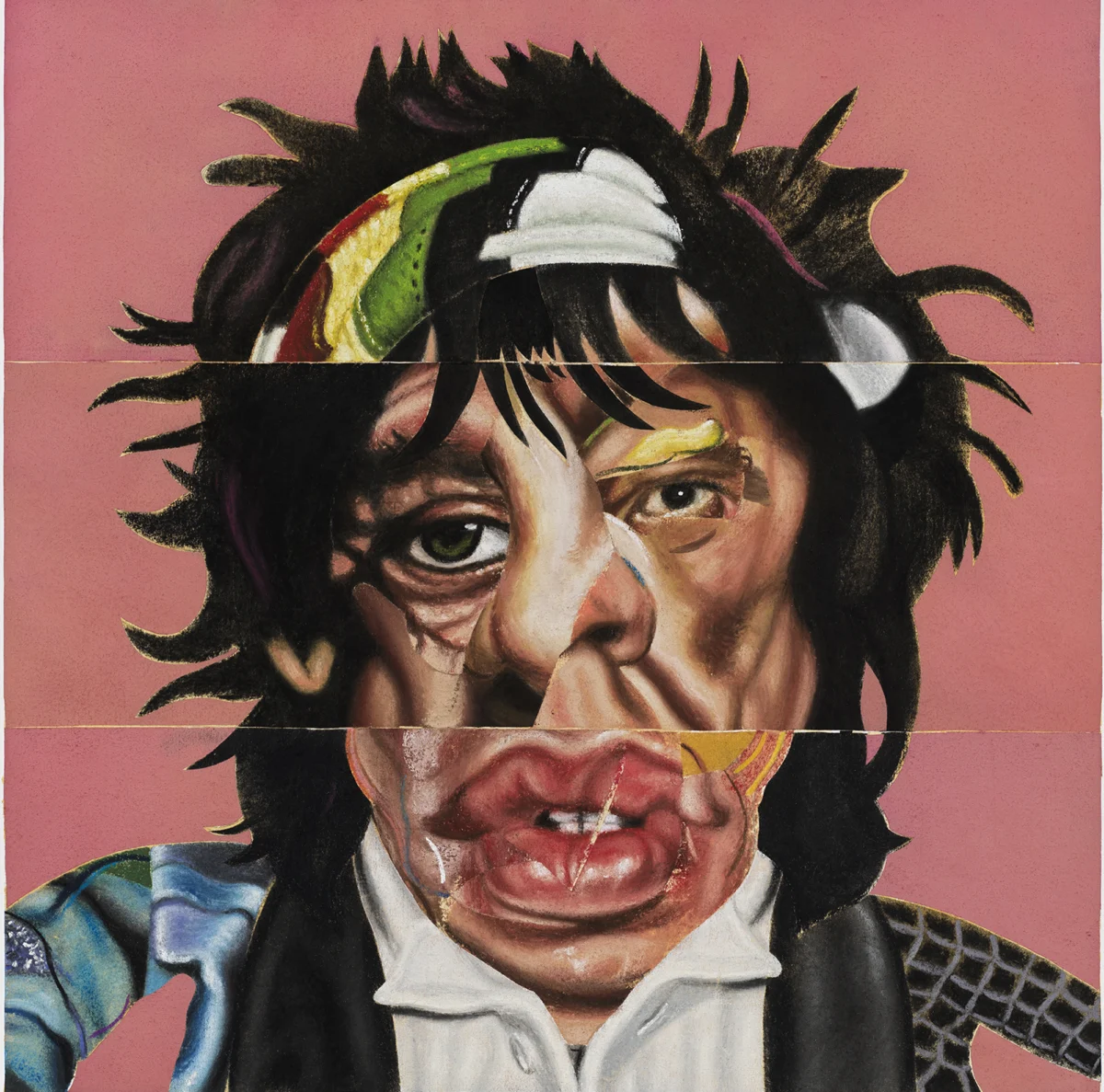
At the heart of this story is the artwork for Foreign Tongues, an album that arrived amidst a flurry of global anticipation. The cover art, executed by Quinn, eschews the traditional rock star portraiture in favor of a fractured, dreamlike composite. It is an image that reflects Quinn’s signature style: assembling identity from overlapping memories, emotions, and experiences rather than relying on conventional likeness.
The Artist and the Method
Nathaniel Mary Quinn has risen to prominence through a technique that mirrors the way the human mind recalls faces—not as static photographs, but as a patchwork of sensory details and emotional resonances. Using a combination of charcoal, gouache, pastel, and oil paint, Quinn creates works that look like digital collages but are, in fact, meticulously rendered by hand.
The Album: Foreign Tongues
The Rolling Stones’ Foreign Tongues, produced by the industry powerhouse Andrew Watt, was framed as a successor to their 2023 resurgence. The title itself suggests a play on the band’s iconic "tongue and lips" logo, reimagined through Quinn’s lens as something more visceral and multifaceted. The collaboration was sparked by Mick Jagger’s personal interest in Quinn’s work, which he encountered during a visit to the artist’s solo show in New York.
The Gagosian Catalyst
The 2025 solo exhibition at Gagosian in Chelsea served as the unofficial audition for this project. The show marked a significant stylistic shift for Quinn, moving toward a looser, more fluid visual language. Despite the artist’s internal fears that the audience might reject this new direction, the exhibition was a critical and commercial triumph, selling out almost immediately and attracting a high-profile audience that included museum directors, major collectors, and the "Greatest Rock ‘n’ Roll Band in the World."
Chronology: From the South Side to the Stones
The path to this collaboration began decades ago in the Robert Taylor Homes on Chicago’s South Side, where Quinn’s early life was marked by both profound talent and sudden tragedy.
1980s–1990s: Early Origins
Quinn’s interest in art was a survival mechanism and a means of expression in a challenging environment. However, the defining moment of his biography occurred when he was away at boarding school on a scholarship. He returned home to find his family gone—his mother had passed away, and his father and brothers had vanished, leaving the apartment empty. This trauma of "disappearance" and the subsequent need to reconstruct his history through memory became the bedrock of his artistic philosophy.
2010s: The Rise to Prominence
After earning his MFA from NYU, Quinn began to gain traction in the New York art scene. His breakthrough came when he stopped trying to paint "correctly" and started painting "honestly," leaning into the fractured aesthetic that defined his mature work. By the early 2020s, his pieces were being acquired by the Whitney Museum of American Art, the Art Institute of Chicago, and the Los Angeles County Museum of Art (LACMA).
2025: The Gagosian Show and the Jagger Encounter
In early 2025, Quinn opened his landmark show at Gagosian. It was here that Mick Jagger, an avid art collector with an eye for the provocative, visited the gallery. Unbeknownst to Quinn at the time, Jagger returned for a second viewing, deeply moved by the "humanity and essence" of the portraits.
The Call and the Commission
Shortly after the exhibition closed, Quinn received a text from Andrew Watt, the producer for the Stones. A conference call was arranged with Jagger. During this "surreal" conversation, Jagger expressed his desire for the Foreign Tongues artwork to reflect the same complexity found in Quinn’s paintings. By the end of the call, Quinn was officially tasked with creating the visual identity for the album.
Supporting Data: The Mechanics of Identity
Quinn’s work is often misunderstood as "collage" in the traditional sense. To understand why his work resonated so deeply with the Rolling Stones, one must look at the data of his process and the psychological depth of his output.

Technical Precision
Unlike many contemporary artists, Quinn does not use projectors or preparatory sketches on the canvas. He works section by section, often covering the rest of the canvas with paper so he can focus entirely on one "fragment" of the face. This creates the jarring, non-linear transitions between features that define his work.
Market and Critical Reception
- The Gagosian Show: 100% of the works were sold prior to the opening night, with prices reflecting Quinn’s status as a blue-chip artist.
- Social Media Impact: The reveal of the Foreign Tongues cover art generated over 50 million impressions across social platforms within the first 48 hours, bridging the gap between the fine art world and the global music audience.
- Institutional Support: Following the Stones collaboration, three major international museums announced retrospectives of Quinn’s work scheduled for 2027.
The "Humanity" Metric
Quinn’s stated goal is to "paint the different modes of expression… the personality and the essence of their humanity." In the context of The Rolling Stones—a band that has been photographed millions of times—this approach offered a way to see them not as icons, but as human beings weathered by time and experience.
Official Responses: In Their Own Words
The collaboration was met with enthusiasm from both the art world and the music industry, with key players providing insight into the creative synergy.
Nathaniel Mary Quinn on the Collaboration
"I don’t have much interest in painting the person’s face as it appears," Quinn stated in a press release following the album’s announcement. "I’m more interested in trying to find ways to paint the different modes of expression… the personality and the essence of their humanity." Regarding the call with Jagger, he described it as "surreal," noting that the band gave him "total creative freedom to interpret their legacy through my lens."
The Rolling Stones’ Perspective
Mick Jagger, speaking to Rolling Stone magazine, explained his fascination with Quinn: "I saw Nathaniel’s work at the Gagosian and was struck by how he captures the fractured nature of modern life. We’ve been ‘The Stones’ for a long time, but Nathaniel saw something deeper—the pieces that make us who we are today. It wasn’t about looking ‘cool’; it was about looking real."
The Producer’s View
Andrew Watt, who facilitated the meeting, noted: "Nathaniel is a rock star of the canvas. His process is improvisational yet disciplined, much like a Stones recording session. He was the only choice for Foreign Tongues because the album is about different voices and different eras coming together."
Implications: A New Era for the Album Cover
The partnership between Quinn and The Rolling Stones has broader implications for the intersection of visual art and commercial music.
The Return of the Album Cover as High Art
In an era of digital streaming where album art is often reduced to a thumbnail on a smartphone, the Quinn-Stones collaboration reasserts the importance of the physical and visual experience. The complexity of the Foreign Tongues artwork encourages the listener to linger, to analyze, and to engage with the music on a deeper intellectual level.
Bridging the Generational Divide
By choosing an artist like Quinn—whose work deals with themes of trauma, identity, and the Black experience—The Rolling Stones have aligned themselves with contemporary social and artistic dialogues. This move helps the band maintain its edge, appealing to younger generations who value authenticity and artistic depth over polished commercialism.
The "Gagosian Effect" on Pop Culture
This collaboration also highlights the increasing power of mega-galleries like Gagosian to act as cultural brokers. The gallery was not just a venue for Quinn’s work but the site of a pivotal cultural exchange that influenced the visual direction of one of the world’s most famous bands.
Future Legacy
For Nathaniel Mary Quinn, the Foreign Tongues project is a career-defining moment that places him in the pantheon of artists who have shaped the visual history of rock music. For The Rolling Stones, it is a testament to their enduring curiosity. As the world looks at the fractured, beautiful faces on the cover of Foreign Tongues, they are seeing more than just a band; they are seeing a reflection of the "complex essence of humanity" that Quinn has spent his life trying to capture.
In the end, the collaboration proves that even after sixty years, there are still new ways to see the world’s most famous faces—if you have the right artist to piece them together.