The Architecture of Enigma: Exploring the Sensual Surrealism of Alfred De Angelo
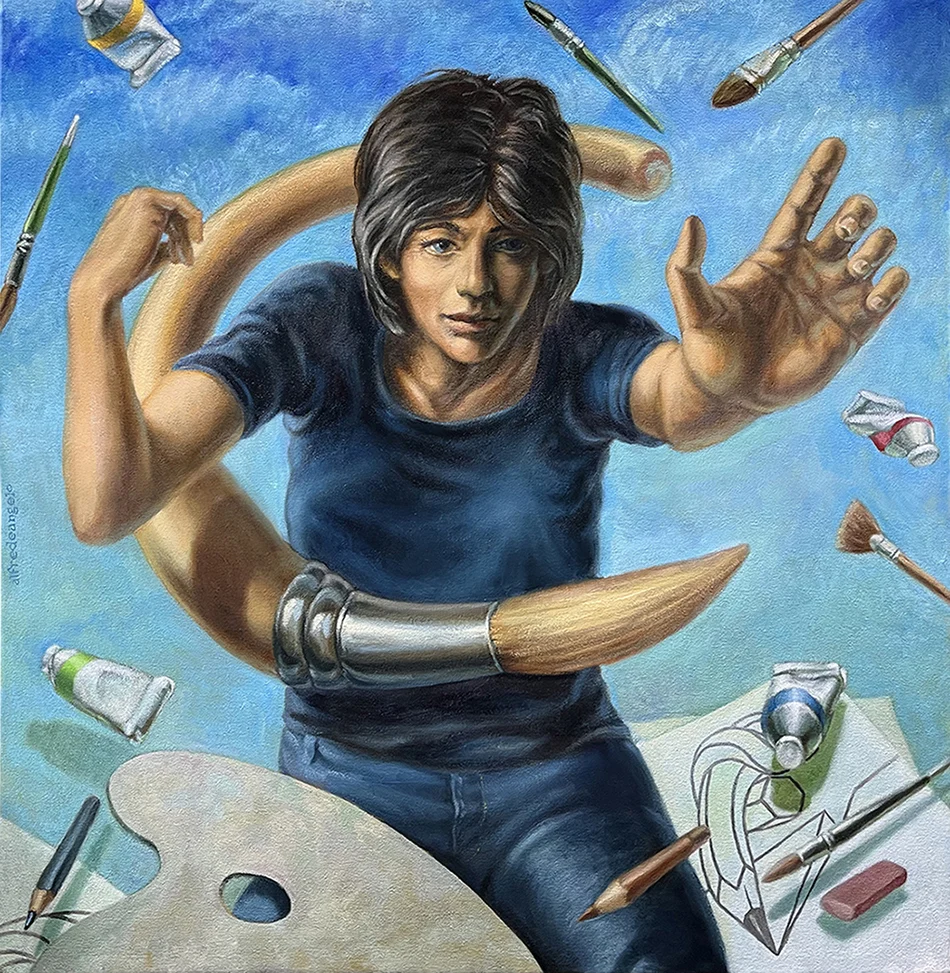
In the contemporary landscape of visual arts, where digital saturation and hyper-realistic renderings often dominate the cultural conversation, the traditional medium of oil and canvas continues to offer a unique, tactile depth that remains irreplaceable. At the forefront of this enduring tradition stands Alfred De Angelo, a painter whose work does not merely occupy space on a gallery wall but serves as a transformative threshold. De Angelo’s portfolio represents a sophisticated intersection of classical technical mastery and the avant-garde spirit of surrealism, creating a "sensual world of provocative beauty" that challenges the viewer’s perception of reality.
The work of Alfred De Angelo is characterized by a remarkable fluency—a seamlessness in execution that belies the complex, often bewildering psychological territory his images explore. His paintings function as "doorways," inviting the audience to step away from the mundane and into a realm where the subconscious is given form and color. This article explores the trajectory of De Angelo’s career, the philosophical underpinnings of his "private vocabulary," and the broader implications of his work within the 21st-century art world.
Main Facts: The Aesthetic of Provocative Beauty
Alfred De Angelo’s artistic output is defined by a singular commitment to exploring the "essential mystery of existence." Unlike many contemporary surrealists who lean toward the grotesque or the overtly political, De Angelo’s work is rooted in a refined sensuality. His images are beguiling, often luring the viewer in with their aesthetic grace before revealing layers of complexity that can lead to a productive state of confusion.
The Visual Language of Fluency
De Angelo is frequently cited for his "remarkable fluency and expertise." In the context of fine art, fluency refers to the ease with which an artist translates thought into form. His brushwork and compositional choices suggest a deep familiarity with the medium, allowing him to render dreamlike sequences with a clarity that makes them feel unsettlingly real. This expertise is not merely decorative; it is the tool he uses to "press against the limits" of the viewer’s understanding.
The Role of the Viewer
Central to De Angelo’s practice is the interaction between the painting and the observer. His work is designed to disrupt "well-worn patterns of thought." By presenting images that are simultaneously familiar and alien, he grants the viewer "permission to be amazed—and confused—and delighted." This tripartite emotional response—amazement, confusion, and delight—is the hallmark of De Angelo’s success as a surrealist. It creates a space where logic is suspended, and the viewer is forced to rely on intuition and emotion to navigate the visual field.
Chronology: The Academic Foundation of a Master
The sophistication of De Angelo’s work is no accident; it is the result of a rigorous academic journey through two of the United States’ most prestigious art institutions. His educational background provides the framework upon which his surrealist explorations are built.

The Massachusetts College of Art (BFA)
De Angelo’s formal training began at the Massachusetts College of Art and Design (MassArt) in Boston. Founded in 1873, MassArt is the only publicly funded independent college of art and design in the country. It has a long-standing reputation for fostering technical excellence and social awareness. It was here that De Angelo earned his Bachelor of Fine Arts (BFA), likely honing the fundamental skills of drawing, color theory, and composition that would later allow him to execute his complex surrealist visions with such "remarkable fluency."
The Rhode Island School of Design (MFA)
Following his undergraduate studies, De Angelo pursued his Master of Fine Arts (MFA) at the Rhode Island School of Design (RISD). Consistently ranked as the top art and design school in the world, RISD is known for its intense, studio-based curriculum and its emphasis on critical thinking. An MFA from RISD is a mark of significant prestige, indicating that the artist has moved beyond technical proficiency into the realm of conceptual innovation. At RISD, De Angelo would have been encouraged to develop the "private vocabulary of images" that defines his current work, moving away from representational art and toward the "through" view of outward appearances.
Supporting Data: The Mechanics of the "Private Vocabulary"
To understand De Angelo’s impact, one must look at the specific data points of his artistic philosophy. He describes his work as the development of a "private vocabulary," a term that suggests his paintings are a form of coded communication.
Subjectivity and Scale
De Angelo’s artist statement emphasizes that human experiences are "usually localized and subjective." He argues that our lives are a series of "impressions on a personal scale." This focus on the subjective is what separates his work from the "Grand Narratives" of historical painting. Instead of attempting to capture a universal truth through objective reality, he seeks to capture the feeling of reality as it is filtered through the individual psyche.
The Surrealist "Through-Line"
De Angelo’s objective is to "look ‘through’ outward appearances." This is a classic surrealist tenet, reminiscent of the works of Salvador Dalí or René Magritte, yet De Angelo applies it with a modern, sensual twist. By stripping away the surface-level identity of objects and figures, he attempts to "embody the essential mystery of existence." In a data-driven world where everything is categorized and explained, De Angelo’s insistence on "mystery" is a radical act of preservation for the human spirit.
Official Responses: The Artist’s Statement and Philosophical Stance
In his own words, Alfred De Angelo provides the most compelling defense of his artistic choices. His artist statement serves as a manifesto for his approach to the canvas, highlighting the tension between the seen and the unseen.

“Our experiences in life are usually localized and subjective, creating a series of impressions on a personal scale. I am continually developing a private vocabulary of images with which I attempt to express different aspects of these experiences.”
This statement underscores the artist’s role as a translator. He is not just painting pictures; he is developing a language. This "vocabulary" consists of recurring motifs, specific lighting choices, and a particular approach to anatomy and landscape that, when viewed across his body of work, creates a cohesive world.
“With my surrealist paintings I try to look ‘through’ outward appearances and somehow embody the essential mystery of existence.”
This second part of his statement reveals his ultimate goal: the embodiment of mystery. For De Angelo, the painting is successful if it leaves the viewer with a sense of the "essential mystery." It is an admission that not everything can be understood through the lens of rationalism, and that art’s highest calling is to represent the unrepresentable.
Implications: Surrealism in the Age of Artificial Intelligence
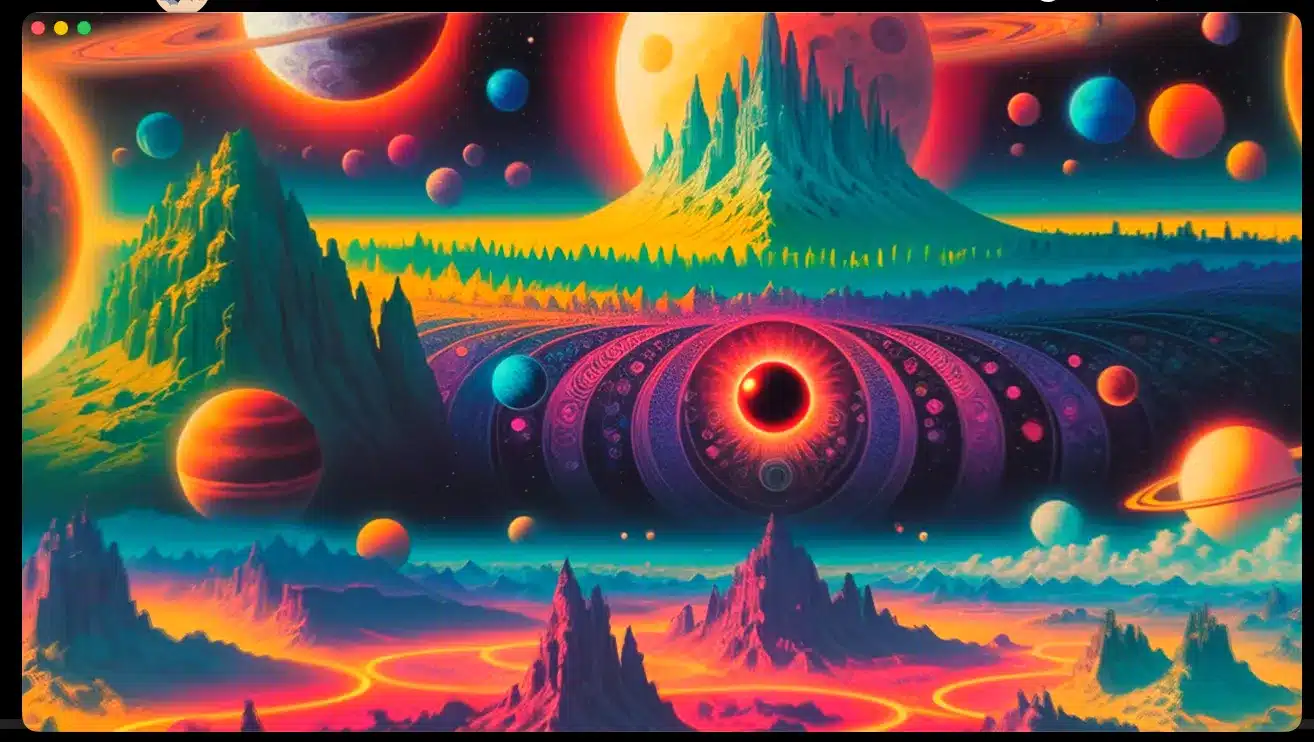
The emergence of Alfred De Angelo’s work in the current era carries significant implications for the future of the arts, particularly when contrasted with the rise of AI-generated imagery. As noted in related artistic developments—such as the "Infinidream AI" or the "Painterly AI Aesthetics of Jacob Holster"—the art world is currently grappling with the role of the human hand in creation.
The Value of the Human Touch
While AI can generate surreal images by recombining existing data points, it lacks the "localized and subjective" experience that De Angelo cites as the source of his inspiration. De Angelo’s work implies that true surrealism requires a soul—a personal history and a subjective perspective that an algorithm cannot replicate. His "fluency and expertise" are not just technical achievements; they are the physical manifestations of a human life spent observing and interpreting the world.
Surrealism as a Mental Health Tool
In an age of "well-worn patterns of thought" and digital fatigue, De Angelo’s paintings offer a form of cognitive liberation. By giving viewers "permission to be amazed and confused," he provides a psychological break from the rigid structures of modern life. His work suggests that the "delight" found in confusion is a necessary component of mental flexibility.
The Continuity of the Surrealist Lineage
De Angelo’s presence in the "Surrealism Today" ecosystem—alongside puppetry like "Big Nazo" and the "Henson Lineage"—highlights the diversity of the genre. His work serves as the "fine art" anchor for a movement that spans from the screen to the stage to the canvas. It proves that surrealism is not a relic of the 1920s but a living, breathing, and evolving response to the complexities of modern existence.
Conclusion: The Doorway Remains Open
Alfred De Angelo is more than a painter; he is a cartographer of the subconscious. Through his rigorous training at MassArt and RISD, he has acquired the tools to build a visual world that is as technically impressive as it is emotionally resonant. His work reminds us that beneath the "outward appearances" of our daily lives lies a deep, sensual, and provocative mystery that only art can truly embody.
As we look to the future of the visual arts, De Angelo’s paintings stand as a testament to the power of the individual voice. In his "private vocabulary," we find a universal invitation: to step through the doorway, to embrace the confusion, and to be profoundly amazed by the beauty of the unknown. For those seeking to explore his world further, his digital gallery at artistpainter.ws remains a vital resource for anyone wishing to experience the "essential mystery" firsthand.