The Hidden Financial Architecture of the Microsoft-Activision Merger: Beyond the Console Wars
Executive Summary: A Paradigm Shift in Gaming Revenue
In the high-stakes landscape of global gaming, the narrative is often dominated by the "console wars"—the perennial struggle for dominance between Sony’s PlayStation and Microsoft’s Xbox. However, a deep dive into the financial disclosures of Activision Blizzard, as highlighted by industry analyst Nicholas Lovell of Gamesbrief, reveals a reality that contradicts popular perception.
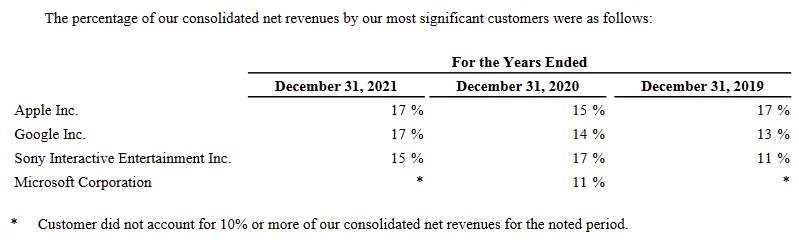
At the height of the scrutiny surrounding Microsoft’s $68.7 billion acquisition of Activision Blizzard, annual reports revealed a surprising truth: Microsoft accounted for less than 10% of Activision Blizzard’s total revenue. In contrast, Sony represented a significantly larger share, while mobile platforms (Apple and Google) commanded roughly one-third of the publisher’s earnings. This data suggests that the acquisition was not merely a move to bolster the Xbox console library, but a calculated strategic pivot toward mobile dominance and a rebalancing of power in an industry where traditional consoles are no longer the primary revenue engines.
I. Main Facts: The Revenue Breakdown That Surprised the Industry
To understand the strategic necessity behind Microsoft’s acquisition, one must first look at the cold, hard data found within Activision Blizzard’s SEC filings. Under standard accounting practices, a company must disclose any single customer that accounts for more than 10% of its total revenue.
In the fiscal years leading up to the 2022 acquisition announcement, the figures painted a startling picture:
- Mobile Dominance: Apple’s App Store and Google’s Play Store combined to account for approximately 33% (one-third) of Activision Blizzard’s revenue. This is largely driven by King (the makers of Candy Crush) and the massive success of Call of Duty: Mobile.
- Sony’s Lead: Sony was consistently listed as a major contributor, frequently exceeding the 10% threshold. For years, the Call of Duty franchise has seen its highest sales and engagement on the PlayStation platform.
- Microsoft’s Minority Stake: Perhaps most shocking was that Microsoft—the very company seeking to buy the publisher—accounted for less than 10% of Activision’s revenue. Because it fell below this threshold, Activision was not even required to name them as a primary revenue source in specific disclosures.
- The "Other" 43%: A massive portion of revenue (approximately 43%) came from sources outside the "Big Four" (Apple, Google, Sony, Microsoft). This includes Nintendo, PC platforms like Steam, advertising revenue, and Blizzard’s direct-to-consumer platform, Battle.net.
II. Chronology: The Road to the Largest Deal in Tech History
The evolution of Activision Blizzard from a traditional console publisher to a multi-platform titan is a decades-long story of consolidation.
- 2008: The Vivendi-Activision Merger. Activision merged with Vivendi Games, bringing Blizzard Entertainment (World of Warcraft, StarCraft) into the fold. This created a powerhouse with a massive PC presence.
- 2016: The King Acquisition. In a move that signaled the future of the industry, Activision Blizzard acquired King Digital Entertainment for $5.9 billion. This instantly shifted the company’s revenue balance toward mobile.
- 2019–2021: The Mobile Pivot. The launch of Call of Duty: Mobile and the announcement of Diablo Immortal solidified the company’s "mobile-first" strategy for its core IPs.
- January 2022: The Microsoft Bombshell. Microsoft announced its intent to acquire Activision Blizzard for $68.7 billion, the largest deal in the history of the video game industry and the largest in Microsoft’s history.
- 2022–2023: Regulatory Turbulence. The Federal Trade Commission (FTC) in the U.S., the Competition and Markets Authority (CMA) in the UK, and the European Commission launched intensive investigations into the deal, focusing on the potential for Microsoft to make Call of Duty an Xbox exclusive.
III. Supporting Data: Analyzing the "Platform Power"
The revenue distribution highlights a significant shift in how games make money. By analyzing the 2020-2021 data, we can see the "Walled Garden" effect and the rise of direct-to-consumer models.
The Console vs. Mobile Divide
While the media focuses on Xbox vs. PlayStation, the data shows that consoles (excluding PC) represent only about one-third of Activision Blizzard’s revenue. This is a seismic shift from the early 2000s, when console sales were the be-all and end-all of the business. The fact that Apple and Google—who do not develop games themselves—take a 30% cut of one-third of Activision’s revenue is a primary motivator for Microsoft. By owning the content, Microsoft hopes to build its own mobile store or leverage Game Pass to bypass the "mobile tax."

The Importance of Battle.net
Blizzard’s proprietary launcher, Battle.net, is a critical piece of the 43% "Other" revenue. By selling World of Warcraft subscriptions and Overwatch microtransactions directly to consumers on PC, Activision Blizzard avoids giving a 30% cut to a platform holder like Sony or Valve (Steam). This high-margin revenue is arguably more valuable than console revenue, where a significant portion is lost to platform fees.
The Nintendo Factor
Despite the massive success of the Nintendo Switch, Activision Blizzard’s revenue from the platform remained below the 10% disclosure threshold. This was largely due to the technical limitations of the Switch, which prevented the porting of the latest Call of Duty titles. One of Microsoft’s primary arguments to regulators was that they would bring Call of Duty to Nintendo’s 100+ million users, thereby increasing competition rather than stifling it.
IV. Official Responses and Regulatory Scrutiny
The acquisition faced unprecedented pushback, primarily from Sony and the FTC.
The Sony Defense
Sony’s official stance was that the deal was "anti-competitive." Jim Ryan, then-CEO of Sony Interactive Entertainment, argued that Call of Duty is a "must-have" title that influences console choice. Sony feared that Microsoft would eventually make the franchise exclusive to Xbox, or at least offer a degraded version on PlayStation. The financial data explains Sony’s desperation: they were making more money from Activision games than Microsoft was. Losing that revenue, and the 30% platform fee they collect on every Call of Duty transaction, would be a catastrophic blow to PlayStation’s bottom line.
The FTC’s New Philosophy
Under the leadership of Chair Lina Khan, the FTC took a "structuralist" approach to the merger. Moving away from the traditional "Consumer Welfare Standard" (which only looked at whether a deal would raise prices for consumers), Khan’s FTC looked at the broader impact on the ecosystem. They argued that Microsoft could use its dominance in cloud computing (Azure) and operating systems (Windows) to monopolize the future of game streaming.
Microsoft’s Counter-Argument
Microsoft’s legal team, led by Brad Smith, argued that they were "third place" in the console market. By highlighting that they represented less than 10% of Activision’s revenue, they painted themselves as the underdog trying to compete with the "market leader," Sony, and the "mobile gatekeepers," Apple and Google.
V. Strategic Implications: Why This Matters for the Future
The revelation that Microsoft was a minor player in Activision’s revenue stream before the acquisition changes our understanding of their long-term strategy.

1. The Mobile Trojan Horse
Microsoft didn’t pay $69 billion just for Call of Duty on Xbox. They paid for King. By acquiring the mobile infrastructure and expertise of the Candy Crush creators, Microsoft gained an immediate, massive foothold in the mobile market—a sector where they had previously failed (e.g., Windows Phone).
2. The Game Pass "Flywheel"
Microsoft’s goal is to transition from a "hardware-first" company to a "service-first" company. By bringing Activision’s massive catalog to Xbox Game Pass, they aim to create a "Netflix of Games." The goal is to shift the revenue split so that the 43% of "Other" revenue (direct-to-consumer) flows through the Microsoft ecosystem, regardless of whether the user is on a PC, a mobile phone, or a console.
3. Vertical Integration and Margins
By owning the content, Microsoft eliminates the 30% fee it would have paid to Sony for every copy of Call of Duty sold on PlayStation (though they have committed to keeping it on PlayStation for at least a decade). More importantly, they gain the leverage to challenge the Apple/Google duopoly on mobile.
4. The End of the Traditional Console Cycle
This data suggests we are entering a "post-console" era. When a publisher as large as Activision Blizzard makes more money from phones than from the two most powerful gaming consoles combined, the industry’s center of gravity has shifted. Future growth will not come from selling more $500 plastic boxes, but from capturing "engagement hours" across every device a consumer owns.
Conclusion
The financial snapshot provided by Nicholas Lovell serves as a reality check for the industry. While the public remains fixated on the rivalry between Xbox and PlayStation, the real battle is being fought on mobile screens and through direct-to-consumer platforms. Microsoft’s acquisition of Activision Blizzard was not an act of aggression against Sony; it was a desperate, multi-billion dollar attempt to remain relevant in a world where the traditional console platform is no longer the king of the hill. As the dust settles on the merger, the "10% revenue" figure will likely be remembered as the catalyst that forced Microsoft to redefine what it means to be a gaming company in the 21st century.