The Elusive Quest for Meaning: Can Language Truly Capture Reality?
London, UK – In an era saturated with information and rapid communication, a fundamental question continues to echo through the halls of philosophy: can the very tools we use to understand the world—language—truly represent it? This enduring puzzle, recently articulated by a curious mind, probes the inherent limitations of words and their capacity to grapple with profound philosophical inquiries. As William, a reader of philosophical discourse, poignantly asked, "Letters are just lines. The combinations are finite. So why do we fall so heavily onto language to communicate and solve the nature of big philosophical questions? Language will never have the capacity to represent reality, so why try? Why don’t we consider it a lost cause?"
This provocative query forms the bedrock of a rich philosophical tradition, one that Geoffrey Klempner, founder member of the International Society for Philosophers (ISFP), addresses with a historical and analytical approach. Klempner acknowledges the paradox at the heart of language: its apparent ability to represent an external reality, despite its constituent elements being mere lines or sounds. He asserts that the intention behind communication, the speaker’s intent, and the very concept of meaning are central to this ongoing philosophical debate.
The Genesis of the Linguistic Paradox: From Ancient Greece to the Enlightenment
The philosophical quandary of how words can signify the world around us is not a new one. Its roots can be traced back to ancient Greece, with Plato’s dialogue Cratylus being a seminal exploration. However, it was the pre-Socratic philosopher Heraclitus who first posed the foundational question: how can meaning exist when the world is in perpetual flux? Heraclitus famously posited that one can "never step into the same river twice." This observation highlights the challenge of applying a static label like "river" to an object that is constantly changing, its very composition different with each passing moment.
Centuries later, in the 17th century, English philosopher John Locke offered a compelling theory. Locke proposed that words function as labels for "ideas" generated by our five senses. The meaning of any statement, in this view, is derived from the combination of these sensory-informed ideas. This established a two-stage process: external reality is perceived, internal ideas are formed, and words are then attached to these internal representations. Meaning, therefore, is not inherent in the words themselves but arises from our internal cognitive landscape.
Simultaneously, on the European continent, Gottfried Wilhelm Leibniz, a contemporary and intellectual rival of Locke, envisioned a more ambitious solution. Leibniz contemplated the concept of a characteristica universalis, a universal language that would articulate reality with such clarity that all philosophical disputes could be settled through logical calculation. Leibniz’s pursuit implicitly acknowledged a crucial point: the very structure and nature of the language we employ inevitably impose limitations on our capacity for thought and understanding.
The Dawn of Modern Logic: Frege’s Revolution and the Quest for Precision
The 19th century witnessed a pivotal development in the formalization of thought with the work of Gottlob Frege, a German mathematician with a profound interest in philosophy. Frege is credited with creating the first effective system of symbolic logic, his Begriffschrifft (Concept Script). This groundbreaking work was capable of representing quantifiers—terms like "All x" or "Some x"—in a manner that clearly delineated all possible logical relationships between quantified statements. This was a monumental achievement, having eluded brilliant minds like Aristotle and numerous philosophers for centuries.
Frege’s logical system provided a powerful new tool for analyzing the structure of thought and language. His work laid the groundwork for subsequent philosophical investigations into the nature of meaning and reference, paving the way for even more radical shifts in understanding.
Wittgenstein’s Labyrinth: The Picture Theory and its Dissolution
It was within this fertile intellectual landscape that Ludwig Wittgenstein, an Austrian mathematician and philosopher, made his revolutionary contributions. In the early 20th century, Wittgenstein’s intellectual journey led him to Cambridge, where he encountered Bertrand Russell, a prominent figure who had further developed Frege’s ideas on symbolic logic. Russell, unlike Frege, saw his work as contributing not only to mathematics but also to epistemology and metaphysics, seeking to understand how language could serve as a vehicle for knowledge about the external world.
Wittgenstein’s initial foray into the philosophy of language, particularly during his wartime experiences where he penned his influential 1914-1918 Notebooks, culminated in his seminal post-war publication, the Tractatus Logico-Philosophicus. This work, which profoundly impacted Klempner and countless other students of philosophy, proposed what became known as the "picture theory of meaning."
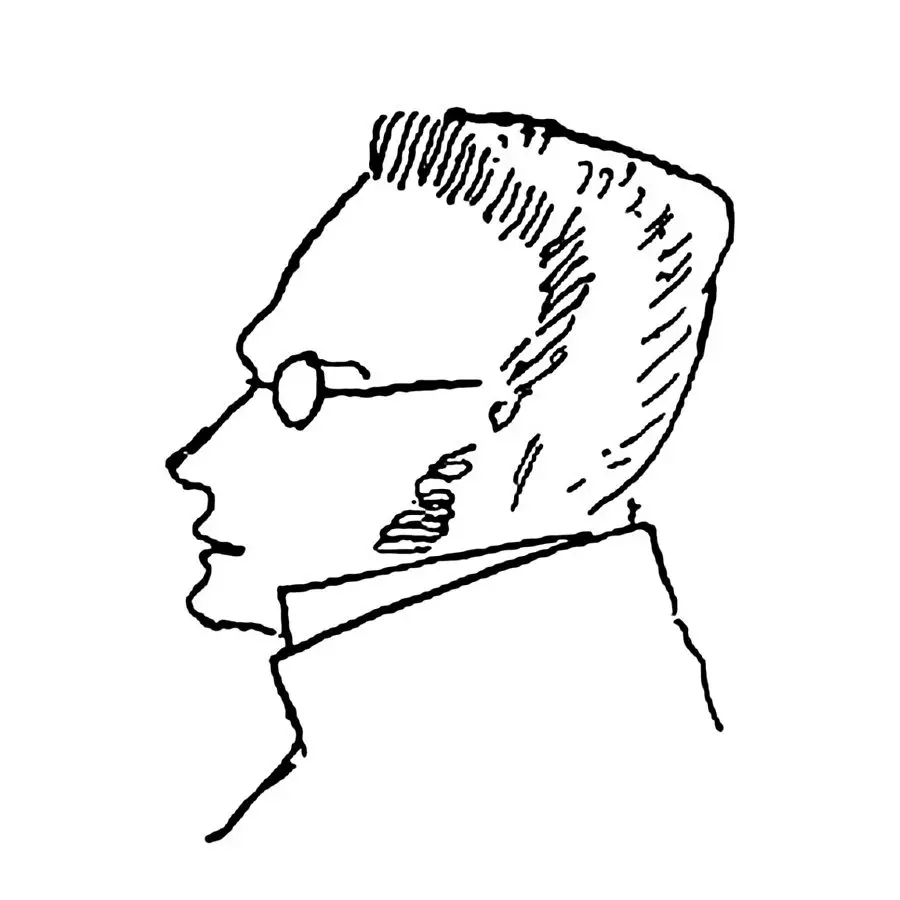
The core tenet of the picture theory is that language functions like a mirror, reflecting the structure of reality. Wittgenstein posited that any proposition that can be meaningfully uttered can ultimately be broken down into simple, "atomic" sentences. These atomic sentences, in turn, refer to discrete "bits of the world" and their structure mirrors the relationships that exist between these bits. An analogy often employed is that of chess notation, where every possible move and game state can be represented algebraically. While the external world may not appear as neatly structured as a chessboard at first glance, Wittgenstein argued that, at its fundamental level, it operates according to similar logical principles.
This was indeed a mind-bending proposition: that the very fabric of reality could be mapped onto the structure of language, and vice-versa. The Tractatus suggested that if language could adequately picture facts, then all meaningful statements would be factual assertions.
The Limits of the Picture: When Language Fails to Capture Truth
However, Wittgenstein himself, in his later philosophical work, came to recognize the profound limitations of his earlier picture theory. He concluded that it was not a satisfactory answer to the fundamental question of how words acquire meaning. For the purpose of addressing William’s query, Klempner emphasizes Wittgenstein’s stark assertion in the Tractatus: "nothing can be said that isn’t resolvable into pictures of reality, or representations of plain fact."
This led to a radical conclusion: much of what is considered philosophical discourse, particularly concerning abstract concepts like ethics, values, and the fundamental nature of existence, falls outside the purview of meaningful language. According to this view, statements about morality, beauty, or the sheer fact of existence—"Why is there anything at all?" or "Why am I here to experience it?"—are, from an objective standpoint, "gibberish." While these questions may resonate subjectively, carrying apparent meaning in our minds, they do not, in Wittgenstein’s early framework, correspond to any discernible factual pictures of the world. Consequently, they are deemed to be "not saying anything" objectively.
Navigating the Unsayable: Language Games and the Elusive Search for Meaning
The implications of this stringent view are profound. If language is primarily a tool for depicting factual reality, then the vast landscape of human experience—our emotions, aspirations, moral judgments, and existential ponderings—seems to be relegated to the realm of the ineffable.
In his later philosophy, Wittgenstein attempted to grapple with this challenge by introducing the concept of "language games." This idea suggests that language operates within various contexts and serves diverse functions, akin to games with their own rules and purposes. Discourse about God, values, or the ultimate nature of reality, from this perspective, could be viewed as distinct "language games" played with words, legitimate within their own human-centric frameworks.
However, Klempner, reflecting on William’s original question, expresses a common frustration with this approach. He argues that when individuals pose these profound philosophical questions, they are not merely "playing" with words; they genuinely "mean" what they say. They are seeking an objective reality, a desire to "know." The frustration lies in the inability of any linguistic theory to fully articulate precisely what it is that one "means" to convey when grappling with these deep existential and ethical concerns. The gap between intention and articulation, between the internal experience of meaning and its external expression, remains a persistent and often daunting philosophical challenge.
The Enduring Mystery: Why We Continue to Strive for Understanding
Despite the inherent limitations of language, the human impulse to communicate, to understand, and to explore the profound questions of existence remains undiminished. The historical trajectory from Heraclitus’s observations on flux to Wittgenstein’s rigorous analysis of logical structure demonstrates a continuous, albeit sometimes fraught, engagement with the relationship between language and reality.
The pursuit of philosophical understanding, even when couched in the imperfect medium of language, is an essential aspect of the human condition. While language may never perfectly encapsulate the entirety of reality, it remains our primary, and perhaps only, tool for attempting to do so. The very act of questioning the capacity of language is, paradoxically, a testament to its indispensable role in our intellectual and emotional lives. The quest for meaning, though perpetually challenged by the finite nature of words, continues to drive our inquiries into the deepest mysteries of existence. The "lost cause" that William suggests might, in fact, be the most vital and enduring human endeavor.