"The Bystander" Unveils a New Dimension of Horror: Where Tropes Become Destiny
FOR IMMEDIATE RELEASE
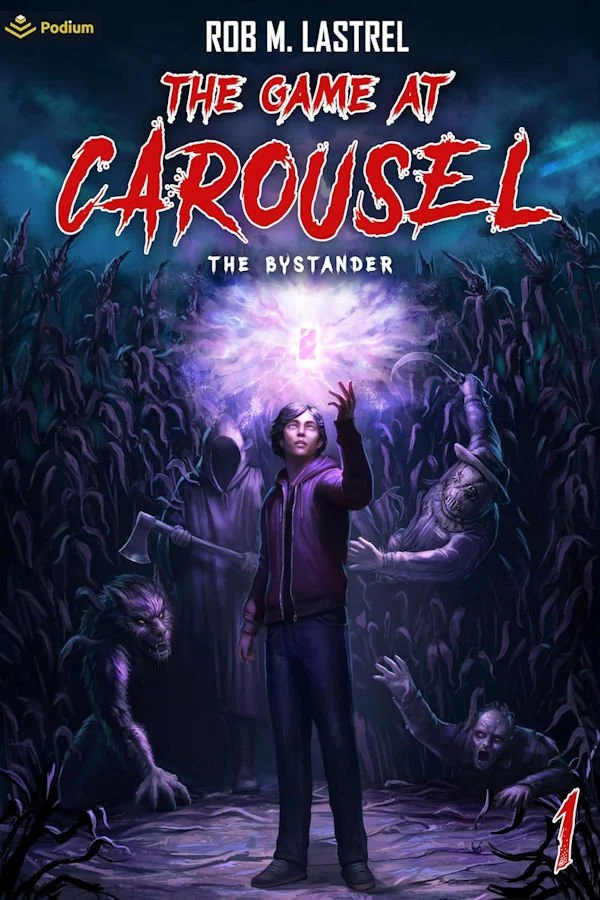
In an era saturated with meta-narratives and genre-bending explorations, a new literary work is poised to captivate audiences by plunging them directly into the heart of their deepest cinematic fears. "The Bystander," a compelling novel penned by Lastrel, is redefining the boundaries of GameLit and horror, offering a fresh, self-aware take on the classic struggle for survival within a deadly, manufactured reality. Blurring the lines between interactive fiction and psychological thriller, the book introduces readers to a meticulously crafted world where film tropes are not merely narrative devices but tangible abilities and fatal vulnerabilities.
This innovative approach positions "The Bystander" as a significant entry in contemporary speculative fiction, appealing not only to aficionados of GameLit and LitRPG but also to a broader audience fascinated by the deconstruction of horror conventions. Its premise – a group of college friends trapped in a deadly game where they must embody archetypes from classic horror cinema – promises a thrilling, cerebral experience that challenges both characters and readers to question the very fabric of their perceived reality.
Main Facts: A Desperate Game of Archetypes
"The Bystander" thrusts protagonist Riley Lawrence, a self-proclaimed horror obsessive, and his college companions into the eerie town of Carousel. What initially appears to be a quaint destination for a Centennial Celebration quickly devolves into a terrifying ordeal. Upon entering a seemingly locked building, they are greeted by an animatronic usher who dispenses tickets, each bearing a designated archetype: Scholar, Athlete, Eye Candy, Final Girl, and Riley’s own fateful assignment, the Film Buff. This isn’t a mere role-playing exercise; it’s a horrifying, inescapable game where these archetypes dictate their actions, abilities, and, most critically, their chances of survival in a meticulously designed patchwork of horror movie sets.
The novel’s core innovation lies in its treatment of "tropes" as tangible skills and limitations. Riley, as the Film Buff, possesses the uncanny ability to foresee the killers’ moves and understand the unfolding horror scenarios, yet he is inherently doomed to be an early victim—a tragic knowing observer. However, a crucial discovery offers a glimmer of hope: the exploitation of the "Oblivious Bystander" trope. By convincingly feigning ignorance of imminent danger, Riley finds he can momentarily circumvent the killers’ attention, a paradoxical shield in a world governed by cinematic rules.
The overarching objective for Riley and his friends transcends mere survival; they must decipher the mechanics of Carousel, understand what traps them, and leverage their assigned tropes to find a way out. As rounds of deadly simulations persist and escape seems increasingly remote, the narrative compels both characters and readers to confront a chilling question: Can they truly survive a horror movie when they are unwilling participants in its script? The stakes are not just physical, but existential, as their very identities become intertwined with the roles they are forced to play.
The Unveiling of Carousel: A Chronicle of Terror
The descent into the nightmare of Carousel is both abrupt and insidious, mirroring the classic horror narrative where innocence gives way to an unsettling realization. The initial arrival of Riley Lawrence and his group of college friends in Carousel is marked by a deceptive tranquility. The "few decrepit cars parked in the street" hint at an abandoned, forgotten place, yet fail to instill genuine fear in the horror-savvy students. Their initial dismissiveness, a common trope in itself, sets the stage for the profound shock that awaits them.
Initial Descent into the Nightmare
The pivotal moment arrives when the group gains entry to a seemingly ordinary, yet locked, building. This act of forced entry, a subtle violation of boundaries, marks their definitive crossing into Carousel’s sinister reality. The appearance of an animatronic usher, a grotesque harbinger of their fate, further blurs the line between benign entertainment and sinister control. Each ticket dispensed is not just an entry pass but a binding contract, assigning each individual a role in the unfolding drama. The dimming lights serve as the metaphorical curtain rising, signifying the commencement of a performance from which there is no intermission. Riley’s dawning realization that they are trapped within an "inescapable patchwork of a horror movie set" is the narrative’s central revelation, instantly elevating the stakes from a casual college trip to a life-or-death struggle orchestrated by unknown forces. The initial horror is not just the immediate danger, but the chilling understanding that their reality has been rewritten, conforming to the brutal logic of slasher films and supernatural thrillers.
Riley Lawrence and the Burden of Foresight
Riley Lawrence’s assignment as the Film Buff archetype is a double-edged sword, a cruel twist of fate for someone whose passion is horror cinema. He is granted the intellectual advantage of foresight, understanding the mechanics, anticipating the killer’s next move, and identifying the very tropes at play. This meta-awareness, however, comes with a dire personal cost: the Film Buff is "doomed to repeat knowing exactly who the killer is but never surviving the attacks himself." It’s a tragic role, where knowledge is power, but not protection. This inherent vulnerability underscores the malicious ingenuity of Carousel’s design, ensuring that even the most informed player remains a pawn.
His subsequent discovery of the "Oblivious Bystander" trope becomes a desperate lifeline. The ability to avoid harm by convincingly feigning ignorance of monsters and killers introduces a fascinating layer of strategic deception. It forces Riley to actively suppress his intrinsic knowledge and embrace a performative innocence, turning a character weakness into a temporary strength. This manipulation of a common horror cliché is a testament to the novel’s cleverness, allowing Riley moments of reprieve and offering a unique avenue for survival that challenges the established rules of his archetype. The ongoing struggle for Riley and his friends is to master these assigned roles, to understand the intricate interplay of their "tropes," and to ultimately decipher the purpose and architects of their deadly game.
Deconstructing the Horror: Mechanics and Meta-Narrative
"The Bystander" stands out not just for its premise but for its meticulous deconstruction of horror conventions, translating them into concrete game mechanics. The narrative thrives on its meta-commentary, inviting readers to analyze the very structures that underpin their favorite horror stories. This intellectual engagement, combined with visceral thrills, creates a truly immersive and thought-provoking experience.
Tropes as Abilities: A Cinephile’s Lexicon
The book’s most distinctive feature is its reinterpretation of narrative "tropes" as functional abilities within the GameLit framework. Unlike traditional LitRPG where abilities might be magical spells or combat skills, "The Bystander" draws its lexicon directly from film theory and genre conventions. This approach offers a rich tapestry of powers and weaknesses, allowing for hundreds of abilities "named from lines in classic horror, science fiction, and fantasy movies." For instance, a character might gain a temporary buff from a trope like "Don’t Go In There!" offering heightened awareness, or suffer a debuff from "The Call Is Coming From Inside the House," inducing paranoia. This clever system not only grounds the narrative in cinematic history but also provides a dynamic, unpredictable set of challenges and opportunities for the characters, making every decision a strategic gamble within a known, yet twisted, framework.
The Archetypal Cast and Their Predetermined Fates
Central to Carousel’s horrifying design are the assigned archetypes, which dictate not only initial abilities but also psychological predispositions. Each character is forced to inhabit a role – Scholar, Athlete, Eye Candy, Final Girl, Film Buff, Monster Hunter, Hysteric – complete with associated skills and flaws. The reviewer highlights the compelling example of the Athlete character, who despite being "relatively clever and is studying to become a lawyer," is compelled by his role’s "low Savvy stat" to embody the "dumb jock stereotype." This internal conflict between a character’s true self and their assigned role offers profound insights into their feelings and personalities.
The book skillfully uses these archetypes to explore character depth. The "badass veteran character, Arthur," finds genuine satisfaction in his "monster-hunter role," a stark contrast to his "cynical, hopeless real-life persona." Even the "Hysteric" archetype, often a figure of derision in horror, is shown to possess "useful abilities tied to it," subverting expectations and proving that every role has its utility within Carousel’s twisted logic. This forced embodiment creates compelling dramatic tension, as characters grapple with their predetermined fates while simultaneously striving to leverage their roles for collective survival.
Echoes of Tabletop Roleplaying: Rules and Consequences
For aficionados of TTRPGs (table-top role-playing games), the mechanics of "The Bystander" resonate deeply with the experience of playing a campaign. The scenarios within Carousel mirror the structured progression of a TTRPG, featuring distinct stages such as an "omen stage, a party stage, a first blood stage," much like the board games Betrayal of House on the Hill or Trouble Brewing. A critical parallel lies in the rule that "players cannot act on information the characters they are playing do not know." This distinction, between player knowledge and character knowledge, is a cornerstone of effective role-playing and is rigorously enforced within Carousel. Characters must respond authentically to their in-scene realities, even if the individual playing them possesses meta-knowledge.
The "rules of Carousel" are often "intuited by most of the characters," with dire consequences for those who fail to adhere. This punitive system, akin to "a player being kicked out of a campaign" for breaking the rules, underscores the high stakes and the pervasive sense of being controlled by an unseen game master. This shared lack of explicit knowledge between characters and readers creates a powerful bond, as both parties learn the brutal laws of Carousel together, experiencing its dangers and revelations in tandem.
Self-Awareness and the Lampshade Effect
The novel masterfully employs self-aware meta-commentary, drawing direct comparisons to films like Cabin in the Woods. The more the characters understand the tropes and plot structures they are forced to inhabit, the richer the narrative becomes, particularly when they attempt to defy their predetermined fates. This "lampshade effect" allows author Lastrel to preemptively address potential plot holes or contrived scenarios. As the reviewer notes, "It’s incredibly hard to call out something in a story when the main character has literally called it before you could even think of it."
This narrative strategy imbues even the most implausible scenes with a sense of naturalism, as the characters’ actions are often dictated by the inherent "nature of the game." Riley’s Film Buff archetype, with his ability to see "stats and abilities of other characters and NPCs," creates constant "self-aware, meta moments." These moments are not merely comedic; they serve to deepen the mystery of Carousel, suggesting a deliberate, intelligent design behind their torment. The continuous interplay between characters trying to outwit the game and the game’s relentless adherence to its own rules forms the exhilarating core of "The Bystander."
Critical Reception and Authorial Intent
The initial reception of "The Bystander" underscores its potential to carve a unique niche within contemporary speculative fiction. While the primary source is a detailed review, its insights offer a comprehensive understanding of the book’s strengths and areas for potential narrative refinement, reflecting the author’s ambitious intent.
Navigating Praise: Innovation and Engagement
The book is lauded for its innovative genre fusion, described as "something else" beyond typical GameLit/LitRPG conventions. The reviewer, a veteran of the genre, expresses profound enjoyment of the "mechanics and tropes," specifically highlighting the unique "cinephile’s lexicon" that defines its abilities. This praise points to Lastrel’s successful execution of a novel concept, effectively marrying the systematic progression of game-like narratives with the rich, referential world of horror cinema. The meta-moments, where Riley’s film buff knowledge allows him to predict and comment on the unfolding horror, are celebrated as "excellent self-aware" contributions that elevate the narrative beyond a simple survival story.
Furthermore, the depth of characterization, achieved indirectly through the archetypal roles, is a significant point of commendation. The reviewer notes how characters’ responses to their assigned roles provide "incredible insight into their feelings and personalities," showcasing the psychological complexity Lastrel weaves into the high-concept premise. The comparison to TTRPGs further solidifies the book’s appeal to an audience appreciative of intricate world-building and dynamic character interaction, suggesting a thoughtful authorial intent to craft a deeply engaging and layered experience.
Addressing the Labyrinth: Challenges in Narrative Progression
Despite the strong commendations, the review also identifies areas where the narrative, by its very design, presents a challenge to reader engagement. A notable concern is the "difficult[y] to get a clear sense of progression in their attempts to escape this world," which often feels like a "one-step-forward, two-steps-back approach." This cyclical pattern, while perhaps an intentional reflection of the inescapable nature of Carousel, can lead to a perceived lack of momentum in the overarching escape narrative.
The reviewer suggests that the constant introduction of "new abilities and stat increases often feel like a distraction from the true conflict at hand," implying that the intricate GameLit mechanics, while clever, occasionally overshadow the primary goal of liberation. This critique highlights a delicate balance Lastrel must strike between showcasing the ingenious "Carousel framing device" for various horror scenarios and maintaining a compelling forward thrust in the characters’ ultimate quest for freedom. The most potent conflict, as observed, is "driven by the characters’ attitudes toward the world and their lack of progress in escaping it," indicating that the emotional and psychological toll of their entrapment resonates most powerfully with readers. This feedback, while critical, serves to illuminate the complex narrative choices inherent in such an ambitious project.
Beyond the Screen: Implications for the Genre
"The Bystander" is more than just a captivating read; it represents a significant evolutionary step for its constituent genres. Its innovative blend of mechanics and thematic depth has implications for the future trajectory of GameLit, horror, and meta-fiction alike.
Redefining GameLit: A Hybrid Genre’s Evolution
Lastrel’s "The Bystander" pushes the boundaries of GameLit and LitRPG by pivoting away from traditional fantasy or sci-fi gaming conventions towards a cinephile’s lexicon of horror tropes. This novel approach demonstrates the genre’s immense flexibility and potential for thematic innovation. By embedding the "game" within the very fabric of cinematic storytelling, the book opens avenues for future GameLit authors to explore mechanics derived from diverse cultural touchstones, rather than solely video game logic. It suggests a future where the "game" aspect can be intellectual and analytical, rather than purely skill-based, enriching the genre with sophisticated meta-narratives and intertextual references. This hybridity could inspire a new wave of GameLit that appeals to a broader, more literary audience, transcending the perceived niche status of its origins.
The Enduring Appeal of Meta-Horror
The book’s success in leveraging meta-horror, drawing parallels to Cabin in the Woods, speaks to a profound shift in audience appreciation for the genre. Contemporary horror audiences are increasingly savvy, aware of tropes, and eager for narratives that acknowledge and play with these conventions. "The Bystander" taps into this desire by making meta-awareness a crucial survival tool, transforming passive observation into active participation. This approach validates the audience’s knowledge and provides a cathartic experience as familiar horror clichés are both celebrated and subverted. The enduring appeal lies in the intellectual thrill of deconstruction, coupled with the visceral fear of being caught in the very narrative traps one understands so well. It solidifies meta-horror not just as a comedic device but as a powerful vehicle for psychological tension and existential dread.
The Road Ahead: Unraveling Carousel’s Mysteries
The reviewer’s concluding statement – "I’m going to keep reading this series and see where it goes, and if that’s not a recommendation, I don’t know what is" – underscores the compelling nature of "The Bystander." This commitment reflects the potent hook of its central mystery and the desire to see how Lastrel resolves the intricate web of Carousel’s rules and the characters’ ultimate fate. The series promises to continue exploring the psychological toll of forced archetypes, the evolving strategies for survival, and the ultimate truth behind their enigmatic prison. As the characters gradually learn more about their confinement, so too will readers hope for a clearer sense of progression towards escape. The implications are that "The Bystander" is not just a standalone novel but the beginning of a significant series that could profoundly influence the landscape of genre fiction, challenging conventions and delivering both intellectual stimulation and heart-pounding suspense. The journey through Carousel, with its myriad horrors and meta-commentaries, has only just begun.