The End of an Era for VR: Polyarc Games Shuts Down After Twelve Years

The landscape of virtual reality gaming has lost one of its most foundational pillars. Polyarc Games, the Seattle-based studio that redefined the possibilities of third-person storytelling in VR through the beloved Moss series, has officially announced its closure. After nearly twelve years of operation, the studio confirmed that it is winding down active development and saying farewell to its staff, marking a somber milestone in the ongoing volatility of the modern gaming industry.
The announcement comes as a profound shock to both the industry and the VR community. Polyarc was not merely another developer; it was a pioneer that proved VR could be about more than first-person shooters or technical tech demos. Through the character of Quill, a diminutive but courageous mouse, Polyarc forged an emotional connection between the player and the protagonist that remains a gold standard for the medium.
The Final Farewell: A Studio Winds Down
The news of the closure was delivered via a poignant statement on Polyarc’s official LinkedIn account. The post, characterized by a mix of pride and mourning, signaled the conclusion of a journey that began in 2015 when a group of former Bungie veterans set out to explore the nascent potential of high-end virtual reality.

"Today is the end of an era for Polyarc," the statement read. "After nearly 12 years riding the joyous rollercoaster of emotions that is making video games, our time together has come to an end. As we wind down active development, we are saying our farewells to each other."
The studio emphasized the honor of bringing "surprise and delight" to players over the past decade. In a final act of corporate responsibility and camaraderie, Polyarc shared a public spreadsheet listing the names and positions of the affected employees, urging other studios in the industry to hire the "exceptional developers" who were now entering the job market. This move highlights the human cost of the closure, particularly following a brutal year for the gaming sector at large, which has seen tens of thousands of layoffs across both indie and AAA spaces.
A Chronology of Innovation: From Bungie to Quill
To understand the weight of Polyarc’s closure, one must look back at the studio’s trajectory. Founded by Tam Armstrong, Danny Bulla, and Chris Alderson, the studio was born from a desire to apply the high-level design principles of major franchises like Destiny and Halo to the intimate, immersive world of VR.

The Birth of a Legend: Moss (2018)
In February 2018, Polyarc released Moss on the original PlayStation VR. It was a revelation. While most VR developers were obsessed with "being" the character, Polyarc cast the player as the "Reader," a giant spectral presence that assisted the tiny hero, Quill. This "diorama" style of gameplay solved many of the comfort issues associated with VR movement while creating a unique sense of scale and companionship.
The game was an immediate critical darling. It wasn’t just the mechanics; it was the artistry. The lush forests, ancient ruins, and the expressive animations of Quill—who communicated with the player via sign language—set a new bar for character-driven VR. Moss eventually migrated to PC VR and became a flagship launch title for the Oculus Quest in 2019, cementing its place as a "must-play" title for any new headset owner.
The Expansion: Moss: Book II (2022)
The sequel, Moss: Book II, arrived in early 2022. It took everything that worked in the first game and expanded upon it, offering deeper combat, more complex environmental puzzles, and a more emotionally resonant narrative. The industry responded with universal acclaim. Moss: Book II won VR/AR Game of the Year at The Game Awards and earned multiple D.I.C.E. Awards, proving that Polyarc had avoided the "sophomore slump" and was capable of sustaining a world-class franchise.

The Strategic Pivot: Glassbreakers (2023-2024)
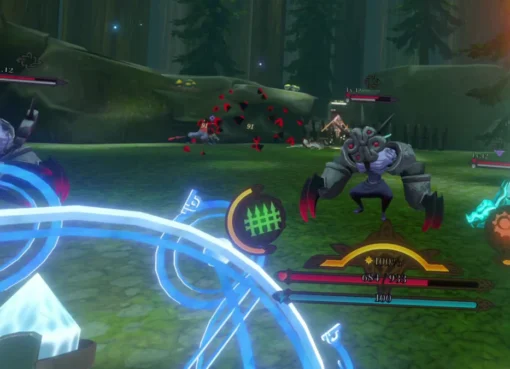
As the VR market began to shift toward live-service models and competitive multiplayer, Polyarc attempted to diversify. They developed Glassbreakers: Champions of Moss, a PvP (player-versus-player) strategy game set in the same universe.
While the game was praised for its tactical depth and charm, it struggled to find a foothold in the crowded competitive market. After an extended beta period and a full launch in late 2024, the game failed to replicate the viral success of the mainline Moss titles. Reviews on Steam remained "Mixed," and the player base never reached the critical mass required to sustain a live-service ecosystem.
Supporting Data: The High Cost of Critical Success
The tragedy of Polyarc’s closure lies in the disconnect between critical acclaim and financial sustainability. By any artistic metric, Polyarc was a triumph. The Moss franchise boasts over 160 awards and nominations. The original Moss currently holds over 7,000 five-star reviews across various platforms, a staggering number for a VR-exclusive title.

However, the internal health of the studio had been precarious for some time. In March 2024, Polyarc underwent a massive restructuring, laying off two-thirds of its workforce. At the time, the studio hoped that a leaner team could bridge the gap to their next big release.
The "Hail Mary" for the studio was Moss: The Forgotten Relic, a flatscreen (non-VR) port released in July 2024. This version combined both Moss and Book II into a single experience, aimed at the much larger traditional gaming market on consoles and PC. Prior to its launch, Polyarc reported that the game had amassed over 200,000 wishlists on Steam. In the world of indie publishing, 200,000 wishlists is typically a harbinger of a major hit.
The fact that the studio is closing just months after this release suggests a grim reality: the conversion rate from wishlists to sales was likely insufficient to cover the studio’s existing debts or the high costs of maintaining a team in an expensive tech hub like Seattle.

Official Responses and Industry Reaction
The industry’s reaction to Polyarc’s dissolution has been one of collective mourning. Developers from across the globe have taken to social media to share their experiences with Moss and their respect for the team’s craftsmanship.
"Polyarc showed us that VR didn’t have to be loud or aggressive to be immersive," said one veteran VR developer on X (formerly Twitter). "They gave the medium a heart. Seeing them go is a warning sign for all of us working in the immersive space."
The studio’s own final statement was notably devoid of bitterness, focusing instead on the gratitude they felt for their community. By providing the recruitment spreadsheet, they signaled that their priority in their final days was the well-being of the people who had built Quill’s world. This gesture has been lauded as a "class act" by industry observers, contrasting with other recent studio closures that have left employees with little more than a locked Slack account and a brief email.

Implications: What This Means for the VR Industry
The closure of Polyarc is more than just the end of a single company; it is a sobering data point regarding the current state of the VR industry.
1. The "Trough of Disillusionment"
The VR market is currently navigating what Gartner’s Hype Cycle calls the "trough of disillusionment." While hardware like the Meta Quest 3 and Apple Vision Pro continue to iterate, the software market remains difficult for mid-sized independent studios. Polyarc’s inability to survive despite having the most recognizable IP in the space suggests that the "middle class" of VR development is disappearing. Studios are either tiny indie teams with low overhead or massive first-party developers (like Meta or Sony) who can afford to lose money on software to sell hardware.
2. The Difficulty of the VR-to-Flatscreen Transition
Polyarc’s attempt to move into the flatscreen market with The Forgotten Relic highlights a difficult truth: VR-first games are often so specifically designed for the medium that they lose some of their "magic" when translated to a standard monitor. While Moss was a masterpiece in a headset, it faced stiff competition in the crowded "action-adventure" genre on Steam and consoles. The failure of 200,000 wishlists to save the studio indicates that the "curiosity" of the general gaming public doesn’t always translate into a sustainable revenue stream for former VR exclusives.

3. The Future of the Moss IP
The most immediate question for fans is: what happens to Quill? With the studio closing, the intellectual property rights for Moss and Glassbreakers enter a state of uncertainty. If the studio is liquidated, the IP may be sold to another publisher or held in a holding company. There is a slim hope that a larger entity—perhaps Meta or Sony, who both benefited greatly from Moss’s presence on their platforms—might step in to acquire the rights and the core talent, but no such plans have been announced.
4. A Talent Exodus
The loss of Polyarc means that dozens of experts in VR interaction design, spatial audio, and 3D storytelling are now looking for work. While this is a tragedy for the individuals, it may lead to a "dandelion effect," where Polyarc’s DNA is spread throughout the rest of the industry as these developers join new teams. However, in a year of record-breaking industry-wide layoffs, the job market they are entering is historically hostile.
Conclusion: A Legacy Written in Sign Language
Polyarc Games leaves behind a legacy that cannot be measured solely in profit and loss statements. They proved that virtual reality could be a place of quiet wonder, of tactical thinking, and of genuine emotional stakes.

When players think of Polyarc, they won’t think of the "Mixed" reviews of Glassbreakers or the financial struggles of 2024. They will think of the first time they reached into the world of Moss to move a platform for Quill, and the way she looked up, met their eyes, and gave a small, thankful wave.
In a medium often defined by its technical specs—field of view, refresh rates, and haptic feedback—Polyarc reminded us that the most important component of any game is the soul. While the studio’s "work is now finished," the impact they had on the early years of virtual reality will be felt for as long as people put on headsets to visit other worlds.