The Architecture of Self-Defeat: Exploring Slavoj Žižek’s Radical Critique of Self-Sabotage and the Modern Condition
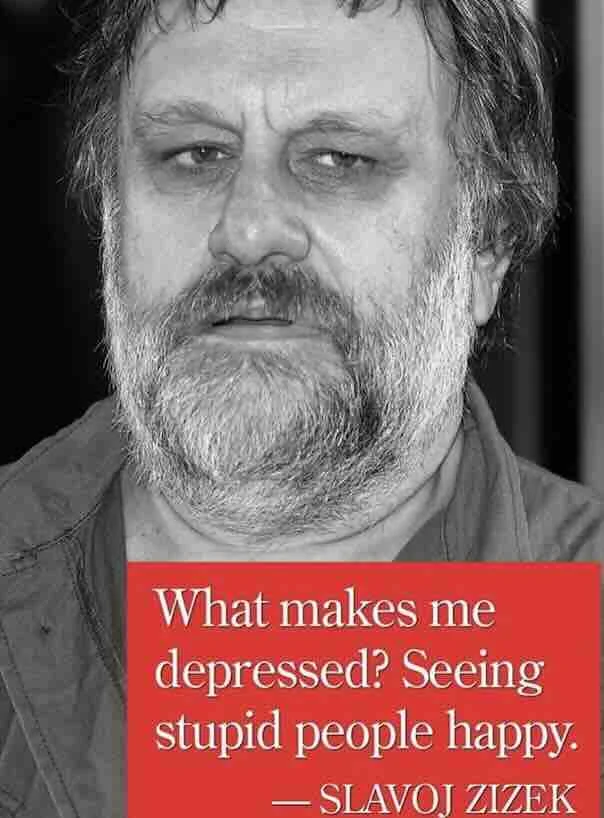
The phenomenon of self-sabotage has long been a staple of clinical psychology and self-help literature, usually framed as a temporary lapse in judgment or a symptom of low self-esteem. However, a growing body of philosophical inquiry, led by the provocations of Slovenian philosopher Slavoj Žižek, suggests that our tendency to undermine our own progress is neither accidental nor a simple "glitch" in the human psyche. Instead, Žižek posits that self-sabotage is a highly consistent, deeply invested behavior rooted in the way we construct our identities and navigate modern ideology.
By moving beyond the "positive thinking" paradigms that dominate contemporary discourse, Žižek’s analysis reveals a more complex reality: we often actively collaborate in our own stagnation because we derive a specific, albeit "ugly," form of satisfaction from it.
Main Facts: The Paradox of the Self-Sabotaging Mind
The central premise of the Žižekian view on self-sabotage is that the human subject is not a unified, transparent entity. Traditional self-help assumes a "wise, good person" who has simply lost their way. In contrast, Žižek, drawing heavily on Lacanian psychoanalysis, argues that we are fractured beings who frequently do not know what we want—and are often terrified of actually getting it.
Self-sabotage, in this context, is reclassified as a defense mechanism against the radical responsibility of success and the "void" of the true self. The primary mechanisms identified include:
- Jouissance: A psychoanalytic term for a "painful pleasure" or the "ugly thrill" found in repetitive, self-destructive patterns.
- Pseudoactivity: The act of remaining in constant, frantic motion to avoid taking a singular, meaningful action that would lead to actual change.
- The Authenticity Myth: The paralyzing belief in a "true self" that must be discovered before one can act.
- Interpassivity: The practice of "outsourcing" our lives to objects, apps, and watchlists to simulate progress without engaging in it.
Chronology of Thought: From Bad Habits to Existential Paralysis
To understand how self-sabotage manifests throughout a lifespan, one must trace the chronology of how these psychological structures develop and solidify.
Phase I: The Cultivation of Jouissance
The cycle often begins with the formation of bad habits. From a standard perspective, a bad habit is a failure of willpower. From a Žižekian perspective, it is a source of jouissance. Whether it is the "pleasure of outrage" found in doomscrolling or the "noble martyrdom" of being overworked, the individual receives an emotional "kickback." This stage is characterized by the internal question: "What am I getting out of this misery?" Often, the answer is a sense of identity or a shield against the pressures of genuine self-actualization.
Phase II: The Trap of Pseudoactivity
As the individual enters professional or adult life, self-sabotage evolves into "pseudoactivity." This is the stage where one becomes "too busy" to succeed. By focusing on administrative minutiae, rearranging task lists, and downloading productivity tools, the subject creates a "defense against action." The chronology of a typical "sabotaged" day involves ending in exhaustion without having moved the needle on any significant goal.
Phase III: The Search for the "True Self"
Eventually, the frustration of stagnation leads to an existential crisis. The individual pauses to "find themselves," believing that an inner essence will provide the roadmap for future action. Žižek argues this is the peak of self-sabotage. By treating every decision as an "existential referendum" on one’s true nature, the subject enters a state of paralysis. They wait for "inner certainty" that never arrives, because the "true self" is a mess of conflicting drives rather than a singular essence.
Supporting Data: Philosophical and Psychoanalytic Contexts
Žižek’s insights are not merely anecdotal; they are grounded in the synthesis of Hegelian philosophy, Marxian critique, and Lacanian psychoanalysis.
The Lacanian Root of Jouissance
Jacques Lacan, Žižek’s primary influence, distinguished between "pleasure" (which is bounded and sustainable) and jouissance (which is an excessive, transgressive drive). Supporting clinical data suggests that people often experience a dopamine spike not just from success, but from the "drama" of failure. This explains why individuals may return to toxic relationships or self-defeating work environments; the "intensity" of the suffering provides a distorted sense of being "alive" that a stable, successful life might lack.
The Critique of Resilience
In modern organizational psychology, "resilience" is often touted as a primary virtue. However, Žižekian analysis suggests that resilience can be a form of systemic self-sabotage. By training individuals to "withstand" intolerable conditions or "find the opportunity" in a disaster, the focus is shifted away from changing the external situation. This "anesthetic optimism" prevents the radical realization that "the house is on fire," thereby trapping the individual in a cycle of adaptive suffering.
The Digital Manifestation of Interpassivity
The concept of "interpassivity" is particularly relevant in the age of Big Data. A 2023 study on digital consumption habits found that a significant percentage of "saved" articles, "bookmarked" videos, and "purchased" online courses are never actually accessed. This supports the Žižekian theory that we use objects to "do the living for us." We feel a sense of accomplishment by merely "owning" the potential for knowledge, which ironically prevents us from actually acquiring it.
Official Responses and Counter-Perspectives
The Žižekian approach to self-sabotage is often met with resistance from mainstream psychological and "Positive Psychology" circles.
The Cognitive-Behavioral Response
Practitioners of Cognitive Behavioral Therapy (CBT) argue that while Žižek’s concepts are intellectually stimulating, they lack the "actionable metrics" required for clinical recovery. CBT focuses on identifying "cognitive distortions" and replacing them with rational thoughts. Critics of Žižek suggest that his focus on the "ugly thrill" of misery might lead to excessive rumination rather than behavior change.
The Humanistic Perspective
Humanistic psychologists, such as those following the traditions of Carl Rogers or Abraham Maslow, take issue with Žižek’s dismissal of the "true self." They argue that "authenticity" is a vital North Star for mental health. To them, Žižek’s view of the self as a "mess of drives" is overly nihilistic and risks stripping individuals of the agency required to build a meaningful life.
Žižek’s Rebuttal
In various lectures and publications, Žižek responds by stating that "polite nonsense" is the greatest obstacle to change. He argues that by treating patients as "wise, good people," we fail to address the "darker" investments they have in their own failure. For Žižek, true liberation only comes when one admits that their suffering is, in some way, "fun."
Implications: Beyond the "Superego of Enjoyment"
The implications of this radical critique extend far beyond individual productivity; they touch upon the very structure of modern life.
The Failure of Modern Leisure
One of the most profound implications is the "Superego of Enjoyment." In previous eras, morality was defined by self-denial. Today, the command is "Enjoy!" We are pressured to have fulfilling weekends, Instagrammable vacations, and "restorative" rest. This turns leisure into a performance review. When we fail to "maximize" our enjoyment, we experience a new form of self-sabotage: the guilt of not being happy enough. Žižek suggests the solution is to allow pleasure to be "small" and "boring," freeing it from the burden of fulfillment.
The Necessity of "Accepting the Bad"
Perhaps the most controversial implication is the rejection of false hope. Žižek posits that we often use optimism as a way to endure humiliating arrangements. By admitting that a situation is "bad" rather than "challenging," the individual collapses the "polite" ideological superstructure that keeps them stuck. This "hopelessness" is actually the precursor to genuine change, as it removes the anesthesia that makes the intolerable seem bearable.
From Excavation to Construction
Finally, the shift from "finding" the self to "building" the self changes the nature of personal development. If there is no "Platonic form" of the individual waiting to be discovered, then self-sabotage can no longer hide behind the excuse of "waiting for the right time" or "finding my passion." The implication is a call to "experimental outward action." We become who we are through the "embarrassing business of living"—by acting, failing, and revising in real-time.
Conclusion
Slavoj Žižek’s perspective on self-sabotage offers a bracing alternative to the sanitized world of modern self-help. By identifying the "jouissance" in our failures, the "pseudoactivity" in our busyness, and the "interpassivity" in our digital collections, he provides a map of the "madness" that lives within the "normal."
While his assumptions are often bleak, they offer a unique form of freedom. Once we stop searching for a mythical "true self" and stop using optimism to mask a "burning house," we are left with the only thing that matters: the ability to act. In the end, the most effective way to stop self-sabotaging is to stop being polite to ourselves and start the messy, unphotogenic work of actually living.