From Cautionary Tale to Industry Icon: The Philosophical and Financial Resurrection of M. Night Shyamalan
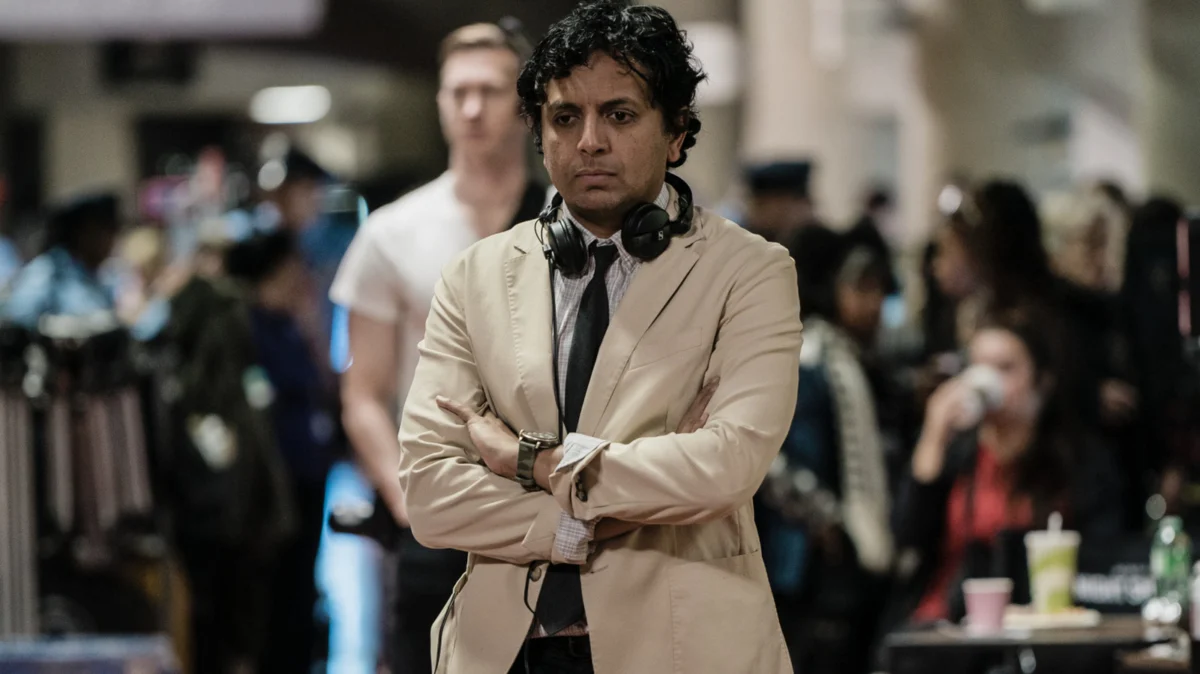
In the volatile landscape of Hollywood, few narratives are as compelling as the "comeback kid." However, even within that storied tradition, the trajectory of M. Night Shyamalan stands as a singular anomaly. Emerging in the late 1990s as a cinematic prodigy and eventually finding himself labeled an industry "cautionary tale," Shyamalan’s journey is a masterclass in resilience, creative pivoting, and the power of self-belief.
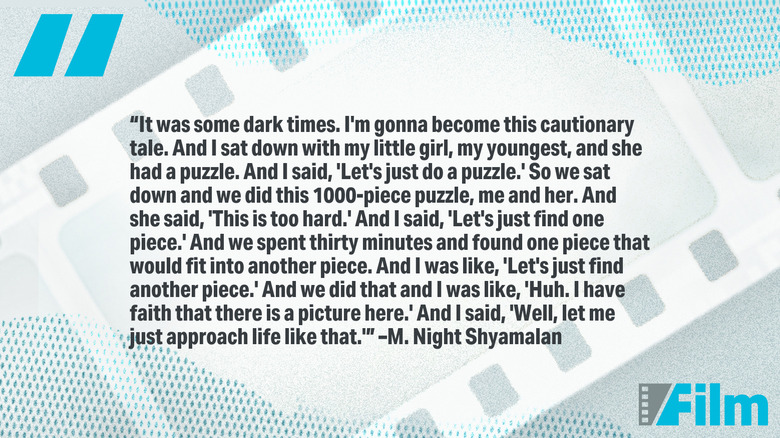
In a recent career retrospective with GQ, the filmmaker reflected on the lowest point of his professional life—a period defined by critical vitriol and a perceived loss of his creative "magic." His revelation centered on a surprisingly domestic moment: a 1,000-piece puzzle shared with his youngest daughter. This quiet interaction provided the psychological breakthrough necessary for Shyamalan to reclaim his career, leading to a self-funded renaissance that has solidified his place as one of the few remaining "brand-name" directors in modern cinema.
The Anatomy of a Resurgence: The "Puzzle" Philosophy
At the heart of Shyamalan’s current success is a fundamental shift in perspective. During the mid-2010s, following a string of high-budget failures that distanced him from his indie-thriller roots, Shyamalan felt the walls closing in. "It was some dark times," he admitted. "I’m gonna become this cautionary tale."
The breakthrough occurred not in a boardroom, but on a living room floor. While working on a difficult puzzle with his daughter, she expressed frustration, noting that the task was "too hard." Shyamalan’s response to her became a mantra for his own life: "Let’s just find one piece."
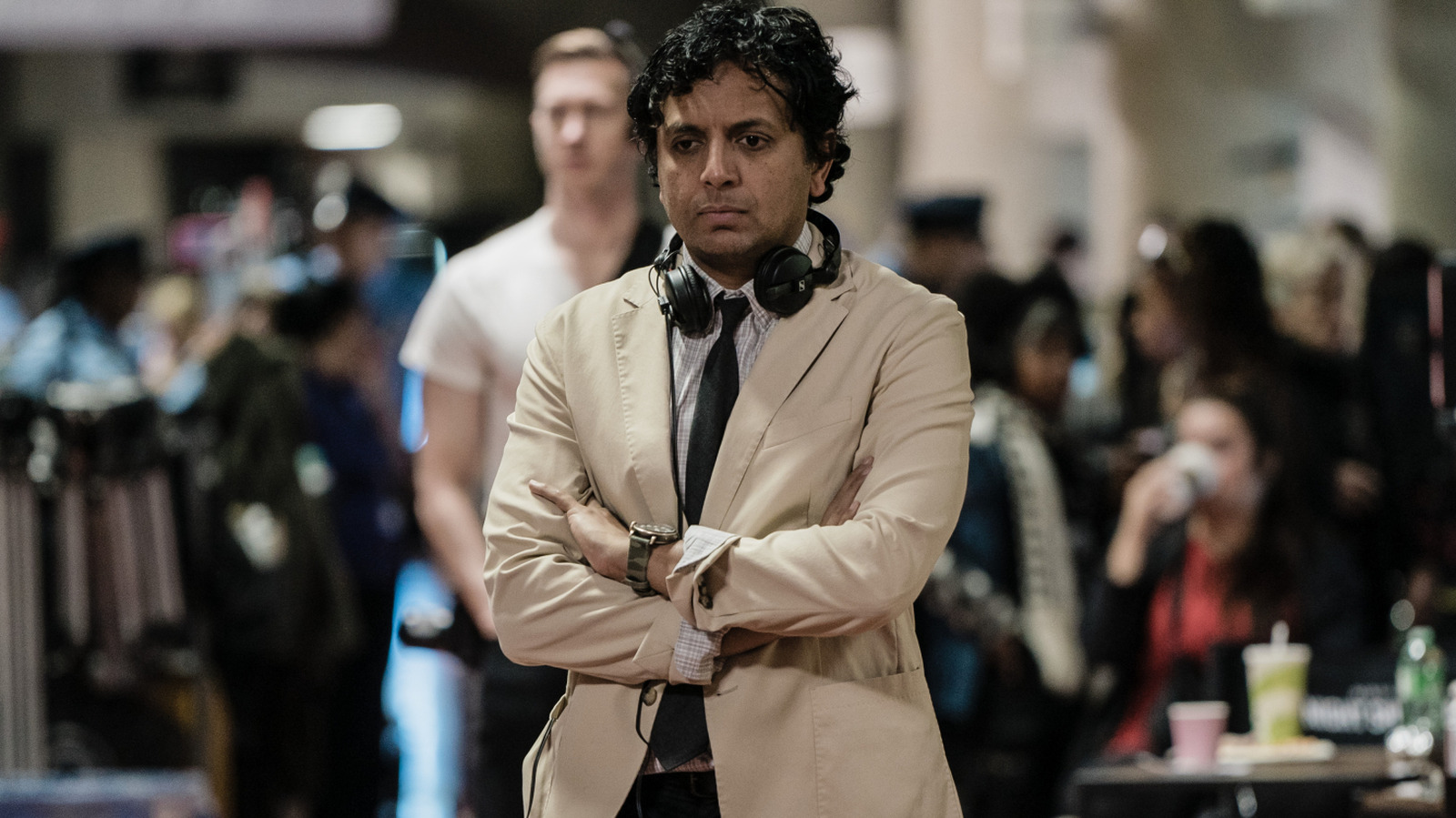
By focusing on the micro—one interlocking edge, one color match—rather than the daunting 1,000-piece whole, they made progress. Shyamalan realized he could apply this to the editing room of his 2015 film, The Visit. "I sat in the editing room and I just made one moment better, made one line better, made one cut better, and I did that every day," he recalled. This iterative approach allowed him to bypass the paralyzing fear of failure and the looming financial stakes of his gamble.
Chronology of a Career: Rise, Fall, and Rebirth
To understand the weight of Shyamalan’s "dark times," one must look at the sheer height from which he fell.
The Meteoric Rise (1999–2004)
Though his 1992 debut Praying with Anger and 1998’s Wide Awake were modest entries, 1999’s The Sixth Sense was a cultural earthquake. It earned six Academy Award nominations and established Shyamalan as the heir apparent to Alfred Hitchcock and Steven Spielberg. He followed this with a run of hits: Unbreakable (2000), which deconstructed superhero mythology long before the MCU; Signs (2002), a masterclass in tension; and The Village (2004), which, despite mixed reviews at the time, was a massive financial success.
The Stunning Fall (2006–2013)
The decline began with Lady in the Water (2006), a film that saw Shyamalan’s relationship with major studios begin to fray. This was followed by The Happening (2008), which became a target for critical derision. However, the true "dark times" arrived with his foray into big-budget franchise filmmaking: The Last Airbender (2010) and the Will Smith-starrer After Earth (2013). These films were perceived as lacking the "Shyamalan touch"—the intimate, character-driven suspense that defined his early work. By 2013, the director was no longer seen as a visionary, but as a risk.
The Extended Comeback (2015–Present)
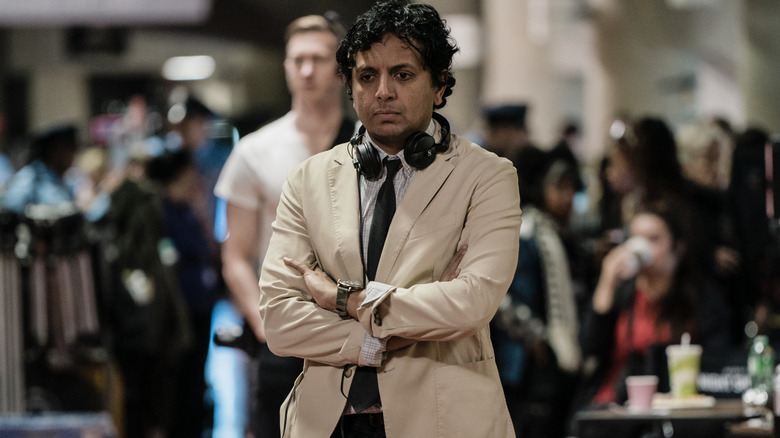
Rejecting the studio system that had begun to doubt him, Shyamalan took a radical step. He mortgaged his own home to fund the $5 million horror-comedy The Visit. By returning to a smaller scale and exercising total creative control, he rediscovered his voice. The success of The Visit paved the way for Split (2016), a secret sequel to Unbreakable that became a global phenomenon, and subsequent hits like Glass (2019), Old (2021), Knock at the Cabin (2023), and Trap (2024).
Supporting Data: The Financial Logic of Independence
Shyamalan’s comeback isn’t just a feel-good story; it is backed by staggering financial data that has made him a hero to independent filmmakers. By self-funding his projects, he retains the majority of the profits while minimizing the risk for his distribution partners (primarily Universal and Warner Bros.).
| Film | Year | Budget | Global Box Office |
|---|---|---|---|
| The Visit | 2015 | $5 Million | $98.5 Million |
| Split | 2016 | $9 Million | $278.5 Million |
| Glass | 2019 | $20 Million | $247 Million |
| Old | 2021 | $18 Million | $90.1 Million |
| Knock at the Cabin | 2023 | $20 Million | $54.8 Million |
The data reveals a consistent "return on investment" (ROI) that is almost unheard of in modern Hollywood. By keeping budgets lean—typically under $20 million—Shyamalan ensures that his films are profitable even if they don’t reach the billion-dollar heights of superhero blockbusters. This financial autonomy is what allows him to take the "weird" creative risks that his fans adore.
Official Responses and Industry Standing
Industry peers and critics have noted that Shyamalan has managed to do something few directors achieve: he became a genre unto himself. Like Jordan Peele, Greta Gerwig, or Christopher Nolan, the audience goes to the theater for the director, not necessarily the intellectual property.
In the GQ retrospective, the sentiment from the industry is clear: Shyamalan is no longer a cautionary tale, but a blueprint. Jason Blum, whose Blumhouse Productions partnered with Shyamalan on The Visit and Split, has frequently cited Shyamalan’s discipline as a key factor in his resurgence. The director’s ability to marry high-concept "hooks" with disciplined, low-budget execution has influenced a new generation of genre filmmakers.
Furthermore, Shyamalan’s commitment to his home base of Philadelphia has created a localized "mini-Hollywood," providing jobs and infrastructure outside the traditional Los Angeles/New York hubs. This dedication to his roots has earned him significant respect within the industry as a filmmaker who prioritizes community and personal vision over studio politics.
Implications: A Family Legacy and the Future of Original Cinema
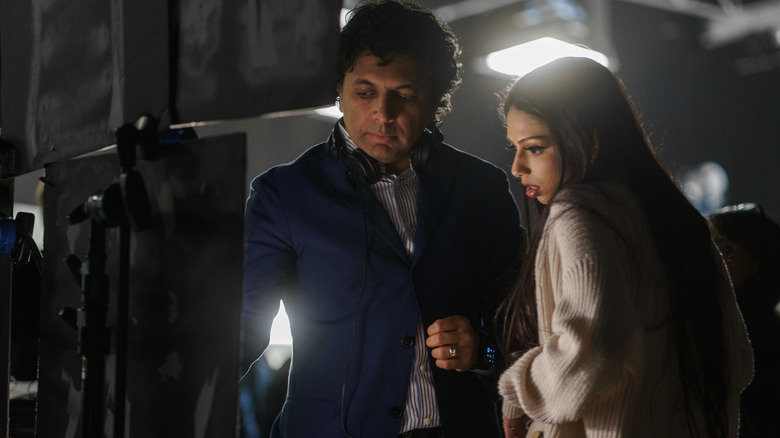
The implications of Shyamalan’s "puzzle" philosophy extend beyond his own filmography. Perhaps the most poignant aspect of his resurgence is how it has become a family affair. His daughters have entered the industry not as mere beneficiaries of nepotism, but as artists trained in the same "one piece at a time" discipline.
- Ishana Night Shyamalan made her directorial debut in 2024 with The Watchers, showcasing a visual style that echoes her father’s but maintains its own identity.
- Saleka Night Shyamalan, an accomplished musician, starred in and provided the soundtrack for Trap, a film built entirely around her dual talents.
This "Shyamalan Dynasty" suggests that the director’s darkest times taught him the value of mentorship and legacy. By involving his children in his process, he is ensuring that his unique approach to suspense and original storytelling continues into the next generation.
The "Originality" Factor
In an era dominated by sequels, prequels, and reboots, Shyamalan remains one of the last bastions of original mid-budget cinema. His career arc proves that there is still a massive audience for "the original idea," provided the filmmaker is willing to bet on themselves. The "cautionary tale" he once feared becoming has instead become a story of creative emancipation.
Conclusion: The Wisdom of the Small Step
M. Night Shyamalan’s journey from the heights of The Sixth Sense to the "dark times" of the early 2010s, and back to his current status as a box-office powerhouse, serves as a vital lesson for the creative community. The "puzzle" metaphor is more than just a cute anecdote; it is a profound strategy for navigating professional crisis.
By focusing on making "one moment better" each day, Shyamalan was able to ignore the crushing weight of a mortgage and the industry’s low expectations. He fell in love with the process rather than the prestige. Today, when audiences see the credit "Written and Directed by M. Night Shyamalan," they aren’t just seeing a name—they are seeing the result of a thousand small pieces, carefully fitted together by a man who refused to let his story end in the dark.