Sculpting Digital Dreams: Marcel Deneuve’s Architectural Sci-Fi Worlds
In the ever-expanding universe of digital art, certain creators carve out unique niches, their imaginations birthing worlds that resonate with both the familiar and the fantastically alien. Marcel Deneuve is one such artist. With a profound appreciation for the visionary architects of Japanese manga and anime, Deneuve has emerged as a prominent digital concept artist, specializing in the creation of breathtaking architectural innovations, sprawling sci-fi landscapes, and monumental, awe-inspiring structures. His work, a testament to the power of digital tools and boundless creativity, offers a compelling glimpse into futuristic possibilities and the evocative potential of speculative design.
Deneuve’s artistic journey is not a linear path but a fascinating evolution, marked by a distinct shift from the auditory to the visual. Initially drawn to the immersive soundscapes of electronic music, he found a new muse in the rich visual traditions of Japan. Masters such as Tsutomu Nihei, known for his dense, intricate, and often melancholic sci-fi cityscapes; Yoshitaka Amano, whose ethereal and fluid character and world designs are instantly recognizable; and Takashi Murakami, a pioneer of the "Superflat" movement that blurs the lines between fine art and pop culture, all served as powerful springboards for his burgeoning visual artistry. This profound influence is palpable in his work, which often carries a sense of grandeur, a touch of the surreal, and an underlying narrative depth.
The Genesis of a Digital Visionary
The year 2017 marked a pivotal moment for Deneuve as he officially embarked on his path as a visual artist. Armed with an insatiable curiosity, he immersed himself in the wealth of knowledge available, diligently learning from books and the vast resources of the internet. This self-directed approach allowed him to build a strong foundational understanding of artistic principles and techniques, setting the stage for his exploration of digital mediums.
A significant turning point in his artistic development arrived with his discovery and mastery of 3D modeling tools. While he initially explored the creation of robots and vehicles, a natural progression led him to gravitate towards more expansive and complex forms. His focus gradually shifted, honing in on the intricate design of architectural concepts and the creation of atmospheric environmental designs within the science fiction genre. This transition allowed him to leverage the full potential of 3D software, enabling him to construct entire worlds, complete with their unique structural languages and ambient moods.
Deneuve’s chosen toolkit is a testament to his commitment to modern digital art practices. He proficiently wields industry-standard software such as Blender, a powerful and versatile open-source 3D creation suite; Adobe Photoshop, the ubiquitous image editing and manipulation software; Procreate, a popular and intuitive drawing and painting application for iPad; and Substance 3D, a suite of tools renowned for its advanced material creation and texturing capabilities. The synergistic use of these applications allows him to move seamlessly from initial concept sketches to detailed 3D models, intricate texturing, and final polished renders, bringing his complex visions to life with remarkable fidelity.
Unveiling the Worlds of Marcel Deneuve
Deneuve’s artistic output is characterized by a distinctive blend of the colossal and the intricate, the futuristic and the deeply imaginative. He has a remarkable ability to conceptualize and render environments that feel both tangible and dreamlike, inviting viewers to step into meticulously crafted realities. Below, we explore three compelling examples of his work, each offering a unique window into his creative process and thematic preoccupations.
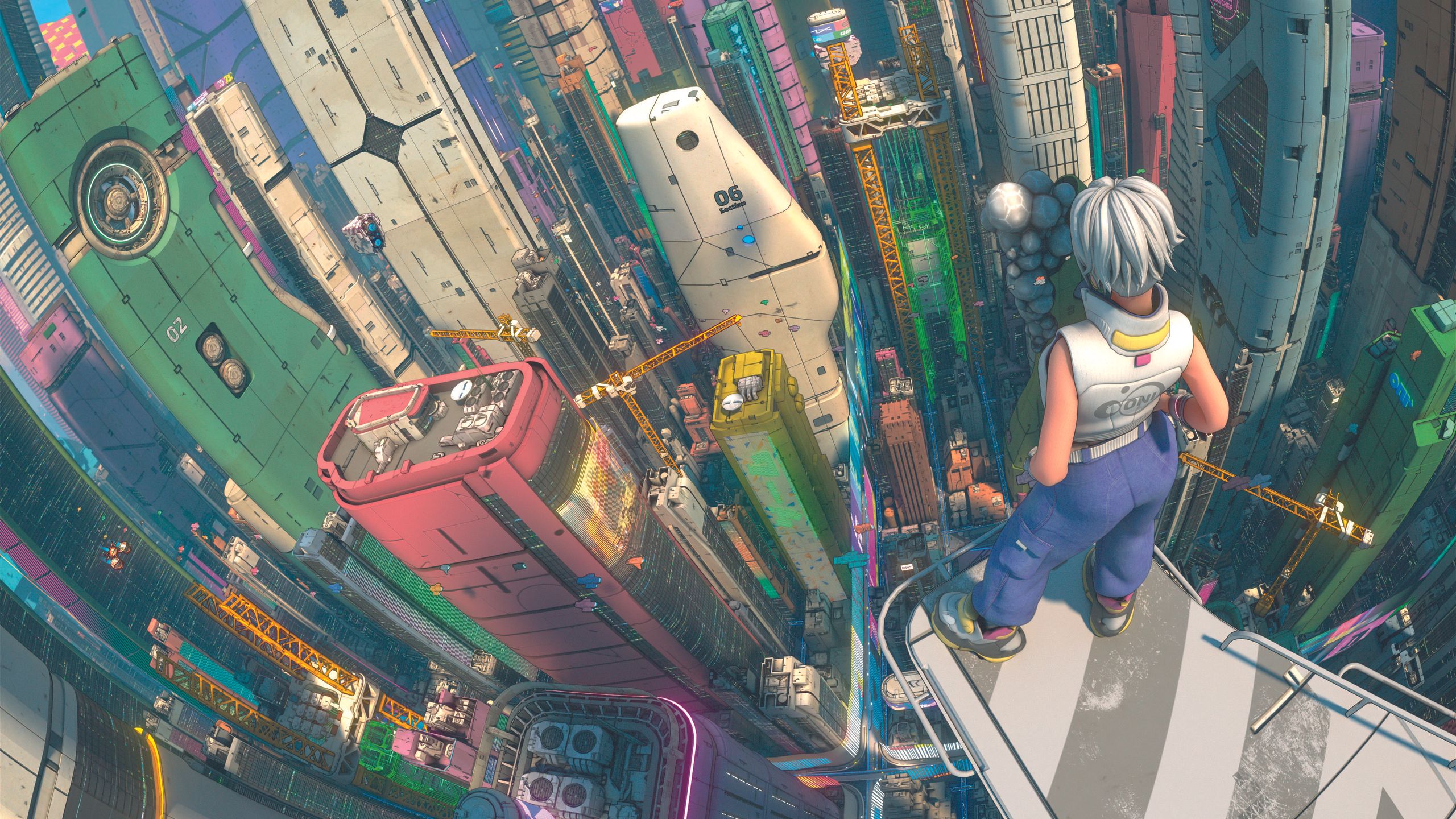
Lollipop: A Futurist Confectionery Metropolis
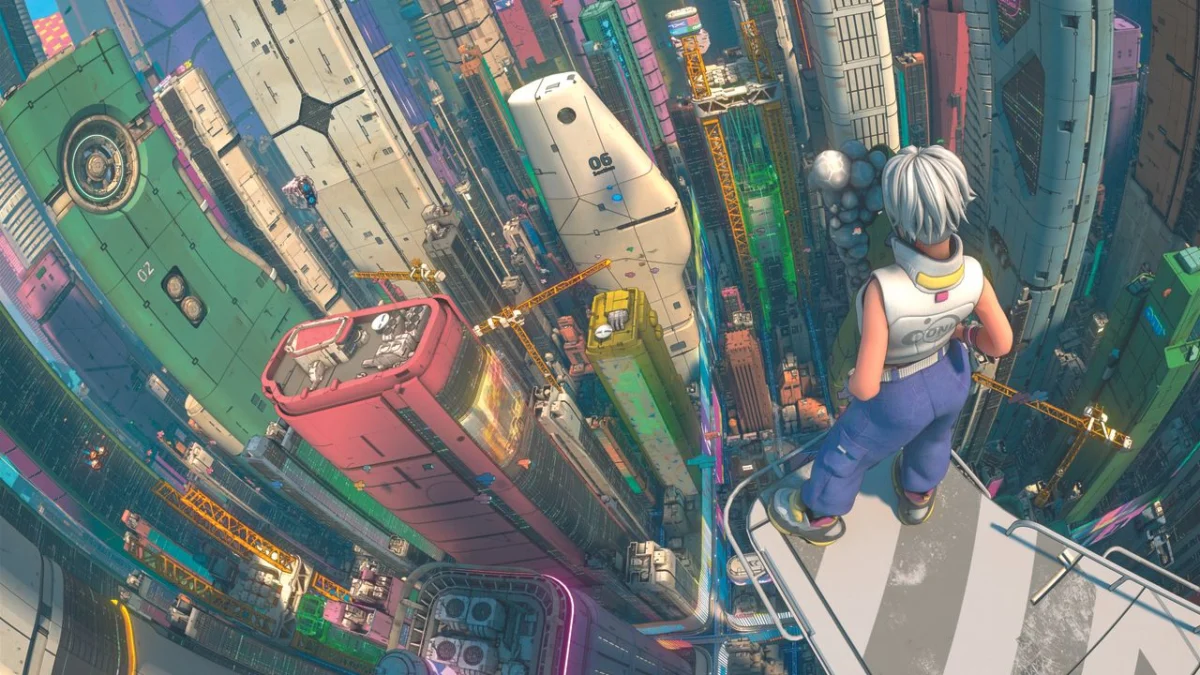
The piece titled "Lollipop" represents a deliberate departure from Deneuve’s established style, a conscious effort to push the boundaries of color and form. He describes this creation as a "futuristic candy city," a vibrant and whimsical metropolis that evokes the playful yet complex aesthetics of a dreamscape. This piece is part of a larger ongoing project known as "Onimeon," a world Deneuve is actively building, suggesting a narrative framework and a deeper lore underpinning his visual creations.
In "Lollipop," Deneuve experiments with a palette that bursts with saturated hues, suggesting an urban environment constructed from materials reminiscent of confectionery. The architectural forms, while bearing the hallmarks of science fiction, possess an almost organic, flowing quality, deviating from the stark, geometric lines often associated with the genre. This daring use of color and form creates a sense of joyful disorientation, a city that is both inviting and alien. The composition likely employs a sophisticated layering of 3D elements, meticulously lit and rendered to achieve a sense of depth and atmosphere. The "candy" aspect might translate into smooth, glossy textures, translucent materials, and structures that playfully defy gravity, akin to oversized, elaborate sweets. The "futuristic" element is evident in the scale and the implied advanced technology that would be necessary to construct and sustain such a fantastical urban expanse.
Deneuve’s statement about pushing colors and forms signifies a critical aspect of artistic growth: the willingness to experiment and evolve. "Lollipop" is not just a standalone artwork; it is a declaration of his expanding creative vocabulary. The "Onimeon" project hints at a broader universe, suggesting that this vibrant city is but one facet of a much larger, interconnected narrative. The challenge in creating such a piece would lie in balancing the fantastical elements with a sense of believable structural integrity, even within a sci-fi context. The choice of Blender for such a project would be ideal, allowing for the complex modeling of organic shapes and the efficient rendering of vibrant, reflective surfaces. Photoshop would then be employed for post-processing, enhancing the colors, adding atmospheric effects like subtle glows or mist, and ensuring the overall visual harmony of the piece.
Red Howl: A Homage to a Manga Master
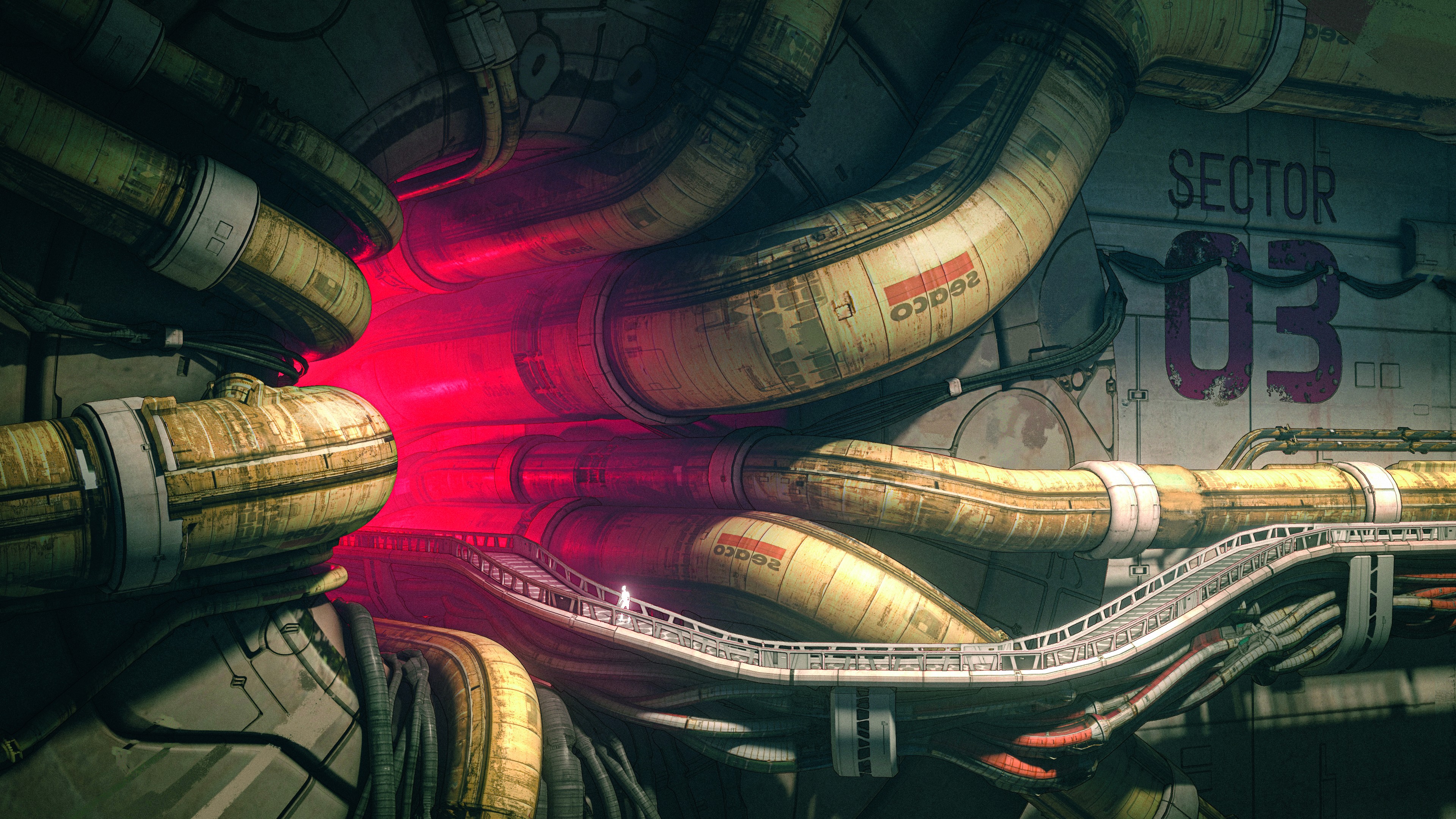
"Red Howl" stands as a poignant tribute to the influential manga artist Tsutomu Nihei, whose distinctive style has clearly left an indelible mark on Deneuve’s artistic sensibility. This piece exemplifies Deneuve’s classic 3D pipeline, a testament to his mastery of the entire creative workflow. The process begins with initial concept sketches in Procreate, where the fundamental ideas and compositional elements are laid out. These sketches then inform the 3D modeling phase, likely conducted in Blender, where the structural forms are brought into existence.
The distinctive textures that imbue "Red Howl" with its gritty, lived-in aesthetic are crafted using Substance 3D. This application allows for the creation of highly realistic and complex materials, adding layers of detail and believability to the 3D models. The final compositing and refinement, including lighting adjustments, color grading, and the addition of subtle atmospheric effects, are executed in Photoshop. This meticulous approach ensures that each element of the artwork is carefully considered and integrated into a cohesive and impactful whole.
The thematic resonance of "Red Howl" with Tsutomu Nihei’s work suggests a visual language characterized by vast, oppressive urban environments, immense technological structures, and a sense of overwhelming scale. Nihei’s worlds are often imbued with a melancholic beauty, a sense of humanity struggling against the immensity of their surroundings. Deneuve’s "Red Howl" likely captures this essence, perhaps depicting a lone figure or a small enclave within a colossal, sprawling cityscape. The "Red" in the title might allude to a dominant color scheme, perhaps hinting at industrial decay, emergency lighting, or a pervasive atmospheric phenomenon. The "Howl" could suggest a sense of desolation, a cry lost in the vastness of the environment. The textures created in Substance 3D would be crucial here, conveying the wear and tear of a futuristic, possibly post-apocalyptic, setting. Think of rusted metal, weathered concrete, and complex, layered industrial elements. The compositing in Photoshop would then be used to enhance the mood, perhaps with volumetric lighting, lens flares, or subtle dust particles, further immersing the viewer in this evocative tribute.
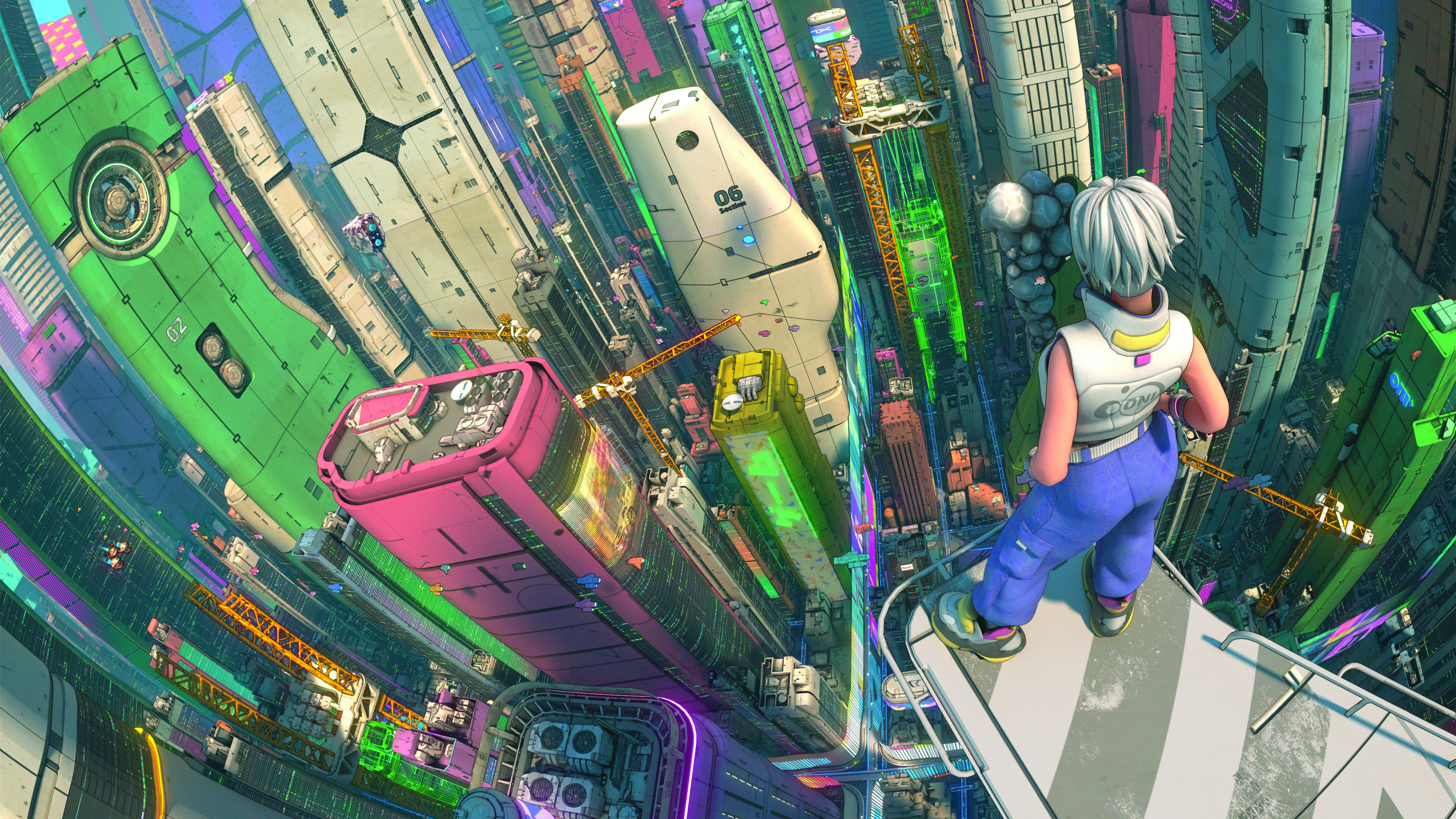
Azzarax: A Symphony of Layered Cities
"Azzarax" showcases Deneuve’s talent for crafting complex, multi-layered urban environments. This piece is described as one of his "signature multi-layered cities," demonstrating his adeptness at creating sprawling metropolises that feel both vast and intricately detailed. The modeling and rendering were executed in Blender, a powerful tool for building such complex scenes. The challenge, as Deneuve points out, lies in populating these cities with a vast library of buildings while ensuring that the overall composition avoids monotony and repetition.
This requires a deep understanding of architectural variation and an ability to design a diverse range of structures that can coexist within a unified visual style. Deneuve’s success in this endeavor speaks to his meticulous planning and his ability to create modular assets that can be recombined in novel ways. The visual impact of "Azzarax" would be immense, with towering edifices reaching towards the sky, interconnected by complex networks of bridges, walkways, and transport systems. The "multi-layered" aspect implies a verticality to the city, with different levels of activity and habitation, perhaps ranging from bustling commercial districts at lower levels to more serene, elevated residential zones.
The process of creating "Azzarax" would involve significant planning to ensure the city’s believability as a functioning urban ecosystem. Deneuve would need to consider factors such as population density, transportation flow, and the integration of diverse architectural styles that still maintain a cohesive overall aesthetic. The sheer scale of such a project would necessitate efficient asset management and a strong understanding of scene optimization within Blender to achieve timely renders. The final rendering in Blender would capture the grand scale and intricate details, while post-processing in Photoshop would be used to enhance the atmospheric effects, such as the interplay of light and shadow, the haze of pollution or atmospheric dust, and the vibrant glow of city lights, further solidifying the impression of a living, breathing, futuristic metropolis.
The Digital Canvas: Tools of the Trade
Deneuve’s ability to translate his visionary concepts into tangible digital art relies heavily on the sophisticated tools he employs. Understanding these tools provides insight into the technical prowess required to bring such complex worlds to life.
-
Blender: As an open-source 3D creation suite, Blender is an indispensable tool for Deneuve. Its comprehensive feature set includes modeling, sculpting, rigging, animation, simulation, rendering, compositing, and motion tracking. For Deneuve’s architectural and environmental designs, Blender’s powerful modeling tools are essential for constructing complex structures, while its rendering engines (Cycles and Eevee) allow for photorealistic or stylized visualizations. The ability to create intricate details, from the smallest architectural embellishments to the grandest cityscapes, is made possible by Blender’s robust capabilities.
-
Adobe Photoshop: The industry standard for image editing and manipulation, Photoshop plays a crucial role in Deneuve’s workflow, particularly in the post-production phase. It is used for compositing rendered elements, color correction, matte painting, adding atmospheric effects, and fine-tuning the overall aesthetic of the final image. Photoshop’s vast array of brushes and filters allows Deneuve to imbue his work with a painterly quality or to achieve specific visual styles that complement his 3D creations.
-
Procreate: Primarily used for sketching and initial concept development, Procreate offers a fluid and intuitive drawing experience on the iPad. Deneuve leverages Procreate to quickly iterate on ideas, flesh out character designs, and establish the foundational compositions of his scenes. Its naturalistic brushes and user-friendly interface make it an ideal tool for capturing spontaneous creative impulses and translating them into a visual format before moving to more complex 3D software.
-
Substance 3D: This suite of tools, including Substance Painter and Substance Designer, is vital for creating realistic and detailed textures. Deneuve uses Substance 3D to develop custom materials that add depth, character, and a sense of history to his 3D models. Whether it’s the worn metal of a futuristic spacecraft, the weathered concrete of a colossal structure, or the intricate patterns of alien architecture, Substance 3D enables him to achieve a high level of material fidelity, making his digital worlds feel more grounded and believable.
Beyond the Canvas: Inspiration and Future Endeavors
Deneuve’s artistic journey is a testament to the power of cross-disciplinary inspiration and the relentless pursuit of creative growth. His transition from electronic music to visual art highlights how diverse passions can inform and enrich one another. The influence of Japanese masters is not merely stylistic; it speaks to a deeper engagement with narrative, aesthetics, and the profound questions that art can explore.
His ongoing project, "Onimeon," suggests a commitment to building expansive, narrative-driven worlds. This approach moves beyond individual artworks to the creation of cohesive artistic universes, offering viewers a more immersive and engaging experience. The continued exploration of architectural innovation and sci-fi landscapes indicates a fascination with the future, with the possibilities of human endeavor, and with the potential for art to shape our perceptions of what could be.
For aspiring digital artists, Deneuve’s story is an inspiring example of self-dedication and the effective utilization of modern digital tools. His journey underscores the importance of continuous learning, experimentation, and the courage to push creative boundaries. The resources he utilizes, from powerful 3D software to intuitive drawing applications, are accessible to a new generation of artists, enabling them to embark on their own journeys of world-building and visual storytelling.
Marcel Deneuve’s work serves as a compelling reminder that the digital realm is not just a medium but a canvas for boundless imagination. Through his meticulous craftsmanship and visionary artistry, he invites us to contemplate the future, to marvel at the potential of architectural innovation, and to immerse ourselves in the captivating sci-fi landscapes he so brilliantly conjures. His creations are more than just images; they are portals to worlds waiting to be explored, dreams rendered tangible in the vibrant language of digital art.