A New Dawn for a Classic: Talisman: The Magical Quest Board Game – 5th Edition Announced
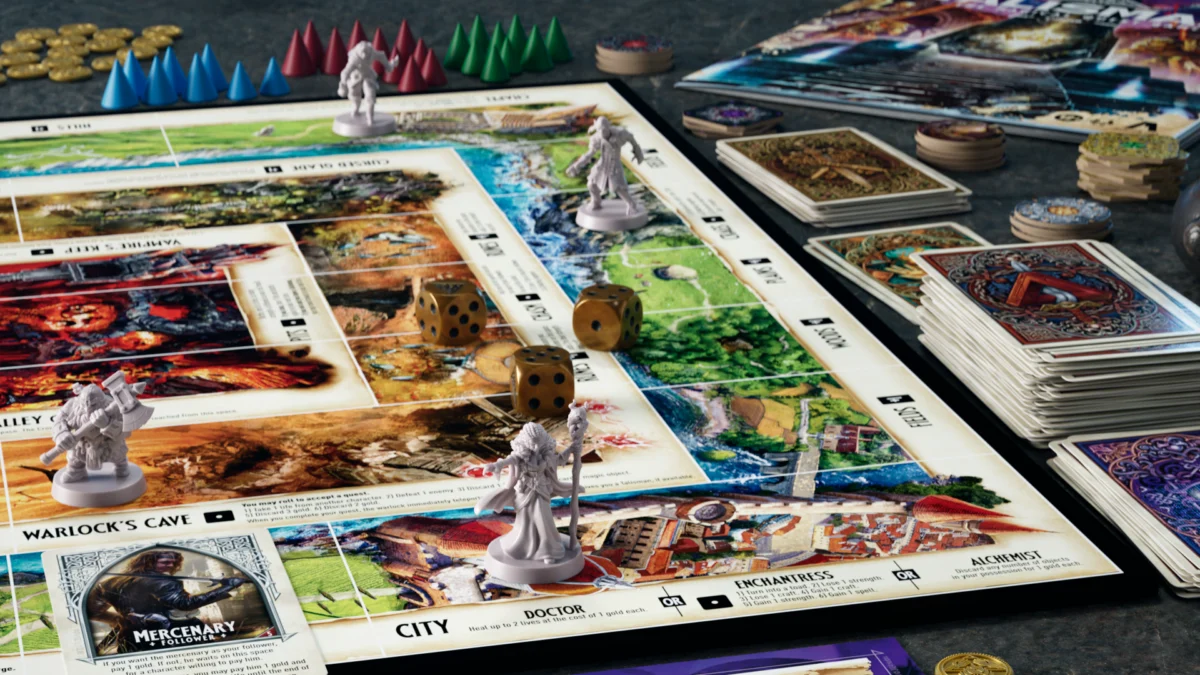
The venerable fantasy adventure board game, Talisman, is set to embark on its latest journey with the announcement of a 5th Edition, officially titled Talisman: The Magical Quest Board Game – 5th Edition. This highly anticipated revival comes courtesy of Avalon Hill, the esteemed publisher renowned for beloved titles such as Betrayal at House on the Hill, promising a fresh yet familiar take on a tabletop legend. Scheduled for release on August 1st, this new iteration aims to captivate both long-time devotees and a new generation of adventurers with a streamlined experience, updated aesthetics, and a host of new content, all priced at an accessible $60 (£47).
For decades, Talisman has held a special place in the hearts of board game enthusiasts, offering a captivating blend of exploration, character progression, and competitive questing within a richly imagined fantasy world. The core objective remains unchanged: players must navigate a perilous board, gather strength, acquire powerful artifacts, and ultimately challenge their rivals to claim the coveted Crown of Command, located at the very heart of the game world. This 5th Edition seeks to honor that legacy while introducing refinements designed to enhance accessibility and engagement.
The Quest Continues: Main Facts of the 5th Edition
Avalon Hill, a subsidiary of Wizards of the Coast and ultimately Hasbro, has officially unveiled Talisman: The Magical Quest Board Game – 5th Edition, marking a significant moment for the iconic franchise. The upcoming edition is poised to deliver a comprehensive update to the classic gameplay, without sacrificing the spirit that has made Talisman a enduring presence in the tabletop landscape.
At its core, the 5th Edition will retain the familiar structure of players racing through concentric rings of the game board, each fraught with unique challenges and opportunities. The ultimate goal, as always, is to reach the perilous inner region and seize the Crown of Command, which grants its wielder the power to eliminate all other contenders and claim victory.
Key features highlighted for this new edition include:
- A Roster of Twelve Playable Characters: Players will have a diverse array of archetypes to choose from, including classic fantasy staples like the Thief, Monk, Warrior, Ghoul, and Sorceress. Each character is expected to offer unique starting statistics, special abilities, and strategic paths to victory, encouraging replayability and varied gameplay experiences.
- One Hundred New Adventure Cards: A cornerstone of Talisman’s unpredictable charm lies in its Adventure cards, which dictate encounters, events, and discoveries. The 5th Edition promises a completely fresh deck of 100 cards, ensuring that even veteran players will face new surprises and strategic dilemmas during their quests. These cards are confirmed to feature all-new illustrations, breathing fresh visual life into the game’s encounters.
- Brand New Artwork and Updated Components: Beyond the adventure cards, the entire board game will boast a complete visual overhaul. From the game board itself to character tokens, spell cards, and various other game elements, players can expect a modern aesthetic that respects the game’s fantasy roots while aligning with contemporary production standards. This commitment to updated components suggests a premium feel for the physical product.
- "Streamlined" Gameplay: Perhaps the most intriguing detail for many is the promise of "streamlined" gameplay, aimed at making the game more accessible to less experienced players. While specific details on these changes are currently scarce, this suggests potential refinements to rules complexity, playtime, or overall flow, without fundamentally altering the core mechanics. This could involve clearer rulebooks, more intuitive iconography, or simplified decision-making processes in certain areas.
- Competitive Price Point: Launching at $60 (£47), the 5th Edition positions itself as an attractive option for both newcomers and existing fans looking to upgrade or revisit the game. This pricing strategy suggests a desire to make Talisman accessible to a broad audience in a competitive market.
The announcement positions Talisman: The Magical Quest Board Game – 5th Edition not merely as a reprint, but as a thoughtful revitalization designed to introduce the enduring appeal of Talisman to a new generation of tabletop adventurers while satisfying the nostalgic cravings of its dedicated fanbase.
A Legacy Forged in Fantasy: The Chronology of Talisman
The journey of Talisman is as epic and winding as the quests undertaken within its fantastical world. Spanning over four decades, its history reflects significant shifts in the board gaming industry and the evolution of a beloved intellectual property.
The Games Workshop Era (1983 – 2008)
Talisman first burst onto the scene in 1983, published by the then-burgeoning Games Workshop (GW). At the time, GW was a pivotal force in the tabletop gaming world, known for its fantasy role-playing games and the nascent Warhammer universe. Designed by Robert Harris, the original Talisman was an immediate hit, offering a compelling blend of fantasy archetypes, unpredictable adventure, and direct player-versus-player interaction.
The early 1980s were a golden age for fantasy media, heavily influenced by the groundbreaking success of Dungeons & Dragons. Talisman tapped into this zeitgeist, allowing players to embody classic fantasy roles—warriors, wizards, elves, and trolls—and embark on a grand quest without the extensive commitment of a full-fledged RPG. Its unique "roll and move" mechanic, combined with drawing cards that represented encounters with monsters, acquisition of treasures, or unforeseen events, created a dynamic and often chaotic experience that players found immensely engaging.
Games Workshop released three editions of Talisman during its tenure, along with a multitude of expansions that added new characters, regions, spells, and adventure cards, significantly expanding the scope and replayability of the game. These early editions, particularly the Second and Third, cemented Talisman’s status as a classic, fostering a passionate community and inspiring countless hours of tabletop adventure. Its distinctive artwork and often brutal difficulty carved out a niche for it in the burgeoning board game market.
The Fantasy Flight Games Era (2008 – Present)
In 2008, the publishing rights for Talisman transitioned to Fantasy Flight Games (FFG), a company that had by then established itself as a leader in producing high-quality, thematic board games with intricate mechanics and lavish components. FFG’s acquisition marked a new chapter for the franchise, bringing a modern sensibility to its production and design.
FFG promptly released a Revised Fourth Edition of Talisman. This edition largely maintained the core gameplay loop but introduced updated rules clarifications, refined components, and a fresh art direction that brought a more contemporary fantasy aesthetic to the game. Crucially, FFG embraced Talisman’s legacy of expansions, releasing a staggering number of add-ons that introduced new board regions (like the Highland, Dungeon, and City), legendary characters, and innovative gameplay mechanics. These expansions significantly deepened the strategic possibilities and narrative richness of the game, making the FFG Fourth Edition arguably the most comprehensive version of Talisman to date.
During FFG’s stewardship, Talisman also saw significant digital adaptations. Nomad Games, in collaboration with FFG, developed highly successful digital versions of the Fourth Edition for PC, mobile, and consoles. These digital implementations not only introduced Talisman to a new generation of players but also provided a convenient platform for fans to enjoy the game with all its expansions, bypassing the extensive setup and storage requirements of the physical game. FFG’s commitment ensured Talisman remained a vibrant and relevant title in an increasingly crowded market.
The Avalon Hill / Wizards of the Coast Era (2024 onwards)
The announcement of the 5th Edition under Avalon Hill signifies another major transition for the franchise. Avalon Hill, operating under the umbrella of Wizards of the Coast (WotC) and Hasbro, brings a new perspective and resources to Talisman. This move aligns Talisman with a publisher known for revitalizing classic IPs and delivering polished, accessible experiences. WotC, the custodians of Dungeons & Dragons and Magic: The Gathering, possesses immense experience in managing and expanding fantasy intellectual properties, suggesting a robust future for Talisman.
This shift promises not only a visual and mechanical refresh but also a strategic alignment that could introduce Talisman to an even broader audience, leveraging the extensive distribution and marketing capabilities of Hasbro. The 5th Edition represents a culmination of its rich history, aiming to honor its past while charting a course for its future relevance in the modern board gaming landscape.
Delving Deeper: Supporting Data and Gameplay Nuances
Talisman’s enduring appeal lies in its deceptively simple core loop that quickly escalates into an epic, often unpredictable, adventure. The 5th Edition’s promise of "streamlined" gameplay, coupled with new content, invites a closer look at the underlying mechanics and how they contribute to the game’s unique charm.
The Core Gameplay Loop: A Hero’s Journey
At its heart, Talisman is a race to the center. Players choose from a selection of characters, each possessing unique starting attributes (Strength, Craft, Fate, Lives) and special abilities. These characters, ranging from the brute Warrior to the cunning Thief or the enigmatic Sorceress, dictate a player’s initial strategy and offer distinct pathways through the challenges ahead.
Movement across the board is typically dictated by the roll of a single six-sided die. Landing on a space triggers an action, most commonly drawing one or more Adventure cards. These cards are the lifeblood of Talisman, introducing a dynamic array of encounters:
- Enemies: Monsters, beasts, and nefarious characters that players must defeat through combat, testing their Strength or Craft. Success often yields trophies, gold, or magical items, while failure can result in loss of life or being forced to retreat.
- Events: Unforeseen occurrences that affect all players or specific regions of the board, adding a layer of chaos and unpredictability.
- Objects and Followers: Valuable equipment, weapons, armor, and magical artifacts that enhance a character’s abilities, or loyal companions who provide passive bonuses.
- Places: Locations that offer unique actions, such as healing, gaining spells, or acquiring gold.
As players navigate the board’s concentric rings—the Outer, Middle, and Inner regions—the difficulty and rewards generally increase. The Outer Region is relatively safe, allowing players to build up their characters. The Middle Region introduces tougher foes and more powerful rewards. To progress to the Inner Region, players must often fulfill a "Talisman quest," a specific condition unique to the game, and then brave the "Portal of Power."
Combat in Talisman is straightforward but impactful. When a player encounters an enemy, or another player, a dice roll is added to their relevant combat statistic (Strength for physical combat, Craft for magical duels). The higher total wins. Losing combat can mean losing a life, an object, or being forced back, creating tense player-vs-player interactions that are a hallmark of the game.
The ultimate goal is to reach the Crown of Command, located in the innermost space of the board. Once there, a player can use its power to slowly eliminate all other players, one by one, until they are the sole survivor and victor. This "king of the hill" endgame creates a dramatic climax where alliances can shatter, and last-ditch efforts are made to prevent the dominant player from securing their win.
The Promise of "Streamlined" Gameplay
The announcement of "streamlined" gameplay for the 5th Edition is a key point of interest. In modern board gaming, "streamlined" often refers to:
- Reduced Complexity: Simplifying rules text, consolidating mechanics, or removing elements that might bog down gameplay without adding significant strategic depth. This could make the game easier to learn for newcomers.
- Faster Playtime: Optimizing turns, reducing downtime, or accelerating certain phases of the game to ensure a more dynamic experience. Previous editions, especially with expansions, could extend play sessions considerably.
- Improved Clarity: Rewriting rulebooks with clearer language, employing intuitive iconography, and providing better examples to minimize ambiguity and common rules disputes.
- Enhanced Flow: Making the progression feel more natural and intuitive, potentially by refining how players transition between board regions or complete objectives.
For veterans, the term "streamlined" can sometimes raise concerns about oversimplification or the removal of beloved mechanics. However, given Avalon Hill’s track record with games like Betrayal at House on the Hill (which blends narrative and straightforward mechanics) and the revitalized HeroQuest, it’s more likely that the streamlining will focus on improving the player experience without gutting the game’s core identity. It could mean more consistent card effects, a clearer path to victory conditions, or perhaps even a more balanced challenge curve across the board.
The Visual and Component Overhaul
The commitment to "brand new artwork and updated components" is crucial in today’s competitive board game market. High-quality production values are often a significant factor in a game’s success. New art direction can inject fresh energy into a classic title, making it visually appealing to contemporary audiences while evoking the familiar fantasy feel.
This could include:
- A more vibrant and cohesive art style across all cards and the board.
- Improved component quality, such as thicker cardstock, more durable player tokens (potentially miniatures, though not explicitly stated), and a well-organized insert.
- Enhanced readability of card text and board elements, crucial for accessibility.
These visual and tactile improvements contribute significantly to the immersion and overall enjoyment of the game, making the 5th Edition a compelling package for both new and returning players.
Official Responses and Publisher Context
The decision by Avalon Hill to publish the 5th Edition of Talisman speaks volumes about the enduring power of the brand and the publisher’s strategic vision.
Avalon Hill’s Vision
Avalon Hill has a storied history in board gaming, particularly known for wargames and thematic adventure games. In recent years, under the wing of Wizards of the Coast (WotC) and Hasbro, Avalon Hill has become a key player in revitalizing classic IPs and creating engaging, often narrative-driven, tabletop experiences. Their portfolio includes:
- Betrayal at House on the Hill: A highly popular horror exploration game known for its emergent storytelling and replayability. This title’s success demonstrates Avalon Hill’s ability to craft thematic games that resonate with a broad audience.
- HeroQuest: A successful revival of another classic fantasy dungeon-crawler, which underwent a similar process of updated components and streamlined rules while staying true to the original’s spirit.
- D&D Adventure System Games: A series of cooperative dungeon-crawling board games set in the Dungeons & Dragons universe, showcasing their expertise in translating rich fantasy worlds into accessible board game experiences.
This track record positions Avalon Hill as an ideal publisher for Talisman. Their approach tends to balance nostalgic appeal with modern design sensibilities, aiming for accessibility without sacrificing depth. The "streamlined" gameplay for Talisman 5th Edition fits perfectly within this philosophy, suggesting a careful consideration of how to make the game enjoyable for a wider audience while respecting its legacy.
Wizards of the Coast and Hasbro’s IP Strategy
The involvement of Wizards of the Coast and Hasbro is also significant. As major players in the entertainment industry, they have a vested interest in leveraging and expanding their intellectual properties. Talisman, with its established fanbase and recognizable fantasy theme, represents a valuable asset.
This move could be part of a broader strategy by WotC/Hasbro to:
- Diversify their tabletop offerings: Beyond D&D and Magic: The Gathering, Talisman adds another strong fantasy brand to their portfolio.
- Reintroduce classic games: Similar to HeroQuest, reviving Talisman allows them to tap into nostalgia while attracting new players with a polished product.
- Cross-promotion potential: While not directly linked to D&D lore, Talisman exists within a similar fantasy genre, potentially drawing players from one franchise to another.
The relatively limited details on the specific gameplay changes for the 5th Edition, particularly concerning the "streamlining," is a common journalistic approach. Publishers often release initial announcements with key highlights to build anticipation, followed by more in-depth reveals closer to the launch date. This allows for controlled information flow and sustained marketing momentum. Expect detailed gameplay videos, designer diaries, and component showcases to emerge in the coming months, offering a clearer picture of how the 5th Edition truly plays.
Implications for the Future of Talisman and the Board Game Market
The launch of Talisman: The Magical Quest Board Game – 5th Edition carries significant implications for the franchise itself, its target audience, and the broader board gaming market.
Expanding the Target Audience
The emphasis on "streamlined" gameplay is a clear indication that Avalon Hill aims to broaden Talisman’s appeal beyond its traditional fanbase. While veterans will undoubtedly be curious about the updated experience, the primary beneficiaries of this simplification are likely:
- New Players: Individuals new to the hobby or those who found previous editions daunting due to their complexity or length. The 5th Edition could serve as an excellent gateway game into the world of fantasy adventure.
- Casual Gamers: Groups looking for a thematic, engaging experience that doesn’t require extensive rule memorization or hours of strategizing.
- Families: Depending on the extent of the streamlining, Talisman could become more accessible for family game nights, offering a compelling fantasy narrative for a younger audience.
This strategic move acknowledges the evolving demographics of the board game market, where accessibility and engaging narratives are increasingly valued.
Market Position and Competition
Talisman 5th Edition will enter a highly competitive market, filled with a plethora of fantasy adventure games. It will need to differentiate itself from more complex dungeon-crawlers, narrative-heavy RPG-lite games, and other classic revivals. Its strengths lie in:
- Brand Recognition: Talisman is a known entity, carrying significant nostalgic weight.
- Accessible Core Loop: The "roll and move, draw a card" mechanic is easy to grasp, making it less intimidating than games with multiple interlocking systems.
- Direct Player Interaction: The ability to attack other players, steal items, and directly race for the Crown creates a dynamic and often thrilling competitive atmosphere that some cooperative games lack.
Its success will hinge on how well the "streamlining" enhances the experience without alienating long-term fans who appreciate the game’s previous iterations. Finding the right balance between modernization and faithfulness to the original spirit will be key.
The Inevitable Question of Expansions
One of Talisman’s defining characteristics throughout its history has been its extensive line of expansions. These additions introduced new regions, characters, spells, and mechanics, significantly extending the game’s replayability and depth. It is highly probable that Avalon Hill will continue this tradition for the 5th Edition.
Speculation about future expansions could include:
- New Board Regions: Expanding the physical game board with new Outer, Middle, or Inner Region areas (e.g., a forest, desert, or celestial realm).
- Additional Characters: Introducing new archetypes or iconic figures from Talisman lore.
- More Adventure Cards: Continuously refreshing the deck to keep encounters varied.
- New Mechanics: Introducing alternative victory conditions, advanced spell systems, or unique questlines.
The modular nature of Talisman makes it an ideal candidate for ongoing content releases, allowing Avalon Hill to maintain player engagement and provide a long-term investment for fans.
The Enduring Appeal and Future Longevity
Talisman’s longevity is a testament to its fundamental appeal: a clear objective, a sense of emergent storytelling, and the thrill of both cooperation and competition. The 5th Edition represents a crucial juncture in its history, aiming to secure its place for decades to come. By blending nostalgic elements with modern design principles and production quality, Avalon Hill is poised to reintroduce this classic adventure to a broad audience, ensuring that the magical quest for the Crown of Command continues for many years to come.
As the August 1st release date approaches, the board gaming community will eagerly await more details on Talisman: The Magical Quest Board Game – 5th Edition. Its success will not only revitalize a beloved franchise but also offer valuable insights into the ongoing trend of classic game revivals in the dynamic world of tabletop gaming.